Home Blog Page 120

“Joe Exotic” rides the Delta-8 wave

He announced it, he did it. While Joe Exotic is still in jail, his cannabis brand was officially released this week at a cannabis fair in Nevada.

And even if it means never doing anything like everyone else, Joe decided to ride the wave of delta-8, an analogue of THC from hemp, more or less in the gray zone in the United States and of sometimes dubious manufacture.

If his conviction on a planned murder was upheld by the United States Court of Appeals, but the sentence quashed for technicality, the convict’s lawyer reported to TMZ that his client had an agreement. with two partners to launch Joe Exotic Cannabis.

And two days after the decision of the court of appeal was rendered, a message on the Twitter account of Joseph Maldonado-Passage, his real name, announced the launch of his various products to his followers: ” Well world this is the official label for Joe Exotic Cannabis and Tiger P * ss Seltzer“.

The official launch took place yesterday July 28 at the CHAMPS show in Las Vegas, which was raided by agents of the DEA in search of products based on Delta-8, Delta-10 and THCO .

Cannabis brand Joe’s Exotics offers delta-8 THC products, including pre-rolled joints, candy, and a cannabinoid-infused seltzer. The goal is to distribute THC products to dispensaries in California later this summer and possibly then in Nevada and Oklahoma, the home state of Mr. Maldonado-Passage, during the fall. .

Currently, recreational cannabis is legal in California and Nevada, but not in Oklahoma.

Branding, subtitled The New King of Cannabis, includes American rainbow flag, flag Sorry Joe and a tombstone on which we can read RIP Hell Carole, his sworn enemy.

His recent judgment is of particular importance. Joe will be convicted again, unless the retrial attempts, which his lawyers are currently working on, are successful. But the money raised by his various cannabis projects could be used to finance his defense!

Pipe or cigar tobacco: what’s the difference?

0

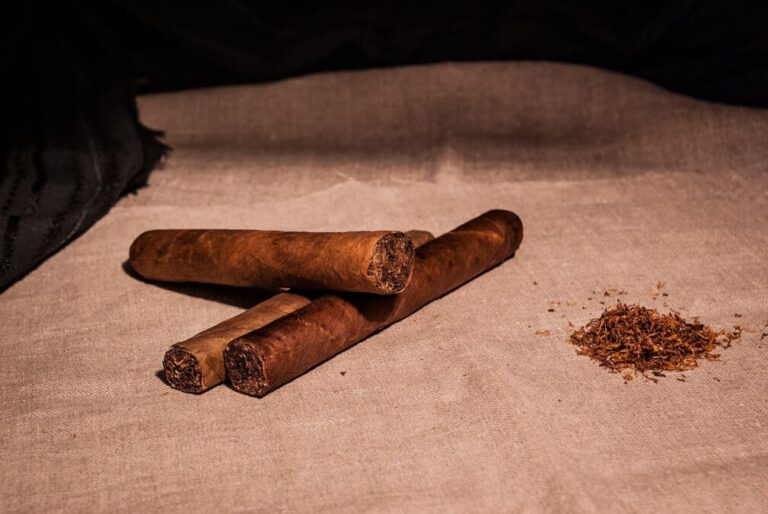
You might think that the same tobacco is used for rolling cigars or smoking a pipe. However, this is false! We will explain to you why they are actually two different tobaccos.

Cigar tobacco

As you probably already know, the tobacco used for cigars comes from regions in Central America (Cuba, Caribbean, Dominican Republic), then in South America (Honduras, Nicaragua…). The cultivation methods, the rich soil as well as the ideal climatic conditions allow to obtain unique aromas and flavors. Cigar tobacco leaves are picked when ripe, then ferment for a long time.

Cigar tobacco leaves are picked when ripe, then ferment for a long time. Then, they are rolled whole for premium cigars. Regarding the slightly more accessible scrolls, it is possible to use chopped tobacco.

In any case, the tobacco of cigars will continue to age and give even more complex aromas when tasted. Indeed, even rolled, cigars are normally stored at optimum temperatures and humidity to allow all flavors to be retained.

Pipe tobacco

Opt for a tobacco pouch to keep your tobacco is an effective solution. Already dry, it does not need to be maintained at a particular humidity level.

The tobacco used for pipe smoking comes from several regions around the world. The two main ones are Turkey and North America. Then, it is divided into two categories: aromatic and non-aromatic. The former is sweeter in taste and is often supplemented with special flavors such as chocolate, rum, cherry or vanilla. As for the non-aromatic, it is more woody or earthy.

Pipe tobacco is actually a blend of different tobaccos, typically Virginia, Cavendish, Latakia, Oriental, Perique, and Burley. It is generally less intense and less racy than that used for cigars.

Comment Below About Pipe or cigar tobacco: what’s the difference? Below ..

Cannabis legalization project fails in Israel

A bill to legalize cannabis in Israel was stopped dead in the Knesset, the Hebrew state parliament, due to opposition from lawmakers in the Ra’am party.

Sharren Haskel, the New Hope Party MP behind the proposal, hoped to get it through in a snap vote, as many opposition MPs were not present at the time. They nevertheless returned quickly to vote against the law.

The vote fell 52-55 after MPs Ra’am Walid Taha and Mazen Ghanaim voted against the law along with opposition parties.

Previously, a vote on the bill had been postponed due to opposition from the Ra’am, who asked for more time to consider how the legalization of cannabis would be received among its supporters in the Arab community. The coalition holds a very slim majority in the Knesset, with limited ability to push forward legislation without Ra’am’s backing.

After the failed vote on Wednesday, Sharren Haskel said she introduced the law to keep a campaign pledge to legalize cannabis within three months of taking office.

“Even though I knew the bill would be defeated, I decided to bring it up,” said Sharren Haskel.

She criticized the Likud party, from which she left last December, for not supporting the bill. His deputies in principle support such an approach, but have ruled out any cooperation with the coalition of which he is not part.

“But you prefer personal political considerations to the public interest and to a law that you yourself deem necessary. You have obtained a small political victory, but you have caused a great injustice, ”she said in a statement.

Last year, when Haskel was still a Likud MP, the party voted to legalize cannabis. The Knesset has since been dissolved and new elections have been called before two bills can pass the three plenary readings needed to become law.

Sharren Haskel said she would continue to try to advance legalization “by any legal means at my disposal, whether parliamentary or extra-parliamentary,” she added.

The bill initiated by Sharren Haskel would allow Israeli adults to own up to 50 grams of cannabis and grow up to 15 plants for their personal use. Anyone possessing a quantity of cannabis greater than this limit is liable to a fine of 2,000 NIS (€ 520).

Consumption of marijuana in public will remain prohibited, with violators liable to a fine of 500 NIS (€ 130).

What is the dress code for smoking cigars?

0

Savoring a cigar is a moment suspended in time. And some people impose a dress code to fit perfectly with this privileged moment. And you ? What type of cigar smoker are you?

Black and white certainly

The fashion for smoking a cigar in a tuxedo and tie or bow tie comes straight from the UK and dates back to the Victorian era. The volutes being a sign of refinement, it was also necessary to do them honor by being dressed for the occasion.

This trend continues to this day. Many known places require correct dress required to come and consume its stems. The tuxedo is therefore the favorite outfit of many smokers: the suit remains the dress code number 1 which is accompanied bya choice of cigar accessories very large.

The plaid shirt

Besides the entrepreneurial style, many hipsters also smoke cigars. Dress is more casual here. Jeans and a plaid shirt provide flawless everyday comfort. However, the cigars remain of good quality and we discuss just as well volutes around a high-end spirit.

Beards, tattoos and silver rings complete the range of this type of no less seasoned smoker. Pleasure above all: smoking a cigar is a moment of your own, during which you don’t bother with a particular dress code.

Chinos and jacket

It’s not just hipsters or businessmen who smoke cigars. The dandies too! This is why there is also a dress code between the two styles. Less staid than the black and white costume, but more dressy than the hipster style, the dandy look also fits very well with the cigar.

It must be said that many young people are now starting to smoke cigars and their favorite outfit is that of the young worker: halfway between that of the office and that of the city.

What about women?

No, ladies, you have not been forgotten in this article. Whatever outfit you wear, you always sublimate the cigar! Tailors and shirt, little black dress or more casual outfit, it’s up to you to decide according to your mood.

Will Saint Lucia finally legalize cannabis?

After a nationwide election favorable to cannabis reform, few obstacles now stand in the way of one of the region’s most progressive cannabis reforms on the island of Saint Lucia.

While cannabis took center stage during the legislative campaign that wrapped up this week, Saint Lucia is among a growing group of Caribbean countries that have yet to pass reforms on it. cannabis.

The government has submitted in recent weeks a report on the reforms proposed by its Cannabis Commission. However, no bill has been introduced either to decriminalize possession of cannabis or to legalize medical and recreational uses. In question, an articulation difficult to find between the defenders of the adult use, those which are in favor of more lenient reforms, such as the decriminalization of the possession and the legalization of the “medical and religious use”, and those which are against any reform.

“We have worked very hard on this subject”, declared Allan Chastanet, outgoing Prime Minister, during a pre-electoral forum on July 22. “I think there is a pretty good consensus and acceptance of the medicinal side of it,” he explained, adding that the case of religious use is also “pretty much accepted by everyone. the world. The Rastafarian movement, to name but one, has always used it as part of its religious ceremonies and we must respect it in this regard ”.

The new Prime Minister, Philip Pierre, is more optimistic on the issue. His party is committed to developing “a medicinal and recreational cannabis industry,” the most progressive reform proposal in the region since Jamaica decriminalized possession of small amounts of cannabis and made the cultivation of five plants legal. home six years ago.

A promise that has so far disappointed at all levels. Andre de Caires, a former member of the country’s Cannabis Commission who has led reform advocacy on the island for more than two decades, says progress on cannabis reform has been “embarrassingly slow. “

“Five years have passed,” he added. “Yet although we have several roadmaps to work on, including a CARICOM report, our politicians have failed miserably. They have not been able to present a single bill to Parliament. “

CARICOM, or Caribbean Community, the region’s fifteen-member economic bloc, produced a report urging governments to act on cannabis reform in 2018. The CARICOM Regional Cannabis Commission has recommended cannabis downgrading as a dangerous drug in all legislation, and its reclassification as a controlled substance, citing the positive impacts on social justice, economy, health and governance that this reform could have in the Caribbean.

The most recent survey conducted on the island by Caribbean Development Research Services estimates that 51% of the population is in favor of cannabis reform, with only 38% wanting to maintain the status quo.

The future industry, whose market could reach 200 million euros, could help the island make up for losses due to the cessation of tourism since the Covid epidemic.

Vape now in the majority in the United Kingdom

0

According to the Eurobarometer 2020, the number of smokers in the UK has been falling for more than 5 years. On the other hand, the number of vapers continues to increase. After the phenomenon of vaping in France, this is how the UK and Scotland became the first vaping pioneers in Europe?

A strong campaign in favor of vaping

The UK government has always strongly encouraged the use of e-cigarettes. Many initiatives have been launched by the authorities, but the Stoptober (the month without tobacco) was the one that had the most effects. Then, the arrival of the electronic cigarette was an important lever. For 5 years, the number of smokers has continued to decline in the country, as well as in Scotland.

In 2019, around 3 million adult smokers had switched to e-cigarettes. And the health authorities are full of praise on the subject, encouraging smokers to give up tobacco in favor of vaping.

The very strict production of e-liquids on the territory ultimately reinforces the feeling of consumer confidence. Brexit itself has failed to threaten the notoriety of vaping in the country. If the trend continues, the UK could become the first country to have completely eradicated tobacco in the near future.

Vape: for a one-way ticket to tobacco

Health authorities have discovered that smokers turning to e-cigarettes hardly ever return to tobacco. According to a study conducted by 4 researchers and published in the journal Addiction, that stopping smoking is twice as important in vapers than in smokers seeking to stop their smoking altogether.

This is how vaping has become a means of encouraging smokers to slow down, then stop smoking in favor of electronic cigarettes, without a substitute. In the United Kingdom, the second largest vaping market after the United States, tobacco companies are no longer making a fortune.

Many events are also organized around vaping, such as the Vaper Expo UK, being one of the largest gatherings in Europe, bringing together no less than 300 exhibitors and attracting 20,000 visitors over just 3 days.

Canadian cannabis producers have sold less than 20% of their production since legalization

Canadian cannabis producers have sold less than 20% of their production since the country legalized cannabis in October 2018, according to an analysis by MJBizDaily.

The most recent data, which runs through 2020, implies that most of the cannabis produced from 2018 to last year was either stored or destroyed, and less than a fifth ended up in retail stores. Almost 40% of production would be stored and unsaleable.

This disconnect probably helps explain how the largest Canadian cannabis producers, who account for the bulk of the sector’s output, have together lost over CA $ 11 billion (€ 7.4 billion) in aggregate.

Different explanations

Some industry experts blame the poor quality of cannabis as the source of the shortfall. “Good products sell,” said Ian Dawkins, senior consultant with British Columbia-based Althing Consulting.

Av Singh, a grow expert at Nova Scotia-based Flemming & Singh Cannabis, believes that Canada’s largest cannabis producers lacked the know-how to produce cannabis on the scale promised to investors.

“Canadian licensed producers quickly tried to capture as much of the market as possible, often building inferior facilities that were not designed to produce quality cannabis,” said Av Singh. .

He also believes that legal constraints at the federal and provincial levels are partly to blame, having raised “obstacle after obstacle” as the new industry took off.

“Countries should legalize cannabis when governments tackle their own stigma and, preferably, the systemic racism associated with the criminalization of cannabis users,” he said.

A premium on quality

Some producers, smaller than the behemoths in the sector, however, have no problem selling their goods. The Canadian market also recorded record sales of recreational cannabis in May.

“Companies that are successful in this area don’t destroy excess inventory,” said Ian Dawkins, consultant at Althing Consulting, based in British Columbia. “If you are producing enough cannabis to have any residual stock, you have fundamentally misunderstood the market. Everything that sells comes from companies that produce products that people want, so much so that they run out of stock as soon as they come out. “

Billions of losses

After selling less than 20% of the cannabis produced between 2018 and 2020, many of the larger greenhouses that drove cannabis stock prices up during the 2018-19 stock market explosion have been sold for pennies.

Canopy Growth’s Tweed joint venture in British Columbia is one example. After purchasing two greenhouses for over C $ 644 million, Canopy ended up reselling them for only C $ 40.6 million.

The two companies that closed the most facilities, Alberta-headquartered Aurora Cannabis and Ontario-headquartered Canopy Growth, also recorded the largest losses. Canopy has lost CA $ 3.8 billion since its inception. Aurora recorded a deficit of C $ 4.1 billion. Neither company has ever declared a profit.

The Zippo car: the marketing star mobile product of the 1950s

0

In order to develop, promote and introduce its brand to Americans in the 20th century, the Zippo brand has decided to opt for a rather original campaign, since it is rarely used. Indeed, the famous torch lighter brand decides to transform a car in its effigy, a car that will travel through the American states one after the other over a predefined period. So the car in the colors and the shape of the iconic Zippo lighter began his journey in 1940. A journey that ended in the early 1950s.

What are “product-mobiles”?

The fact of transforming a vehicle for the promotion of its company or its brand makes it possible to obtain the title of “product-mobile” on this one. Product-mobile offers many advantages, but there are also some disadvantages. The first advantage is the enormous publicity stunt that can be drawn from it when the main disadvantage is rather at the economic level. Indeed, the cost of the purchase of the car, its transformation, transport (gasoline) and potential repairs can be very important.

The very first Zippo car

It was towards the end of the 1940s that the lighter brand Zippo decided to embark on the “mobile-product” adventure. She decides to buy a 1947 Chrysler Saratogaa for $ 2,014 and then Mr. Blaisdell (the founder of the company) transforms it in the image of his brand for about $ 25,000. From 1940 until around 1950, the car traveled through 48 states in the United States. However, in the early 1950s many repairs had to be done on the car so that it could continue its journey. The costs turning out to be too high, the brand decides to leave the project aside. A project that will be resumed at the end of the 90s.

The Jeep Zippo, a new face for the brand

Following the success of the Zippo 1 and 2 car, the famous lighter brand continues its momentum by creating a new vehicle transformation in its image, this time on a Jeep. This all-terrain monster is presented for the first time in 2011 and combines power with design. The main objective of the Jeep Zippo is to travel and attend a large number of events (musical, etc.) in order to promote the entire range of the brand. As with other vehicles like Zippo, you can see them in person at the Zippo / Case Museum in Bradfort, PA.

Comment Below About The Zippo car: the mobile product marketing star of the 1950s Below ..

Launch of an initiative to consolidate the global hemp industry

Organizations around the world are joining together to form an international association to defend the interests of the hemp industry.

The new body, which has yet to be named, will work to set the industry’s development priorities and formally represent hemp stakeholders to global intergovernmental agencies, with the primary goal of getting hemp phased out. and hemp extracts from the 1961 United Nations Single Convention on Narcotic Drugs, said Daniel Kruse, president of the European Industrial Hemp Association (EIHA) and one of the initiators of this global effort.

The group intends to collaborate with the World Health Organization, the United Nations Committee on Narcotic Drugs, the Organization for Economic Co-operation and Development, and the Food and Agriculture Organization of the United Nations ( FAO) on issues related to the agency’s Codex Alimentarius, internationally recognized standards for food production and safety.

The association will also work on environmental issues and represent the hemp industry on the Intergovernmental Panel on Climate Change, which reports to the United Nations Environment Program and the World Meteorological Organization.

Defend hemp

The new organization will act as “a representative of a diverse and robust hemp industry that benefits all stakeholders in the value chain,” according to a launch document that outlines the group’s mission.

“This international association can foster engagement in multilateral relations, advance the agenda of industry, statistical agendas, partnerships, trade and global regulation,” said Daniel Kruse. “It will improve engagement of the hemp industry and benefit everyone, globally and nationally, as a result. “

A wide range of issues and challenges could also be addressed by the new association, including the potential of hemp to mitigate climate change or its participation in sustainable development, Kruse said.

Advocacy, co-creation

“There is a compelling need to develop a new international hemp organization to enable industries around the world to create a single voice,” said Ted Haney, president and CEO of the Canadian Hemp Trade Alliance, another of the key organizers. “The new organization will also create a place where players in the hemp industry can cooperate, coordinate, share information, advocate and co-create. “

Product and process standards, crop protection, standards for maximum chemical residue levels, seed registration standards and international standards for maximum THC levels for hemp flowers and finished products are among the many pressing issues identified by the initiative.

Kruse said the new global association also plans to create a parallel technical association that will publish an international hemp research journal and create a peer review network. This would fill a current gap, which is that research on hemp and its multiple applications is not compiled in an exhaustive manner, Kruse said.

Representative organizations

“The organizations coming together to form this new global initiative are made up of some of the most experienced and high-level professionals in the industry,” said Lorenzo Rolim da Silva, president of the Latin American Industrial Hemp Association.

“Our goal is to create a world where hemp is truly integrated into multiple other industries and agriculture all over the world,” said Rolim da Silva.

“We look forward to joining this visionary mission to consolidate and strengthen cooperation for the development of the hemp industry globally,” said Anar Artur of the Mongolian Hemp Association. “Mongolian farmers and manufacturers are actively showing their interest and joining our local association. They are aware of the future of hemp. We welcome hemp entrepreneurs to Mongolia. “

The working group behind the project includes representatives of:

Canadian Hemp Trade Alliance; Mongolian Hemp Association; Australian Hemp Association; European Industrial Hemp Association; Hokkaido Industrial Hemp Association; China Hemp Alliance; Latin-American Industrial Hemp Association; Friends of Hemp (South Africa); Chamber of Industrial Hemp of Paraguay (CCIP); Uttarakhand Hemp Association (India); and Indian Industrial Hemp Association.

And for the United States: American Trade Association for Cannabis and Hemp; Texas Hemp Growers Association; Oregon Hemp Association; National Hemp Association; Hemp Industries Association; National Industrial Hemp Council; Kentucky Hemp Industries Association; Hemp Feed Coalition.

Morocco: legalization of medical cannabis officially promulgated

Law 13.21 relating to the legalization of the legal use of cannabis for medical and industrial purposes entered into force in Morocco after its publication in the Official Bulletin of July 22.

This text was approved last May by the House of Representatives by a majority of 119 votes in favor against 48 votes, before being also approved by the House of Councilors.

This law carried by the Ministry of the Interior aims to regulate activities related to the cultivation of cannabis, its production, manufacture, transport, marketing as well as its export and import for medical and industrial purposes, while being subject to authorizations exclusively issued by a specialized agency.

Promote local industry

When the bill was presented to the Chamber of Advisors, Abdelouafi Laftit, the Minister of the Interior, recalled that this text opened up prospects for development for the benefit of the population of the areas affected by the illicit cultivation of cannabis.

He also indicated that the Moroccan interior ministry carried out field studies which demonstrated the catastrophic effects of illicit cannabis cultivation on the health of citizens and soil pollution due to deforestation and overexploitation of the water table. phreatic. Referring to the positive impact of the bill on the national economy in general and local development in particular, the minister said that these studies revealed that Morocco had strong potential allowing it to position itself on the world markets for this plant. , which are experiencing significant growth rates.

Drafted in accordance with the Kingdom’s international commitments, Bill 13.21 aims to submit all activities related to the cultivation, production, processing, transport, marketing, export and import of cannabis medical, hemp and their products to a system of authorizations and licenses, favoring local actors, through a national regulatory agency.

The legalization of medical cannabis in Morocco will also allow farmers to join agricultural cooperatives that will supply cannabis to manufacturing and exporting companies.