Many smoking bans abound in public places. However, are these prohibitions really legal? We did our little investigation and here’s what it says.
Laws that evolve
The reform of January 10, 1991 (Evin law) raised a debate in 2006. It emerged that in French law, no law provided for the prohibition of smoking in open public spaces, with the exception of station platforms and high school, college and school courses.
However, since 2006, local directives have come to thwart the right of smokers in open public spaces. Indeed, in the absence of laws, it is then the municipalities which may or may not impose a restriction on smoking in so-called open places. Consequently, from one city to another, the bans may change.
Random bans depending on the city
You will understand, depending on the city you are in, you may or may not be able to smoke your cigarette in a park. For example, since 2018, if you are from Strasbourg or just passing through, you are not allowed to smoke in the city’s parks and gardens, even with a pocket ashtray. Since June 2019, Paris has banned smokers in no less than 52 gardens. Lyon has been groping it since 2020 by banning smoking in only one park on an experimental basis, and this over 3 years. In Marseille, 3 of the 20 beaches are prohibited for smokers.
Any breach of these rules is punishable by fine. The legality of these orders is tendentious, but legal despite everything.
Sanctions at the discretion of the municipalities
Normally, smoking bans in parks or beaches must be posted in the public place concerned. Some town halls also mention this information on their website. However, it can happen that tourists are not aware of these prohibitions for various reasons. How to differentiate a distracted person from a recalcitrant and recidivist citizen? This question sometimes generates inequalities.
Inequalities which are also visible on the sanctions: a simple warning in Lyon against a 38 euros fine in Paris …
The decriminalization of cannabis went into effect in Louisiana last Sunday. Democratic Governor John Bell Edwards signed the law in June, and he stressed that it was “not a decision. […] taken lightly, ”but acknowledged that criminalization has had significant consequences for families and taxpayers.
Under the new law, possession of up to 14 grams of cannabis is now punishable by a fine of $ 100, without threat of jail time. The governor opposed defining this policy as “decriminalization”, even though technically it is.
“When I saw two city council members from my hometown of Shreveport – a Tory and a Progressive – unite to decriminalize personal use marijuana possession, I knew it was time to push for this reform. at the state level, ”said Cédric Glover, sponsor of the bill. “The criminalization of marijuana possession is detrimental to the people of Louisiana in many ways, but it is especially so for black and brown communities, low income individuals and youth. My fervent hope is that this new law will finally bring some relief and a sense of freedom to these communities. “
The pressure group Louisiana Progress, who accompanied MP Glover to push through decriminalization, hopes lawmakers shouldn’t stop at simple decriminalization and pass broader legalization of cannabis in an upcoming session.
“The decriminalization of cannabis is an important victory for criminal justice reform in Louisiana, especially for traditionally marginalized communities that have been disproportionately criminalized under prohibition,” the group said. “But we must continue to fight to end cannabis prohibition. This could be hugely beneficial, including bringing dozens of new small businesses and hundreds, if not thousands, of new jobs to Louisiana. “
The legislation marks a notable expansion of the state’s limited medical cannabis program. As it is, patients can vaporize cannabis preparations using a “metered dose inhaler”, but cannot access the entire flower and smoking is prohibited.
Sativex, a THC: CBD oral spray, is going to be tested for an upcoming study to treat an aggressive type of cancer known as glioblastoma.
The Brain Tumor Charity, an organization that seeks to increase research to find cures for brain tumors, is seeking £ 450,000 to fund the Sativex trial, which will be led by Professor Susan Short of the University of Leeds.
“We believe that Sativex can kill glioblastoma tumor cells, and that it can be particularly effective when given with chemotherapy with temozolomide,” she said. “It could therefore enhance the effects of chemotherapy by stopping the growth of these tumors, which would allow patients to live longer.” This is what we want to test in this study ”.
The study will include the recruitment of 232 patients in early 2022, chosen from around 15 different hospitals and cancer centers in the UK. To study the effectiveness of Sativex, researchers will give two-thirds of patients Sativex, and the remaining third a placebo.
Approved by the National Health Service (NHS) from the UK in 2009, Sativex contains both THC and CBD. It has been authorized in France since 2013, for patients with multiple sclerosis, but has never been distributed in pharmacies for lack of agreement on the price of the spray between the distributor and the French authorities. The drug is known for its ability to reduce pain, inflammation, and anxiety.
According to Guardian, around 2,200 people are diagnosed with glioblastoma each year in the UK. It is an aggressive cancer that is difficult to treat successfully and almost always comes back, even if other treatments such as surgery, radiation therapy or chemotherapy are used. Typically, patients who are diagnosed do not live longer than 18 months.
“We hope this trial may pave the way for a new, long-awaited lifeline that could provide glioblastoma patients with precious additional months to live and create memories with loved ones,” said David Jenkinson, Acting CEO of the Brain Tumor Charity. “We know there is significant interest in our community on the potential activity of cannabinoids in the treatment of glioblastoma, and we are truly delighted that this first global trial here in the UK can help accelerate those responses. “
The father of Tom Daley’s 10-meter synchronized diving Olympian who won a gold medal in Tokyo last week, has died of a brain tumor. Mr. Daley recently made a video touting the potential of this trial and what it could mean for those who are currently in pain, and their families.
“We are reaching out to all of you, individual heroes and supporters, to help fund this groundbreaking trial,” he said in the video. “When you donate, you receive a link for your badge of honor on social media. Join our community; spread the word and help us pave the way to beat brain tumors. “
Sativex, a potential savior
Glioblastoma is considered a common, devastating condition for patients like Stephen Lee. He participated in an early phase of the trial which was conducted in 2015.
“My diagnosis was very sudden and was one of those days you never forget. Having had to leave work early with a severe headache and a throbbing pain in my right eye, my wife insisted that we go straight to the hospital after what my brother had been through, ”he said. at BBC News.
He is not sure whether or not he received Sativex or a placebo at the time, but he is eager to see what the outcome will be. “This new trial is very important because it will give people hope that there may be life beyond the diagnosis of glioblastoma, and that there are other treatments being tried to help them live.” their life. “
Between today and August 10, donations for this trial will be collected by The Big Give. “If the result of this trial is positive, it could pave the way for a new treatment option that would allow people with recurrent glioblastoma to spend precious time with their loved ones,” wrote The Brain Tumor Charity on its website.
In the series of marketing strategies on the wrong foot, it is the turn of Philip Morris to shine. Indeed, the brand now encourages adult smokers to quit smoking. Explanations of this rather unexpected announcement.
Towards a “smoke-free future”
Each year, the WHO reports that more than 8 million people worldwide die from tobacco-related illnesses. Tobacco makes you addicted, it’s undeniable. 80% live in a poor or developing country. The organization therefore demonstrates that “tobacco is one of the main causes of death, disease and impoverishment”.
Philip Morris is the first tobacco company to start the ball rolling by advocating a “smoke-free future”, notably through electronic cigarettes and tobacco vaporizers. Philip Morris indicates that this transformation of the tobacco industry is also part of a lasting and profound transformation in favor of the environment. In fact, the company plans to be carbon neutral by 2030.
Like an anti-tobacco association slogan, the president therefore evokes a “smoke-free future”, but with alternatives considered healthier and innovative. Philip Morris claims to cover 6 of the 17 Sustainable Development Goals.
Allowing teens to start smoking
Behind this surprising message, however, Philip Morris is addressing a wider audience, since they are younger! Indeed, the tobacco company offers products directly to adolescents and does not hide it. To do this, Philip Morris even tied a partnership with a 21-year-old influencer for the promotion of his IQOS electronic cigarettes, before being pinned and then stopped.
On the one hand, Philip Morris invites adult smokers to stop their tobacco consumption in favor of e-cigarettes and on the other, the company encourages young people (smokers or not) to discover the pleasures of vaping. A position that is not unanimous. As a reminder, according to the company’s press release, the products “are not without risk”, but “are a better choice than to continue to smoke”.
From September 11 to 12, the first edition of the CB Expo, Cannabis Business Expo and Conference will be held in Zurich, organized by the Cannatrade team.
The largest cannabis companies from Switzerland, other European and overseas countries will present in StageOne – the all-modern exhibition hall – their activities relating to CBD, medical cannabis, cultivation, accessories and services.
Exhibitors and trade visitors will meet for informal exchanges in the Network Area, the network space, while renowned speakers will present the latest findings in research, policy, product development and trade in the world. conference space.
Don’t wait to register! Benefit from a special reduction on your registration by registering here with the code “newsweed-cb-expo-2021”:
We hope you will be in Zurich on September 11 and 12, 2021 to experience this moment!
The cannabis world is full of acronyms. A myriad of cannabinoids are found naturally in the cannabis plant. If we often hear about THC or CBD, CBDA or more precisely, cannabidiolic acid, is the subject of much speculation. Overview of this substance extracted from cannabis plants.
CBDA, the acid form of cannabidiol
Similar to the acronym CBD, CBDA is by definition the acidic form of cannabidiol. This is the original form of CBD. This substance is found in high quantities in the trichomes of the plant. These are small vesicles that contain the resin, either cannabinoids, flavonoids or terpenes. These elements, naturally present in the plant, are responsible for the effects and aromas of the plant.
Over time, the decarboxylation process turns CBDA into CBD. Scientists have thus created the following formula to designate this process which occurs naturally: CBDA + heat = CBD + carbon dioxide (CO2). For your information, this phenomenon occurs when the plant is dried out. The light and heat of the sun are two main factors that cause this condition. So what about legalization?
Legalization around CBDA
At present, the French and European legislation in force in the field agree more or less on one point. Only THC, also called tetrahydrocannabinol, is prohibited by law. This molecule, extracted from the cannabis plant, has psychotropic effects on the consumer. After ingestion of this molecule, high effects of cannabis can appear depending on the amount ingested and the metabolism of the person.
Reactions can vary from one individual to another. Unlike CBD, THC is thus classified in the category of narcotics because of its effects responsible for altering the consciousness of the consumer. In the eyes of the law, CBDA is considered the same as CBD. Thus, this molecule is legal and tolerated by the law in force. However, the marketing of the neutral form of this cannabinoid is not yet specified in the legislation. A certain legal vagueness still remains in the field.
What are the differences between CBDA and CBD?
First of all, you should know that the mode of consumption by combustion of CBDA in CBD is strictly prohibited in France. Decarboxylation is the removal of CO2 (carbon dioxide). In this process, CBDA becomes the neutral form of CBD that we know today. Overall, CBDA can be derived from different varieties of cannabis plants, legal or not.
Along with decarboxylation, when CBGA becomes CBD, THCA becomes THC. While the neutral form of cannabidiol is not known to the general public, it nevertheless brings many virtues for the body. Check out some of the differences that remain between the two shapes:
If we compare CBDA to CBD, the latter acts more quickly after absorption of the molecule.
However, you should also know that cannabidiol is an effective molecule to fight against signals related to a state of pronounced stress or a depressive state. According to the conclusions of certain studies carried out by researchers-scientists, cannabidiol is a cannabinoid that targets various mechanisms that cause stress and anxiety. These mechanisms have the role of regulating serotonin, also known under the name “hormones of happiness” and cortisol, called “stress hormone”.
The effects of CBD are stronger, than the effects of CBDA.
According to experts in the field, CBDA acts mainly on CB sensors. These are the sensors that act on the nervous system of the endocannabinoid system (ECS). CBD, on the other hand, activates two sensors: CB1 and CB2. Here is some scientific insight into the effects of CBDA on the human body.
What are the effects of CBDA on the body?
If cannabidiol is still the subject of much research, there are currently some benefits of CBDA on the body:
From a therapeutic point of view, CBDA acid has effects on the body. This would have positive effects on pain and inflammation.
In addition, CBDA is also said to be more effective than CBD in combating stomach problems, such as vomiting or nausea.
Like CBD, CBDA helps fight stress, as well as depression. The neutral molecule of CBD would be all the more effective in combating this type of psychological disorder. This would bind to 5-HT1A receptors more easily than CBD.
In short, cannabidiol is still attracting the attention of research scientists, always seeking to discover the secrets of this molecule as complex as it is intriguing.
Regular Newsweed consumers will have noticed, we’ve been on hiatus for the past few weeks. But since the news is not waiting for us, here is a recap of what has happened in the meantime on the planet Cannabis.
France
During our absence, France legalized cannabis. Oops, no. She actually came back in 1960 with a communication campaign from the Ministry of the Interior worthy of Nancy Reagan’s “Say no to drugs”, which claims to convince those who are convinced of the good work done by Place Beauvau. The campaign entitled “Behind the smoke”, laid by a Publicis lacking inspiration in what looks like an almost copy-paste of the name of the Netflix documentary “Behind our smoke screens”, intends to put on the back of cannabis the school failure, domestic accidents and insecurity. The budget, not communicated, was probably insufficient to add global warming, the sinking of the Amoco Cadiz and the leak of photos of Benjamin Griveaux.
The ANSM has announced the creation of a temporary scientific committee on the cultivation of medical cannabis in France: “The opinion of this CST should relate to the THC and CBD contents of plants or to the variety of plants used. It will also have to define the methods of traceability of the plants until the harvest of the flowers, the expected pharmaceutical forms of medicinal products based on cannabis, the pharmaceutical quality criteria as well as the necessary controls for the cultivation of medical cannabis in France ”. If the first meetings will take place in September 2021, the conclusions are already known since European standards prevail and the model adopted should be close to the German model which itself was based on the Canadian model, with EU-GMP standards. in addition.
Aurora / Etypharm delivered its first medical cannabis flowers to France in the form of 3 varieties:
Aurora 20/1: LA Confidential strain
Aurora 8/8: Equiposa variety
Aurora 1/12: Cannatonic variety
The ANSM has not communicated on the number of patients having been delivered these flowers.
However, let’s be happy, DelleD, one of the most advanced French companies on the subject of medical cannabis (and whom we interviewed previously) obtained funding from BPI France and the Ile-de-France region after raising 3 million euros in 2020. It plans to launch a first clinical trial in 2022, which could easily exceed the number of patients included so far in the French experiment.
National Police cling to controlling CBD stores as if they were selling death. The new memo recognizes, however, that the many searches carried out since 2018 were undue in light of the Kanavape case law, French law and European law. Fortunately, shops can still be prosecuted for inciting the illicit use of narcotics, a very practical offense as it is vague.
The planets are lining up in Germany for an upcoming legalization of cannabis. Erwin Rueddel, member of the Bundestag (CDU) and chairman of his committee on health, thinks in particular possible a legal experiment of cannabis for adult use in #Germany “during the next legislative period”. The German commissioner in charge of the fight against drugs has also assured that she wants to relax the legislation on the possession of cannabis, for example by allowing the possession of less than 6 grams of cannabis throughout Germany.
Cookies, which will soon be legally distributed in Canada, is gaining another foothold in Europe thanks to a cultivation partnership with Flowr Corporation at their Portuguese site. European patients will therefore soon be able to access one of the most popular cannabis brands in the world.
Switzerland continues its process of facilitating access to medical cannabis. It is now the Federal Council which has validated the decision.
An Italian study finds that oral CBD sprays are associated with improvements in patients with refractory migraines.
The Dutch Ministry of Health has awarded a grant of € 1.4 million for research into the effectiveness of medicinal cannabis in children with treatment-resistant epilepsy. Research will investigate whether medical cannabis reduces the frequency and / or severity of epileptic seizures in children.
British CBD brand Cannaray has launched a pretty ad campaign against a backdrop of revolution.
International
South Africa has unveiled its plan to legalize cannabis. The estimated turnover is around € 1.6 billion and could create up to 25,000 jobs while attracting foreign investment.
Tilray bought out part of MedMen’s debt, which could be converted into equity when the United States legalizes cannabis.
Buzzfeed launched its cannabis brand Goodful in partnership with California cannabis producer NUG. The site editor realized that part of his audience was more than interested in cannabis topics. Unfortunately for us, the company closed its French offices in 2018, so we avoided CBD Buzzfeed.
The U.S. CBD market is projected to reach $ 2.8 billion per year by 2028, according to projections by Grand View Research.
Seth Rogen has decided to end his partnership with Canopy Growth for the distribution of Houseplant products in Canada. While Houseplant drinks have become one of the best-selling products in Canada, the quality of its flowers has left consumers hungry for more than what is grown and smoked in the United States. Rogen, however, plans to return to Canada as soon as he finds a grower Canadian capable of ensuring a quality up to what is made in the US.
Still in Canada, legalization has not led more adolescents to use cannabis. The argument of “what example would we give to young people”, often rehashed in France by prominent alcohol users, therefore seems surprisingly wrong.
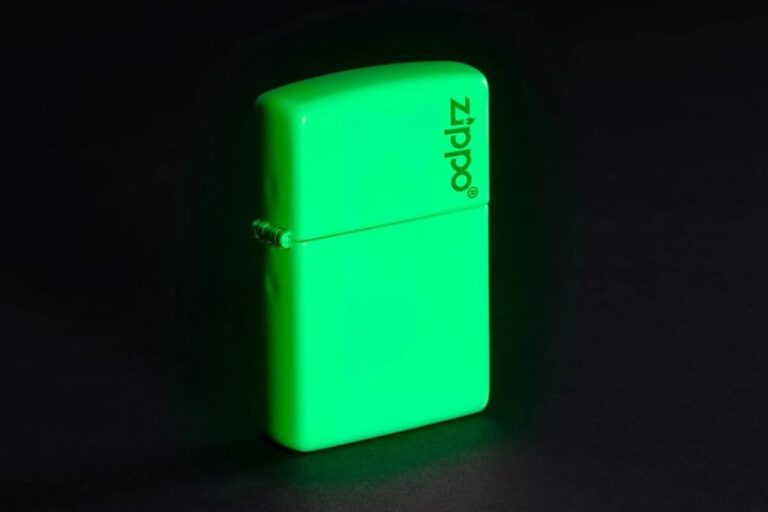
The American brand known for its unique lighters: Zippo, makes new ranges of products available to consumers and collectors every year. Over time, the Zippo printing techniques become very numerous. In this article, we will see together the big novelty of 2021: the 540 Color marking and its combination with the finish Zippo Glow in the Dark. An association for a rendering of great originality and which, we are sure, will appeal to a large number of you.
What is the 540 Color marking?
Unlike the 360 ° laser printing method which allows the lighter to be covered on 4 sides, the 540 Color marking, meanwhile, allows the brand’s new Zippos to be marked on all its sides in color to leave no part of patterns empty lighter. There are only the hinges and the base of the lighter which are not affected by this marking for various reasons (easier verification of the date on the base, etc.), The Zippo brand called on 2 street artists for the creation of unique copies. The two world famous artists are: Tristan Eaton and Marija Tiurina.
The Glow-in-the-Dark-Green finish
The “Glow-in-the-Dark-Green” finish, as the name suggests, allows your lighter to glow (green color) in the night after exposing it to a bright light for a short time. This is a new way to stand out from the crowd. What is particularly interesting is that you can therefore be sure to find your Zippo! This finish does not affect the quality of the designs and simply allows consumers to have a more original Zippo lighter that will surprise those around them.
The combination of 540 Color marking and Glow-in-the-Dark-Green finish
Now that you have explained to you what this marking and finishing consisted of, it is time to talk about their association with the Zippo brand. Thanks to these new techniques, Zippo was able to design Zippo lighters with patterns present on the entire surface of the lighters and which, in addition to that, light up in the dark in a green color. The green color of the lighter in the dark also makes it possible to highlight the contours of the lighter and to highlight the design of this one in another light. Discover the different products that have this unique association now!
Comment Below About New, your Zippo shines in the night Below ..
Being the richest country in the world inevitably has some advantages. Luxembourg has just spent 3 million euros for 30 kilograms of medical cannabis. If you take out your calculator, and apply a good old cross product, you get the tidy sum of 100 euros per gram.
“The chosen offer is that of Canopy Growth Germany in collaboration with Tilray Germany. The products of both suppliers come from Portugal and Canada ”, indicates the Luxembourg Minister of Health, in a written response addressed to a parliamentarian. Paulette Lenert also specifies that the Grand Duchy will receive 28.5 kilograms of cannabis flowers at a ratio THC 18% / CBD <1%, and 2.25 kilograms of weed balanced in THC / CBD.
This delivery is welcome in Luxembourg. The country has experienced a shortage of medical cannabis since March. The 700 or so patients treated with the flowers will soon be able to resume their treatment. This particularly concerns those who suffer from serious illnesses with chronic pain, cancer, or multiple sclerosis.
” Spending a lot “
But this supply comes at a high price. Very strong. 100 euros per gram is unheard of. “It must be a mistake, it’s not possible!, reacts hot Bertrand Rambaud, the representative of the Francophone Union for cannabinoids in medicine. Typically, wholesale purchase prices range from $ 2 to $ 3 per gram. Then on resale, it is around 7 euros. When I went to the Netherlands, the Bedrocan was sold at around 7.20 euros per gram. “
Luxembourgers also seem confused by this purchase price. In the journal comment space The essential, many Internet users share their surprise: “100 euros per gram ?! But it’s big nonsense ”,“ Luxembourg is known to throw money down the drain ”, “There must be an error, or then an intermediary who takes a good commission in the process.”
The government will have no trouble paying so much. Luxembourg is the richest country in the world, in terms of wealth per capita, according to the latest figures from the World Bank. But now, we will have to see how much Luxembourg medical cannabis will sell for. “If they buy it at 100 euros per gram, they are not going to resell it at 10 euros”, prognosis Bertrand Rambaud.
44 votes in favor, zero against. The Panamanian deputies say a big “yes”, this Monday, to the law 153 legalizing medical cannabis. The text, entitled “For a day without pain”, must now be signed by the center-left president, Laurentino Cortizo. If it enacts the law, Panama will become the first country in Central America to allow medical cannabis.
It is the end of a legislative marathon, since it is the third vote in five years on this same bill. “Today is relief for patients, because they deserve it! “, rejoices the President of the National Assembly of Panama, Crispiano Adames. This law will particularly concern people suffering from multiple sclerosis, epilepsy or nausea due to chemotherapy.
Medicinal cannabis will only be sold in pharmacies. These must first receive the stamp of the Minister of Health. Establishments will also have to undergo several tests to ensure that they meet health standards.
No flowers allowed
Panama is putting in place several safeguards to prevent medical cannabis from being diverted for recreational purposes. Example: pharmacies will not be able to sell flowers, but only capsules or liquid extracts such as oils. Also, patients will be prohibited from practicing self-cultivation.
In this rather rich country, but very unequal, many patients did not have access to care. Fundacion Luces, for example, estimates that 40 to 50% of the 50,000 people with epilepsy have no medicine available.