Home Blog Page 54

Rue de la Boulette: French hash experts

If you have tasted a French CBD resin this year, there is a good chance that it has passed through the hands of Rue de la Boulette. These enthusiasts, craftsmen of French hemp hash, quickly became a benchmark and supply a number of French and European shops and brands.

Visit of their exploitation in Aveyron, between softwood bushes and extractors, destined for the best legal hash in Europe.

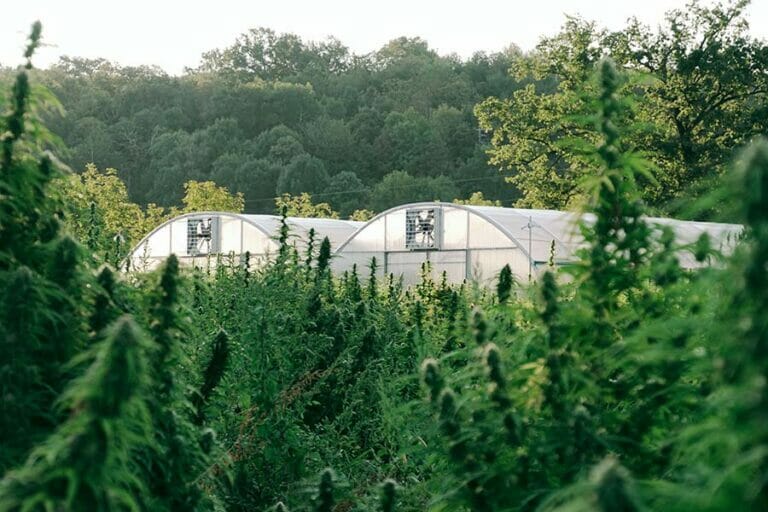
The Cannabis plants of Rue de la Boulette

The Cannabis plants of Rue de la Boulette

A team of enthusiasts

The Rue de la Boulette brand was created in 2019 by 3 cannabis enthusiasts. Housed in the hollow of the Aveyron, in a climate conducive to culture outdoors hemp, the young team of enthusiasts cultivates several hectares of hemp in greenhouses and in the open air, the harvest of which is only used to extract the trichomes.

hemp plant alignmenthemp plant alignment

Aerial photo of one of their outdoor plots

The well-aligned rows of hemp are maintained with great care by the production team to develop flowering plants which, once mature, express the full potential of cannabinoid and aromatic active ingredients, all with varieties from the European legal catalog hemp.

A hash mark 2.0

The Rue de la Boulette team includes qualified engineers who have developed their own range of tailor-made machines: harvesting, extraction and refining of trichomes – these resinous glands which contain the precious active ingredients of hemp (CBD, CBG, terpenes, etc.) , raw material for the resins they offer in their catalogue.

Rotary sieves (right), and Ice-O-Lator / Bubble Hash Extractors, the heart of RDLB productionRotary sieves (right), and Ice-O-Lator / Bubble Hash Extractors, the heart of RDLB production

Rotary sieves (right), and Ice-O-Lator / Bubble Hash Extractors, the heart of RDLB production

Hashmaker, an exceptional profession

The young team strives to produce high quality cannabis resin, mastering the different manufacturing methods, such as dry and wet sieving on frozen plants at harvest, to ensure the quality and purity of the product. finished. These hashmakers also do a lot of work selecting the best Cannabis Sativa.L phenotypes to obtain a top quality resin.

This craft requires in-depth knowledge of the different properties of hemp, CBD or CBG, the terpenes – essential oils produced by the flowers – as well as painstaking attention to detail to ensure a consistent, high-quality end product.

RDLB expertise: quality, traceability, responsiveness

By working with materials mainly from their own production and those of French partner farmers, the RDLB team produces around ten different varieties of resins, each offering a unique experience for consumers. And of course all at -0.3% THC, respecting the legislation in force.

Each batch once produced is stored and shipped from France, they are obviously tested by a third party laboratory to check the concentration of CBD, CBG and THC before placing on the market. These results are transparently accessible on their website.

The mastery of all the processes, from the seed to the wafer, makes RDLB one of the most recognized companies, which has won the trust of consumers in this booming sector.

Some of their products

The Originals - The YellowThe Originals - The Yellow

The Originals – The Yellow

The yolk is sifted over dry plants in a negative atmosphere. The “pollen” is then placed in a vegetable cellophane bag and lightly pressed to keep its foamy texture. A classic with light flavors of fresh citrus, typical of the variety used.

The Originals - the AfghanThe Originals - the Afghan

The Originals – the Afghan

This traditional CBD Hash is one of the resins with the highest concentration of active ingredients at Rue de la Boulette, made with plants harvested late, which explains its dark appearance. It is worked and laminated by hand, which gives it a soft and oily texture, with floral and spicy flavors typical of a real Afghan.

The Supremes - the filtered x3The Supremes - the filtered x3

Les Suprêmes – the filtered x3

The 3x filtered is considered one of the most high-end hashes, the extraction is carried out directly on the still fresh plant, then the resin is filtered three times using sieves of different meshes to keep only the ripest and most concentrated trichomes, while preserving the flavor profile of the living plant. Once pressed, this hash is then refined for 3 weeks under a controlled atmosphere to make it “ooze”.

So don’t wait any longer, if you are a legal cannabis professional, wholesaler or retailer, take a look at their website, and take the opportunity to work with the flagship of the fledgling French CBD industry!

Website

instagram

The DEA bans certain neo-cannabinoids

There Drug Enforcement Administration (DEA) claims that two cannabinoids that have appeared in different products sold in the United States do not meet the federal definition of legal hemp and are therefore considered illegal controlled substances.

Asked about the legal status of delta-8 THC-O and delta-9 THC-O, two acetate esters of THC, the DEA replied that the two cannabinoids “do not occur naturally in the cannabis plant and cannot be obtained only synthetically, and therefore do not meet the definition of hemp”.

“Delta-9-THCO and delta-8-THCO are tetrahydrocannabinols with chemical structures and pharmacological activities similar to those contained in the cannabis plant,” continues the letter from Terrence L. Boos, Chief of Drug & Chemical Evaluation Section from the DEA.

A new market for minor cannabinoids

Since the 2018 Farm Bill has legalized hemp containing up to 0.3% delta-9 THC on a dry weight basis, the market for natural and synthetic cannabinoids has developed in the United States and especially in states that have not yet legalized cannabis.

While there are many new cannabinoids, one of the best known is delta-8 THC, which can be produced synthetically from CBD but is also present in trace amounts in the cannabis plant. Several states have gone to great lengths to regulate this product which, unlike CBD, has intoxicating effects.

DEA officials have advised that delta-8 THC products are not controlled substances as long as they are extracted from the natural plant and not synthesized.

A federal appeals court, meanwhile, ruled last year that delta-8 is uncontrolled because the Controlled Substances Act (CSA) only explicitly talks about naturally occurring delta-9 THC and because federal law defines hemp as “any part” of the cannabis plant, including “all derivatives, extracts, [et] cannabinoids” which contains less than 0.3% delta-9 THC by weight.

What about THC-O?

The DEA analysis concluded that unlike delta-9 THC and delta-8 THC, THC-O is not a natural cannabinoid. Since it can only be produced by synthetic processes, it is federally banned. The question does not arise in France where only delta-9-THC is legal.

“While the DEA’s latest statement does not clarify the legal status of all new hemp-derived cannabinoids, it does state that the DEA believes Delta-9 THCO and Delta-8 THCO are controlled substances,” said Michelle Bodian, partner of the law firm Vicente Sederberg in Marijuana Moment.

“Hopefully Congress will take action soon to address the issue of the legality of all hemp-derived cannabinoids, so that the industry is not left with a patchwork of laws, regulations, policies and now letters. . »

Advocacy organizations like NORML have warned against the use of these lesser known and unregulated cannabinoids.

The American association believes that the regulatory patchwork and the resulting confusion for consumers and the market could be effectively resolved if the federal ban on cannabis were lifted and people had the option of using natural cannabis products. cannabis, which would suppress the demand for these synthetic neo-cannabinoids, especially in states where cannabis remains illegal.

“Whether synthetic or natural, psychoactive cannabinoids must be regulated responsibly to protect public health and safety,” Aaron Smith, CEO of the National Cannabis Industry Association (NCIA), said at Marijuana Moment.

“The only way to successfully achieve this goal is to finally end national prohibition, enact sensible regulations at the federal level, and allow state cannabis laws to continue to operate nationwide. »

Bob Marley’s former home opens cannabis dispensary

THE Bob Marley Museum of Kingston, Jamaica, former home and recording studio of the reggae legend, now has a new attraction: the Marley Natural Dispensary & Loungeaccording to proprietary information obtained by El Planteo.

Marley Natural owns the exclusive worldwide rights to the cannabis products promoted under the Bob Marley image. The brand was born out of a partnership between the Marley family and Docklight Brands. The dispensary is the first of several planned stores on the island, including the Tuff Gong Studio in Kingston.

The dispensary was approved by the Cannabis Licensing Authority of Jamaica for medical and therapeutic use, both for locals and tourists. Visitors can enjoy cannabis from the Marley Natural dispensary. The cannabis is grown locally, sold in 3.5 gram packs and pre-rolls. They also offer vape pen cartridges, as well as a range of Marley Natural accessories, such as grinders, rolling trays, bubblers, and other Marley Natural products.

“I think my dad would love to see a cannabis dispensary open at the Bob Marley Museum. When I think of how far the world has come in terms of attitude towards cannabis and the eventual recognition of the many positive qualities it has to offer, that’s exactly what my father and the Rastafari community have been saying ever since. over 40 years. He has done so much to foster positive understanding that it is right that we do this for him and his legacy,” said Stephen Marley.

The interior of the cannabis dispensary located in the former home of Bob Marley

The interior of the cannabis dispensary located in the former home of Bob Marley

One Draw Holdings, another Marley subsidiary, operates Marley Natural cannabis outlets and is the distributor of Marley Natural cannabis products in Jamaica. Docklight Brands, headquartered in Seattle, Washington, is a consumer brand company focused on cannabinoid products. It was founded by Privateer Holdings, the first private equity firm to invest exclusively in the legal cannabis sector.

Zimbabwe raises the limit of THC in hemp to 1%.

Zimbabwe drops the THC limit that characterizes industrial hemp from 0.3% to 1%, a significant change for hemp farmers in the country.

In 2018, Zimbabwe became the second nation in Africa to legalize medical cannabis. She legalized hemp the following year.

A country at the forefront

The amended bill, called Criminal Law (Codification and Reform) Amendment Bill, 2002proposes to modify section 155 of the Criminal Law (Codification and Reform) Act [Chapitre 9:23] to remove industrial hemp from the list of dangerous drugs.

“By inserting the following definition, the Bill states: “‘Industrial hemp’ means the Cannabis Sativa L plant and any part of that plant, including the seed and all derivatives, extracts, cannabinoids, isomers, acids , salts and salts of isomers, whether growing or not, with a delta-9-tetrahydrocannabinol concentration not exceeding one percent on a dry weight basis.”

An increase in the THC level will offer industrial hemp growers a greater range of Cannabis varieties to extract certain cannabinoids such as THC or CBD, but also to obtain a better quality of fibers.

Hemp cultivation is also giving new life to tobacco farms, whose production has been declining in recent years. THE Tobacco Research Board (TRB) was ordered to “reform and restructure by 2025,” to become a national center for tobacco and alternatives research, development and innovation.

The country has set itself the goal of advancing the profitability and development of agriculture in Zimbabwe. Industrial hemp was one of the crops of interest. Over the past few years, TRB has been testing and developing varieties of hemp acclimated to the climatic conditions of Zimbabwe.

Five years of medical cannabis in Zimbabwe

Zimbabwe legalized medical cannabis in 2018.

In 2019, Zimbabwe abolished the ban on cannabis cultivation, setting the stage for farmers in the country to start growing industrial hemp for export. In the same year, the country issued the first license for a medical cannabis company to begin cultivation.

In May 2022, Zimbabwean President Emmerson Mnangagwa commissioned a €25 million medical cannabis farm and processing plant to be managed by Swiss Bioceuticals Limited in the Western Province of Zimbabwe.

“This milestone demonstrates the successes of my government’s engagement and re-engagement policy. It also demonstrates the confidence that Swiss companies have in our economy by continuing to invest in Zimbabwe. I extend my heartfelt congratulations to Swiss Bioceuticals Limited for this timely investment in the medicinal cannabis farm, processing plant and value chain, worth US$27 million,” Mr. Mnangagwa said during of the factory announcement.

The Zimbabwe Medicines Control Authority said on July 26, 2022 that it would begin accepting applications from cannabis and hemp producers, manufacturers, importers, exporters and retail pharmacists, in a shift in focus from tobacco. .

3 good reasons to opt for Swiss CBD

CBD or cannabidiol is an increasingly commercialized cannabinoid. This craze for this substance is explained by the fact that it has multiple virtues. On the market, you will find different qualities. Swiss CBD is one of the best. Discover in this article good reasons to opt for this quality of cannabidiol.

Swiss CBD: a natural and organic substance

One of the main reasons why the cbd switzerland is a substance to adopt is that it is a 100% natural product. Indeed, Swiss producers do not use any chemical fertilizers, fertilizers or synthetic pesticides during production. This guarantees optimum quality of the harvested herbs.

In the composition of cannabis plants CBD Switzerland, there is no chemical residue. Growers of these plants grow under controlled conditions indoors, in outdoor fields and in greenhouses. All this takes place entirely biologically. Therefore, all Swiss CBD products are of high quality.

The plants of cannabis grown in Switzerland are tasty. They are selected and fed in an artisanal way. In this country, large means and innovative infrastructures are implemented to ensure the production of CBD on a large scale and to offer the best possible quality. For your cannabidiol needs, you can go to a Swiss CBD Wholesaler.

CBD Switzerland: a remedy for several ailments

The Swiss CBD makes it possible to overcome several ailments. On the one hand, this substance is a relaxant that allows consumers to relax. It thus helps the body to fight against anxiety and emotional stress. People prone to anxiety and stress can use this cannabidiol quality for guaranteed effectiveness.

On the other hand, Swiss cannabidiol has excellent pain-relieving properties. Thus, taking it allows you to better manage the pain. I’use of Swiss CBD helps reduce the intensity of pain of various kinds. It is also a natural sleeping pill that promotes sleep thanks to its relaxing properties.

By using this substance, the quality of sleep is therefore improved, thus avoiding the taking of sleeping pills. This product also makes it possible to deal with certain neurological disorders such as dystonia or epilepsy and has a strong medical potential to relieve the symptoms of schizophrenia.

Also note that Swiss CBD is effective against skin conditions. It promotes the local treatment of certain skin problems, regulates the activity of the sebaceous glands and reduces lipid synthesis. This therefore helps to prevent and treat acne, eczema, psoriasis or redness, to control breakouts and to make them disappear faster.

Availability in a variety of shapes

Another reason why it is recommended to adopt Swiss CBD is its availability in a wide variety of forms. Indeed, this hemp derivative made in Switzerland is available in the form of oil, capsules, resin, cream, infusions, cosmetics and food products.

Usually it is thecbd oil which is the most widely consumed form of Swiss cannabidiol. It is more effective because its sublingual ingestion through the mucous membranes of the tongue quickly produces the expected effects. In addition, it can be taken as it is or mixed with a dish or a drink.

THE CBD flowers are used in the form of an infusion. They can be inhaled or vaporized or incorporated into a cooking recipe. As for the CBD capsules, they are well concentrated and easily assimilated. In short, the Swiss CBD is to be adopted, because it is natural and of excellent quality. It has many health benefits and it is available in a variety of forms.

In Nebraska, patients still struggle to be heard

Nebraska senators held a hearing on a new medical cannabis legalization bill last Thursday.

The Judiciary Committee of the unicameral legislature reviewed the bill by Democratic Senator Anna Wishart, who has fought for several years to pass this reform, both through legislation and through election campaigns led by activists.

Members of the same committee also met later that afternoon to discuss separate proposals to legalize adult cannabis.

“My goal is that no family will have to flee our state to access medical cannabis for themselves or a loved one,” Ms. Wishart said in her opening remarks for the medical cannabis hearing.

“This bill is not going to fail because of a lack of compromise or thought from all of the senators and stakeholders who have worked on this,” she said. “If this bill fails, it will fail as it has in the past because of political pressure from a few people in our state who wield their power to eliminate the will of the people. »

Wishart pointed out that the legislation has already been revised since the last session to address some concerns, including eliminating provisions allowing smoking or vaping cannabis. She said she was “ready to restrict this bill further as long as it remains patient-centred”.

After lawmakers heard testimony from people who implored lawmakers to consider their stories and those of their children with serious illnesses who could benefit from cannabis, Republican State Attorney General Mike Hilgers testified in opposition to the bill.

He challenged the constitutionality of legalizing medical cannabis in conflict with federal prohibition and said there was a “federal dereliction of duty” with respect to the Justice Department’s hands-off approach to towards state cannabis programs in recent years.

Notably, when asked what his office would do if Nebraska legalized medical cannabis, he said there would be a “duty to enforce constitutional laws” — indicating that law enforcement could seek to interfere with implementation and continue to criminalize people who use cannabis regardless of the policy change, or perhaps seek to block the law from coming into effect.

A Nebraska State Patrol representative also expressed opposition to the legislation, testifying that the reform would support the illicit market and increase drunk driving incidents. He also said it would create problems for gun owners, although a lawmaker pointed out to him that a federal court had recently ruled a ban on cannabis users owning firearms unconstitutional. fire.

Legislation that has been submitted to the commission provides for a system of medical cannabis dispensaries where people could purchase and possess up to two and a half ounces (70 grams) of cannabis for medical purposes if they suffer from any of the 16 eligible illnesses including cancer, epilepsy, HIV/AIDS and chronic pain.

Canopy Growth will lay off 35% of its staff

Canopy Growth, a Canadian cannabis producer, announced it was closing its flagship grow facility in Smiths Falls, Ontario, and cutting 35% of its workforce as part of a shift to a “lean model.” assets” in Canada.

The news comes after it reported a net loss of more than $260 million in its most recent quarter. It also follows Canopy’s withdrawal from the Canadian retail market and the closure of its Scarborough research center. The company says it expects to achieve up to $160 million in savings over the next 12 months.

The restructuring will lead to a significant reduction in production and the workforce, with 800 positions affected immediately. Canopy says it intends to lay off about 60% of its payroll.

Following the closure of Smiths Falls, the company is discontinuing the cultivation of cannabis flower at the Ontario facilities. It will also stop sourcing cannabis flowers from a facility in Mirabel, Quebec, and transition to a third-party sourcing model for beverages, edibles, vapes and cannabis extracts.

“Canopy must achieve profitability to realize our ambition for long-term leadership in the North American cannabis market. We are transforming our Canadian business into a low-asset model and significantly reducing the overall size of our organization. These changes are challenging but necessary to drive our business toward profitability and growth,” said David Klein, CEO of Canopy.

Klein was Canada’s highest-paid CEO in 2020, according to a report released last year by the Canadian Center for Policy Alternatives. His total compensation reached more than $45 million as the company reported a net loss of $1.3 billion in 2022.

In the first quarter of its fiscal 2023, the company reported a loss of $2.1 billion, including $1.7 billion in impairments.

In its 2022 fiscal year report, Klein said the company was moving away from low-cost products in favor of “premium brands” and focusing on expanding its footprint in the United States.

The company launched a US-domiciled holding company, Canopy USA, to “accelerate entry into the US cannabis market” and hold the company’s US investments.

The company has acquired a number of leading American brands, including the manufacturer ofedibles Wana, California-based Jetty Extracts and Acreage Holdings, a multi-state cannabis grower and retailer.

🎙️ “Let’s talk Canna! » : The reality of cannabis in Canada: what you need to know about legalization – Alexandre Gauthier

Parlons Canna is pleased to welcome Alexandre Gauthier, Master grower, expert in cannabis cultivation who will not fail to amaze you. As Vice President of Research and Development, Director of Cultivation and Analyst at Origine Nature, a high quality cannabis cultivation company in Quebec, he knows what he is talking about.

With his 33 years, Alexandre was attracted by the world of cannabis from an early age. Residing in Quebec, he is proud of his French and Quebec nationalities. In this podcast, he will share with us his incredible journey in the world of cannabis.

He will also tell us how he became an undisputed expert in this field and describe the startling reality of cannabis in Canada: its beginnings, its establishment and its impact on society. The Canadian model could give ideas to more than one and make us think twice.

Our guest will also share with us his clear vision of the French market. According to him, the non-legalization of cannabis in France leads to an explosive climate and those who have a negative view of cannabis close their eyes and ears not to inform themselves.

We hope you take the time to immerse yourself in this fascinating episode and listen to Alexander’s perspectives on the world of cannabis. Wishing you a very good listening experience on Parlons Canna!

You can find all of the Let’s Talk Canna podcasts here.

Psychedelics in the United States: breakthroughs in Hawaii, Virginia, New York…

Several US states are working to change their psychedelic laws. Here is an overview of the latest developments.

Hawaii to Create Task Force on Psilocybin for Therapeutic Use

Of the six proposed psychedelic laws in Hawaii during 2023, SB 1454 is the only one approved so far.

The new measure provides for the creation of a working group on therapeutic psilocybin. This group will study the medical and therapeutic effects of psychedelics for treating anxiety, depression, and post-traumatic stress disorder (PTSD). The new measure also provides a long-term strategic plan for safe, affordable and available access to psilocybin or psilocybin products for people aged 21 and over.

The bill passed unanimously on February 6, after the Health and Human Services Committee held a public hearing in which veterans, health policy reform advocates drugs, mental health professionals and representatives of state agencies testified.

Lawmakers recommended amendments to the original bill. For example, that the new working group be led by a representative of theOffice of Wellness and Resiliency (OWR) from the Governor, rather than the Director of the Ministry of Health, and that an incumbent be appointed to allocate funds to support the activities of the group.

The measure won the support of Democrat Josh Green as governor.

In the meantime, SB I531 will hold its next public hearing on February 10. The measure aims to create an advisory council to review, evaluate and recommend new mental health treatments, including not only psilocybin, but also MDMA.

The other four bills were sent back to committee.

Virginia reps to vote on psilocybin reclassification

The entire Senate passed SB 932 with 25 votes in favor and 15 against. The new measure calls for the creation of a psilocybin advisory board and the reinstatement of the substance into state law.

Although psilocybin therapy is not immediately legal, the new advisory council wants to establish therapeutic access to psilocybin services. It will also monitor and review federal laws, regulations, and policies relating to psilocybin.

New York considers reforming psychedelics

The state’s fourth psychedelics proposal for the 2023 session calls for the legalization of medical psilocybin with a certified producer in a controlled environment.

She would also set up a grant program for veterans, first responders, retired first responders and low-income people to receive treatment with psilocybin or MDMA. The measure has been in the Senate Finance Committee since Jan. 31.

New York lawmakers have also introduced bills to declassify and legalize psychedelics (A00114, in the Health Committee since Jan. 4) and pilot psilocybin and MDMA-assisted therapy programs (A8569A revised, still in committee).

They also introduced a more recent Senate bill, which decriminalizes possession of personal amounts of drugs and creates a task force to study other possible harm reduction reforms (S2340, referred to committee codes on January 20).

Other Psychedelic Bills in the United States

West Virginia: A bill to remove psilocybin, cannabis, and THC from Schedule I state controlled substances was sent to the House Health and Human Resources Committee on January 24.

New Hampshire: the first bill to legalize the possession and use by adults of psilocybin, mescaline, peyote and LSD for those over 21 and to reduce penalties for the manufacture, sale and possession of LSD for those under 21 is still under review by the House Criminal Justice and Public Safety Committee as of January 5.

A second bill seeks to exempt DMT from the state’s controlled substances list and is currently at the Criminal Justice and Public Safety Committee, where an executive session will be held on February 10. Lawmakers will have until March 16 to vote on these two measures.

Missouri: a bill to legalize psilocybin-assisted therapy for eligible patients on the recommendation of a physician was removed from the House calendar after a second reading on January 19 (with no hearing scheduled). This bill would also expand treatment access to people over the age of 21, once psilocybin is reclassified from the schedules at the federal level.

Massachusetts: bills HD 1450 and SD 949 are active in the current 2023 session. The goal is to decriminalize psilocybin, psilocin, DMT, ibogaine and mescaline for those over 18. There is also a harm reduction-focused bill that would change the state’s statute, replacing criminal penalties for drug possession with health and need testing.

Illinois: the CURE Act, which creates a statewide assisted psychedelic therapy program for people ages 18 and older and decriminalizes psilocybin possession, is under review by the House Rules Committee state officials after being fired on January 12.

Washington: A bipartisan push for legal psychedelic therapy for people age 21 and older is the Psilocybin Services Wellness and Opportunity Act, which aims to improve general physical, mental and social well-being and to help treat behavioral disorders. The bill, which includes a social opportunities program aimed at including low-income communities, military veterans and Indigenous peoples, is currently being considered by the Labor and Commerce Committee, where a public hearing was held on January 30.

Connecticut: a bill calling for the legalization of psilocybin for therapeutic or medicinal purposes “including, but not limited to, the provision of physical, mental, or behavioral health care” has been at the Joint Committee on Public Health since the January 9.

arizona: A bipartisan bill was read a second time on January 23 and finally assigned to the MAPS committee on February 1. This bill encourages psilocybin research by providing grants of up to $30 million for clinical trials investigating the effects of psilocybin mushrooms on 13 different mental disorders.

California: the latest attempt to decriminalize the possession and personal use of certain psychedelics, led by Senator Scott Wiener, was introduced on December 16, 2022. It received first reading on January 4, 2023 and currently sits on the public safety committee since January 18. This bill only affects naturally occurring psychedelics, such as psilocybin mushrooms, DMT, ibogaine, and mescaline (not derived from peyote).

Towards a smoking ban in the old city center of Amsterdam in mid-May?

From mid-May, the old city center of Amsterdam, De Wallen, the part of the city that includes the red light district, could be banned from outdoor cannabis consumption, Mayor Femke Halsema announced via a Press release.

The smoking ban is part of a series of measures aimed at preventing nuisance from tourists, alongside restrictions on the sale of alcohol and on the opening hours of “windows”.

Cannabis ban in the Red Light District

The press release, reported by CannabisIndustrie.nl states that:

“The ban on the use of soft drugs in public places should reduce nuisance. In addition, the Commission will examine whether a purchase ban for soft drugs from 4 p.m. to 1 a.m. from Thursday to Sunday is legally feasible and enforceable. If the nuisance does not decrease sufficiently with the smoking ban, the possibilities of banning the consumption of cannabis on the terraces of coffeeshops in the neighborhood will also be studied. »

For now, only a smoking ban will apply. The municipality of Amsterdam is still investigating whether a ban on the purchase of cannabis from 4 p.m. to 1 a.m. Thursday to Sunday is feasible.

The announcement is not a surprise. The plan was presented at the end of November by Alderman Sofyan Mbarki. These measures follow the citizens’ initiative “Amsterdam has a choice”, which received 30,000 statements of support in 2020.

“Residents of the old city center are structurally and excessively inconvenienced by crowds and nuisance caused by mass tourism and drug use in public spaces,” the city said. “These measures are part of the package of measures announced last year to combat crowds and nuisance in the red light district,” the city continues. These issues keep residents awake at night, reduce their quality of life, and affect the “safety of the whole neighborhood.” »

For the moment, the resident criterion (i-criterion) which would prevent tourists from accessing coffee shops, has not been mentioned.