Home Blog Page 53

91% of patients satisfied with experimenting with medical cannabis

The experimentation with medical cannabis in France, intended for a maximum quota of 3,000 patients, has given rise to an extremely positive response from patients.

According to the first clinical data published since the launch of the experiment in March 2021, 91% of patients say they are satisfied with their treatment.

Despite this positive response, the results should have little or no impact on the potential legalization of medical cannabis in France, the experiment having been extended for a year in order to officially collect more data.

While this is great news for companies providing free products for experimentation, vendors will now have to go through a competitive bidding process to be selected to supply their products for this year. extra, which means there is no guarantee that they will be reselected.

Positive results

According to data published by the National Medicines Safety Agency (ANSM), as of October 18, 2022, 2,204 patients were included in the experiment.

Of the 1,453 still in the study, 792 were being treated for refractory neuropathic pain, 215 for painful spasticity related to multiple sclerosis, 181 for drug-resistant epilepsies, 105 in oncology, 104 in palliative settings and 56 for spasticity.

For indications of treatment-resistant neuropathic pain, results showed that medical cannabis reduced the percentage of patients reporting “severe” or “unbearable” pain from 81% to just 29% after six months.

Just under a third of patients reported a 30% reduction in their pain intensity score after six months, according to the Brief Pain Inventory (BPI) questionnaire, while just over 40 % reported a ‘significant’ or ‘very significant’ reduction in pain at month three, a reduction that continued after six and nine months.

According to data presented by Dr Nicolas Authier, university professor and president of the ANSM scientific committee on medical cannabis, 28% of 739 patients suffering from neuropathic pain abandoned the experience – 49% due to adverse effects. and 41% due to ineffective treatment.

The results were equally positive for palliative care patients, particularly regarding insomnia and pain – 51% reported “significant improvement” and 45% “moderate improvement”.

Across the study, 91% of patients said they were in favor of legalizing medical cannabis in France.

Its impact

Although the results are mostly positive, they should have little impact on the French government’s verdict on the legalization of cannabis for medical use in France.

First of all, as Nathalie Richard, director of the ANSM, pointed out, the objective of this trial was “not to evaluate the effectiveness of medical cannabis, even if clinical data is collected”.

On the contrary, it aims to “assess, in a real situation, the committee’s recommendations in terms of prescribing and dispensing conditions and the adherence of healthcare professionals and patients to these conditions”, only providing safety and efficiency than as a “secondary objective”.

Benjamin-Alexandre Jeanroy, of Paris-based cannabis consultancy Augur Associates, echoed the remarks, adding that it would have been ‘surprising’ if these results were not positive, as these indications were selected specifically. for the trial because medical cannabis had already been ‘assessed as effective’.

While this data is likely to ‘mean very little’ to the entire trial, it should be a significant boon to companies that have been providing free trial products for over a year.

Addressing Marijuana Business Daily in 2020, Dr. Authier said: “It would not be legal to give exclusivity to suppliers, but with hundreds of patients already treated (at the end of the experiment) and doctors accustomed to prescribing their products, c is probably a marketing advantage. »

He added that these companies would also be “first to market” if and when the legalization of medical cannabis was implemented, while these companies would also make “savings” on clinical research.

Companies currently providing the French medical cannabis experience at their own expense include Canadian giant Aurora Cannabis in partnership with Ethypharm, Tilray in partnership with Medipha Sante, Israel’s Panaxia Pharmaceutical in partnership with Neuraxpharm France, Australia’s Little Green Pharma in partnership with Intsel Chimos, and Emmac Life Sciences, which has since been acquired by the American actor Curaleaf.

However, now that the project has been extended for another year, there is no guarantee that these supply agreements will remain in place.

A call for tenders is currently underway and potential suppliers will have to undergo a rigorous verification process before being selected.

The key difference this time around is that providers should be paid for their contributions, with the National Health and Medicines Agency having already asked current providers for a price list to estimate the cost of the extended trial. The call for tenders mentions 14€ per bottle of oil of 10mL and 14€ per bottle of flowers of 10g.

The first round of the experiment is due to end in March this year. Questions remain as to how the following year will be funded.

🎙️ “Let’s talk Canna! “: The French police and cannabis: between repression and tolerance – Mathieu Zagrodzki

This week, Parlons Canna welcomes Mathieu Zagrodzki, eminent researcher in political science, who published a groundbreaking report with Terra Nova titled “cannabis: for another police and penal strategy”.

Although he has never touched cannabis, he has an in-depth understanding of the issue, having studied police-population relations, the management of police services, as well as questions of daily security.

In this captivating episode, Mathieu Zagrodzki shares with us his enlightened vision on the cannabis market, politics, legislation and above all, the position of the police regarding this substance. It explores current police and penal strategies, and offers innovative ideas for finding the right balance between repression and tolerance.

The cannabis debate in France is complex and far from resolved. For decades, politicians have tried to find a balance between repression and tolerance, but despite all the years of prohibition, this substance remains the most consumed drug in the country. In this battle against drugs, the police play a crucial role, but is this really the right strategy?

This episode of Let’s Talk Canna explores that question with a subject matter expert, who brings fresh ideas and in-depth knowledge of the subject.

You can find all of the Let’s Talk Canna podcasts here.

GW Pharmaceuticals – désormais Jazz Pharmaceuticals – tente-t-il d’enterrer l’industrie du CBD ?

Avec un secteur du CBD européen en pleine expansion, malgré un bourbier réglementaire, des centaines d’acteurs industriels de part et d’autre de l’Atlantique sont confrontés à un avenir incertain.

Toutefois, une entreprise britannique, pionnière dans l’utilisation médicale de l’extrait de cannabidiol, aura une vision totalement différente des événements.

GW Pharmaceuticals, qui a été rachetée par l’entreprise irlandaise Jazz Pharmaceuticals pour 7,2 milliards de dollars en 2021, a lancé son médicament à base de CBD, l’Epidiolex, commercialisé sous le nom d’Epidyolex en Europe, en 2018.

Et, alors qu’elle a dépensé des millions de dollars en lobbying, une série d’événements concourrait à la voir dominer le secteur du CBD.

Le CBD, désormais une Novel Food ?

En 2019, l’année suivant l’approbation américaine d’Epidiolex, les régulateurs européens ont voulu intégrer le CBD dans la plateforme Novel Food. Des événements récents indiquent que d’autres interventions réglementaires sont imminentes.

Alors que l’Union européenne avait indiqué que les Novel Food seraient la voie d’accès au CBD pour les consommateurs depuis 2015, les difficultés à faire coller le CBD et ses complexités au catalogue Novel Food rendent cela de moins en moins probable.

Ces événements européens se reflètent aux États-Unis, où la Food and Drug Administration (FDA) a récemment déclaré qu’elle préférait que le CBD soit régulé par voie réglementaire plutôt que par son intermédiaire.

Mais pourquoi le CBD « bien-être » devrait être autant protégé, voire réservé à une voie médicale ? S’agit-il d’une pure coïncidence, ou d’autres facteurs sont-ils en jeu ?

Nous devons arrêter cela

C’est la deuxième hypothèse, selon Steve Oliver, fondateur et codirecteur de Canna Consultants, une société basée au Royaume-Uni. Il a déclaré à BusinessCann : « GW a vu l’industrie du CBD commencer à décoller, et ils ont dû se dire qu’il fallait arrêter ça. »

Le CBD a été découvert en 1940. Son potentiel pour l’épilepsie a, lui , été exploré dans les années 1980 par Raphaël Mechoulam et son équipe. GW, en partenariat avec l’Université de Reading, près de Londres, a travaillé sur son potentiel médical dans la réduction des crises d’épilepsie à partir de 2010.

En 2014, elle a levé plus de 148 millions de dollars auprès d’investisseurs américains pour faire avancer son traitement pour l’utilisation du CBD dans le traitement de l’épilepsie infantile sévère.

Après des essais approfondis, la FDA a approuvé l’Epidiolex pour traiter deux formes rares et sévères d’épilepsie, le syndrome de Lennox-Gastaut et le syndrome de Dravet, chez les patients âgés de plus de deux ans.
Logo de GW Pharmaceuticals

Logo de GW Pharmaceuticals

Toujours aux États-Unis, vers 2012, les parents d’enfants épileptiques ont trouvé des moyens d’accéder au CBD – qui était devenu connu sous le nom de « Hippies Disappointment » en raison de ses propriétés non psychoactives – pour traiter leur épilepsie.

Ces développements ont conduit à la croissance rapide de l’industrie du CBD des deux côtés de l’Atlantique. Elle est actuellement évaluée à plus de 6 milliards de dollars aux États-Unis et à 1,7 milliard d’euros en Europe, indique Prohibition Partners dans sa dernière analyse.

Nocivité du CBD

Peu après sa désignation en tant que Novel Food In Europe en 2019, le Comité sur la toxicité (CoT) du Royaume-Uni, qui conseille les régulateurs du CBD, l’Agence des normes alimentaires (FSA), a été chargé d’élaborer un « document de cadrage sur les effets indésirables potentiels des produits CBD ».

Des représentants de GW étaient présents lors d’une réunion du CoT pour en discuter, et certaines sections du rapport du CoT sur les effets néfastes potentiels du CBD ont été reprises mot pour mot des soumissions de GW.

Le rapport du CdT s’appuie largement sur les données fournies par GW et inclut les résultats d’études dans lesquelles le dosage de CBD administré aux participants atteignait 20 mg par kilogramme de poids corporel.

Le CoT a conclu que le CBD présente des risques pour la santé, y compris le potentiel de dommages au foie et de somnolence, même si les données de GW ont été dérivées de doses d’une ampleur significative par rapport à l’apport quotidien recommandé de CBD qui, au Royaume-Uni, est actuellement de 70 mg – ou un mg par kg de poids corporel.

À la suite d’une série d’essais sur des rongeurs, l’Association européenne du chanvre industriel (EIHA) a abaissé sa limite supérieure quotidienne recommandée à 17,5 mg (milligramme), là où le Canada s’est fixé 200mg par jour.

Le résultat des conclusions du CoT est que la FSA exige désormais des participants souhaitant rester dans l’industrie qu’ils fournissent des preuves de la sécurité du CBD. Trois ans plus tard, et malgré les millions de livres dépensés pour apaiser ces craintes, l’industrie doit encore satisfaire les régulateurs britanniques et européens.

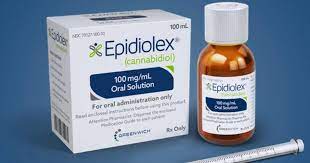
Un flacon d'EpidiolexUn flacon d'Epidiolex

Un flacon d’Epidiolex

M. Oliver a déclaré : « GW n’était pas prêt à donner au CoT l’accès à tous ses rapports d’étude, seulement à quelques uns choisis par GW. Ces rapports ont tous soulevé des problèmes de sécurité, sans indiquer si les problèmes étaient explicables ou s’ils se répétaient par la suite. Cette sélection a certainement servi les objectifs de GW en amenant l’autorité de réglementation à considérer le problème de sécurité comme un facteur nuisible pour le CBD en tant qu’aliment. »

Pour l’OMS, le CBD est sûr

En novembre 2017, le Comité d’experts sur la pharmacodépendance de l’Organisation mondiale de la santé a indiqué que le CBD « ne semble pas avoir un potentiel d’abus ou causer des dommages ».

Son document s’est basé sur un examen de la littérature existante et a conclu qu’il ne devrait pas être reclassé comme une substance nocive.

Cependant, en répondant à ces conclusions, et, dans une soumission à la FDA en 2019, GW a fait référence à ses propres recherches et a repoussé les conclusions de l’OMS.

Ce document de lobbying soutient que « le rapport de l’OMS sur le CBD soutient en fait un processus scientifique délibératif et une approche prudente de la FDA ».

Il poursuit en disant qu’il « soutient la conclusion selon laquelle la FDA devrait faire preuve de prudence lorsqu’elle examine les paramètres de la vente de CBD en tant que biens de consommation de masse ».

Plus de 2 millions de dollars de dépenses de lobbying aux États-Unis en 2019

À peu près à la même époque, par le biais de sa filiale américaine Greenwich Biosciences, GW s’était enregistrée pour faire du lobbying dans les 50 États – elle a dépensé près de 2 millions de dollars en 2019 pour faire du lobbying auprès du Congrès.

Et, c’est du Congrès que la FDA se tourne maintenant pour obtenir des directives sur la façon de traiter le CBD.

Le 26 janvier de cette année, la FDA a conclu qu’ » une nouvelle voie réglementaire pour le CBD est nécessaire pour équilibrer le désir des individus d’accéder aux produits CBD avec la surveillance réglementaire nécessaire pour gérer les risques « .

Et, dans des propos similaires à ceux du CoT au Royaume-Uni, et en référence à GW, elle a déclaré qu’en utilisant les « données Epidiolex… ainsi que les études menées et commandées par l’agence… il n’est pas évident que les produits à base de CBD puissent répondre aux normes de sécurité des compléments alimentaires ou des additifs alimentaires ».

La US Hemp Roundtable, qui représente de nombreuses entreprises de CBD, s’est déclarée « extrêmement déçue » par la décision de la FDA et l’a accusée de s’appuyer sur des études – y compris celles d’Epidiolex – qui ne montrent un risque qu’à de fortes doses, ce qui n’est pas courant dans les produits de CBD vendus au détail, ajoutant que des mesures de qualité et de sécurité sont déjà en place dans l’industrie.

Problèmes de brevets

En 2021, la FDA avait fait référence à l’Epidiolex lorsqu’elle avait rejeté les demandes de notifications de nouveaux ingrédients alimentaires pour des extraits de CBD à spectre complet présentées par les sociétés Charlotte’s Web et Irwin Naturals.

Elle a déclaré que le CBD étant l’ingrédient actif du médicament sur ordonnance approuvé Epidiolex, il ne pouvait être commercialisé en tant que complément alimentaire.

Depuis l’annonce du 26 janvier, Jazz s’est inscrit pour faire pression sur le Congrès au sujet de ses délibérations en déclarant : « Nous pensons que les patients et leurs familles sont mieux servis par des médicaments dont la sécurité et l’efficacité ont été prouvées par un solide programme de développement de médicaments et qui sont fabriqués selon les normes les plus élevées pour garantir une qualité et une identité constantes. » (Voir les réponses de Jazz ci-dessous)

Ces développements ont suivi de près l’annonce par Jazz qu’elle avait lancé une série d’actions contre un certain nombre de sociétés pharmaceutiques, les accusant de violer son brevet Epidiolex, qui, selon elle, dure jusqu’en 2039.

Cette démarche n’est pas inhabituelle pour une société pharmaceutique qui cherche à protéger ses brevets – GW possède plus de 150 brevets sur la plante de cannabis.

France et Brésil

Une autre preuve de la capacité de GW à influencer les régulateurs nationaux est apparue au Brésil à la fin de l’année dernière, où l’Epidiolex a servi de base à la décision du gouvernement d’interdire la prescription de cannabis « brut ».

La publication portugaise sur le cannabis CannaReporter rapporte que la résolution 2324/2022 « interdira aux médecins brésiliens de prescrire du CBD pour toute indication thérapeutique autre que celles pour lesquelles Epidiolex est prescrit ».

L’industrie française du CBD est sortie avec succès d’une période difficile qui comprenait l’affaire KanaVape et l’interdiction de la vente de fleurs de CBD, qui a maintenant été levée.

Alors que l’Epidiolex est disponible en France depuis quelques années, Jazz s’intéresse de plus près au marché français suite au lancement de l’expérimentation du cannabis médical dans le pays en 2021.

Elle a récemment rejoint un groupe de travail lancé par la Direction générale de la santé qui s’est réuni pour la première fois en décembre dernier.

Ce groupe de travail comprend notamment les sociétés de cannabis médical fournissant l’essai français, notamment les producteurs canadiens Aurora et Tilray, l’israélien Panaxia Pharmaceuticals et l’australien Little Green Pharma.

Benjamin Alexandre-Jeanroy, du cabinet Augur Associates basé à Paris, craint qu’à mesure que les marchés français et européen du cannabis médical se développent, les sociétés pharmaceutiques telles que Jazz modifient leur profil et étouffent la concurrence.

Il a déclaré : « Jazz tente de restreindre l’accès aux extraits à un modèle uniquement pharmaceutique, mais est-ce la bonne voie pour le cannabis, puisque son objectif est de breveter une plante ? »

« La question pour les entreprises de cannabis médical est de savoir si elles peuvent proposer un modèle plus viable. Un modèle qui soit dans l’intérêt des patients, un modèle qui permette un traitement personnalisé et le choix. »

Il a souligné que Jazz a les poches profondes et que ce niveau de capital n’est pas encore disponible pour la plupart des entreprises de cannabis médical.

La stratégie de l’innocent

Mike Morgan-Giles, directeur général du Conseil britannique de l’industrie du cannabis, a déclaré : « Nous aimerions voir le secteur pharmaceutique travailler avec l’industrie du cannabis au sens large pour aider tout le monde. Ce n’est pas un jeu à somme nulle et nous devrions travailler en collaboration. »

Nick Moreland, PDG de la société transatlantique de CBD Tenacious Labs et coprésident du groupe parlementaire britannique multipartite sur le CBD, se réjouirait également d’une telle évolution.

Cependant, il affirme que Jazz a l’intention de consommer tout le gâteau du CBD dans des démarches qu’il qualifie d’ »injustes ».

Tenacious LabsTenacious Labs

« GW, avec Jazz derrière elle, est l’entité la mieux organisée dans l’espace du cannabis et elle a un point de vue spécifique et étroit. »

« Et la raison pour laquelle ils attirent une telle négativité est qu’ils préfèrent avoir une grande part du petit gâteau plutôt qu’une partie d’un plus grand. »

« Ils n’ont pas la réputation de jouer gentiment, ou équitablement… donc une partie des études sur lesquelles on s’appuie ont été faites par des gens qui sont en avance sur le jeu en présentant ce qui se passe, par des gens qui sont très bons pour jouer les innocents. Ils n’ont pas été une force du bien ».

Il poursuit en disant que GW/Jazz a fait « un bon travail en défendant ses intérêts dans un secteur qu’ils dominent, mais ce faisant, ils gâchent la naissance de toute une industrie ».

« Sur la base du modèle Colorado, l’industrie au Royaume-Uni pourrait créer plus de 500 000 emplois et 5,5 milliards de livres de recettes fiscales annuelles. Mais la réalité de ce qu’il se passe en coulisses, de la tentative de tuer les choses à chaque étape afin d’avoir une industrie isolée avec quelques centaines d’emplois est assez déprimante », a-t-il ajouté.

En raison de cette approche unique, Jazz a laissé passer les occasions de s’engager auprès de l’industrie au sens large, un certain nombre d’organismes représentatifs affirmant que leurs tentatives d’ouverture du dialogue se sont heurtées à une réponse muette.

Le CBD va-t-il devenir un médicament ?

La FDA a identifié la voie médicale comme une possible voie d’accès pour l’industrie américaine du CBD, et l’UE a une fois de plus stoppé le processus de Novel Food car elle reste préoccupée par la sécurité du CBD.

Au Royaume-Uni, un rapport datant de 2021, auquel le gouvernement actuel n’a pas encore donné suite, a suggéré que le CBD soit considéré comme un médicament en vente libre (OTC).

Alors que les médicaments OTC populaires tels que les analgésiques et les médicaments contre la toux sont largement disponibles, si cela s’avère être le cas pour Epidiolex, cela fera le jeu de Jazz.

M. Oliver a ajouté : « Jazz cherchant à maintenir ses brevets jusqu’en 2039, il est fort possible qu’il domine l’industrie du CBD pendant la prochaine décennie. »

« Cela aura un impact majeur sur le secteur du CBD, qui sera dominé par Jazz, ce qui ne laissera que ceux qui ont les poches très profondes et la capacité de contrer ses mouvements agressifs par le biais des tribunaux. »

Prenant l’exemple du Royaume-Uni, il ajoute : « Si la situation ne change pas, le CBD sera de plus en plus placé sous les auspices du ministère de la Santé et des Soins sociaux et de l’Agence de réglementation des médicaments et des produits de santé, et ne sera disponible que sous forme d’isolat en vente libre, sans aucune trace de THC. »

M. Moreland a ajouté : « L’absence d’une définition claire de ce qui est un véritable médicament et de ce qui est des gens qui essaient de faire levier sur une ligne d’argumentation légitime en médecine dans des domaines où elle ne s’applique pas, mais qui s’emboîte bien, est préoccupante. »

Un autre haut responsable de l’industrie britannique, qui a choisi de ne pas être nommé, a ajouté : « Si Jazz a dépensé plus de 7 milliards de dollars pour GW, il voudra les récupérer, et son modus operandi consistera donc à étouffer la concurrence et à maintenir un monopole ».

L’investissement substantiel de GW dans ses deux médicaments à base de cannabis – Sativex et Epidiolex – et leur distribution par le biais de systèmes de santé remboursés en Europe et aux États-Unis, se traduisent par un prix de plus de 30 000 dollars par an, soit beaucoup plus que l’utilisation d’une année de produits de bien-être au CBD vendus au détail.

Les ventes totales d’Epidiolex ont atteint 464 millions de dollars en 2021 et devraient avoir augmenté d’au moins 20 % en 2022.

Réponse de Jazz à BusinessCann

BusinessCann a posé les questions suivantes à Jazz et a reçu les réponses suivantes

1. Les données relatives à l’Epidiolex sont-elles pertinentes pour le CBD grand public ?

2. Jazz communiquera-t-elle d’autres données aux organismes de réglementation concernant ses travaux sur l’Epidiolex ?

3. Certains disent que les données communiquées au Comité britannique sur la toxicité ont soulevé des problèmes de sécurité, sans indiquer si ces problèmes étaient explicables ou s’ils se sont répétés par la suite ?

4. Combien Jazz a-t-elle dépensé pour ses activités de lobbying au Royaume-Uni, aux États-Unis et dans le reste du monde ?

5. Le CBD est-il mieux traité comme un aliment ou un médicament ?

Réponse aux questions 1, 2, 3 et 4

Jazz est une société biopharmaceutique internationale qui possède un portefeuille diversifié de médicaments commercialisés et de nouveaux produits candidats dans ses deux domaines thérapeutiques clés, les neurosciences et l’oncologie.

En tant que leader mondial dans le domaine de la science des cannabinoïdes et des médicaments, Jazz reconnaît qu’elle a un rôle important à jouer pour informer l’environnement externe afin de réaliser le plein potentiel médical de la plante de cannabis et des cannabinoïdes, tout en tenant compte de la sécurité des patients et de la santé publique.

Nous prenons cette responsabilité très au sérieux. Cela peut inclure la fourniture d’informations précises et fondées sur des preuves concernant la science des cannabinoïdes, la médecine et la réglementation, ainsi que le soutien aux décideurs politiques et à la communauté des soins de santé pour faciliter leur travail.

En tant qu’entreprise responsable ayant à cœur les meilleurs intérêts des patients et de la santé publique, nous soutenons tout effort visant à générer des données supplémentaires permettant de mieux combler les lacunes actuelles en matière de sécurité et de qualité des produits de consommation contenant du CBD, et à évaluer ces données par le biais d’un processus réglementaire solide.

Des preuves scientifiques plus solides sont nécessaires pour que les organismes de réglementation puissent évaluer la sécurité des produits contenant du CBD utilisés sans ordonnance et sans la supervision d’un médecin.

Nous soutenons et demandons instamment la production de données supplémentaires par d’autres entreprises afin de combler les lacunes actuelles en matière de sécurité et de qualité de ces produits.

Détails supplémentaires concernant la question 2

En ce qui concerne l’Epidyolex et son statut de médicament autorisé à base de cannabinoïdes, nous croyons fermement à notre responsabilité et à notre obligation permanentes de fournir des données supplémentaires aux organismes de réglementation médicale et entretenons donc un dialogue régulier avec ces organisations.

Ces données supplémentaires peuvent être partagées de plusieurs façons, notamment par des études de sécurité post-autorisation ou par un engagement dans des registres de sécurité.

Réponse à la question 5

Qu’il s’agisse d’un aliment ou d’un médicament, nous croyons que les patients et les consommateurs méritent d’avoir accès à des produits bien tolérés et bien documentés.

Jazz croit passionnément aux bienfaits thérapeutiques potentiels de la plante de cannabis et croit fermement que les médicaments cannabinoïdes ont le potentiel d’améliorer la vie des patients et des familles. Pour les consommateurs qui cherchent à utiliser des produits de consommation contenant de la CBD, nous croyons que des preuves scientifiques plus solides sont nécessaires pour que les organismes de réglementation puissent évaluer la sécurité des produits contenant de la CBD pour une utilisation sans ordonnance et sans la supervision d’un médecin.

Nous soutenons et demandons instamment la production de données supplémentaires par d’autres entreprises afin de combler les lacunes actuelles en matière de sécurité et de qualité de ces produits.

En ce qui concerne l’utilisation des médicaments à base de cannabinoïdes, nous espérons que beaucoup plus de patients bénéficieront de ces médicaments dans les années à venir, mais selon nous, la meilleure façon d’y parvenir est de procéder à des essais contrôlés randomisés et d’appliquer la rigueur et les normes exigées par le processus d’obtention d’une approbation réglementaire [une autorisation de mise sur le marché].

Les médicaments à base de cannabinoïdes qui ont franchi ces étapes importantes auront un profil de sécurité et d’efficacité bien établi, répondront aux normes de qualité et de stabilité et contiendront des concentrations constantes de médicament dans chaque lot.

Informations supplémentaires sur la plateforme cannabinoïde de Jazz

La plateforme de cannabinoïdes, dans laquelle Jazz continue d’investir à la suite de l’acquisition de GW Pharmaceuticals, a été créée en réponse directe aux besoins médicaux non satisfaits d’un groupe de patients britanniques atteints de sclérose en plaques (SEP), qui, à l’époque, faisaient l’objet de poursuites pour automédication avec du cannabis de rue.

Ces dernières années, GW, et maintenant Jazz, ont exploré le potentiel des médicaments à base de cannabis pour aider les personnes atteintes de formes graves et potentiellement mortelles d’épilepsie infantile.

L’équipe a passé les deux dernières décennies à mener des enquêtes scientifiques rigoureuses et des essais cliniques approfondis pour découvrir le potentiel thérapeutique de la plante.

Cependant, nos principes fondateurs continuent de guider notre travail et répondre aux besoins des patients reste notre objectif principal. Nous croyons toujours passionnément au potentiel des médicaments à base de cannabinoïdes pour améliorer la vie des patients et de leurs familles.

Jazz est un défenseur de la voie pharmaceutique éprouvée des essais cliniques et des autorisations réglementaires pour le CBD et le cannabis. Cette voie permet de comprendre les risques et les avantages de ces composés pour les patients et d’établir les trois piliers pharmaceutiques fondamentaux que sont la qualité, la sécurité et l’efficacité. Selon nous, c’est la meilleure façon de servir les intérêts des patients et des professionnels de la santé.

Sans un ensemble complet d’études précliniques et cliniques, nous n’avons aucune idée de la toxicité d’un produit, de ses interactions médicamenteuses, de son potentiel d’abus, de ses effets secondaires et de son dosage sûr, entre autres. Cela entraîne des risques inconnus pour les professionnels de la santé et les patients eux-mêmes.

Les autorisations réglementaires que nous avons obtenues aux États-Unis, en Europe et dans le monde entier démontrent que les médicaments à base de cannabis extrait de plantes, qu’ils soient complexes ou composés d’un seul cannabinoïde, peuvent être acheminés avec succès par la voie réglementaire pharmaceutique établie et être ensuite remboursés, et nous encourageons les autres à suivre notre exemple.

Le remboursement de nos médicaments par les systèmes de santé et les payeurs du monde entier démontre que, si elles disposent des preuves de haute qualité adéquates, les autorités sanitaires assureront l’accès aux médicaments à base de cannabinoïdes pour les patients qui pourraient en bénéficier.


Spain’s largest cannabis B2B conference returns to Barcelona in March 2023

Barcelona is a place conducive to exchanges around cannabis. Home to hundreds of Cannabis Clubs, Barcelona’s cannabis community and consumers have a unique experience in every way. The rich history and culture of cannabis and the city once again make it the perfect backdrop for the 2018 trade show.International Cannabis Business Conference (ICBC), which will take place on March 9, 2023.

IInternational Cannabis Business Conference is the first series of events business-to-business (B2B) on the planet’s cannabis, with previous conferences having taken place in several countries on several continents. The event series is owned and operated by cannabis advocates who believe in celebrating cannabis culture, in addition to providing world-class cannabis industry education and networking opportunities.

ICBC has once again teamed up with Spannabis, Europe’s largest cannabis trade show, to form another unmissable super-event for anyone looking to succeed in the emerging cannabis industry.

“Spannabis is not only the biggest cannabis fair in Europe, but also the biggest in the world. The Spannabis brand is iconic, and we are honored to once again partner with such an important and long-standing institution,” said ICBC CEO Alex Rogers.

“Networking is more important than ever, and Spannabis is the meeting point for the entire European cannabis scene. This is primarily a consumer-facing event, but many people who attend are also looking for a B2B element. ICBC’s partnership with Spannabis fills this gap and responds to a clear need for major players in the cannabis industry to meet, network and move the industry forward as cannabis laws are liberalized in Spain and throughout the continent. said Mr. Rogers.

It’s increasingly difficult to gain an edge over the competition in the emerging international cannabis industry, and it’s vital for people to pitch their idea, product or service to the right people at the right time. With industry executives, entrepreneurs, investors, decision makers and service providers converging from around the world, the ICBC B2B Barcelona trade show is the perfect place to showcase ideas on the global cannabis stage. For a list of speakers presenting the event, click here.

Not all networking opportunities are equal, and that’s especially true in the cannabis space. ICBC events are attended by cannabis leaders from dozens of different countries, with the Barcelona B2B show serving as the first major international cannabis event of its kind for 2023.

The conference itself will be held at the Auditori de Cornellà, and the after-party will take place at the Hotel Arts (Ritz-Carleton) in Barcelona. You can consult the program of the event on this link. If you want to network with the best players in the cannabis industry, ICBC Barcelona is a must-attend event.

Spain is home to arguably the best cannabis culture in the world, with 70% of Spanish cannabis clubs being located in Barcelona. About 90% of Spanish voters are in favor of medical cannabis, according to a recent survey by the Center for Sociological Research. The country has around 4 million regular cannabis users and 56% of Spanish residents support legalizing the regulated sale of cannabis to adults (18 years or older). The current value of the cannabis industry in Spain is estimated at 3.3 billion euros (2.81 billion pounds) per year.

Over 1,000 people from over 40 countries will be represented at the super event to be held in March in Barcelona, ​​including representatives from all industry sectors, as well as leading international policy makers and service providers. in the field of cannabis. Attend the Barcelona super-event to connect with international investors, entrepreneurs, industry regulators and policy makers, and scale up your industry.

ICBC also has other events coming to Berlin in June 2023. Newsweed readers can get discounted ICBC tickets by clicking this link here, and be sure to get your tickets as soon as possible before the event is sold out!

About the International Cannabis Trade Conference

The International Cannabis Business Conference, held in Barcelona, ​​is Europe’s oldest and largest B2B trade show and conference. For more information, including how to register for ICBC Barcelona, ​​Berlin and Zurich, please visit: Internationalcbc.com. To learn more, check out LinkedIn, Twitter, Facebook, YouTube and Instagram.
For more information or media requests, please email noelle@internationalcbc.com or call 541.864.0090.

Golden CBD: High Quality and Chill

Created in 2018, Golden CBD is above all a story of enthusiasts with a credo: Swiss CBD with a THC level less than or equal to 0.3%.

Now distributed in around thirty tobacconists and around ten partner shops, the brand surfs on sure values: fragrant and tasty CBD genetics, a wide range of CBD-based products (infusions, e-liquids , oils, gummies…) and collaborations with artists. And even the Emperor succumbed to Golden CBD!

Discover now the best products from Golden CBD.

Golden Gelato Kush CBD

Golden Gelato Kush CBD

If you are looking for a sweet and light CBD weed with a fruity aftertaste, opt for Gelato and its light cotton candy taste! This flower is said to provide well-being and relaxation in less than 5 minutes, with its 0.18% THC and 4.3% CBD.

Buy Golden Gelato Kush CBD

Golden Amnesia Kush CBD

Golden Amnesia Kush CBDGolden Amnesia Kush CBD

Golden CBD’s Amnesia Kush CBD is bound to bring back memories for those who have tasted the real Amnesia. Getting closer in taste and smell to the original genetics, this flower develops just over 3% CBD, a natural rate for a tasty flower.

Buy Golden Amnesia Kush CBD

Premium 4x CBD

4x filtered hash4x filtered hashGolden CBD’s 4x filtered CBD inherits the best hash-making techniques to reach 0.3% THC and pack 54.9% CBD. Made from CBD and CBG flowers, the trichomes are extracted in an ice water bath boosted with liquid nitrogen.

Buy Premium 4x CBD

Study: the legalization of cannabis does not increase psychoses

A new study published this month in Jama Network Open shows no increase in psychosis-related disorders or incidents in US states that have legalized cannabis for adult or medical use.

The researchers used the database Optum Clinformatics Data Martwhich contains insurance data for more than 63 million unique individuals tracked between January 1, 2003 and December 31, 2017. All beneficiaries ages 16 and older with at least one month of insurance eligibility during the period were included in the study.

The study authors used the number of unique claims with psychosis-related diagnoses, antipsychotics prescribed, and enrollees for each month of follow-up and merged the data with time-varying categorical measures of level state cannabis policy; and demographic, economic, and social characteristics of the state.

The researchers found more than 7 million psychosis-related diagnoses and recorded more than 20 million prescriptions filled for antipsychotic drugs during the study period. And, during the research period, medical or adult-use cannabis reforms were approved in 29 states.

“In this retrospective cohort study of commercial claims and Medicare Advantage data, state medical and recreational cannabis policies were not associated with a statistically significant increase in rates of psychosis-related health outcomes.” in the study.

In their secondary analysis, the researchers found that rates of psychosis-related diagnoses increased slightly among men over the study period, particularly among those aged 55 to 64 and among Asians, States that allow cannabis use by adults, versus states that do not.

“The results of the fully fitted models showed that, compared to no legalization policy, states with legalization policies did not experience a statistically significant increase in rates of psychosis-related diagnoses,” write authors.

The study was conducted by researchers from the University of Philadelphia, Stanford University and the Veterans Affairs Palo Alto Health Care System.

Twitter now allows cannabis ads

Twitter has decided to open its platform to cannabis advertising in the United States and Canada.

A update on website from the company says that, subject to restrictions, Twitter will now allow approved cannabis brands to target adults in legal jurisdictions in the United States and Canada.

Beyond cannabis products, Twitter will also allow ads for related products and services, such as analytical labs or cultivation tools. Until now, only CBD-based cosmetic brands were allowed to advertise on the platform.

Very limited ads

According to the new guidelines, cannabis-related advertisers must be pre-approved by Twitter and have a license issued by the relevant authorities. They can only target jurisdictions in which they are authorized to promote their products or services.

Ads promoting or offering to sell cannabis remain prohibited, with the exception of topical hemp-derived CBD products containing 0.3% THC or less, the US federal limit.

Advertisers cannot target customers under the age of 21, and landing pages must be categorized by age. Claims of efficacy, health benefits or advertisements depicting people using cannabis are also not allowed.

For Canadian brands, it seems little has changed, as the platform already allowed restricted cannabis advertising.

Similar to rules in the United States, Canadian cannabis advertisers must have a license from Health Canada and prior approval from Twitter and can only promote informational or brand preference content.

Advertising content that communicates prize or distribution information, offers a testimonial or endorsement, or features a person, character, or animal remains prohibited.

Despite these restrictions, this policy change makes Twitter the first major social network to allow cannabis advertising in the United States.

The other platforms still reluctant

Google recently – a little – opened up to advertise hemp products and CBD cosmetics in California, Colorado and Puerto Rico.

Facebook, which acquired Instagram in 2012 for US$1 billion, prohibits “attempts to buy, sell or trade in non-medical drugs, pharmaceutical drugs and cannabis by individuals, manufacturers and retailers”, according to company rules. It allows advertisements for certain hemp products, but not for THC or CBD products.

On Instagram, the policy is similar, with the platform noting that it “does not allow individuals or organizations to use the platform to advertise or sell cannabis, regardless of the state or country of the seller. »

TikTok also severely censors all posts around cannabis and completely bans advertising, even by legal operators.

Reddit allows ads for “topical and non-edible hemp-derived products” in the United States.

Legal green light for the sale of hemp flowers in Italy

The Regional Administrative Court (TAR) of Lazio, an Italian region, overturned the Medicinal Plants Decree that limited hemp production to seeds and fibers. This decision authorizes the effective use of the entire hemp plant in Italy.

“The national legislation of each Member State may limit the use of parts of the plant only if such limitation is strictly necessary to protect the right to public health” can be read in the decision.

Lawyer Giacomo Bulleri, who was defending the case, commented for CanapaIndustriale: “In other words, in cases like the one in question, it is necessary for the administration to provide an adequate explanation of the priority requirements for the protection of health and precaution, by providing scientific data demonstrating the existence of a risk arising from the cultivation of hemp plants in their entirety (i.e. seeds, seed derivatives, leaves and the inflorescences from which the resin has been extracted).

Now that the decree has been canceled, the competent ministries will have to rework the text. In the meantime, the ban on hemp being sold in herbal medicine or potentially being registered as a smoking product is technically outdated.

Protective measures would nevertheless be necessary to protect the sector and operate completely legally.

“The satisfaction was to make a court understand for the first time what the hemp regulatory system is that the TAR has shown to have seized with a sentence substantially in line with that of the French Council of State”, underlines Bulleri at Canapaindustriale.

The TAR specifically cited both the recent decision of the French Council of State, which effectively legalized the trade in CBD and weed light in France, and the judgment of the European Court of Justice which stressed that legal CBD products from a Member State must be able to circulate freely throughout Europe.

Regarding the fact that hemp can be used in its entirety, he writes that: “It is not possible to infer any distinction between the parts of the hemp plant which are freely cultivated, according to the law cited not. 242/2016, which can be used for the purposes established by the law itself. Indeed, the sectoral discipline of international and Community origin specifies that the discretionary criterion for establishing the free cultivation of hemp lies in the type of plant, considered as a whole”.

Government departments in an attempt to restrict the use of hemp flowers had also invoked the “precautionary principle” without however providing evidence to support the scientific uncertainty regarding the safety of hemp leaves and flowers.

Greece: six years later, is legal access to medical cannabis finally in sight?

Greek patients hope to finally have access to legal cannabis-based medicines in 2023, six years after the law was first amended.

The construction of the first medical cannabis production facility in Greece has been slow to materialize and thousands of patients still rely on the illicit market despite the medical cannabis reclassification in 2017.

In late January, Tikun Olam Europe, a subsidiary of Israel-based cannabis company Tikun Olam, announced that operations had begun at Greece’s first medical cannabis production plant.

The vertically integrated production unit is located on a private plot of 56,000 square meters in Korinthos, following an investment of more than 40 million euros.

The installation has been welcomed by the Greek authorities and patient associations, with the first products expected to be brought to market in the course of 2023.

The Minister of Development and Investments, Mr Adonis Georgiadis, called the event a “historic day” for Europe and a step towards providing Greek patients with “pharmaceutical cannabis products”.

Mr. Georgiadis commented: “Today is a historic day not only for Europe and investment in Korinthos, but also because today we are paving the way for something that did not exist in Greece – a way to provide Greek patients with pharmaceutical cannabis products. But also a means for a product that we can export all over Europe, because this unit has the capacity to make huge exports to all the major countries in Europe and therefore Greece will play a leading role in the years to come, spearheaded by this factory and the other factories that will come to work on what is called medical cannabis. »

SYRIZA MP for Korinthos, Georgios Psychogios, added: “I would like to point out that despite the fact that when this framework was made it was objectionable to many, I am happy that we are now here to monitor the development of medical cannabis. both for investors and for patients who will now be able to access these drugs. »

The context of medical cannabis in Greece

The reclassification of medical cannabis to Schedule 2, was first announced by the then Prime Minister in 2017, following a campaign by mothers of children with severe epilepsy, who collected more than 45,000 signatures.

This meant that cannabis could be legally prescribed and was then approved for use for three conditions: multiple sclerosis (MS), chronic pain and cancer-related cachexia.

In 2018, a more extensive law was introduced outlining licensing requirements for companies wishing to produce medical cannabis products in Greece.

But since then, progress has been slow.

A handful of patients have been able to obtain pharmaceutical cannabis drugs, such as Epidyolex and Sativex, through individual import applications, but the process is long and complicated. At the end of 2022, the first patient in Greece to receive Sativex did so after an 18-month battle.

A ban on the import of medical cannabis

In November 2021, the Greek government introduced a ban on the import of cannabis products, which as a member of the EU goes against free market regulations.

According to sources in the country, this measure was aimed at protecting the internal market and encouraging foreign companies to invest in Greece.

However, this means that any progress towards a robust legal medical cannabis market has slowed considerably.

“We were one of the first in Europe [à légaliser] and we’re going to be the last to get on the boat,” says Jacqueline Poitras, founder of patient advocacy group MAMAKA, which has campaigned for access to medical cannabis for her daughter.

“The cannabis import ban in Greece was a very hard blow for us. [À l’époque] we were in conversation with companies trying to get products here…but the ban meant we just had to sit and wait. »

Ms Poitras believes the import ban is unlikely to be lifted under the current government unless a company is prepared to take legal action in European courts.

Jacqueline Poitras, Founder of MAMAKA

Jacqueline Poitras, Founder of MAMAKA

Legal cannabinoids and home cultivation

In the meantime, Greek patients have been forced to continue to access their medicines through the illicit market, by growing their products themselves or importing oils illegally.

Many make do with CBD, which is widely available in retail stores and over the counter in pharmacies.

“Fortunately, a very large portion of the population is doing quite well with CBD and we have a very healthy legal cannabinoid market here. You can find CBG, CBN, and just about every minor cannabinoid,” says Poitras.

“But everyone who needs THC orders it from abroad and everyone who buys flowers does so illegally. There is a huge underground movement of people growing their own product. »

The first legal products are expected in 2023

The first flower products from Tikun Europe are expected later in 2023, with the oils not expected to be ready until the first quarter of 2024.

A government announcement on January 3, 2023 confirmed that the cost of these drugs would not be covered by the country’s public health insurance system and would have to be funded privately by patients.

Ms Poitras, who also represents Greece on the International Cannabinoid Medicine Alliance (AIMC) patient council, says the company is aware that its primary concern is to ensure prices are affordable for patients. .

“The entire economic burden rests on the shoulders of the patients,” she says.

“We expect the retail price to be slightly higher than the illicit market, i.e. 11-12 euros per gram. For a while they will be the only ones in the market, but we have quite friendly cooperation with them and hopefully we can find ways to make this product affordable for patients. »

A number of other companies are reportedly in various stages of the licensing process, with more facilities expected to be operational by 2024.

“A healthy market needs variety; it needs competition,” adds Ms. Poitras.

“Once we have a bit of competition in the market, it will bring prices down.”

Hope on the horizon?

The recent creation of a Greek company for cannabinoid drugs (Hellenic Medical Association for Cannabinoids, HMAC) – a body that will officially represent doctors, clinicians and pharmacists interested in the field of medical cannabis – is also a “significant step forward” for the sector.

Separately, Ms Poitras hopes the addition of a pediatric neurologist to the committee advising the Greek Pharmaceutical Association on medical cannabis could lead to approval for its use for children with epilepsy and autism. .

Expanding the range of conditions for which cannabis can be prescribed is a cause for which MAMAKA and other patient advocates in Greece continue to campaign.

“It’s a very important moment,” says Ms. Poitras.

“Patients have more hope now because we no longer look two years ahead before we can get legal products. We are at the finish line”.

She adds, “We will continue to fight for cannabis to be covered by health insurance, but as long as we pay, we should be able to get it prescribed for any condition. »

The different customizable smoking accessories

0

Sometimes we are looking for a unique gift to give to a loved one. And very often, we forget that it is possible to personalize certain products so that they correspond completely to the tastes and uses of the recipient. This is widespread in decoration, tableware, but also in the smoking world. Zoom on customizable smoking accessories!

Why customize a smoking accessory?

A personalized product allows the person giving it to please with a unique item and the person receiving it to feel special. The personalization of a gift makes the object a unique piece, regardless of its original price. It allows its owner to stand out and sometimes even to arouse admiration.

In the smoking universe, it is possible to personalize several articles in order to mark one’s membership. Thus, they are more difficult to steal and recognize each other quickly if they are misplaced or mixed up during an evening. On the other hand, they can also be passed down from one generation to another as a family heirloom.

Similarly, many companies also offer the personalization of certain products for customers, employees and partners, with the aim of building their loyalty and thanking them.

Which smoking products can be personalized?

As much to be honest, the more you have the means, the more you can afford all the fantasies, even that of asking for the custom design of a smoking product. As not everyone is necessarily in this case, the more basic and accessible customization is available on several products already designed. This does not detract from the uniqueness of the product.

The most common customizable items are certainly cigarette or cigar cases. There are many variations on which you can have a name, a short phrase or sometimes even a logo engraved.

Several pipe accessories can also be personalized with the image of the pipe tamper or pipe cleaner. Besides, there are also customizable pipes! Chacom was one of the first companies to offer this type of product to its customers. To go a little further, lighters can also be engraved to mark their belonging, just like alcohol flasks.

Comment About Different customizable smoking accessories Below ..