Home Blog Page 36

Fewer youth-police incidents after cannabis legalization in Canada

The legalization of cannabis in Canada has led to a drop in incidents between the country’s youth and law enforcement, according to data released in early spring.

The results, published in April in the journal Drug and Alcohol Dependenceshow that Canada’s five-year-old cannabis law “has been associated with a significant reduction in police-reported cannabis offenses for both males and females” among citizens aged 12 at 17 years old.

Looking at police data between January 1, 2015 and December 31, 2021, researchers at the Center for Addiction and Mental Health in Toronto found a rate of 4.04 daily incidents among young women, a decrease of 62 .1%, and 12.42 daily offenses among young men, representing a reduction of 53%.

The Cannabis Act officially came into force in Canada in October 2018, legalizing the recreational use of marijuana for adults aged 18 and over.

“The results suggest that the impact of the Cannabis Act on reducing youth cannabis-related crime is strong, supporting the law’s goals of reducing cannabis-related criminalization among youth and the associated effects on the Canadian criminal justice system,” the researchers wrote in their conclusion.

The researchers added that there was “no evidence of an association between cannabis legalization and patterns of property crime or violent crime.”

In their review, the researchers wrote, “The Cannabis Act was associated with sustained and substantial decreases of approximately 50% to 60% in national trends in cannabis-related criminal incidents among young men and young police-reported women over a period of approximately three years after legalization….. Given that involvement with the police and the Canadian criminal justice system for cannabis-related criminal incidents represents social and individual harm important for youth, it is reasonable to conclude that our results demonstrate a benefit associated with the implementation of the Cannabis Act. »

The researchers said they had “previously reported that the Canadian Cannabis Act of 2018, allowing youth to possess up to 5g of dried cannabis or the equivalent for personal/sharing use, was associated with a reduction short-term (76 days) after legalization of police-reported cannabis-related youth crime. »

The results are consistent with another recent study, also published in Drug and Alcohol Dependencewhich showed that the legalization of cannabis in Canada did not lead to an increase in road accidents.

“Neither the LCC [loi canadienne sur le cannabis] nor the NCS [nombre de magasins de cannabis par habitant] are associated with concomitant changes in (road safety) outcomes. … During the first year of CRUL implementation [loi sur l’usage récréatif du cannabis] in Toronto, no significant changes were observed in crashes, road fatalities and KSI [tous les usagers de la route tués ou gravement blessés] “says the study.

Another study, conducted in 2021, found similar results, finding “no evidence that cannabis law implementation was associated with significant changes in post-legalization patterns of trauma ER visits.” for all drivers or, more specifically, for road trauma emergency presentations for young drivers”.

“Given that Canada’s Cannabis Act requires the Canadian Parliament to review the public health implications of the law no later than 2023, the results of this study may provide empirical data not only for the Canadian assessment of calculation of harms and benefits, but also for other international jurisdictions weighing the merits and demerits of cannabis legalization policies,” the study states.


What are CBD flowers?

Have you ever heard of CBD flowers? These increasingly popular products intrigue and arouse curiosity. But what are CBD flowers really? Let’s look at the subject.

What is CBD?

CBD, or cannabidiol, is one of many chemical compounds, known as cannabinoids, that occur naturally in the hemp plant. Unlike THC, another well-known cannabinoid, CBD does not have a psychoactive effect. In other words, it does not cause the state of euphoria or the “high”. This is one of the reasons why CBD has been legalized in many countries.

What are CBD flowers?

CBD flowers, sometimes called “CBD buds,” are the parts of the hemp plant that contain the most CBD. They are harvested from specific varieties of industrial hemp that have been bred for their high CBD content and low THC content. CBD flowers are often used to produce high-quality CBD products, such as oils, tinctures, and edibles.

How are CBD flowers used?

There are several ways to consume CBD flowers. One of the most popular methods is infusion, where the flowers are steeped in hot water to release the CBD. Another method is vaporization, which allows you to inhale. CBD flowers can also be used to make homemade CBD oils or incorporated into cooking recipes.

CBD flowers are often used for their potential health benefits. Although research is still ongoing, some studies suggest that CBD may help manage stress and anxiety, relieve pain and inflammation, and even improve sleep.

Choosing the Right CBD Flowers

When it comes to choosing CBD flowers, quality is everything. Look for flowers that have been grown without pesticides and have a good CBD content. It is also important to check the origin of the flowers. High-quality CBD flowers often come from farms that use sustainable growing practices.

CBD flowers are an intriguing product with significant potential. However, as with any product, it is important to do your own research and consult with a medical professional before trying CBD flowers.

Colorado legalizes the sale of cannabis online

The governor of Colorado has signed a bill allowing the sale of cannabis online in his state, after more than 10 years of legalization.

The text, voted on and then signed, removes the passage of the law which explicitly prohibited the sale of cannabis on the Internet, while adding regulations to allow online commerce.

Adults 21 and older will still need to physically pick up their cannabis products in store, however, they will be able to view and purchase their cannabis online before going to the store.

The bill signed by Democratic Governor Jared Polis provides that retailers will have to verify the name and age of the customer when making an online purchase, and that this information will have to match the identification documents that he will provide when he will come to pick up the products.

In addition, the retailer will be required to provide buyers with “digital versions of any warning or educational materials that the cannabis retail store is required to display and provide on its licensed premises.” The customer must “acknowledge receipt” of these documents before completing their purchase.

“This bill is primarily, from my perspective, aimed at reducing cash in the cannabis sector, which is extremely important because when there is a lot of cash in an industry, it can lead to disturbing results, including thefts,” Republican Senator Kevin Van Winkle said during the plenary session last month.

“It exposes them to a huge number of potential thefts, and other things. »

State lawmakers also hope Congress will finally get around to addressing financial and public safety issues unique to the cannabis industry by passing the bipartisan law. Secure and Fair Enforcement (SAFE) Banking Act during the current session.

Bern wants to test the controlled sale of cocaine

The legal sale of cocaine in the Swiss capital, Bern, may be authorized following the introduction of a bill last week, which was passed by a vote of 43 to 18. However, the sale of cocaine will not be permitted. not be legalized until the bill has been adopted at the federal level, by the Swiss government.

The Alternative Left party in Bern’s municipal government introduced the bill, which was opposed by city councilors from the center-right and religious parties. The bill received support from the left, including members of the Social Democratic Party.

Last year, Bern became one of the first cities in Europe to allow and implement the legal sale of cannabis. Conceived as a pilot study likely to be extended to the rest of the country, the SCRIPT project (Safer Cannabis – Research in Pharmacies Trial) from the Swiss University of Bern will study the effects of the legal sale of cannabis on society.

Last month, the federal government authorized the University of Bern’s cannabis sales pilot project, but the same is unlikely to happen for the sale of cocaine in the immediate future.

Franziska Teuscher, director of education, social affairs and sport for the municipal government of Bern, explained that the cannabis bill was passed at the federal level due to pressure exerted on the government by other cities.

She said, “The government only agreed to the cannabis pilot projects under pressure from the cities.” She added that the legal sale of cocaine bill was intended to send a signal to other cities.

Cocaine consumption in Switzerland is one of the highest in Europe. Four cities feature in the top 20: Zurich, Geneva and Basel occupy 5th, 6th and 7th place respectively, and Bern 18th (the list excludes cities located in non-EU countries).

A previous proposal to legalize cocaine sales was defeated in 2019, but revised plans with more restrictions won enough additional support from the left-leaning Social Democratic Party to pass the motion on Thursday.

Andre Gomes, communications manager at Release, said of the proposal: “This pilot project will be extremely interesting, given that Europe is the center of demand for global cocaine use. Although the details are not yet clear as to how this model will work, pressure from city-level initiatives has demonstrated the existence of potential future models of drug regulation. »

“The cocaine industry will only become safer when the global supply chain is reformed. How this cocaine will be obtained legally is not yet clear; whatever regulatory model is implemented, it will have to oppose the dangerous and ineffective global war on drugs”.

Nine Realms, first European brand of Vape HHC

If you’ve recently been to Germany and are familiar with HHC vapes, you may have come across Nine Realms, a very well-known vape brand in Europe. Nine Realms has grown from an HHC business to a business specializing in other minor cannabinoids, making it a household name among cannabis enthusiasts in Germany. The brand has successfully established itself in the German market and is now entering France.

Here’s how Nine Realms is becoming one of the leading premium cannabinoid brands in the EU.

Partnerships and strategic collaborations

Nine Realms owes its success to strategic partnerships with leading European hardware manufacturers, laboratories and organizations. By partnering with these entities, the brand has designed its products based on consumer preferences and community feedback. These partnerships have created a unique product line and premium devices, further enhancing the quality and diversity of the Nine Realms brand.Nine Realms HHC vape

Product development and innovation

One of the key factors in the rise of Nine Realms is its unwavering commitment to product innovation. The company is focused on creating high quality, potent and functional cannabinoid products that appeal to a wide range of consumers. By incorporating cutting-edge hardware technologies and design elements, Nine Realms HHC vapes stand out from their competitors and establish a strong brand identity.

The brand is constantly evolving its product offering, offering not only HHC MINI, CLASSIC and LIGHT vapes, but also going beyond disposable vapes by working on new edibles and vaporizer cartridges. This diversification allows Nine Realms to appeal to a wider audience and increase its market share.

Professional Documentation

At Nine Realms, documentation is of paramount importance. The company operates transparently, sharing updates on its social media with images and professional blog posts. This approach highlights product details, important company updates, and provides all necessary test results and certifications, demonstrating brand legitimacy and customer focus.

Openly growing their business resonates with the community and contributes to Nine Realms’ reputation as a trusted brand. This insider perspective on ongoing operations makes consumers feel valued and privileged as members of the community.

Emphasis on community building

As a community-based company, Nine Realms understands the importance of building a strong community around its brand. The company has cultivated a loyal fan base who appreciate the creative benefits of cannabis products. By creating content and showcasing diverse artists, musicians, and creators, Nine Realms welcomes all creative minds into its community. These efforts foster a sense of belonging and expose emerging talent within the community.

Conclusion

Nine Realms is more than just a cannabis brand. It is a way of life for many members of the community. It’s a way to meet like-minded cannabis users, artists and creators across Europe, and it’s a way to express your vision to an open-minded audience.

Join the thriving community of European cannabis enthusiasts and creative minds and experience the difference by visiting the Nine Realms homepage and taking advantage of their time-limited discounts. Use the code ” 2-SHIP-FREE to qualify for free shipping when you purchase two or more products.

Cannabis legalization in Colombia about to be voted on

The bill to legalize cannabis in Colombia passed in the penultimate vote in the Senate on Tuesday, bringing the country one step closer to ending prohibition.

Deputy Juan Carlos Losada Vargas’ bill, approved by the House of Representatives last month, was approved by the Senate’s First Committee by a vote of 15 to 4. This is the seventh of eight votes needed for the proposal of constitutional amendment be forwarded to the President.

The next and final step is the Senate vote, which is expected to take place on June 16. If the bill passes, lawmakers will have less than a week to effect a bicameral reconciliation before the end of the session.

The legalization bill supports “the right to free personality development, allowing citizens to decide on cannabis consumption within a regulated legal framework.” And it mitigates “arbitrary, discriminatory or unequal treatment of the population that consumes”.

It also calls for public education campaigns and promotion of drug treatment services.

Last year, the House of Representatives gave initial approval to the legalization bill. The Home Secretary also came out in favor of the reform proposal at the time. The vote came shortly after a congressional committee pushed through that measure and another legalization bill.

President Gustavo Petro, a progressive who since taking office in August has vigorously advocated for an end to the criminalization of drugs internationally, spoke of the possible benefits of legalizing cannabis.

Last year, the president delivered a speech at a meeting of the United Nations (UN), urging member countries to radically change their approach to drug policy and end prohibition .

Mr. Petro also raised the possibility of legalizing cannabis in Colombia in order to reduce the influence of the illicit market. He also indicated that this change in policy should be followed by the release of those currently imprisoned for possession of cannabis.

He spoke of the economic potential of a legal cannabis industry, in which small towns in the Andes, Corinto and Miranda could benefit from legal cannabis cultivation, possibly without licensing requirements.

The president also indicated that he would be interested in the idea of ​​exporting cannabis to other countries where the plant is legal.

Mr. Petro met the President of Mexico last year and the two men announced that they would bring together other Latin American leaders for an international conference aimed at “redefining and rethinking the politics of of drugs”, given the “failure” of prohibition. Mexican lawmakers are also seeking to legalize the drug domestically.

Antigua and Barbuda legalizes sacramental use of cannabis to Rastafarians

Antigua and Barbuda became one of the first in the Caribbean to allow Rastafarians to cultivate and consume cannabis for sacramental use.

Rastafarians have been pushing for years to have cannabis legalized in the country. In 2021, followers “demanded a broader relaxation to end persecution and ensure freedom of worship.”

For decades, many Rastafarians have been imprisoned and racially and religiously profiled by law enforcement because of their cannabis use. Authorities in Antigua and Barbuda, an island country of just over 90,000 people, have sought to rectify the situation.

“We are freer now,” Ras Tashi, a member of the Ras Freeman Foundation for the Unification of Rastafarians, was quoted as saying by theAssociated Press.

This change in the law comes five years after Antigua and Barbuda decriminalized cannabis. It could also cause a domino effect in the Caribbean where other Rastafari communities are trying to assert their rights.

The Associated Press reported last week that “Rastafarians are pushing elsewhere for similar religious protections” and that some “believe Antigua and Barbuda law could boost those efforts in around the world, at a time when public opinion and politics continue to evolve in favor of the medical and recreational use of cannabis”.

Under new law in Antigua and Barbuda, the island’s government now allows “non-believers” to grow four cannabis plants each and possess up to 15 grams.

“We believe in giving everyone a place at the table, regardless of religion,” said Antigua and Barbuda Prime Minister Gaston Browne.

“Just as we have recognized other religions, it is absolutely important for us to ensure that the Rastafarian faith is also recognized…to recognize their constitutional right to worship and to use cannabis as a sacrament.”

“We are proud to be an inclusive government and we believe that we must give everyone a place at the negotiating table, regardless of their religion, denomination or faith”, justified Gaston Browne.

“The Rastafari movement preaches brotherly love. And I’m talking about the purity of religion. We know that there are people who call themselves Rastafarian, but who do not necessarily practice Rastafarian values. But if we stick strictly to Rastafarian values, we see that he advocates brotherly love and good health; even his plant-based diet can benefit all of humanity,” Browne said.

Will the legalization of cannabis in the Czech Republic be implemented in 2024?

The Czech Republic’s Health Minister, Vlastimil Válek, has cast doubt on the country’s ambitious plan to get a legal commercial cannabis market for adults approved and in place by 2024.

Expressing his position to the local media ZdraveZpravy.cz last week, Mr Válek said he was waiting “for his German colleagues” to share their draft legislation, but also to see how the European Commission (EC) reacts to the German proposals.

This measured statement contrasts with those of the country’s anti-drug coordinator, Jindřich Vobořil, the “engine of reform” in the Czech Republic, who remains determined to pursue the establishment of a commercial market despite the fact that Germany has revised its lower ambitions in the face of the European Commission’s refusal.

Go forward

In a speech given in May on the occasion of Cannabis Europa London 2023and a few weeks later at the Cannabis Summit in Prague, Mr. Vobořil reiterated his commitment to “launch a fully regulated market”.

In early April, the Czech Republic said it had approved a new drug strategy until 2025, which includes the introduction of a strictly regulated cannabis market, with an “expert group” tasked with ironing out the details of the regulations.

Vobořil, who is currently working on the strategy, said he wants the Chamber of Deputies to approve the bill by the end of the year, which would establish the market in 2024.

Under the proposed regulations, companies will be able to enter the commercial cannabis market through a paid conditional license, which will cost sellers CZK 50,000 (€2,200) per year. The same amount would apply to a 200 square meter crop plot.

Pharmacies will be able to sell cannabis without paying duties, while citizens will be able to cultivate a maximum area of ​​3 square meters for their personal use.

A consumer registration system is also being considered which would limit the amount a person can buy per month, although it is understood that the number of licenses issued would not be limited.

Willingness to take risks

After Germany gave up trying to create a trade market, the Czech Republic is now “alone in its quest” to become the first country in Europe to do so.

The probable refusal of the European Commission, which pushed Germany to develop a different strategy, would also have prompted the Czech government to be cautious.

Speaking to local media, Mr Válek said: “I am waiting for colleagues from Germany who are trying something similar. They are not there yet, and they have promised to show us the bill, on which, of course, the EC must give a positive opinion, because it will be a certain breakthrough in Europe “.

According to Astrasana Czech managing director Tomas Ryska, Mr Vobořil is not so discouraged by the threat of a refusal from the EC.

“What Jingrich said in London, and what he told me in our private conversations, is that right now the government is willing to take the risk, because they don’t is not even guaranteed that the EU actually creates problems related to this type of legal challenge. »

“They faced a similar situation last year when they were preparing to update the legislation regarding the THC limit from 0.3% to 1%. »

“Rumours were circulating that the EU was going to intervene and that there would be problems. It never happened. No one has ever contacted the Czech Republic because of this increase. »

“So they think the situation could be similar, but they are, at this stage, ready to take the risk. »

In order to clarify why the EC rejected Germany’s proposals and what guidance was provided, Business of Cannabis contacted the union, whose full response is published at the end of the article.

Internal opposition

In addition to external threats from the EC, there are potential problems internally. Mr. Válek recalled that there was no consensus within the five-party coalition regarding cannabis reform. Currently, the main objections to Mr. Vobořil’s project have been raised by the Christian Democrats (KDU-CSL).

Mr. Ryska continues: “Most members of the government are very supportive of these initiatives. They support them. However, a small group of members of the Christian party oppose it. »

“Their position does not reflect the whole party; it only reflects a very influential small group, two members who are supposed to become the leaders of the party. »

Business of Cannabis also understands that this opposition is likely driven by the interests of a small number of high-profile pharmaceutical companies. This influence is also seen as the main driver of recent controversial efforts to limit the sale of CBD products in the country, which the government later backtracked on.

European Commission’s full response to Business of Cannabis

Could you enlighten us on the orientations that the general manager Monique Pariat gave to Thomas Steffen on November 14, 2022 and January 18, 2023?

Director General Monique Pariat met on 14 November 2022 and on 18 January 2023 Thomas Steffen, State Secretary of the German Federal Ministry of Health, and on 16 November 2022 Klaus Holetschek, Bavarian Minister for Health and Care, to discuss of the German initiative regarding the legalization of cannabis, based on the first key points document adopted in October 2022. As we have not yet received the official request for consultation from Germany, we cannot make any d any other comments at this point.

What is the current position of the European Commission vis-à-vis countries wishing to legalize the recreational use of cannabis?

We cannot comment on specific national discussions. However, we are aware of and are closely monitoring developments in Member States, in particular to understand the impact of changes in cannabis policies. These include the impact on health, crime, the environment or social aspects.

As a reminder, it is important to consider the EU legislative framework on drugs. European legislation (Council Framework Decision 2004/757/JHA) obliges Member States to take the necessary measures to ensure that offenses related to trafficking in narcotic drugs, including cannabis, are punishable.

This law provides minimum criminal penalties for drug trafficking. Personal drug use is not covered and it is up to Member States to decide how to deal with personal drug use, including cannabis.

Under European law, the cultivation of the cannabis plant is also prohibited, with a few notable exceptions. Cannabis can be cultivated either in case of specific right/authorisation, for example for the production of medicinal products derived from Cannabis plants, or in case of exclusion from the scope of application of “personal consumption”, this question being left to the appreciation of the Member States.

In addition, the cultivation of hemp plants (low-THC cannabis varieties) is permitted under the EU Common Agricultural Policy (varieties bred for their tetrahydrocannabinol (THC) content less than or equal to 0, 3%).

The Top 10 Best Cuban Cigars

Due to their great diversity, it can sometimes be difficult to choose your cigar. The choice can be even more complicated when you are a beginner. For you, we have analyzed different factors like taste, potency, build quality and balance to provide you with the top 10 best cigars in the world.

Among these 10, you are sure to find the best cigar that you will continue to smoke with pleasure for a long time.

1. Cohiba Behike 52

If you are a cigar enthusiast, you have certainly heard of the Cohiba Behike. They are the most exclusive Cuban products. THE Cohiba Behike 52 is the smallest member of the range also consisting of the BHK 54 and BHK 56. Cohiba Behike cigars are produced in very limited quantities, as they incorporate the “media tiempo” leaf which is renowned for its exceptional flavors. This makes Cohiba Behike 52 a unique and powerful cigar with a creamy taste. It has a length of 119 mm and a diameter of 20.6 mm. Its smoking time is between 30 and 45 minutes. It costs around 119 euros.

2. Partagas Serie DN° 4

THE Partagas Series DN° 4 is a very prestigious cigar and one of the most smoked in the world, after the Montecristo N° 4. It is the Robusto module of the Cuban brand founded in 1845 by Don Jaime Partagas Ravelo. Known for its harmony and complex balance between power and aroma, this cigar is ideal for amateurs. The fleecy and soft side accompanied by a perfect print seduces a lot of people.

With a diameter of 19.84 mm and a length of 124 mm, it will take between 45 and 60 minutes to smoke the Partagas Serie DN° 4. The product leaves a rather pleasant spiciness on the tongue with a taste of fresh grass, menthol, earth and spices. The price of this product is around 505 euros per box in France. You will surely find it in the top-of-the-range Pinel and Pinel cigar cellar for your greatest pleasure.

3. Partagas Lusitanias

Coming from the Partagas factory, the Lusitanias is part Cuba’s most famous hand-rolled cigars. Many experts also consider it the strongest Double Corona. It is therefore rightly listed among the 10 best Cuban cigars.

Particularly appreciated by connoisseurs, the Lusitanias offers rich flavors of leather and wood. Available on the market since 1976, this cigar is timeless. The productions after 1995 have however undergone a slight modification, particularly in terms of variations between vintages. With a length of 194 mm and a diameter of 19.45 mm, the Partagas Lusitanias requires at least 2h30, even 3h to be smoked. It costs between 15 and 23 euros per unit.

4. Romeo Y Julieta Churchill

Created in 2008, the Romeo Y Julieta Churchill is an imposing cigar. This is the fourth product in the Habanos Reserva series and has been made with harvested tobacco. The Romeo Y Julieta Churchill cigar has a medium strength that gradually reveals itself. It gives off a richly woody smoke and reveals aromas of damp earth, roasted coffee and spices (green pepper).

The Romeo Y Julieta Churchill has a length of 178 mm and a diameter of 18.7 mm. Its smoking time is estimated between 1h15 and 2h. To buy this product, which appears in this ranking of the best cigars of the year, you will have to pay around 1,300 euros.

5. Saint Luis Rey Double Corona

Created in 1940, Saint Luis Rey is one of the best cigar brands in the world. Its Double Corona allows you to spend privileged moments savoring rich and sweet flavors (woody, vanilla) for 2 to 3 hours. This cigar mod is designed with completely hand-rolled wrapper leaves. THE Double Corona of Saint Luis Rey is quite flexible with a length of 194 mm for 49 mm in diameter. Its approximate price is 839 euros.

6. Davidoff Millenium Blend Robusto

THE Davidoff Millenium Blend Robusto cigar is made in the Tabadom factory based in the Dominican Republic. It is a compact 50 caliber product that takes about 45 minutes to taste. This powerful cigar of 133.3 mm in length and 19.83 mm in diameter is characterized by the great diversity of its aromas.

As it burns, flavors of cedar, coffee, chocolate and cherry are revealed. Added to this is a taste of white pepper, cocoa and a creamy earthy touch. The Davidoff Millenium Blend costs around 17 euros each. It is the best cigar in terms of value for money.

7. Arturo Fuente Opus X Robusto

If you are looking for a premium cigar, theArturo Fuente Opus X Robusto should please you. It is now considered the perfect cigar. This vitola is a true work of art that allows you to live a unique experience. The cigar offers a great diversity of aromas whose combination is all the more pleasant. There are notably flavors of wood, cognac, cedar as well as a touch of nuts.

With a length of 133 mm and a diameter of 19.4 mm, the tasting of this cigar lasts between 45 minutes and 1h15. To buy a box of 29 cigars, you will have to pay a sum of 936 CHF, or approximately 954 euros.

The Top 10 Best Cuban Cigars

8. Flor de Selva

With its silky cut, the Flor de Selva is considered the fine flower of Honduran tobacco. This is a round and powerful Robusto that is appreciated by many experienced consumers. Flor de Selva has flavors of resin as well as black and green pepper. As the tasting progresses, we perceive quite sweet notes of liquorice.

At the level of the second part, the power of the cigar goes up another notch. The length of the Flor de Selva is 120 mm with a diameter of 19.8 mm. Its smoking time is between 30 and 45 minutes. The price of a box of 25 is around 239 euros.

9. La Aurora 107 Nicaragua Robusto

There Aurora 107 Nicaragua Robusto is an exceptional and powerful cigar that can seduce you just at the first glance. With a length of 127 mm and a diameter of 19.84 mm, this product exclusively made with hand-rolled tobacco from Nicaragua offers delicious moments. It has flavors of cocoa, vanilla, black fruits. There are also earthy taste nuances as well as notes of nutmeg.
To take full advantage of all these aromas, you will have to taste La Aurora 107 Nicaragua for 45 minutes to 1h15. Moreover, the price of a box of 20 cigars is approximately 162 euros.

10. Montecristo Open Eagle

With a medium power, the Montecristo Open Eagle nevertheless remains an imposing cigar of very high quality. Launched in 2009, this Cuban vitola remains one of the most popular today. The Montecristo Open Eagle comes in an oily, silky wrapper that makes it even more gorgeous.

From the first puffs, you can perceive notes of cedar, vanilla and chocolate. This Cuban cigar, whose box of 20 costs around 481 euros, can be enjoyed for 45 minutes to 1h15.

Summary table of the best cigars in the world

Here is a summary table of the best cigars according to strength, taste, smoking time and price.

best cigar Power Taste Smoking time Price
Cohiba Behike 52 High Creamy 30 – 45 minutes 119 euros per box
Partagás Serie D Nº 4 High fresh grass, menthol, spices 45 – 60 minutes 505 euros per box
Partagas Lusitanias High Drink 2h30 – 3h 15-23 euros each
Romeo Y Julieta Churchill Mean Roasted coffee, green pepper, 75 – 120 minutes 1300 euros
Saint Luis Rey Double Corona Habanos High Wood, vanilla 23 hours 839 euros
Davidoff Millenium Blend High cedar, coffee, chocolate and cherry 45 minutes 17 euros each
Arturo Fuente Opus X Robusto High wood, cognac, cedar, nuts 45 – 75 minutes 954 euros
Flor de Selva High Black and green pepper, licorice sugar 30 – 45 minutes 234 euros
The Aurora 107 Nicaragua High cocoa, vanilla, black fruits, nutmeg 45 – 75 minutes 162 euros
Montecristo Open Eagle Mean cedar, vanilla, chocolate 45 – 75 minutes 481 euros

How to store the best cigar in the world?

To enjoy the flavors of luxury cigars and not alter their quality, it is necessary to store them well. Proper long-term storage also brings positive flavor changes. It’s not just about putting the boxes of cigars in a drawer or cupboard.

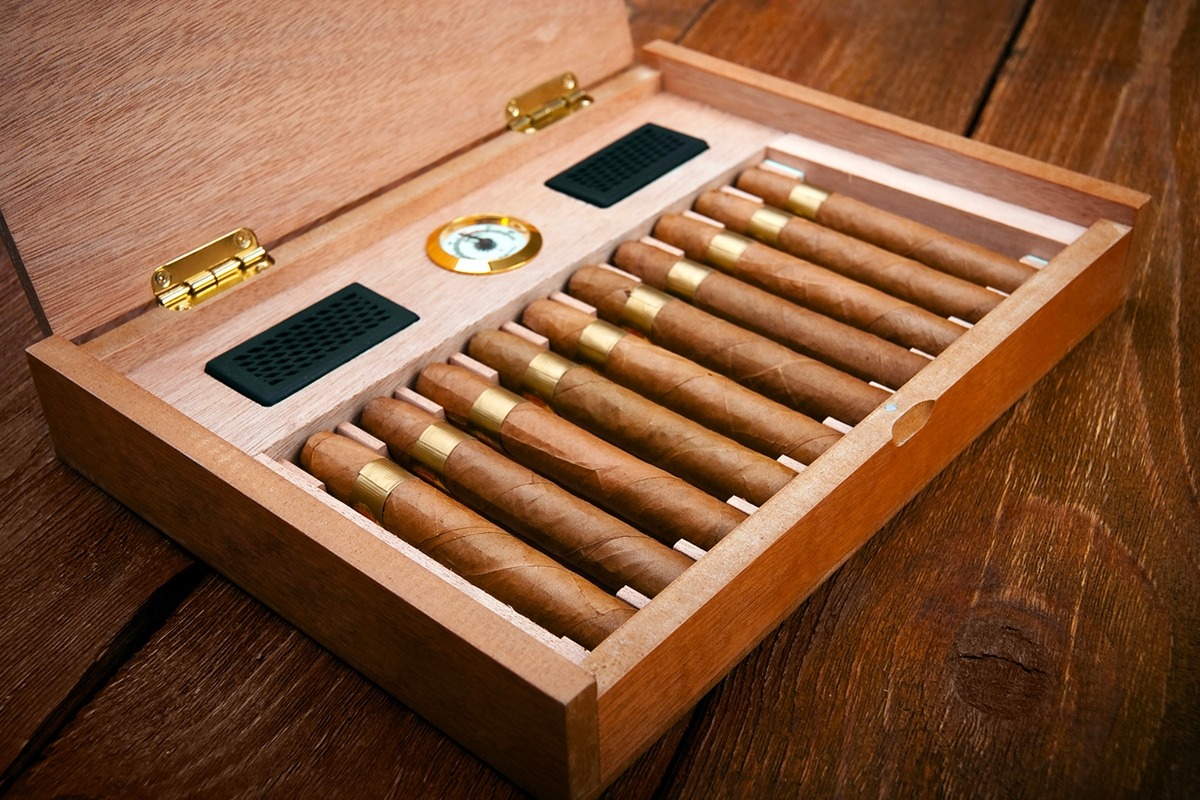
For perfect preservation of your cigars, the top-of-the-range cigar cellar from Pinel et Pinel is, in our view, the most ideal. It respects the very strict criteria expected for perfect conservation, such as a storage temperature of between 18 and 21°C and a humidity of 70% (this is the level of humidity in the cigar cellar). In addition, it must be ensured that it is regularly ventilated. You can open it every two weeks for example. Thanks to its recognized know-how, Pinel et Pinel has become the specialist in the preservation of high-end cigars, with its trunks and boxes adapted to all volumes. Indispensable for the preservation of your best cigars, with us, we are a fan of their cellars. To test is to approve it!

What are the elements that make up the cigar?

A luxury product despite itself, the cigar is associated with businessmen and those in power. The best cigars are sold at gold prices. Whether good or bad, the cigar is always composed of the same elements. Let’s do a check in.

The making of a cigar: a ritual that does not change

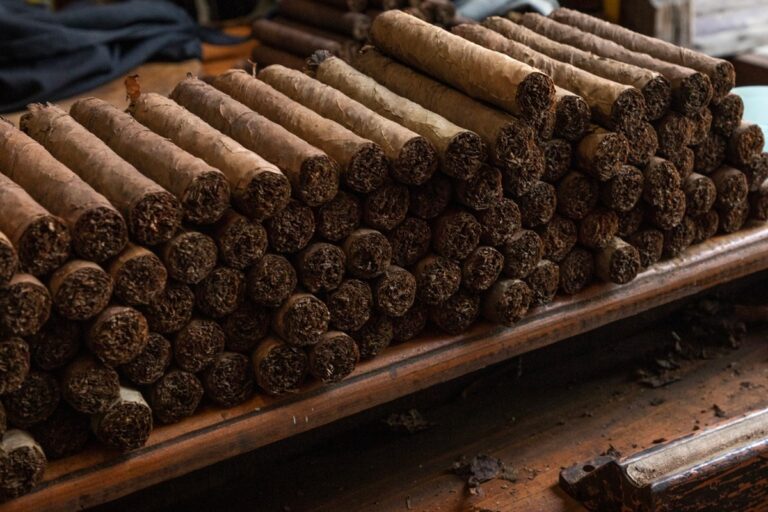
Even if the popularity of cigars does not tarnish, the manufacturing method has changed little. Indeed, the best cigars are rolled by the expert hands of torcedors. Whether crafted in Cuba, Honduras, Dominican Republic, Nicaragua, or any other country in the world, a cigar is always made the same way.

Of course, there is also a less orthodox manufacturing method that produces lesser quality cigars: the one that uses machines. Certainly, the yield is higher, the composition of the cigar remains the same, but the tobacco leaves used are often of lower quality and the rolling impersonal. The soul and passion of the torcedor does not live through the vitola, which also makes it lose its taste.

The composition of the cigar

In addition to the head that is brought to the mouth and the foot that is set on fire with the flame of a lighter, a cigar can be broken down into three parts. Here are which ones.

the tripe

This is the heart of the cigar, in other words, the invisible part. It is made of cut or rolled tobacco leaves.

The binder

These are tobacco leaves that cover and protect the filler. It is also the middle part of the cigar.

The Cape

It is represented by a large rolled tobacco leaf that wraps the cigar and allows its finishing. It is therefore the visible part of the upper which comes to rest on the binder. Its color may vary depending on the type of tobacco used. It is for this reason that there are light yellows to dark browns.