Home Blog Page 35

What are the effects of CBD flowers?

In the world of well-being and natural health, CBD flowers are the talk of the town. They are praised for their many potential benefits. But what exactly are these effects? Let’s dive into the fascinating world of CBD flowers. CBD, or cannabidiol, is one of many chemical compounds, called cannabinoids, found in the hemp plant. CBD flowers are harvested from specific hemp varieties that have a high CBD content. CBD is non-psychoactive.

The effects of CBD flowers

Preliminary studies and anecdotal evidence suggest that CBD may have a number of positive effects:

Anti-inflammatory

One of the main benefits of CBD flower is its anti-inflammatory properties. It interacts with the body’s endocannabinoid system (ECS), a complex cellular signaling system, which plays a key role in regulating many functions, including the inflammatory response. CBD may help reduce inflammation by inhibiting certain effects of the immune system that cause inflammation. This property may help relieve inflammation and pain associated with conditions like arthritis, inflammatory bowel disease, and some forms of chronic pain.

Reduction of anxiety

CBD flower has also been studied for its potential to reduce anxiety. Preliminary studies suggest that CBD may interact with serotonin receptors in the brain, a neurotransmitter that plays a key role in regulating mood and behavior. Balanced serotonin levels can help reduce feelings of anxiety and stress. It should be noted that while some people have reported reduced anxiety using CBD, more research is needed to fully understand how CBD flower interacts with the serotonin system.

Pain relief

Another area of ​​interest for researchers is the analgesic properties of CBD flower. Again, the interaction of CBD with the endocannabinoid system could play a role. Studies have shown that CBD can help reduce pain by affecting how the body’s endocannabinoid receptors respond to pain.

Sleep improvement

Another promising area of ​​study is the effect of CBD flower on sleep. Although the exact mechanisms are not yet fully understood, it is believed that CBD may help regulate the sleep-wake cycle by interacting with receptors in the endocannabinoid system in the brain. Additionally, because CBD can help reduce anxiety and pain, two factors commonly associated with insomnia and sleep disturbances, it may indirectly contribute to better quality sleep.

Neuroprotective potential

Finally, some research suggests that CBD may have neuroprotective effects. This means it could help protect neurons from damage and degeneration. This neuroprotective effect could have implications for conditions like Alzheimer’s disease, multiple sclerosis and Parkinson’s disease. However, it’s important to note that research on CBD and neurological health is still in its early stages, and more studies are needed to confirm these potential effects.

CBD flowers are a natural product that may have a number of health benefits. However, as with any health product, it is important to do your own research and consult with a medical professional before trying CBD flowers.

French Polynesia is working on new Cannabis legislation

On Tuesday evening, the President of French Polynesia, Moetai Brotherson, met with Karl Anihia of the association Tahiti Herb Culture, Philippe Cathelain, President of the Union Polynésienne du Chanvre, as well as pharmacists and doctors to discuss progress on the cannabis legislation, which is one of the Tavini party’s campaign themes. The meeting focused on four main areas of action, with the goal of drafting a new law by “the end of the month” according to Tahiti Infos.

“This is a meeting that we have been waiting for for a very long time. Already with President Fritch, we had asked him several times but we never got an answer. There, a simple request to Moetai [Brotherson] and he receives us as soon as he returns from his mission, so that proves his attachment to this file. He is very aware of the urgency for sick people who can no longer take it. So yes we are very satisfied. We were treated to a very attentive, very pragmatic ear,” explained Karl Anihia after being received by President Brotherson and his Minister of Agriculture, Taivini Teai.

The agenda included discussions on medical cannabis, as well as other topics such as industrial hemp, CBD, local CBD (such as monoi, a hemp-infused oil already sold in Polynesia), and the project national recreational cannabis law.

Before being elected President, the then deputy Moetai Brotherson tabled in the National Assembly a proposal for an organic law relating to the experimentation of the social regulation of cannabis in French Polynesia, which proposed the creation of Cannabis Clubs, associations non-profit organization aimed at bringing users together to cultivate cannabis for personal use. The text was sent back to the Constitutional Law Commission and has not changed since.

Tuesday’s meeting mainly allowed to establish a calendar, the associations having to join the working groups in two weeks. This collaboration is a significant step forward compared to the previous government. Karl Anihia explained that the first project will focus on industrial hemp and its outlets as a construction material, textile… The objective is to produce locally what is currently imported, such as hemp-based shampoos. The associations involved obviously have the support of professionals in the cosmetics industry, who are eager to participate.

The discussion on recreational use will be complicated in advance, warned Moetai Brotherson, indicating “that he could not go beyond what France authorizes”, even if cannabis consumption is significant in the archipelago. where 50% of the Polynesian population over the age of 15 uses cannabis.

The “typical” cannabis user? There is none, according to a US report

Cannabis users in the United States span a broad demographic spectrum, but nearly all are looking for a way to disconnect, according to a new report.

In February 2023, researchers from New Frontier Data surveyed over 5,500 people about their cannabis use. The results show that while cannabis users span a wide range of backgrounds, economic brackets and political stances, many of them are active and almost all are looking for something to help them relax.

According to the report, 42% of adult participants said they had used cannabis before and would likely use it again, with 37% describing themselves as “current users”.

Among them, 37% said they had increased their consumption in the past year, and more than a third of them use cannabis every other day. Although more than half of the respondents live in a state where adult cannabis use is legal, the authors report that the frequency of use does not vary significantly by market type.

The demographics are almost evenly split between male (54%) and female (46%), but the majority identify as white (63%), followed by Hispanic/Latin (14%) and black (14%). %).

Only 10% of respondents were aged 18-24, with 25-44 year olds accounting for just under half (47%). Some 18% were between 45 and 54 years old, 15% between 55 and 64 years old and 10% over 65 years old.

The majority of consumers were working people, with most earning between $25,000 and $75,000, and 38% holding a bachelor’s degree or higher. 38% have children under 18.

Asked about their political orientation, 36% describe themselves as “liberal” and 26% as “conservative”.

Reasons for cannabis use

The line between medical use and recreational use is blurred. Most respondents said they use cannabis to achieve a ‘specific goal’, with 83% saying they use it for relaxation, including relaxation, anxiety and sleep .

While most respondents reported using cannabis “for recreational purposes”, more than half indicated that their use was both medicinal and recreational, with chronic pain being the most common indication, followed closely by anxiety, depression and insomnia.

Three-quarters of declared “medical consumers” treat a specific disease diagnosed by a doctor. Almost all (94%) said their condition had improved since using cannabis.

A significant proportion of non-consumers also said they would be willing to try cannabis if they became ill with a condition that could be relieved by cannabis.

How do people consume cannabis?

Joints are the most common consumption method, followed by edibles.

Even in states where adult cannabis use is legal, access to a wide range of products is limited. Less than half of consumers had access to products other than flowers, pre-rolls and edibles.

THC potency and product effect are the attributes that consumers find most relevant when choosing a product.

Among flower consumers, 77% said variety was important and 47% gave importance to minor cannabinoid and terpene profiles.

Where do consumers get their cannabis?

While just under half of respondents (43%) buy their cannabis from a dispensary, many still get their supplies from friends or family members, 15% have it delivered and 10% get it from from a reseller.

Only 2% of respondents say they grow their own cannabis at home.

Cannabis consumers need more options

Although the report indicates a strong position and potential growth for the cannabis industry, the report’s authors say producers and regulators need to do more to meet consumer needs.

“The demographics of cannabis users are diverse, with users split across age groups, genders, economic brackets and political affiliations,” the report said.

“The majority of cannabis users use the product for medical and recreational purposes. This underscores the need to develop products focused on specific effects, such as increased energy or pain relief, and to understand that a consumer may seek several distinct effects in different settings. »

The authors add: “Access to forms of cannabis other than flower and edibles remains limited for many consumers, even in states where use is restricted to adults. As such, regulators should ensure that a greater variety of cannabis products are made available to consumers, and existing operators who have focused primarily on flowers and edibles should expand their product offerings to reach new consumers, while providing existing consumers with additional product options. »

Luxembourg will vote on the legalization of cannabis by the end of June

Provided for in the 2018-2023 coalition agreement, the legalization of cannabis in Luxembourg “will be debated and voted on in public session during the week of June 26”, now indicates the Chamber of Deputies on its website.

As a first step, the Grand Duchy plans to authorize adult residents to grow up to four plants at home, from seeds. Plants should not be visible from the public space. Consumption must also be done at home under penalty of being fined up to 250 euros and possession of cannabis in public must not exceed 3 grams.

The next phase will be devoted to developing a state-controlled cannabis production and sales chain. To this end, a pilot project will be set up to regulate the sale of cannabis in Luxembourg, which will be reserved for residents over the age of 18, with a maximum purchase of 5 grams of cannabis per day in all future stores. and 30 grams per month. Certain products such as pre-rolls will not be authorized for sale to promote consumption in vaporization.

2 production licenses are currently planned. They will supply 14 points of sale that remain to be created. The sale of cannabis in public places will remain prohibited and coffeeshop-type places of consumption will not be authorized.

Sanctions will be provided for people who do not respect the rules, such as crossing the Luxembourg border with cannabis and regardless of the country of origin, possession of more than 5 grams in public or the sale or donation to minors or non-residents of Luxembourg.

The study will be monitored by the European Monitoring Center for Drugs and Drug Addiction (EMCDDA) and various public health research institutions in the country to verify whether the system “enables the protection of public health at national level to be improved, in particular by quality control of products consumed by a very large public, and if the new prevention strategies make it possible to limit use, stem the proceeds and development of organized crime, free up capacities and resources at the level of the reduction of supply and the fight against organized crime and to reduce the contacts, to date unavoidable, of users with criminal circles. »

Luxembourg has set up a website with all the details of the legalization project.

Aurora Cannabis closes its last production site in Denmark

Canadian producer Aurora Cannabis is closing its last facilities in Denmark and will resume European supply from Canada, a change that should help reduce its costs.

The move comes more than a year after the company sold its Nordic Sky facilities in Odense, Denmark, for around 5 million euros.

“This is not a reflection of our European business as it remains strong with healthy margins and growth prospects,” Aurora’s spokesperson told MJBizDaily.

“However, the Nordic site faced many unique challenges, beyond our control, which could not be overcome despite our best efforts. »

A complicated installation in Europe

This release ends a difficult period for Aurora in the Danish market. In early 2018, Aurora had considered setting up Europe’s “largest” medical cannabis producer in Denmark when it unveiled its plans to become the second grower allowed to build a facility in the Scandinavian country after Canopy Growth.

The facility was expected to produce an impressive 130 tonnes of medical cannabis per year, far more than the European market is currently demanding.

Germany, which is the largest market for medical cannabis in Europe, imported only 25 tons of cannabis for medical or scientific purposes in 2022, with a 19% increase compared to the 20,769 kilograms imported in 2021.

A few months before Aurora committed to Denmark in 2018, rival producer Canopy Growth Corp. unveiled plans to establish its own 4-hectare production site in Odense. Canopy eventually sold the facility to Australian company Little Green Pharma in 2021.

In a conference call with analysts on Wednesday, Aurora CEO Miguel Martin said the Denmark shutdown was part of a roughly C$40 million cost savings plan, which is expected to be completed by here on March 31, 2024.

“We have taken the decision to close our Nordic production plant in Denmark and we will supply [l’Europe] from our Canadian facilities, which have much lower unit costs and much more reliable supply,” said Chief Financial Officer Glen Ibbott.

“We believe this will allow us to be even more competitive in a growing European market. »

Mr. Martin identified three “main” challenges with the Danish installation.

“First, regulations around what would be traditional pathogen remediation – whether powdery mildew or whatever – in this facility made it difficult to achieve the same yield and production. than the ones we get in Canada,” the CEO told analysts.

“Secondly, the size of these greenhouses did not allow for the same production efficiency that we achieve in our indoor facilities in Canada. »

Finally, Mr. Martin said that European markets “for one reason or another” consider Canadian products to be of higher quality and more valuable to them.

Cannabis advertising banned on Twitch, exceptions remain for alcohol

Video game streaming platform Twitch, acquired by Amazon in 2014, recently released an update to its branded content guidelines, which include a ban on sponsoring cannabis products or brands.

Twitch’s branded content guidelines explain that it is defined as “streamers showcasing products or services on the basis of an exchange of value, such as being paid or receiving goods or services “. These can be product placements, endorsements, channel sponsorships, and more.

Under Prohibited Product Categories, Twitch clarifies that it does not allow services that violate its Community Guidelines, such as risky gambling, unauthorized sharing of private information, and “illegal products and services”. , such as the sale, advertising or trafficking of drugs, firearms, counterfeit products or other illegal products and services”.

It also clarified that streamers cannot feature sponsored content that includes weapons, adult items, tobacco products, political content, and “cannabis-related products, including vaping and delivery.”

Interviewed by High Times, content creator JimTanna, who streams on Twitch and videos on YouTube, explains that the mention of banning cannabis sponsorship, but keeping alcohol brand sponsorship allowed elicited many reactions.

“But what’s weird, and what’s allowed, is that you can still promote alcohol. I do not understand what is happening. We can promote alcohol, but we can’t promote legal cannabis? JimTanna said. “…Let the content creators live. Let us smoke our weed. Let us promote the products. »

JimTanna adds that these new rules do not prevent streamers from smoking freely on their streams, but are specifically focused on sponsoring cannabis-related products.

Previously, Twitch implemented other changes to prevent usernames with “references to hard drugs, recreational drugs, and drug abuse” except for “alcohol, tobacco and marijuana” in February 2022. Amazon itself has already taken steps to update its drug testing policy in September 2021, and has also lobbied to support federal legalization of cannabis in January 2022. .

In recent years, other companies have updated their cannabis policies. Twitter recently refined its policies, including allowing ads related to cannabis, including THC and CBD. Apple removed and banned vaping-related apps from the Apple Store in November 2019, but an update in 2021 ended that ban which prevented cannabis companies from entering the Store.

Everything you need to know about blower cleaning

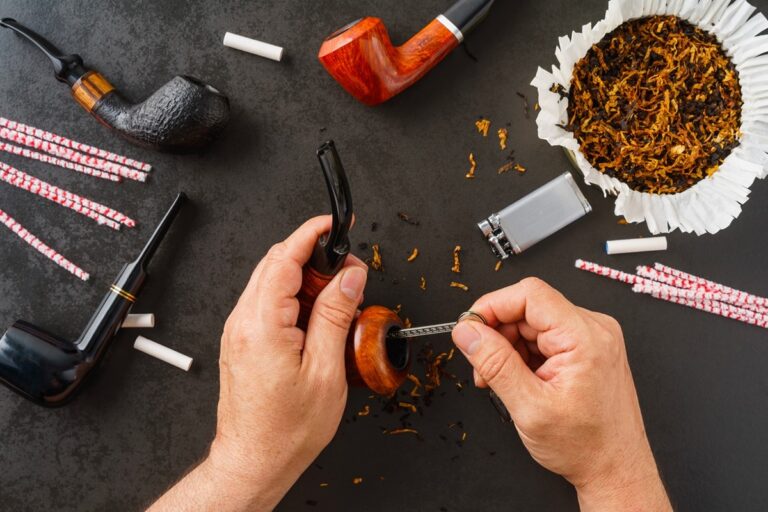
Cleaning your pipe isn’t just about cleanliness. It is also the guarantee to enjoy all the aromas of your favorite tobacco in addition to guaranteeing the durability of your puff. The idea is to do this after each session. Here’s how to properly clean your pipe.

Disassemble his blower to clean it

To be properly cleaned, the pipe must be disassembled. But be careful, you have to wait until it has cooled down so as not to damage it and above all empty the ashes and the tobacco residue with a pipe cleaner or by tapping it on a piece of cork.

Only then can you gently remove the pipe by twisting it around itself. Also remove the filter if present. All items are now ready to be cleaned.

Internal cleaning of your blower

Using a pipe cleaner, polish the inside of the pipe and stem to remove tar and moisture. Take another pipe cleaner and repeat the operation. It is advisable to use a special cleansing fluid approximately every 10 to 12 sessions. It will then suffice to dip the pipe cleaner in it before inserting it into the pipe and the stem.

If you use disposable filters, remember to change it approximately every 3 or 4 sessions. The metal filters can be cleaned with warm soapy water before being dried with a soft, clean cloth. You can now reassemble your pipe, proceeding in the same way as for dismantling.

The external cleaning of the blower

To keep your pipe shiny and tarnish-free, it’s also important to clean the outside of the pipe. Many recommend using clean water and soap. However, this can alter the wood. Some smokers never clean the exterior to maintain the vintage look. Others polish it from time to time with linseed or olive oil. However, it can give the tobacco a taste that some smokers don’t like. So do as you see fit!


France wants to ban CBD cosmetics in Europe

According to information released by CosmeticOBS, France intends to ban the use of cannabidiol (CBD) in cosmetic products in Europe.

But, isn’t CBD already legal in cosmetics?

CBD, in its natural and synthetic forms, is included in CosIng, the European database of all cosmetic ingredients approved in Europe, for anti-sebum, antioxidant, moisturizer and skin protectant uses.

But as if it were too simple, two regulations can go against its regulation.

Classification, labeling and packaging

The first is the European regulation n° 1272/2008, known as CLP for classification, labeling and packaging of substances and mixtures, which is carried out by the harmonized classification and labeling (CLH). The CLP regulation thus has an impact on a certain number of European regulations, including that of cosmetics.

On June 7, 2023, the European Chemicals Agency (ECHA) published the intent from France of CLH for CBD, for its reproductive toxic potential. The beginning of a process, which, if it comes to an end and as CosmeticOBS explains, would end up listing CBD as a Carcinogenic, Mutagenic and Toxic for Reproduction (CMR) substance and therefore prohibited in cosmetic products in Europe .

The ECHA platform invites anyone with relevant information on the identity or hazard properties of a substance to provide this information.

A second regulation could also threaten the use of this ingredient in cosmetics.

European cosmetic regulation

CBD is not regulated by Cosmetic Regulation 1223/2009 on cosmetic substances and ingredients. As CosmeticOBS informs us, it is currently the subject of a consultation by the European Commission (EC), which launched a call for data in early June in preparation for the work of a Scientific Committee (CSSC) which will rule on the safety of CBD in cosmetics.

The call for data first of all takes up the conclusions of the Kanavape judgment which on the one hand rules definitively that CBD cannot be considered as a narcotic within the meaning of the United Nations Single Convention, and which on the other hand adds that legislation restricting the marketing of CBD might be appropriate to ensure the achievement of the objective of protecting public health, as long as it does not go beyond what is necessary for that purpose. For clarification, CBD was added to CosIng after the Kanavape judgment, pursuant to its conclusions and at the request of the European Industrial Hemp Association (EIHA).

The call for data then cites a statement from EFSA relating to the classification in some cases of CBD as Novel Food. On April 26, 2022, EFSA published a statement summarizing the state of knowledge on the safety of CBD consumption and highlighting areas where further data is needed:

“The effect of CBD on the liver, gastrointestinal tract, endocrine system, nervous system and psychological functions needs to be clarified. Animal studies show significant reproductive toxicity, and the extent to which this occurs in humans in general and women of childbearing age in particular needs to be assessed. Considering the significant uncertainties and data gaps, the Panel concludes that the safety of CBD as a novel food cannot be established at this time. »

The relationship with cosmetics seems tenuous but interested parties can submit their information to the EC for a period of 15 months, until September 30, 2024.

We have contacted various French authorities, who generally deal with CLH declarations or sit on the European working group on cosmetics, and are awaiting their responses.

Chile opens dialogue on cannabis legalization

Chilean MPs Marcela Riquelme and Ana María Gazmuri met with the National Prosecutor, Ángel Valencia, and the director of the specialized unit in the fight against organized crime, Ignacio Castillo, with the aim of establishing a constructive dialogue on cannabis, both medical and recreational.

MP Gazmuri shared a tweet in which she indicates that the meeting focused on the challenges that will arise from the implementation of the anti-drug law, in particular the new indication of Law 20,000, which allows the medical cultivation of cannabis.

For his part, the national prosecutor expressed his commitment, according to La Maria Juana: “I have the responsibility to apply the law correctly and to give prosecutors the means to prosecute the most serious crimes. In this sense, the Prosecutor’s Office will issue a general instruction to update the investigation recommendations of prosecutors in cases related to drug trafficking, making a clear distinction between personal use and use for medical purposes. , especially with the new law that has been introduced. »

Chile listens to cannabis users

According ElPlanteo, this breakthrough marks the end of years of struggle, both on the part of civil society and Congress. A regulatory amendment to Law 20,000 has been made for the benefit of cannabis consumers, an important step according to cannabis advocates to avoid undue persecution of patients and cannabis users.

The opening of the dialogue on cannabis between MPs, the national prosecutor and the specialized unit in the fight against organized crime is a fundamental step towards the establishment of a more inclusive and fairer legal framework for the community of cannabis in Chile. This meeting could be the starting point for future collaborations and policies that will benefit patients in need of cannabis for medical purposes and adult recreational users.

ANSM classifies HHC and two of its derivatives on the list of narcotics

As the Minister of Health had announced, and after evaluation by the National Medicines Safety Agency, hexahydrocannabinol (HHC) and two of its derivatives, HHC-acetate (HHCO) and hexahydroxycannabiphorol (HHCP) will be included on the list of narcotic products from Tuesday, June 13, 2023.

Their production, marketing and consumption will therefore be prohibited on the same date in France, joining many countries in Europe which already prohibit it.

HHC, HHCO, HHCP: what are we talking about?

HHC is obtained by a chemical process of hydrogenation of CBD. The synthetic molecule, which exists in very low doses and only in seeds in the natural environment, is said to produce effects psychotropic similar to those experienced when consuming THC. Sold especially on the internet and in CBD shops, HHC comes in the form of a distillate-like extract that can then be inserted into oils, resins, vapes or food derivatives, or sprayed on hemp flowers. . The HHC concentration of products sold on the market is variable and can reach up to 99%, depending on the forms and brands.

According to the ANSM, the monitoring carried out by the national addictovigilance network indicates that the consumption of HHC is currently increasing in France, sometimes without the knowledge of users who think they are consuming another product, such as CBD.

According to various feedback, the HHC had taken a clear share in the turnover of CBD shops and online sales, demonstrating in particular the appeal of a “legally” sold product. Will manufacturers attack this ranking as it was done for CBD? On to the next episode.