Home Blog Page 37

Rhode Island prepares to legalize psilocybin and its therapeutic access

A Rhode Island House of Representatives committee has approved a bill that would legalize the possession and cultivation of psilocybin mushrooms, while taking steps to prepare for therapeutic access pending federal reform.

The House Judiciary Committee, which held an initial hearing on Democrat Congressman Brandon Potter’s bill in March, passed the bill with amendments in a 12-2 vote on Tuesday.

The next step for the bill will be the House of Representatives.

The relevant Senate committee last week heard the corresponding version of the bill from Democratic Senator Megan Kallman, but members decided to put it on hold for further study before scheduling a possible vote in the chamber. .

The legislation would remove criminal penalties for possessing and cultivating up to one ounce (28 grams) of psilocybin for personal use, and individuals would also be able to share this amount with other adults, except from July 1.

The law also provides that if the Food and Drug Administration (FDA), the federal food and drug agency, is re-evaluating the psychedelic, which the agency has already designated as a breakthrough therapy, the Rhode Island Department of Health “will establish rules and regulations relating to cultivation, distribution and medical prescription”.

In the event the FDA expands its access program, the State Department would also have to allow sites to administer psilocybin to “patients with a serious or life-threatening mental or behavioral disorder, who have not access to effective medications for mental or behavioral health”.

According The Intercept, the FDA could approve the therapeutic use of psilocybin, as well as MDMA, within the next year or two. Biden administration health officials are considering the creation of a task force on psychedelics in anticipation of possible federal policy reform.

Malta publishes new ‘fine-tuned’ rules for Cannabis Clubs

The Malta Authority for Responsible Cannabis Use (CURA) has updated its regulatory framework for cannabis for adult use following widespread criticism from various stakeholders.

At a press conference in mid-May, Rebecca Buttigieg, Malta’s Parliamentary Secretary for Reforms, and Leonid McKay, Director of CURA, presented the new “tweaked” set of rules, aimed at addressing a number of questions as part of an ongoing “stakeholder consultation process”.

The two also revealed that 7 cannabis association applications have been filed and 11 association names have been reserved, suggesting that more applications are pending.

While stakeholders praised CURA for remaining flexible and taking feedback on some issues into account, they say many “grassroots community members and traditional cultivators feel it is next to impossible” to create associations.

“Refined” regulations

Following the Thursday May 18 press conference, the CURA released its updated regulatory framework on May 23.

In April, we reported that many local actors were complaining that the CURA had “shot itself in the foot” and that the “barriers to entry were too high”.

One of the main concerns of future owners of the Cannabis Harm Reduction Association (CHRA) was the format of the application procedure, which stipulated that all documents should be submitted together with the application. Candidates had to ensure that they had the right to inspect the chosen property for the duration of the application procedure in order to be able to provide the necessary documents.

CURA has now amended this requirement “to allow prospective associations to take a modular approach throughout the application process”.

Also, the transport of cannabis between the place of cultivation and the place of sale was previously authorized only to people with ADR certification, the same license as that required for the transport of toxic, radioactive and explosive substances. This had led Andrew Bonello, president of ReLeaf Malta, to state that the CURA treats cannabis “like plutonium”.

The newly amended rules will allow the CURA to issue its own certifications, “which meet all the criteria required to ensure that cannabis is transported safely”.

These include ensuring that transport only takes place at night, that cannabis is only moved in sealed containers inside a safe, and that the vehicle is at temperature controlled, closed and monitored.

Next comes waste management. Initially, the CURA stipulated that the waste must be incinerated in an approved landfill, which met with strong opposition from stakeholders due not only to the excessive financial burden, but also environmental considerations.

Associations will now be able to simply compost their waste, but this must be done in a closed container; the compost should be used as a nutrient for the associations’ own cultivation operations; and a detailed written record of “all stages of the waste composting procedure” should be kept.

Finally, the tests, which require associations to “test [leur] cannabis at a level ten times that of medical cannabis”, should cost “thousands and thousands” every month, just to determine the quality of the product. There would also be only two test machines on the island with the obligation to raise the levels of at least nine cannabinoids.

While the CURA said the “testing regime is maintained in its entirety”, it clarified that “the frequency and modalities of testing have been refined to address the risk of each specific element of the testing criteria”.

Phytocannabinoid profile testing will eventually be done “periodically”, rather than with each batch, but bacteria, yeast, mold and moisture testing will still need to be done by the association “prior to release.” of each batch.

“We expected more applications at the moment”

While some welcomed CURA’s willingness to respond to feedback and change regulations to address stakeholder concerns, Bonello suggested there was still a long way to go.

While it is positive to see that completely unnecessary costs have been reviewed, the overall effectiveness of the ‘tweaked’ regulations remains to be seen.

“A lot of communities and former farmers are still unable to form an association. One wonders how the objectives of combating the illicit market and social justice can be achieved when the needs of those who fought for this reform are ignored”.

Mr. McKay and Ms. Buttigieg, meanwhile, said they thought the “process was going very well” and that the feedback they had received from the founders had been positive so far.

Furthermore, the Parliamentary Secretary for Reforms hinted that Malta would soon meet with other countries wishing to replicate its model.

The duo also said that of the seven associations that applied, there is a mix of cultivation practices between indoor and outdoor cultivation methods, while the majority of them had between 100 and 150 members.

However, given that CURA was created more than six months ago, Mr. Bonello said that “one would not only expect that there would be many more applicants, but also that that a large number of them are already operational”.

“However, we hope that the fundamental principles of the reform will be respected, acting in the best interests of the community and genuinely focusing efforts on social justice and human rights. ” he added.

Bègles wants to experiment with the legalization of cannabis

The mayor of Bègles, a small town of 30,000 inhabitants close to Bordeaux, wants to make his city a territory for experimenting with the supervised legalization of cannabis.

Mayor Clément Rossignol Puech’s proposal to experiment with the production, sale and consumption of cannabis in Bègles has its origins in two recent reports: one from the Information Mission on the Uses of Cannabis, which was held to the National Assembly in 2021, and the other to the Economic, Social and Environmental Council (CESE) in 2023. These two reports came out in favor of a supervised legalization of cannabis.

Convinced of the need to reform the existing legislative framework, the mayor of Bègles sent a letter to the President of the Republic at the beginning of this year, presenting this experimental proposal.

“When I pressed the ‘send’ button, I felt I had done my duty, welcomed the green city councilor last March to Newsweed. It was the first time that I publicly committed to the legalization of cannabis, even if it is a subject that I have known for a long time”.

The mayor says he is motivated by several objectives: to fight against illicit trafficking and the violence associated with it, to unclog the judicial system, to better support users, to curb consumption by young people through quality control and to contribute to regional economic development through the establishment of a new agricultural sector.

To do this, he intends to mobilize the living forces of the nation around his project. A column relayed last weekend in the JDD and signed by around fifty personalities from all walks of life thus calls for “experimenting with a local model for the legalization of cannabis” and co-constructing “a model corresponding to the needs, expectations and capacities to really do for our territories, a local model that really works”, probably comparable to what is already taking place in Switzerland and what is partly planned for Germany.

On Thursday June 15, a round table will be held in Bègles and will involve members of the French Economic, Social and Environmental Council, the national secretary of the Syndicat de la Magistrature, addictologists and doctors, as well as a CBD producer. This event, open to all, aims to outline the desirable outlines of a French model of regulated legalization of the production, sale and consumption of cannabis.

All information is available on the town hall website.

After Toronto, Uber Eats delivers cannabis to British Columbia

Since April 18, Uber Eats, in partnership with the Leafly marketplace, has allowed adults over the age of 19 to order cannabis and have it delivered directly to certain cities in British Columbia.

Thirteen retail stores in Vancouver and Victoria were working with Uber Eats to launch the program, six months after working with Leafly to bring cannabis delivery to Ontario. This was the first time cannabis delivery was available on a major third-party delivery platform.

“More British Columbians than ever have access to legal cannabis. We partner with industry leaders like Leafly to help retailers provide safe and convenient options for British Columbians to purchase legal cannabis that will be delivered directly to their doorstep. »

» Over the past few years, we have invested heavily in our delivery offer and the selection has grown considerably. Uber Eats has quickly grown into a versatile platform that can be used by a variety of businesses, large and small. »

“Leafly has been involved in the cannabis market in Canada for over four years and we support over 850 cannabis retailers in British Columbia. We are excited to work with Uber Eats to help licensed retailers bring safe and legal cannabis to people across the province,” said Yoko Miyashita, CEO of Leafly.

“At ARCannabis, our goal has always been to provide the best cannabis experience for our customers,” said Aaron Sinnathamby, CEO of ARCannabis, which is one of thirteen retailers currently participating. “This partnership will help us grow and reach even more people in Vancouver. Similar to the in-store experience, our province-certified couriers understand and adhere to local regulations regarding cannabis transactions, including ID verification. »

A success… for Uber Eats

If the two companies are obviously delighted with the partnership set up, some criticize the usefulness of such a device, in particular in the face of the delivery options already available via specialized platforms.

Brad Poulos, Lecturer at Metropolitan University of Toronto and Ambassador for Cannabis Education, noted for example that the Ontario Cannabis Store, the only authorized online distributor in the province, already offers home delivery. The addition of Uber Eats would then only benefit the delivery platform and the provincial wholesaler, to the detriment of producers and retail stores who would be forced to trim their margin to add an intermediary.

In Florida, a new battle around the legalization of cannabis

Florida activists have garnered enough signatures to qualify their proposal to legalize cannabis on the November 2024 ballot. The campaign, however, faces a legal challenge from the state’s attorney general, as in previous years.

Cannabis company Trulieve, which financially supports the Smart & Safe Florida campaign, has donated more than $38 million to date.

“Our investment demonstrates our firm belief that Floridians are ready to experience the freedom to use cannabis for personal consumption; a freedom that more than half of American adults currently enjoy,” said Kim Rivers, CEO of Trulieve, in a press release on Thursday.

“With over 965,000 validated signatures from nearly every region of our state, it is clear that these voters share this belief. We are thrilled the campaign has reached this milestone and look forward to seeing this initiative on the ballot next November. »

Legal ping pong

The Florida Division of Elections, which updates petition tallies at the end of each month, recently reported that it verified the 967,528 signatures collected at the end of May, exceeding the required threshold of 891. 523 signatures.

“There are a few steps to go through before she’s put on the ballot and gets a ballot number, but she’s received the required number of signatures to start that process,” said Mark Ard, spokesperson for the Florida State Department, MJBizDaily.

However, last month Florida Attorney General Ashley Moody announced a lawsuit seeking to disqualify the measure. Smart & Safe Florida of the ballot. She argues that the initiative would violate the state constitution’s single-purpose rule for election metrics. Popular initiative proposals should be narrowly focused on a particular issue.

Despite the advice, campaigners say they have carefully reviewed the measure and are confident the court will find it meets constitutional requirements.

The attorney general made the same argument against a 2022 legalization measure, and the Supreme Court later struck it down. The Supreme Court will hear Moody’s appeal as early as next month. Both sides are due to present their initial arguments in court on June 12, with possible closing arguments to follow.

What does Smart & Safe Florida offer?

Here’s what the Smart & Safe Florida initiative for cannabis legalization would do:

  • Adults 21 and older could purchase and possess up to three ounces of cannabis (84 grams) for personal use. The cap for cannabis concentrates would be five grams
  • Medical cannabis dispensaries could “acquire, cultivate, process, manufacture, sell and distribute cannabis products and accessories to adults for their personal use”
  • Lawmakers would be allowed — but not required — to approve additional entities that aren’t currently licensed cannabis dispensaries
  • The initiative clarifies that nothing in the proposal prevents the legislature from “enacting laws consistent with this amendment.”
  • The amendment further clarifies that nothing in the proposal “changes federal law,” which appears to be an effort to avoid past legal challenges over the ballot’s misleading wording.
  • There are no provisions for home cultivation, erasure of past records or social equity
  • The measure would take effect six months after it was approved by voters

Europe No Longer Considers Cannabis Leaves Novel Food

Three years after the start of its fight for Cannabis leaves to be considered a traditional food, the European Industrial Hemp Association (EIHA) has just won a great victory.

The European Commission has confirmed that it no longer considers the leaves of the Cannabis plant to be a Novel Food, a European food classification aimed at distinguishing novel foods whose consumption does not date back to before 1997.

The Novel Foods Catalog entry for Cannabis Sativa L. has therefore been updated to include the following: “A history of consumption in the EU has also been demonstrated for hemp leaf infusion (when they are not accompanied by flowering and fruiting tops) consumed as such or as part of infusions. This (these) use(s) is (are) therefore not new. »

It’s a welcome U-turn that could boost the European hemp food market and comes more than four years after the controversial classification by the EC, which decided to categorize all parts of the plant as ” novelty”.

The EIHA has also requested that natural products made from hemp extracts be classified as traditional foods under Article 4 of the EC Novel Food Regulations.

Companies wishing to file applications for synthetic CBD products and isolates, as well as broad or full-spectrum extracts, must for now go through the Novel Foods procedure, flowers and fortified or isolated cannabinoids are still considered novel foods.

Hemp infused tea

The primary impact of the Cannabis leaf ruling will be on those involved in hemp-infused tea and related products.

EIHA President Daniel Kruse said: “This is a major step forward for our sector, which clearly demonstrates that a collective industry effort is key to standardizing the hemp plant. and its products. »

“For many years, the EIHA has been in talks with the European institutions and Member States about novel food legislation. We are happy that science and historical facts have prevailed over prejudice.”

In a press release, the EIHA continues: “Hemp leaves were traditionally consumed as food, and in particular in the form of aqueous infusions before 1997.

She goes on to say that the change in status is also in line with the 1961 Single Convention, where hemp leaves are explicitly exempted.

And she adds: “In addition to this important regulatory development, a number of other seed-derived products will also be explicitly excluded from the application of the Novel Foods Regulation, which will clarify and strengthen their legal status on the EU. »

THC content of seeds

Although the EIHA is naturally delighted with the progress made so far, it is still awaiting feedback from the EC on the position of the THC content in hemp seeds.

Ms. Romanese added, “We sincerely hope that this spirit of positive and constructive engagement translates into the urgent need for written clarification on the uncertainty of the THC measurements in seed products. »

“Currently, operators in many EU countries suffer from misleading interpretations, seizures and unnecessary administrative requirements”, for example in Belgium.

“These new changes will remove all remaining doubts about the legality of seed-derived products and open up the market for infusions and tea made from hemp leaves, thereby ensuring additional economic income for farmers and commercial operators. »

The socialist senator of the Rhône Gilbert-Luc Devinaz proposes to legalize cannabis

The socialist senator from the Rhône Gilbert-Luc Devinaz, who revealed last September in our columns that he was working on a proposal to legalize cannabis, kept his word. The elected Villeurbannais, accompanied by 43 co-signatories, tabled his cross-partisan bill in the Senate to request a supervised legalization of cannabis.

If the explanatory memorandum prosaically recalls the failure of the last 50 years of prohibition of cannabis in France, qualifying the prohibition as the Maginot line (with a beautiful “borrowing”, on several lines, from an article by Slate 👀), the proposal stands out from the previous ones with a new text, a mixture of Canadian legalization and German proposals for the legalization of cannabis.

What does the senator suggest?

In his proposal, Senator Guess wants the creation of a regulatory agency, the “National Agency for the Control and Management of Cannabis”, placed under the supervision of Health and Agriculture. This Agency would be responsible for issuing licenses for all activities relating to cannabis – producing, processing, transporting, distributing -, controlling the quality of cannabis placed on the market and piloting the prevention and reduction of risks relating to cannabis. .

Cannabis would be produced by farmers who request it, as well as by Cannabis Social Clubs, which are therefore included in the proposal.

In addition to the Clubs, the sale of cannabis would be done in specialized stores, some of which could be equipped with places of consumption like the Dutch coffeeshops. A taxation model is proposed, with a 33% tax and fixed costs depending on the number of units purchased (60€ / 1000 units), with a minimum charge of 350€ for 1000 units. However, the “units” are not clearly defined; it is therefore not specified whether it is grams, eighths or pounds.

Any advertising of cannabis products would be prohibited outside of retail locations.

The sale of cannabis or a cannabis product to a minor is punishable by a fine of €7,500.

If passed, the law would come into force on January 1, 2030, with the Agency responsible, in the meantime, for defining a precise regulatory framework for the cultivation of cannabis, the creation of cannabis associations and the issuance licenses.

A transitional period would be enacted as soon as the law is voted with a decriminalization to 25 grams.

What is missing from the proposal?

The text tabled in the Senate sweeps away most of the objects relating to regulation. However, several points have not been integrated. We think in particular of:

  • Self-cultivation: would it be authorized? For how many plants?
  • At what age can an adult legally buy or grow cannabis: 18? 21 years old ? 25 years ?
  • What about people previously convicted for acts that are no longer reprehensible: would there be a mechanism for automatically erasing criminal records?
  • By what mechanisms would regulation channel the living forces of the illegal market into the new legal market?
  • Would home delivery of cannabis be allowed?

Faced with the current government conservatism, the parliamentary initiative will have the merit of causing debate on the subject, Senator Devinaz believing that “it’s better than silence”.

Cannabis use does not lead to impaired driving performance, state of California-funded study finds

Scientists from the University of San Diego in California have published a study that found that being under the influence of cannabis is not associated with poor driving performance.

Released May 26, the study was funded by the state of California and used specially trained law enforcement officers.

After consuming cannabis via a “cannabis cigarette” containing 5.9% THC or 13.4% THC, or a placebo, the 191 participants assessed their ability to drive via a simulator driving, a real car, and were also subjected to Standard Sobriety Tests (SSTs) by specially trained police officers.

Saliva samples were taken at the same time as driving was assessed, including the ability to sit upright, over a 5-hour period.

Although field sobriety tests conducted by police officers correctly identified participants in the cannabis control group in 81% of cases, they also incorrectly identified 49% of participants in the placebo group as being intoxicated, suggesting a lack of reliability of the tests carried out by the police. Officers performed several tests, including walking and turning, a Romberg test, or standing on one leg and putting their finger to their nose.

The researchers’ analysis of participants’ mouth swabs, blood samples, and breath after using the car and simulator found no link between substandard driving and fuel consumption. cannabis.

The researchers stated in their study: “In the largest trial to date involving experienced users smoking cannabis, there was no correlation between THC (and related metabolites/cannabinoids) in blood, oral fluid or breath and driving performance. The complete lack of relationship between the concentration of the centrally active component of cannabis in blood, saliva and breath is strong evidence against the use of laws per se for cannabis.

These findings are consistent with a recent meta-analysis that found THC levels to be “relatively poor predictors of cannabis-induced impairment.”

CANAUOS, CBD extraction in Auvergne

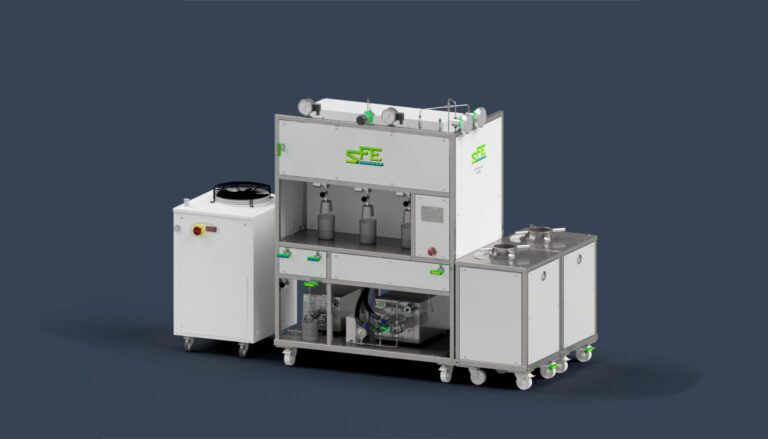
CANAUOS, a major player in CBD in the Auvergne-Rhône-Alpes region, has invested in a state-of-the-art supercritical CO2 extraction machine. This new machine should transform the way aromatic and medicinal plants such as hemp are processed, in particular by producing CBD extracts free of toxic substances and pollutants.

With demand for CBD products on the rise, CANAUOS is stepping forward to ensure its customers have access to the highest quality products. The supercritical CO2 extraction method is a natural way to extract CBD from plants, as it uses carbon dioxide in a liquid state to extract cannabinoids and other beneficial compounds from plant material.

Unlike other extraction methods, such as solvent extraction, supercritical CO2 extraction produces a pure and potent extract that is free from harmful chemicals and toxins, and full-spectrum, obviously without the addition of isolate, to promote the entourage effect in the product. It also makes it possible to capture terpenes, the aromatic molecules of plants, to benefit from all their advantages.

The new machine, which has been custom calibrated to meet CANAUOS’ specific needs, will enable the company to produce the highest quality CBD extracts. Where it already provides quality products to its customers, it will now be able to have full traceability from seed to finished product. Besides, the machine is able to extract a wide range of aromatic and medicinal plants, which will allow CANAUOS to expand its range to other herbal products in the future.

The CO2 extraction machine

The CO2 extraction machine

“We are delighted to invest in this cutting-edge technology which will allow us to produce the highest quality CBD extracts,” said Severine Malhière, founder of CANAUOS. “Our customers trust us to provide them with safe and effective products, and this investment reflects our commitment to delivering on that promise. »

The new machine will be registered under the GMP label and will be able to supply products that meet pharmaceutical standards. It will also help CANAUOS achieve its sustainability goals. Supercritical CO2 extraction is an environmentally friendly method that produces little to no waste and does not require the use of harmful chemicals. This method is in line with CANAUOS’ commitment to produce environmentally friendly and sustainable products and goes hand in hand with its organic and Ecocert-certified cultivation methods.

“We are committed to sustainable development and the new supercritical CO2 extraction machine demonstrates this commitment,” said the manager. “We are delighted to be able to manufacture high quality CBD products while being aware of our impact on the environment. »

CANAUOS’ investment in the supercritical CO2 extraction machine is an important step, for it, but also for the region, which will now be able to benefit from local CBD extractions.

Researchers want to combine psilocybin and cannabis in a single medical treatment

The company, CaaMTech, received an initial patent supporting the research in 2021. An article published Wednesday on the Greenstate site explains that the company is “developing pharmaceutical drugs for mental illnesses such as depression and mental disorders. obsessive-compulsive” and that she is “currently studying the therapeutic value of psilocybin in combination with cannabinoids”.

“Through its research, CaaMTech has isolated derivatives of psilocybin, cannabinoids, and terpenes,” says Greenstate.

Activate psychedelics and cannabinoids

Andrew Chadeayne, Founder and CEO of CaaMTech, said that “From day one, the company’s goal has been to integrate CaaMTech’s scientific innovation as much as possible into its intellectual property portfolio, as we develop the next generation of psychedelic drugs”.

“The acceptance of our first patent application gave a boost to the team that has worked steadily over the past four years to bring it to the finish line,” said Mr. Chadeayne in the ad. “While there are still hundreds of applications to process, this is an excellent start. »

“Strong patent protection and basic research give our drugs the fundamental support they need to pass clinical trials and become FDA-approved drugs,” he added.

“Compositions and methods comprising a psilocybin derivative” covers (among other things) the synergistic modulating effects of cannabinoids on serotonin receptor activation when administered in conjunction with a serotonin agonist. In simpler terms, CaaMTech has demonstrated that cannabinoids work synergistically with psychedelic tryptamines to produce their effects. In doing so, CaaMTech demonstrated the potential of two drugs once declared by the US federal government to have “no known medical value” to treat some of the world’s toughest mental health conditions.

The announcement states that “the notice of authorization [de l’Office américain des brevets et des marques (USPTO)] is a watershed moment for CaaMTech’s Intellectual Property Division, which has filed more than 100 additional patent applications since filing in 2017.”

“Authorization is the final hurdle of examination before a patent is granted,” the statement said.

Since the approval of this patent in 2021, Greenstate reports that “CaaMTech has shared results related to 4-PrO-DMT as a new synthetic alternative to psilocybin, among other things. »

“Distinct efforts can complement this work, such as SABI Mind’s research survey covering a myriad of topics, such as general acceptance or disregard for synthetic alternatives to compounds such as psilocybin. These measures, along with policy work, create broader pathways for patients seeking trustworthy, science-based psychedelic therapies,” the outlet reported.

Developing a treatment won’t be easy because of “serious hurdles to creating a combination compound.”

“Cannabinoids and psychedelics act on different receptors in the brain. Cannabinoids such as THC primarily bind to the CB1 cannabinoid receptor; CBC primarily binds to the CB2 receptor. Psychedelics like psilocybin primarily bind to serotonin 5-HT2A receptors,” the journal states.

“But research has shown that the cannabinoid CBD can bind to serotonin, and when serotonin is paired with a cannabinoid CB2 receptor, the combination of the two can do things that neither receptor can do alone… Scope by the potential of the combined compound, the medical cannabis community is increasingly enthusiastic. For example, cannabis combined with psychedelics has been found to significantly shrink tumors in breast cancer.”

CaaMTech, based in Issaquah, Wash., bills itself as “the premier drug discovery and lead optimization company focused on developing psychedelic drugs that meet the standards of modern medicine.”