

Cannabis in Latin America is changing, with emerging brands such as In Volá in Chile and WePlant in Argentina adopting traditional marketing and branding techniques. These strategies, which include market segmentation, brand experiences and collaboration with influencers, reflect a renewed interest in massification, large-scale production and more professional communication in the region.
However, the road to Latin brands is not free of cultural and legal pitfalls. “A brand is an identity and it is essential to define its name, logo or isotype. And his activity. Certain names cannot be registered without authorization,” explains Ivana Vigilante, lawyer in the sector.
How can Latino cannabis brands reach more consumers? What is the potential of these strategies for civil user associations? And what are the challenges to overcome?
Retail cannabis sales
Here's a spicy fact: more than 80% of the global cannabis market is a retail market. Thousands of businesses of all types and sizes grow, process and retail cannabis in all its forms. Design, packaging, labeling, quality labels, customer service, traceability and monitoring: cannabis brands are trying to be omnipresent.
While some brands choose to position themselves as leaders in an age segment, others focus on the lowest price or on raising awareness of environmental issues.
Chilean cannabis
Simon d'In Volá, a media and brand production company in Chile, explained how cannabis clubs and associations, although legally limited, have fostered a thriving medicinal market in the country. The self-management of these associations has allowed them to focus on providing detailed and reliable information to consumers, who are also affected by the importance of marketing and branding.
In addition, he noted a growing interest in information on product composition, product safety and transparency, particularly through labeling. To learn more about the average user, In Volá used key demographic information to design an average consumer. A theoretical model known in marketing as the “buyer persona”.
Meeting with Jorge
“This cross-checking of information with key parameters of marketing campaigns allowed us to create the profile of a cannabis consumer in Chile. His name is Jorge, he is 27 years old, has an average salary and spends about the same amount on cannabis,” explains Mr. Simón.
Mr. Simón also notes the importance of different segments of medical consumers and the construction of a narrative that gives meaning to the brand's design.
“There are those who look for the specific effects of certain cannabinoids and those who are interested in more general experiences,” explained Mr. Simón.
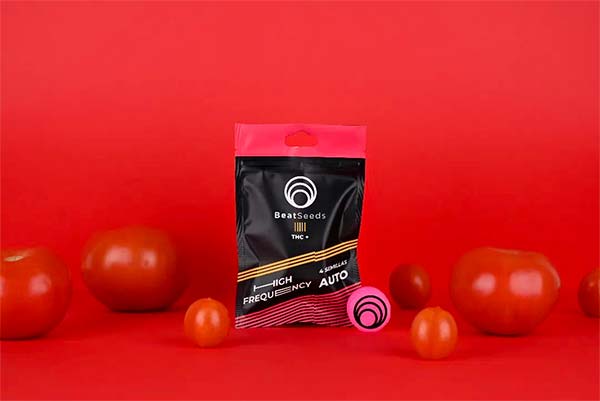
Looking for an immersive experience, In Volá has developped Beat Seedsa brand of cannabis genetics that combines their cannabinoid profile with music playlists on Spotify, designed to understand the graphical curves of different cannabinoids.
BeatSeeds seeds
We Plant: community, education and minimalist marketing
Founded with the aim of benefiting the community and fostering the advancement of medical cannabis, WePlant, a non-profit organization in Argentina, stands out for its emphasis on legal and safe access for consumers .
Marlexis Romero, social communications graduate and marketing specialist, believes that as a brand, WePlant is inspired by minimalist marketing strategies, seeking to create an impactful and recognizable image.
Ezequiel, co-founder of the NGO, and Marlexis both understand that brands are important because they tell a story, can justify the role of those who care for others and add value to their work.
Ezequiel also believes that creating educational content strategies helps bring quality information to a larger and more diverse audience, and he is already considering the possibility of synergies between cannabis and other industries, such as tourism.
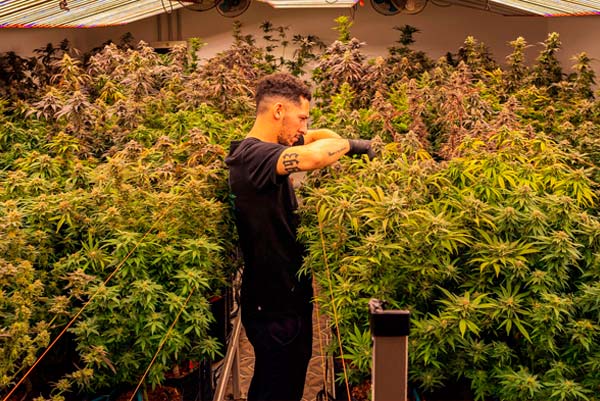
The Weplant plantation
Segmentation: Fancy, Zaza and others
When Mau Lamonica teamed up with urban music artists to promote his first brand, Fancy, he didn't expect his genetics to make a splash.
In a short time, “the genetics that Duki smokes” became the most sought-after gem, just like Zaza, a resinous genetic with the presence of terpenes, which targets a segment aware of the therapeutic benefits of extractions.
“In pre-sale, a thousand packages were sold in a few days. Our goal is to make this product accessible to all growers,” said Mr. Lamonica. I tried to give the product a “jewel” aura, where the grower is the artist,” added the breeder.
“We must adapt products to the needs of local consumers for effective and organic marketing. Market research is essential to continually improve our products,” adds Mau Lamonica.
As for the potential of the brands, he emphasizes: “Barcelona overcame an economic crisis thanks to cannabis, that is why I want to support the national industry.”

Zaza x Fancy
Jelly Genetics
In Mexico, where the U.S. market is more popular, brands are following the retail trend. José Luis, co-creator of the Jelly Genetics seed bank, explains that his brand tries to exist as an exceptional product.
It specializes in the production of feminized seeds, the first in Mexico, and stands out by offering local varieties that emphasize flavor, quality and storytelling.
“Between selection and design, a brand takes years. Our genetic products are intended to be enjoyed at certain times. They reflect the time of year in the life of the grower. We try to convey this work, in the visual line and in the merchandising,” explains José Luis.
“We look for quality to build loyalty. We don't give away our work. Brand is about price, and what's better than world-class quality, by Mexicans for Mexicans? »
 All branding is political
Sofía Morello is a graduate in social communications and marketing director of the Argentine seed bank Red Ojitos (editor’s note: the little red eyes), with which she mainly focused on user trust and experience.
Sofía Morello knows the importance of making technical information accessible to her new clients, through personalized advice and digital applications. Its packaging is thus designed taking into account functionality and reuse, in order to increase the visibility of the brand.
Beyond traditional marketing, Ms. Morello stressed the urgency of recognizing the work of caregivers in clubs and civil user associations on the market.
“When designing a brand, it is essential to understand and respect the diversity of cannabis players, including women and diversities, who have gained ground in an initially male-dominated space, using stories and testimonials to break down prejudices and connect with new consumers,” said Ms. Morello.
In this regard, Vigilante noted that “NGOs have the legal capacity to register a trademark and, in some cases, they can make a profit through the trademark to cover their operational costs. The advantage of a brand is that it can be adapted to the reality of the project it represents. »