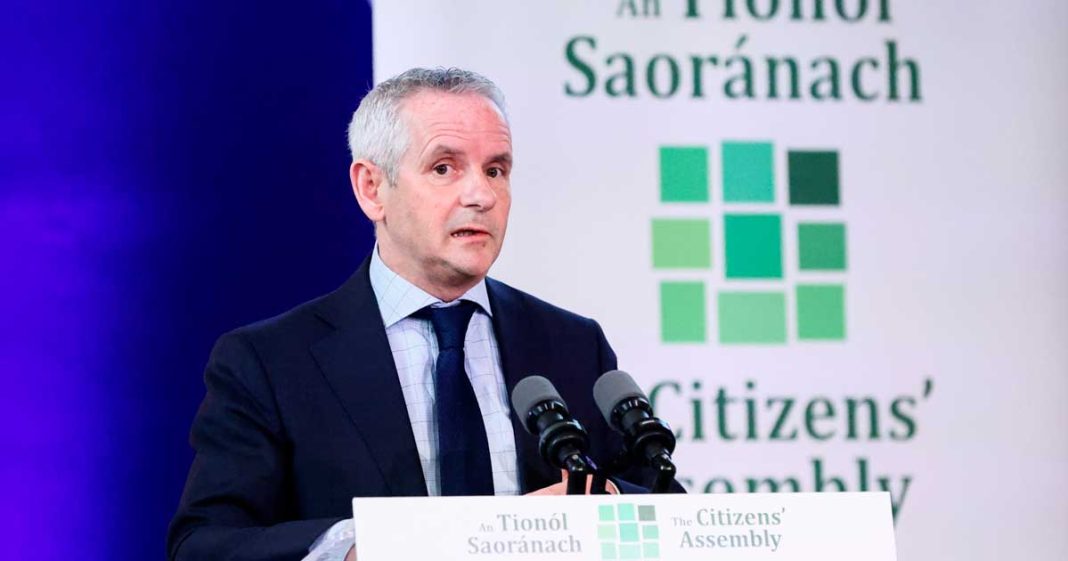


The Irish Citizens' Assembly on Drug Use recently released a report recommending the decriminalization of possession of drugs for personal use, marking a step change in Irish drug policy.
Led by Paul Reid, the Citizens' Assembly report proposes a “decriminalized” model, advocating a shift from a criminal justice approach to a comprehensive health-focused strategy.
Assembly Recommendation
The Assembly, made up of 99 randomly selected citizens, approved a “comprehensive health-oriented approach” to drug possession. This approach involves giving people caught in possession of drugs for personal use “ample opportunities” to voluntarily engage with health services, in order to minimize or eliminate the possibility of criminal conviction and prosecution. prison sentence for simple drug possession.
Paul Reid stressed that the Assembly was focused on the end result, leaving the Oireachtas, Ireland's bicameral parliament, to sort out the complex legislative details of implementing effective decriminalization. The report must now be considered by the Oireachtas and the government, prompting Paul Reid to call for political ownership of the recommendations.
Taoiseach – Prime Minister of Ireland – Leo Varadkar has been open to considering changes to the country's drug laws, saying: “I certainly think that shaming people, blaming them and criminalizing them is not not an effective policy.”
Mr Varadkar pledged to carefully consider any recommendations and stressed the need for political courage and leadership to oversee “effective decriminalisation”.
Legislative challenges and considerations
The path to drug decriminalization in Ireland is not without obstacles. Assembly members and legal experts already disagree on the definition and feasibility of decriminalization.
The international drug context doesn't help either: a recently published major EU study on the heroin market warns of the potential negative effects on public health and security of the shift from opium to synthetic opiates following the decline in poppy production in Afghanistan. The risk is to see the surge of synthetic substances with side effects that are much stronger and more deadly than natural substances, accentuated by the policy of prohibition.
The Irish government's response further complicates matters. While the assembly recommends a comprehensive health-focused approach, the Ministry of Justice and An Garda Síochána oppose legal changes beyond the existing diversion program, which allows a maximum of two referrals to services health for drug possession.
The government's delay in advancing a bill to legalize cannabis possession – up to 7 grams of cannabis and 2.5 grams of resin for adult personal use – adds a new layer of complexity to the current debate.
Delay in the “legalization” of cannabis
Despite the assembly's efforts to reform drug policy, the Irish government is proposing to delay the vote on the bill to legalize the possession of cannabis by nine months. Taoiseach Varadkar stressed the need not to blindly adopt models from other countries and suggested a nuanced approach, taking into account the legal context of decriminalization under Irish law.
Critics, including Ryan McHale Crainn of the Irish drug policy reform organization Crainn, express disappointment at the delay, pointing to the Citizens' Assembly's clear calls for change and the overwhelming support of the public opinion to the decriminalization of drugs. MP Paul Murphy says the government's proposed delay only kicks in and urges it to follow through on its rhetoric of a health-focused approach to drugs.