Home Blog Page 95

Canopy Growth continues to lay off as part of “strategic adjustments”

Canopy Growth, one of the largest cannabis companies in Canada and around the world, has announced new maneuvers to reduce operating costs, including “downsizing” and reducing the number of “members of the dedicated team.

Calling them “strategic adjustments” in its press release, Canopy says these changes “are expected to generate savings of $100-150 million within 12-18 months. »

“Due to these difficult but necessary changes to the organizational structure, team members will be impacted as the company will operate with a reduced workforce in the future. The Canopy management team wishes to recognize the efforts of these individuals during their tenure and thank them for their contributions to the Society,” the press release notes.

“To achieve profitability and power growth, we are taking critical steps to evolve Canopy Growth into an agile organization with a clear focus on areas where we have the greatest potential for success,” said David Klein, Chief the management of Canopy Growth.

“These necessary changes are being implemented to ensure that the size and scale of our operations reflect current market realities and support the long-term profitability of our business. »

The company laid off several hundred people at the end of 2020 and another 75 staff at the start of 2021 following the closure of several production sites and internal “restructuring” efforts. Canopy was also dropped from the S&P/TSX 60 index last March and announced quarterly losses in February.

The company reported a net loss of $115.5 million in its latest quarter, compared to a net loss of $829.3 million a year earlier. Its net income also fell by 8%.

Spanish cannabis activist Fernanda de la Figuera dies

“I want them to mix my ashes with soil and plant marijuana,” cannabis activist Fernanda de la Figuera, also known as Abuela Marijuana, Granny Marijuana, asked before she died.

Fernanda died on April 24 at the age of 78, after a life of fighting against cannabis prohibition in Spain. As a result of her struggle, she was the first Spanish woman to be granted the right to cultivate this plant herself, in 1995.

Abuela Marihuana, born in Madrid in 1943, founded and chaired one of the first cannabis associations in Spain, the Ramón Santos Association for the Study of Cannabis in Andalusia (ARSECA).

Fernanda also created the Cannabis Party for Legalization and Normalization (PCLYN) and the Federation of Cannabis Associations (Federación de Asociaciones Cannábicas). She was also spokesperson for the European Coalition for Just and Effective Drug Policies (ENCOD) and chair of the cannabis party Luz Verde.

As she liked to say in an interview, in 1982, Fernanda understood that her relationship with cannabis would last a lifetime: thanks to this plant, she was able to fight depression and her physical ailments.

“It’s the best medicine I’ve ever had and the best medicine I own. If it wasn’t for the marijuana I wouldn’t be here now, of that I am absolutely convinced,” Fernanda said in 2019.

On social media, the international cannabis community bid him farewell.

The official account of the Confederation of Federations of Cannabis Associations of Spain tweeted: “Today the sun shines a little less. Grandma Marijuana rest in peace and freedom. For those of us who love #Cannabis, you will always be in our thoughts. »

Or, on the Spanish account of the World Cannabis March: “From today, Fernanda de la Figuera will be missed. Abuela Marijuana, feminist, fighter, absolute reference of the cannabis movement in our country, who supported the cause until the end. We will continue to plant in your name, comrade! »

The Dutch VOC also paid tribute to him by sharing a photo of Abuela Marijuana with Ben Dronkers, Richard Branson, Freek Polak and Todd McCormick.

Joe Biden grants amnesty to Americans convicted of nonviolent drug trafficking

After more than a year in office, US President Joe Biden yesterday granted amnesty to 75 people whose criminal records include federal convictions for non-violent drug trafficking.

The president commuted the sentences of 75 people who had been placed under house arrest during the coronavirus pandemic. This is the first leniency step taken by Joe Biden, a step long overdue by human rights advocates and lawmakers and one that the administration has been pressed on repeatedly.

While not the mass amnesty campaigners have been calling for, it is a first step toward fulfilling a Joe Biden campaign promise.

“America is a nation of laws and second chances, of redemption and rehabilitation,” Joe Biden said in a statement.

“Elected officials on both sides of the aisle, religious leaders, civil rights advocates and law enforcement officials agree that our criminal justice system can and should reflect these core values ​​that enable safer and stronger communities. »

The president said many of the people he is granting remission ‘would have received a lesser sentence had they been charged with the same offense today, thanks to the bipartisan law. First Step Act“, signed into law by his predecessor, President Donald Trump.

Along with the 75 commutations, Mr. Biden also granted three pardons.

The US President continues to oppose the legalization of cannabis, despite growing bipartisan support for this policy change. The White House, however, seems willing to provide some relief to those caught up in the war on drugs that Joe Biden himself helped perpetuate when he was a senator.

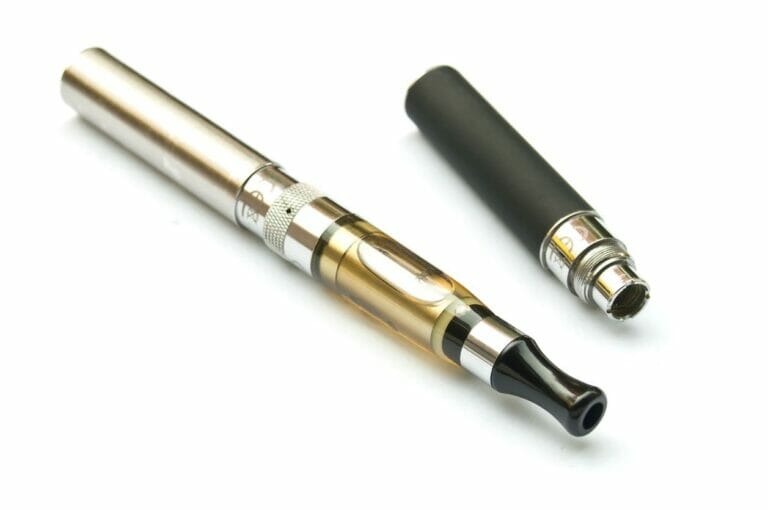
Our president addicted to the e-cig?

Several clichés abound on the net and in the press for a few weeks: Emmanuel Macron would be a fan of the e-cigarette. On Sunday March 13, an official snapshot put an end to speculation.

A “relaxed” president

For the past few weeks, we have seen photos of Emmanuel Macron dressed in a hoodie, his hair in battle or his face covered with a 3-day beard. Is it an assumed letting go or an argument to seduce his electorate?

Anyway, these photos are not stolen by paparazzi, but indeed taken by his official photographer Soazig de la Moissonnière. It is the first time in 5 years of mandate that the Head of State appears as “everyman”.

It would seem that the stress caused by his electoral campaign and the Russian-Ukrainian conflict after the Covid-19 episode got the better of his nerves. Some newspapers even go so far as to indicate that Emmanuel Macron lets himself go slightly when Brigitte is no longer there to watch over the grain.

Emmanuel Macron de-stresses with the vape

Rumors were telling the truth, the President of the French Republic is a vaper. After several explicit shots that leaked on the internet, on March 13, Soazig de la Moissonnière immortalized the French head of state with an electronic cigarette in his hand.

It must be said that the pressure is at its peak. This end of term is rather eventful and the Head of State, like any human being, needs to dissipate his stress. It is obviously thanks to the e-cigarette that he finds a semblance of comfort.

This is not the only political figure user of e-cigarettes that has been detected by photographers and journalists. One of Emmanuel Macron’s competitors in the race for the Élysée also seems to appreciate the electronic cigarette. Indeed, for the past few months, Marine Le Pen has shunned cigarettes in favor of e-cigs. The results are visible on the quality of her skin and her healthy glow. A contagious habit, since several party faithful have also followed suit!

Comment About Our president addicted to e-cigs? Below ..

Malaysian Nagaenthran executed for drug trafficking in Singapore

Nagaenthran Dharmalingam, a Malaysian with intellectual disabilities who was convicted of drug trafficking in 2010 and whose case attracted worldwide attention, was executed at Changi Prison in Singapore.

Nagaenthran, who was arrested after police found a 42.7 gram packet of heroin strapped to his thigh, was hanged just before dawn on Wednesday, according to Al Jazeera.

The Malaysian’s execution came after the appeals court rejected a request by the 33-year-old’s mother to stop her son’s execution. The judges said his last-minute request was “vexatious”.

Last month, the court called legal efforts to save Naga’s life a “gross abuse” of legal process, and found it “inappropriate to engage in last-minute attempts or encourage them” to delay or stop an execution.

The Nagaenthran case drew worldwide attention to Singapore’s continued use of the death penalty, particularly in drug-trafficking cases, and reignited debate in the city-state itself.

Mr Ravi, a lawyer who represented Nagaenthran, expressed his grief over Wednesday’s execution on Twitter, saying: “Om Shanti, may your soul rest in peace. »

He added: “You can break us, but not defeat us. Our fight against the death penalty continues. »

On Monday, a few hundred people demonstrated their opposition to the death penalty by gathering in a park in Singapore. Small protests also took place outside the Singapore embassy in Kuala Lumpur, the Malaysian capital.

The Malaysian government, experts from the United Nations, the European Union, several associations from civil society and celebrities, including Richard Branson, had also called for Naga’s life to be spared.

“The use of the death penalty for drug-related offenses is incompatible with international human rights law,” the UN High Commissioner for Human Rights (OHCHR) wrote in a statement. calling on Singapore to suspend the execution of Naga.

“Countries that have not yet abolished the death penalty can only impose it for the ‘most serious crimes’, which is interpreted as extremely serious crimes involving intentional murder. »

Other planned executions

Singapore also plans to hang Datchinamurthy Kataiah, another Malaysian convicted of drug-related offences, on Friday in what OHCHR said appears to be “an alarming acceleration of execution notices in the country”. Abdul Kahar Othman, a Singaporean also convicted of drug offences, was hanged on March 30, the country’s first person to be executed in two years.

According to the United Nations, at least three other men convicted of drug offences, Roslan bin Bakar, Rosman bin Abdullah and Pannir Selvam Pranthaman, are at imminent risk of execution.

In a statement, Erwin van der Borght, director of the Asia-Pacific program at Amnesty International, called Nagaenthran’s execution “a disgraceful act on the part of the Singapore government” and said that it “continues a cruel path that goes against the global trend towards the abolition of the death penalty.”

Singapore has one of the toughest drug laws in the world and claims the death penalty acts as a deterrent. According to the UN, more than 50 people are on death row in Singapore.

“This deterrent has been repeatedly discredited, and there is no evidence that the death penalty is more effective in reducing crime than life imprisonment,” said Amnesty’s van der Borght. “Punitive drug policies, which impose harsh penalties, have been shown to harm people rather than protect them from drug-related problems. »

Malaysia and Indonesia also impose death sentences for drug-related crimes, but Malaysia has reviewed its use in such cases and currently has a moratorium on executions.

The first CBG-rich hemp variety approved in Europe

A new variety of hemp has been added to the catalog of the European Union. Its particularity: it has been selected for its high content of cannabigerol (CBG).

This new variety, named Enectarol, was developed for 5 years by the Italian-Dutch company Enecta. The strain produces 5.5% CBG and less than 0.1% THC.

“There is a lack of true hemp flower strains for cannabinoids in Europe, as most varieties in the catalog are spin-offs of fiber strains,” Paolini told HempToday. “New genetics for the industry are evolving at an incredible rate, but the common EU catalog does not reflect this evolution. The lack of new varieties is a sore point for the European hemp industry. »

What is CBG?

CBG (cannabigerol), is one of the 120 cannabinoids found in cannabis. CBG is known as the “mother” cannabinoid, the precursor to CBD, CBN, CBC and THC.

CBG activates both CB1 and CB2 receptors in the endocannabinoid system, offering the promise that it may hold the joint qualities of all other cannabinoids combined.

Studies have shown that CBG shows promise for conditions such as glaucoma, inflammatory bowel disease, and Huntington’s disease, and can inhibit tumor growth in some cases; it is known to kill or slow down bacteria and promote bone development.

Last year, the European Commission added CBG to the EU Cosmetic Ingredients Database (Cosing), indicating that the compound is safe to use in health and beauty products. When applied topically, CBG acts on the CB1 and CB2 endocannabinoid receptors, which are located in the skin.

According to its proponents, this hemp-derived compound has anti-inflammatory, antibacterial, and antioxidant properties that help the endocannabinoid system maintain healthy skin function.

Comment les Conventions Internationales autorisent la légalisation du cannabis ?

Le 15 mars dernier, lors de la Commission des Stupéfiants de l’ONU, le rapport High Compliance était présenté. En 110 pages, High Compliance dissèque la Convention Unique sur les stupéfiants de 1961, généralement tenue pour un étau légal empêchant les États de légaliser le cannabis récréatif.

Le résultat ? Il n’en est rien : dans le texte comme dans l’esprit général de la Convention, il est en fait tout à fait légal et légitime de réguler l’industrie du cannabis non-médical.

Plongée dans les abîmes d’un droit international du cannabis bien mal connu.

La Convention Unique est le traité international régissant toutes les lois nationales et locales sur le cannabis. Or, tristement, l’analyse de ce traité est émaillée d’oublis et d’erreurs.

En particulier, les analystes ont la fâcheuse tendance de ne citer que des morceaux choisis de la Convention. C’est le cas pour l’article 4(c) de la Convention Unique qui définit le champ d’application de ce traité.

Article 4(c) : une Convention-cadre des secteurs médico-pharmaceutiques

Voici comme l’article 4(c) est cité : « Les Parties prendront les mesures législatives et administratives qui pourront être nécessaires […] pour limiter exclusivement aux fins médicales et scientifiques la production, la fabrication, l’exportation, l’importation, la distribution, le commerce, l’emploi et la détention des stupéfiants. »

Et voici l’article 4(c) en entier : « Les Parties prendront les mesures législatives et administratives qui pourront être nécessaires […] sous réserve des dispositions de la présente Convention, pour limiter exclusivement aux fins médicales et scientifiques la production, la fabrication, l’exportation, l’importation, la distribution, le commerce, l’emploi et la détention des stupéfiants. »

Les 8 mots systématiquement oubliés sont très importants, car ils expliquent que la Convention Unique ne limite pas le cannabis seulement à des fins médicales et scientifiques. En fait, elle le limite à ces fins, mais sous réserve de certaines dispositions.

Quelles sont donc ces dispositions ? Il suffit de lire la Convention pour s’en rendre compte… mais pour les fainéants, le Commentaire officiel de la Convention l’explique plus explicitement encore : il s’agit d’une série d’articles qui façonnent différents niveaux d’exemption pour les drogues lorsqu’elles sont utilisées à des fins autres que médicales et scientifiques.

Donc, la Convention limite le cannabis à des fins médicales/scientifiques, sous réserve de l’exemption des fins non-médicales/non-scientifiques. Dans les mots de 1961, et en écho avec le préambule de la Convention Unique et toutes ses mesures concrètes (qui ne concernent que les médicaments, les médecins, les pharmaciens, les prescriptions, etc.), cela peut être analysé comme définissant une Convention qui cherche à ne s’appliquer avant tout qu’à la sphère médicale : une “convention-cadre des secteurs médico-pharmaceutiques pour le contrôle de certains médicaments”. Certainement pas une “convention de prohibition”.

Article 2(9) : une exemption pour l’industrie du cannabis non-médical

Un autre article de la Convention unique qui est systématiquement mal analysé, ou tronqué, est l’article 2(9) :

« Les Parties ne sont pas tenues d’appliquer les dispositions de la présente Convention aux stupéfiants qui sont couramment employés dans l’industrie à des fins autres que les fins médicales ou scientifiques, à condition: a) Qu’elles prennent des mesures pour empêcher, en recourant à des procédés appropriés de dénaturation ou par tout autre moyen, que les stupéfiants ainsi employés puissent donner lieu à des abus ou produire des effets nocifs (article 3, paragraphe 3) et que dans la pratique la substance nocive puisse être récupérée »

Ici, l’on brandit le mot “dénaturation” comme s’il empêchait d’exempter le cannabis non-dénaturé. Or, il est clairement inscrit que “tout autre moyen” peut être utilisé, autre que la dénaturation.

Pour comprendre cet article, et l’interpréter légitimement, il faut faire appel à deux principes en droit internationale :

Ut res magis valeat quam pereat

D’une part, une des règles cardinales du droit international, introduite par Grotius, est le principe d’effet utile, ou ut res magis valeat quam pereat. Celui-ci prescrit qu’il faille “lire toutes les dispositions applicables du traité de façon à donner un sens à toutes, harmonieusement”.

Un des corollaires de ce principe cardinal est l’obligation d’interpréter un traité dans son intégralité, et que toutes les parties fassent sens. On ne peut interpréter un traité d’une façon qui laisserait certaines sections sans effet ou sans sens. Il y a peu à dire de plus, au regard des oublis systématiques dans les articles 2(9) et 4(c).

De même, si l’on interprète les mots “la substance nocive puisse être récupérée” comme synonymes de “dénaturation”, on rend inopérant les mots “ou par tout autre moyen”, ce qui rompt avec le principe d’effet utile. Il n’est donc pas possible d’interpréter cet article sans les tout autres moyens qu’il contemple.

Ceci est aussi corroboré par le fait que beaucoup de stupéfiants sont des molécules uniques, s’il est possible (bien que douteux) d’interprèter cet article comme une obligation de retirer le THC du cannabis, il est impossible de retirer la codéine de la codéine, par exemple. L’interprétation où la dénaturation est obligatoire ne serait donc opérante que pour les produits herbaux ou à plusieurs composantes, ce qui, encore une fois, viole le principe d’ut res magis valeat quam pereat.

Intertemporalité en droit international

D’autre part, l’insertion de marqueurs d’intertemporalité (et le souhait limpide exprimé par les négociateurs à cet égard) invite à considérer l’article 2(9) dans le cadre du langage courant de nos jours –contrairement à la règle générale qui veuille que l’on interprète un traité avec le sens qu’avaient les mots à l’époque où le traité était négocié.

Aussi bien “dénaturation” que “autre moyen” doivent donc être considérés dans le cadre du vocabulaire d’aujourd’hui, pas de celui de 1961. Et, en 2022, d’autres moyens pour réduire les risques et l’abus… c’est la réduction des risques.

L’intertemporalité permet aussi avec aise de trouver un écho dans à expression “industrie du cannabis” dans les termes “couramment employés dans l’industrie”. OMS, ONU, OICS, tous se réfèrent au cannabis récréatif comme à “l’industrie du cannabis non-médical” en totale correspondance avec la terminologie de l’article 2(9).

Échec et Malte

Il n’y a pas que le rapport High Compliance qui postule cela : c’est aussi le cas de la loi de Malte adoptée en décembre 2021, qui légalise les “usages à des fins autres que médicales et scientifiques” dans le contexte de la “réduction des dommages et des risques” (RDR).

Oui, Malte est le premier pays à légaliser l’industrie du cannabis non-médical en respect de la Convention Unique sur les stupéfiants.

Ce qui, par ailleurs, est important c’est que l’industrie du cannabis, à Malte, prendra la forme de Cannabis Social Clubs – ces structures d’économie sociale et solidaire de taille humaine, dont on sait qu’elles permettent de minimiser les dommages sanitaires et sociaux liés aux usages problématiques du cannabis.

C’est aussi une perspective intéressante pour, et grâce au cannabis, se réapproprier et redéfinir le concept d’”industrie”.

Don’t judge a book by its cover: read it!

D’autres principes du droit international, comme in dubio mitius et d’autres, longuement détaillés dans l’étude, viennent en renfort l’interprétation suggérée. Malheureusement, les analystes qui critiquent la thèse développée dans High Compliance ont rarement lu le texte et considéré ces arguments.

C’est par exemple le cas de Peter Homberg, outre-Rhin : en ne se basant que sur le discours de 4 minutes prononcé aux Nations Unies pour présenter High Compliance, mais sans avoir pris la peine de lire le rapport, Homberg taxe de “fallacie” l’interprétation proposée. La fallacie semble plutôt venir de ceux qui affirment que l’habit fait le moine. Si le niveau des meilleurs experts allemands se résume à la critique d’une analyse légale sans même l’avoir lue –et donc d’une analyse faisant fi de principes aussi cardinaux en droit international comme peut l’être ut res magis valeat quam pereat– il y a peu à espérer des futures réformes de nos amis teutons.

Il est inquiétant que des experts dont l’activité professionnelle, par ailleurs, est en partie fondée sur leur capacité à déchiffrer un panorama légal complexe (qu’adviendrait-il si ce dernier se simplifiait !?), critiquent une thèse juridique développée au cours de nombreuses années, et basée fondamentalement sur les sources primaires de la Convention et ses travaux préparatoires, sans même l’avoir lue.

Mais, lorsque l’on voit la façon dont la Convention Unique est citée et interprétée par beaucoup en ne l’ayant que partiellement lue, il semblerait que la paresse intellectuelle ne soit pas indifférente à la difficulté à se défaire de schémas de pensée biaisés.

Anslinger le savait déjà

Tout ceci peut en effet paraître fort de café car, à première vue, tout le monde sait que la Convention est le bras armé de la guerre aux drogues. Mais d’où le sait-on ? Se questionne-on sur cette certitude ? À la lecture de la Convention Unique, pourtant, où le mot “prohibition” n’apparaît quasiment pas, on est en droit de se poser des questions.

L’histoire de la Convention Unique (analysée dans l’introduction de High Compliance) éclaire à ce sujet.

Écrite entre 1951 et 1961, elle précède d’une décennie la déclaration de “guerre aux drogues” par le président nord-américain richard Nixon, qui eût lieu en 1971, et l’internationalisation de la politique prohibitionniste des USA marquée par la création de la DEA en 1973.

Harry Anslinger, un fervent défenseur de la prohibition du cannabis, et négociateur de la Convention Unique pour les États-Unis, était très déçu par la Convention. L’historien William McAllister documente les négociations, qu’Anslinger quitta, par dépit, laissant à ses sous-fifres le soin de terminer la négociation.

Anslinger s’opposa par la suite vigoureusement à la ratification de la Convention de la part des États-Unis. Pourtant, beaucoup voient la Convention Unique comme la création d’Anslinger, mais c’est tout le contraire ! Tout un tas de pays s’opposèrent à l’application d’une prohibition obligatoire, de la France à l’URSS. Le consensus voulait d’une Convention basique et “généralement acceptable” par tous les pays ; au vu de la teneur des dix années de discussion, jamais les négociateurs de la Conventions ne se seraient mis d’accord sur un traité hyper-prohibitif.

En fait, les Etats-Unis ont récupéré dans les années 1970 un traité préexistant (et plutôt mou) de contrôle des médicaments psychoactifs… et, en y appliquant une interprétation rigoriste (et douteuse au vu du principe ut res magis valeat quam pereat) l’ont transformé en un outil de guerre aux personnes faisant usage de ces médicaments. C’est cette interprétation omniprésente, hélas, qui crée des biais cognitifs nous empêchant parfois de voir des mots écrits noir sur blanc dans le traité.

Pourtant, rien n’empêche de chercher à dépasser ces biais, et voir les choses autrement… et à plus forte raison lorsque l’on sait que la discrétion et la capacité pour les États d’interpréter le droit international de bonne foi est l’une des constituantes principales du concept de souveraineté. Se défaire du joug des États-Unis et user de la pleine souveraineté des États, cela passe par la reprise en main de sa capacité à analyser, interpréter, et implémenter le droit international.

À l’heure où la question de souveraineté semble être capturée par une frange extrême du champ politique, et presque taboue pour le reste, savoir user de cette souveraineté pour mettre en avant des politiques publiques rationnelles en matière de drogues peut constituer un élément capital d’une démarche cherchant à redonner à la chose politique sa teneur, son intérêt, et sa pertinence.

Il serait aussi pertinent qu’ensemble, la société sache se saisir de concepts auparavant associés aux pires développements du monde contemporain comme peut l’être le concept d’”industrie” : on pense bien sûr d’abord aux “big industry” comme celles du tabac ou de l’alcool.

Mais il n’y a rien d’autre que nous-mêmes qui empêche de penser et de construire, en se basant sur l’historique riche des communautés cannabiques de Barcelone à La Valette, de Kingston à Amsterdam, de Montévidéo à Mendocino, en passant par Paname et Ktama, une industrie du XXIème siècle, durable, humaine, qui protège la santé, l’emploi, et l’environnement…

Car désormais, plus personne ne peut brandir l’excuse de tel ou tel traité pour nous en empêcher. Il est temps de légaliser en pleine souveraineté, et en respect aussi bien le droit international que les droits des citoyennes et citoyens adultes qui consomment du cannabis.

“100% German” medical cannabis arrives in pharmacies

Demecan, the only independent German producer of medical cannabis (the other two are Aurora and Tilray), has prepared its first cannabis flowers for the German Federal Institute for Drugs and Medical Products (BfArM), constituting its first harvest for German pharmacies.

In 2022, more than 300 kg of high-quality cannabis flowers have already been harvested, dried and packaged. by Demecan The first batch of 100 kg will be collected by the German Cannabis Agency and distributed to pharmacies.

The company opted for an indica-dominant strain based on the high THC cultivar OG Kush, between 18% and 22%. Since March, another variety (type 2 DEMECAN) has also been in cultivation, without further details for the moment on the variety chosen, although we already know that it should have between 12 and 16% THC with less than 1 % CBD.

Demecan has already produced around half of the annual quantity ordered by the BfArM. Each year, up to 660 kg of this variety are delivered from their cultivation site in Saxony.

For physician and co-founder Dr. Adrian Fischer, who is responsible for cultivation and quality control, knowing that his own cannabis flowers are available in pharmacies is a particularly important step: “We can finally obtain cannabis from Germany in pharmacies. I am particularly happy that this quality product can help many patients and that we can improve the supply situation through cultivation in this country. It would of course be desirable if we could produce many more. Demecan is capable of it”.

From Berlin Startup to Germany’s Largest Cannabis Producer

Since 2017, German law has authorized therapeutic cannabis.

In 2019, DEMECAN was the only independent German company to obtain the contract from the federal government for the production of cannabis flowers for medical use. The resulting delivery contract is valid for a period of four years. Production takes place in their EU-GMP certified production site near Dresden and according to the quality standards of drug manufacturing.

The 100,000 m² production site was acquired by Demecan in the summer of 2020. In less than 15 months of work, the building – a former slaughterhouse – was transformed and is today the largest cannabis production facility inside Europe.

24 cm of reinforced concrete in all walls, steel doors, 150 cameras and a high-tech computer system to control and optimize plant growth, ensure the perfect development of plants. Thanks to its modular production capacities, Demecan can also massively increase its production capacity, even in the short term, in order to meet the growing demand in Germany.

Amsterdam mayor threatens (again) to ban cannabis for tourists

The mayor of Amsterdam, Femke Halsema, wants to continue her plan to close the city’s coffeeshops to tourists, believing that this is the only solution to rein in the local cannabis market.

She believes that there is a “worrying interdependence” between the soft drug trade and the hard drug trade and that “money from the lucrative cannabis trade easily finds its way into the hard drugs”.

“Many of the city’s major problems are fueled by the cannabis market: from the nuisance caused by drug tourism to serious crime and violence,” she said.

“The ban on sales to tourists is a necessary intervention… and a first step towards regulation”.

Legal tourism

Every year, some three million foreign tourists visit a coffee shop in Amsterdam, a part of the country where the sale of cannabis is not restricted to residents.

Nonetheless, Femke Halsema says introducing a ban would be the best temporary measure to ensure the cannabis market remains manageable while experiments in regulated cannabis production, with legal production, take hold.

However, the government recently announced that the pilot project had encountered several problems and would not start until 2023. The project, launched five years ago, aimed to remove the gray area between licensed coffee shops and producers, illegal.

South Africa approves its first cannabis dispensary

South Africa’s first dispensary opened after receiving its license in late 2021.

THC Pharmacy, registered with the South African Pharmacy Board and Department of Health, will supply medical cannabis users with cards. This first launch follows the end of cannabis prohibition in South Africa in 2018 and the authorization of its personal use.

The pharmacy is located in Glenanda, Johannesburg, and supplies two others around the country. She also offers to take care of the application procedures for the use of medical cannabis or gives cooking classes with cannabis.

“So far, the pharmacy has sold more than 3 kg of dried medical flowers. It’s slow because each card only allows 120 grams per person per month, or 4 grams per day for 30 days. We are aiming for around 500 cardholder members which will allow us to sell around 30-50kg of product per month,” said Kyle Brocklebank, CEO of THC Africa who launched the THC Pharmacy.

To obtain a license, the pharmacy underwent various quality checks with the South African Health Products Regulatory Authority. After these checks, the license issued authorizes the cultivation of cannabis, but only for medical purposes.

“The patient then sees a doctor who listens to their ailments and prescribes cannabis with specific doses of CBD and THC. »

Patients complete a document to submit to the South African Health Products Regulatory Authority (Sahpra), which is responsible for issuing cards authorizing the therapeutic use of cannabis.

“This is the approval that Sahpra has to give in order to use cannabis. We tie the whole process together helping with demand and selling the regulated product,” said Professor Benny De Beer, who works with THC Pharmacy.