Home Blog Page 85

3 things to take away from the UN World Drug Report 2022

The United Nations Office on Drugs and Crime (UNODC) has released its World Drug Report 2022 which provides an in-depth analysis of the various legal and illegal global drug markets and paints a comprehensive picture of measurable effects and impact of the COVID-19 crisis and the various legalizations.

It also examines this year the links between drugs and the Sustainable Development Goals, climate change and environmental sustainability. The report covers all drugs, but here we will focus on cannabis.

Highlights of the report

Regarding cannabis, here are the main points of this report.

Overall cannabis use is increasing

Cannabis remains the most widely used drug in the world. In 2020, more than 4% of the world’s population aged 15-64 (209 million people) had used cannabis in the past year. The prevalence of cannabis use in the past year increased by 8%, compared to 3.8% in 2010, while the number of people who used cannabis in the past year increased by 23% , up from 170 million in 2010, partly due to the increase in world population.

In the United States, whether in states that have legalized or not, the trend is on the rise, as in Canada or Uruguay.

The report notes that “legalization by itself does not explain the greater increase in cannabis use in states where cannabis has been legalized. In states that have legalized the non-medical use of cannabis, such as Colorado, cannabis use has traditionally been higher than the national average. »

Cannabis use among adolescents has increased in Uruguay, while it has either decreased or remained stable in the various states of the United States and in Canada.

The pandemic has benefited cannabis

No surprise here, the Covid pandemic and the various confinements have increased all drug use, legal and illegal. Cannabis trafficking has also weathered the crisis well and seizures have never been so high in 2020, a sign of increased police activity and possibly increased production.

In 2019 and 2020, the reported growth of indoor cannabis cultivation appears to have once again exceeded the growth of outdoor cultivation globally, with the net number of countries reporting an increase in indoor cultivation three times higher than the number net of countries reporting a decrease in outdoor cultivation.

The cannabis seized is high in THC and low in CBD, confirming a trend of illegal markets in recent years, forced into rapid production and powerful varieties to escape possible arrests as much as possible or reduce production space while preserving similar pure THC production.

The black market retreats in the face of legalization

UNODC recognizes that the various legalizations have effects on the black market.

“Illegal cannabis markets still exist after legalization, but to varying degrees, in the different countries and jurisdictions that have legalized cannabis. In some countries, the size of the illegal market has decreased since the introduction of the new regulations,” the report explains.

Furthermore, “tax revenues from the legalized cannabis market have continued to increase. A variable part of these revenues was invested in the prevention of drug addiction and the treatment of drug use disorders. »

Report: “What models for the regulation of cannabis for adult use in Europe?”

Among the ongoing discussions in Germany, Luxembourg, Malta, the Netherlands, Switzerland, or Denmark, Europe must define its own way of effectively and sustainably regulating domestic cannabis markets.

Augur Associates, a consulting firm dedicated to the cannabis industry, today presents its latest report “ Which models for cannabis adult-use regulation in Europe? Findings, objectives and proposals for legalization“, available now in English, and in French in September.

While answering the debates that are going in the wrong direction and the questions that are not being asked, this new report covers in detail the do’s and don’ts of regulating adult cannabis use in Europe.

You can view the table of contents below and access the link to download the full report here.

The writer of this article is also a co-founder of Augur Associates and contributed to the writing of this report.

The CLIMB Act, New Cannabis Banking Bill

Forget the SAFE Act, which was rejected for the 6th time on June 23, here is the CLIMB Act.

the Capital Lending and Investment for Marijuana Businesses (CLIMB) Act, sponsored by Democratic Representatives Troy Carter and Republican Guy Reschenthaler, wants to make it easier for the cannabis industry to access banking, in part by providing protections for private financial institutions and government agencies that provide such services. services to traditional markets.

It also provides, and this is new, a “safe harbor” for national stock exchanges and market participants who “have listed, are listing or intend to list, or permit trading, or facilitate the offering, listing or trading on a national stock exchange of the securities of a legitimate cannabis-related business or service provider”.

In short, cannabis companies would be allowed to list on major stock exchanges like the Nasdaq and the New York Stock Exchange (NYSE). The only cannabis companies today listed on the stock exchange in the United States are companies that do not directly touch the plant on federal soil like Weedmaps.

The bill more broadly states that no federal agency would be authorized to penalize any business or government authority for “receiving funding, credits, grants, contracts, or other forms of monetary or non-monetary assistance.” government authority, or for marketing, offering, or selling a security, banking, insurance, or other financial service product” simply because the business or individual “provides business assistance to a business or a provider of legitimate cannabis-related services”.

So, for example, the bill would theoretically protect an agency like the Federal Small Business Administration (SBA) from being penalized by another agency (e.g. the Department of Justice) for providing its services to businesses in legal cannabis. However, it in no way compels the SBA to provide such services to the industry.

For now, the future of CLIMB law is as clear as a Roor tip after a J of dry siftthe bill should initially garner enough support in Congress.

The full text of the bill can be viewed here.

Medical cannabis grown in Uganda imported into the UK

Two years after officially legalizing medical cannabis, Uganda exported its first grams of medical cannabis to the UK.

Via the German company Cantourage and its British subsidiary, the Israeli company Together Pharma, a producer of medical cannabis in Uganda, exported an undisclosed quantity of medical cannabis for the Cantourage Clinic network of clinics.

Cantourage UK will thus offer two medical cannabis flowers with a high THC content and non-irradiated: Glueberry OG® (Gorilla Glue x OG Kush x Blueberry, 17% THC) and Power Plant (19% THC).

To our knowledge, Together Pharma is today the only company cultivating medical cannabis in Uganda despite many requests. His Ugandan farm spans around 30,000 m² of greenhouses and has a reported total production capacity of over 15 tonnes per year.

Together Pharma currently mainly supplies Israel with medical cannabis and made its first export to Germany at the start of the year, already with Cantourage, for an undisclosed quantity.

Niall Ivers, COO of Cantourage UK, said in a statement: “We are delighted to extend our successful partnership with Together Pharma to the UK. Together Pharma is a leader in the Israeli domestic market, with extensive knowledge and international experience in delivering high quality, high value medicines to patients. We are confident that the introduction of these first two varieties will help build a sustainable ecosystem for UK patients. »

Nir Sosinsky, Managing Director of Together Pharma, added: “The extension of our partnership with Cantourage UK is extremely exciting for Together Pharma and is another step in expanding our global reach. It strengthens our position in the UK and Europe, while supporting our commitment to Uganda’s cannabis industry, which holds great potential for the country. The UK is an extremely important market for us. We are pleased that our medical grade cannabis flowers are made available by Cantourage UK and Cantourage Clinic, enabling a reliable supply to benefit patients across the country. »

Study: Legalizing medical cannabis appears to reduce drunk driving

A recently published study indicates that there is a link between US states with medical cannabis programs and a decrease in car accidents.

These data are part of a study published in Health Economicswhich analyzed insurance information and trends from automobile companies in the United States from 2014 to 2019.

The study authors found that insurance premiums went down in states with medical cannabis programs because cars were involved in fewer road accidents.

According to the research, premiums decreased by approximately $22 per year after states activated their medical cannabis programs. The effect is also stronger in areas geographically close to a dispensary, which suggests that easier access to cannabis increases this effect even more.

In addition, a significant drop in premiums has been observed in regions where the blood alcohol level while driving was relatively high before the legalization of cannabis for medical use.

The researchers believe that this is due to a decrease in car accidents and drunk driving in these states, with drivers substituting alcohol for cannabis and mostly preferring to consume their medical cannabis at home, a de facto obligation in some States, places of social consumption do not exist.

“The legalization of medical cannabis has reduced auto insurance premiums by $1.5 billion in all states that have currently legalized it, with the potential to reduce premiums by an additional $900 million if the remaining states legitimize it. did,” write the study authors.

A previous study from 2017 already made the connection between the enactment of medical cannabis programs and the reduction of alcohol consumption.

Russia bans several Canadian pro-cannabis activists from entering its territory

Russia has barred access to its territory to a handful of Canadian cannabis activists, as well as a long list of politicians and former politicians, judges, military leaders, bankers, chiefs companies, journalists…

“Turns out I was banned from entering Russia along with 657 other Canadians,” Dana Larsen wrote on Twitter. “Strange to be on a list that includes Justin Trudeau, Stephen Harper and John Horgan.”

“I happen to be one of the Canadian citizens who were banned from Russia…?! “, tweeted Jodie Emery. “It’s pretty crazy to see! »

As reminded StratCannin March, Russia had already sanctioned hundreds of MPs and other Canadians, including Prime Minister Justin Trudeau, Foreign Minister Mélanie Joly and Defense Minister Anita Anand, in retaliation for support for the Ukraine.

A few weeks later, the list grows and now includes hundreds of other Canadians, including the four Canadian pro-cannabis activists.

Jodie and Marc Emery are known for their activism around the Cannabis Culture brand. The couple also briefly ran a handful of cannabis dispensaries as legalization approached. Marc spent several years in an American prison for “selling seeds”.

Dana Larsen has operated a cannabis dispensary in downtown Vancouver for over a decade and is a key player in the cannabis legalization scene in the city and the country. He also currently runs a psilocybin dispensary.

Blair Longley took the helm of the Marijuana Party of Canadahas in 2004.

Donald McPherson is the Executive Director of the NGO Canadian Drug Policy Coalition. Since 2020, he is also president of theInternational Drug Policy Consortiumbased in Amsterdam.

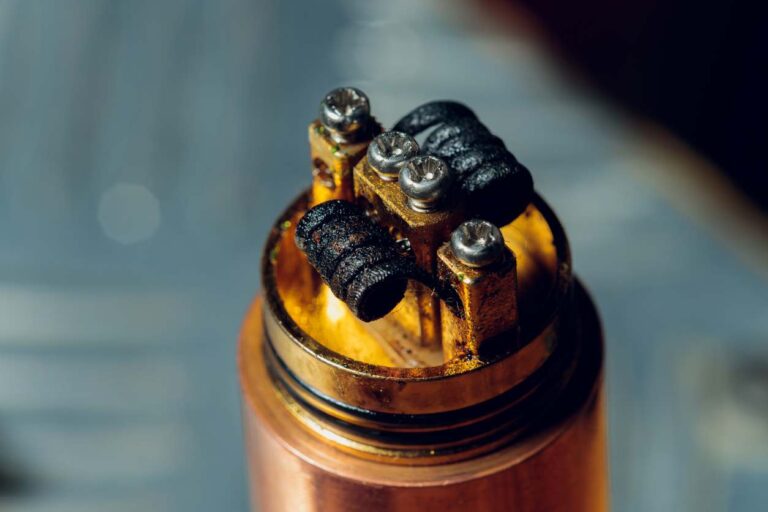
The right gestures to take care of your vaper

If you have decided to start vaping, this article is for you. Indeed, we explain to you how to clean your electronic cigarette in order to keep it as long as possible! Explanations.

Cleaning with each filling of e-liquid

To put it simply, regularly cleaning your vape contributes to its durability. If you have a disposable model, you don’t have to worry about cleanup. For other removable models, several steps are necessary, but rest assured: it is neither long nor restrictive.

First, empty the e-liquid tank. For fully removable models, you can unscrew all the parts to clean them. Otherwise, only unscrew the atomizer.

For cleaning, no need to use products. Hot water is enough. Be sure to rinse all the parts well before reassembling them and wipe them with a soft cloth. Ideally, let the elements dry overnight on a clean cloth. You can now top up your e-cigarette with your favorite e-liquid, then screw back the atomizer and the other elements if necessary.

Regular maintenance

If cleaning is a good way to make your e-cig last, maintenance should not be neglected. This will allow you, among other things, to protect your mod (whether with integrated or replaceable battery) as well as your battery. Indeed, when necessary, the battery must be changed. A few warning signs should alert you, such as a charging problem or the battery not holding up as much as before.

For mods with built-in battery, you already know that it will last you about 1 year. After this time, you will need to have it changed. For replaceable battery mods, these have a lifespan of around 6 months. The change is easy, but you have to follow the manufacturer’s instructions so as not to damage the thread, for example. Little tip: when the battery is recharged, avoid leaving your e-cigarette plugged in! As with smartphones, this leads to premature obsolescence of its battery!

Comment About The right gestures to take care of your vaper Below ..

In the United States, CBD companies can now sponsor baseball teams

Teams in Major League Baseball (MLB), the main American baseball league, are now allowed to be sponsored by CBD brands.

MLB officials told team marketing executives on a conference call this week that CBD companies are now an “approved category,” so long as the companies can prove the products have been certified by the NSF regulatory body and that the THC levels are within regulatory limits.

So far only the Ultimate Fighting Championship (UFC), at a pro level, authorized sponsorship by CBD brands, the other sports leagues still fearing the amalgamation with cannabis.

In March 2021, the UFC announced a five-year partnership with Love Hemp Group, which provides CBD and hemp products worldwide.

Noah Garden, Chief Revenue Officer of MLB, reportedly said the league has had its eye on the CBD category for some time and that three to five brands are in the process of trying to obtain NSF certification.

CBD brands that enter into agreements with MLB teams or with the league itself will be able, similar to the rules governing sports betting advertisements, to run advertisements during broadcasts of MLB games.

Some American athletes have already taken the plunge into sponsorship with CBD, including golfer Bubba Watson, soccer player Megan Rapinoe and former NFL star Rob Gronkowski.

MLB removed cannabis from its list of prohibited substances in December 2019, the idea being to treat cannabis the same as alcohol.

Biotech Overseed launches the first cultivation of medical cannabis in France

6 months after obtaining ANSM approval and raising €2.5 million, the biotech is launching its R&D program in the cultivation of medical cannabis. Overseed becomes the 1time French company to cultivate this plant for medical purposes in France.

By the end of the year, the biotech aims to select 5 plants on which the first pharmaceutical trials will be initiated.

Research Runs

Authorized to conduct research on cannabis for therapeutic purposes for the first time in France, Overseed started the first agronomic phase of phenotyping these plants 2 months ago.

This process aims to select plants with precise agronomic criteria and phytochemical profiles, which will guarantee the stability of production and the reliability of cannabis varieties. In a second step, the production of these varieties will be tested in a controlled climate, to ensure the stability and homogeneity of the plants.

These seedlings materialize a first R&D program in France, the culmination of which is scheduled for 2023, the date on which the generalization of therapeutic cannabis in France should take place.

Production runs

By the end of 2022, the teams ofOverseed plan to select 5 varieties of plants that meet the requirements to start the “pharmaceutical run” phase.

The process of extracting the active ingredients from the cannabis plant will then make it possible to develop new drugs that meet the specifications of the ANSM. Overseed will develop its extracts with Stanipharm CDMO, an expert in the production of active ingredients, in particular by supercritical CO2 extraction.

“We are very excited to begin this complex agronomic and scientific process that is critical to future drug development. In the coming months, our experts in genetics and cultivation techniques will be fully invested in providing medical research and our partners with all the potential of this plant.” said Hugues Péribère, founder and CEO ofOverseed, in a statement.

“It is also a further step for the French pharmaceutical industry, its sovereignty and its ability to respond to the many medical uses of cannabis. Through our project, we combine the best French expertise to create an innovative and efficient value chain in the territory. The next few months will be devoted to the search for operating laboratory partners and distributors”.

Switzerland: lifting of the ban on medical cannabis on August 1

The Swiss government announced on June 22 that it would lift the ban on medical cannabis, in accordance with an amendment to the Swiss narcotics law that Parliament approved in March 2021. The Swiss government thus intends to “facilitate access cannabis for medical use for patients. »

“The decision to use a cannabis-based drug for therapeutic purposes will be up to the doctor, in consultation with the patient,” the government said of this amendment. From August 1, patients will no longer be required to obtain authorization from the Federal Office of Public Health (OFSP).

In Switzerland, medical cannabis is only authorized for patients who have the agreement of a doctor or who previously had to obtain authorization from the FOPH. Currently, only Sativex is approved for prescription to patients without exceptional authorization from the FOPH. For any other magistral preparation or medicinal product based on cannabis not subject to authorization, an exceptional authorization from the FOPH was mandatory and only in justified cases.

The country’s public-law federal institution, Swissmedic, which is responsible for both the “authorization and monitoring of therapeutic products”, including cocaine, methadone and morphine, could be tasked with managing the industry. cannabis in the future.

In 2019, the FOPH issued approximately 3,000 authorizations to patients suffering from a wide variety of cannabis-related medical problems. However, the FOPH described this process as “tedious administrative procedures”. “Sick people must be able to access these medicines without excessive bureaucracy,” the Office said.

Since then, 3,000 authorizations of this type have been issued each year, rendering the “exceptional” nature of these authorizations obsolete.