Home Blog Page 84

California governor signs tax break for cannabis companies

California’s governor signed a sweeping bill last Thursday to overhaul the state’s adult-use cannabis program, including eliminating the cannabis cultivation tax, in a bid to relieve the industry and to further reduce the illicit market.

Key provisions of AB 195 coming into force eliminate the Cannabis Cultivation Tax and shift the point of collection and remittance of the 15% excise tax on cannabis sales from the distribution level to the of retail. Additionally, there will be no excise tax increase for at least three years under the proposal, which is expected to be signed by the governor and take effect immediately.

The legislation also aims to take steps to strengthen law enforcement against unlicensed operators. For example, property managers who knowingly rent premises to a business that illegally manufactures, stores or sells cannabis will be subject to civil penalties of up to $10,000 per day per violation. County governments can also take civil action against unlicensed growers for pollution or water diversion.

Cannabis businesses linked to the social equity program will be eligible for a $10,000 tax credit under the bill, and they can keep 20% of excise tax revenue from their cannabis sales in order to reinvest them in their business.

The legislation also earmarks approximately $670 million in cannabis taxes for education, youth drug treatment, school retention, environmental cleanup and remediation related to illicit cannabis manufacture. cannabis, as well as law enforcement.

California has taken in nearly $4 billion in cannabis-related tax revenue since the adult-use market launched in the state in 2018.

Italy debates legalizing cannabis self-production

The Italian Parliament has started debating a law that could legalize the home cultivation of cannabis.

The bill for the self-production of cannabis provides for the possibility of cultivating 4 female plants for personal use, the reduction of penalties for minor offenses and the abolition of administrative sanctions for possession of cannabis for personal use.

In addition, it is planned to establish, at the beginning of each school year, in primary and secondary schools, a national day on the harmful effects of alcoholism, smoking and the use of drugs and psychotropic substances.

“The start of the debate on the law that authorizes the domestic cultivation of four cannabis plants marks a historic day for our country, rooted in old and failed repressive policies against drugs”, celebrated Mario Perantoni, president of the Justice Commission of the Chamber of Deputies and member of the M5E party.

“The law will save 600 million a year in spending on unnecessary processes, but above all it will make possible extensive therapeutic use and take space away from drug trafficking,” Perantoni said.

The project has the support of the centre-left and the M5E. Against are the Lega, the Brothers of Italy and Forza Italia.

The supporters of the law hope that it can be voted on by the Chamber of Deputies before the summer and then land in the Senate in September when parliamentary work resumes.

The Albanian government has finished drafting its medical cannabis law

In accordance with the results of the referendum proposed by the Albanian Prime Minister, Albania has decided to open the production of medical cannabis in the territory, for the moment only for export.

And the least we can say is that Albania is wasting no time. The law on medical cannabis and the conditions for obtaining licenses relating to the production of cannabis have already been drafted, 4 months after the end of the referendum.

The legal initiative aims to regulate and control the cultivation, processing and export of the Cannabis plant and the production of its by-products, intended for medical and industrial purposes.

For the implementation of the law, the National Agency for the Control and Monitoring of the Cultivation and Processing of the Cannabis Plant is created and will depend on the Ministry of Health. The agency is responsible for controlling and monitoring the process at all levels, from seeds, planting, harvesting, drying and the final destination of the cannabis.

Each company’s license will be approved by the government based on certain selection criteria and procedures organized by the National Cannabis Agency. The decision to provide a company with a license for the cultivation of cannabis is proposed by the Minister of Health, in this case by Minister Ogerta Manastirliu.

Restriction, no more than 150 hectares

The law sets a limit on the maximum area of ​​land that can be cultivated with cannabis. Specifically, the total area authorized for the cultivation of the Cannabis plant for medical purposes cannot exceed 150 hectares nationwide.

In addition, the area of ​​the activity license unit for medical purposes cannot be less than 5 hectares or more than 10 hectares. This restriction is expected to spark a tug of war between companies for licenses.

Conditions for obtaining a license

The law sets strict criteria for obtaining a license. In practice, no Albanian company meets these conditions, since the first criterion is that the company must have experience in the cultivation, production, processing, circulation and administration of the cannabis plant.

The company or shareholder holding 51% of the shares of the company must be engaged in the production of products derived from the cannabis plant in one of the 38 countries that are part of the Organization for Economic Co-operation and Development. The entity must have at least a GMP certificate issued by the European Medicines Agency and the American Food and Drug Administration. In addition, the company must have a capital of at least 100,000,000 ALL (825,000 €).

Interested companies should also submit their business development plan, cultivation model and cultivation goal as well as the minimum and maximum area of ​​the development unit. They must present a treatment plan for the premises for the drying, cutting and storage of cannabis.

The security plan for the cannabis cultivation and processing area defining the protection elements, fencing, security with cameras and physical security for 24 hours.

Among the criteria for applying for a license are the self-declaration of the employment of at least fifteen people, the self-declaration of the desire to conclude agreements with the responsible structure of the ministry responsible for law enforcement public and security to ensure access for inspection and self-declaration that it will begin to exercise within 12 months of obtaining the license.

Entities will also have to agree to pay, after the third year, an annual fee equal to 1.5% of annual turnover, but in any case not less than ALL 10,000,000 (€82,500).

A first medical cannabis production license on the Isle of Man

The Isle of Man’s first medical cannabis production license has been approved by the Gambling Supervisory Commission of the island, which regulates the sector, and awarded to the company GrowLab Organics.

GrowLab could now cultivate, extract, manufacture medical products, import and export cannabis.

Business Minister Tim Crookall said the approval “represents the dawn of a new economic sector”. He added that it would promote “high value-added economic diversification”, create new jobs and training opportunities and “encourage foreign investment”.

Applications to operate in the sector on the Isle of Man opened last June.

Alex Fray, managing director of GrowLab, said the company expects to create more than 50 jobs over the next three years.

“The emerging cannabis sector is potentially the most exciting global development of this generation and has the potential to transform the quality of life for millions of people. GrowLab Organics’ mission is to help people live better lives through the power of cannabis, while reducing the need to source cannabis from illicit sources for medical purposes. »

Medical cannabis is currently not available in the Isle of Man and there are no GPs registered to prescribe it. A license has however been granted to the company Karsons Pharmacy to import and distribute products to people with private prescriptions, paid for and not reimbursed by the local health system.

Cannabis lounges in Nevada by the end of the year

Nevada’s cannabis regulator has finally approved rules that will govern the first 60-65 cannabis consumer lounges, a move long desired by an industry keen to better profit from the state’s thriving tourist industry.

The first ones cannabis lounges should open before the end of the year, according to a statement from the Cannabis Compliance Board disseminated on social networks.

The regulatory council approved the regulations a year after lawmakers passed a bill allowing salons, and after 15 public meetings and workshops on the issue.

40 to 45 licenses will be issued for places of consumption attached to existing cannabis stores and 20 others for independent lounges.

Ten of these licenses would come with reduced fees for applicants for social equity or for people with a non-violent conviction for cannabis use and living in one of the eligible deprived areas.

One of the criticisms leveled against the rules is the high barrier to entry: Applicants must prove they have $200,000 in liquid assets to obtain a license.

“It (the approval of the regulations) should be seen as a first step. It won’t be perfect,” said Tyler Klimas, executive director of the Cannabis Control Board.

Regulators are expected to open the application process this fall for an opening of the first cannabis lounges before the end of the year, some stores having already built their facilities with the hope of receiving a consumer license.

Only Nevada tribal lands currently have the right to open social cannabis consumption venues.

Malta plans to open its Cannabis Clubs by the end of the year

The very first Maltese Cannabis Clubs could open within the next six months.

Parliamentary Secretary for Reforms Rebecca Buttigieg told Lovin Malta that his office is currently working to ensure authorities have the necessary resources in place to meet the year-end timeline that was provided by Mariella Dimech, Chair of the Responsible Cannabis Use Authority (CURA) .

“Six months ago, Malta had the courage to face reality and pass historic reform for the responsible use of cannabis,” Mr Buttigieg said. “It was a huge step that many thought would never happen and yet here we are, the first EU Member State to take this step. »

“We had to put in place an authority to regulate it and we are now at a stage where the authority is put in place to effectively and responsibly enforce the law.”

Last December, Malta legalized the personal use of cannabis and allowed the creation of Cannabis Clubs, non-profit associations that can cultivate cannabis for their members. Cannabis associations will be regulated by the CURA and must meet the following criteria to obtain a license.

  • Training certificate for all employees for: a) culture; b) storage; c) dispensation; d) delivery from point a to point b
  • No connection with criminal organizations
  • An insurance
  • Residence in Malta
  • Commit to providing all necessary data to the centralized data collection system

All applications will need to provide a clear action plan that includes plans for cultivation, storage, deliveries and dispensing.

Although the regulatory process has yet to begin, Rebecca Buttigieg urged people to take things step by step, noting that people can already grow and consume cannabis at home with peace of mind and have their records expunged. court for possession of cannabis.

The German “drug czar” will speak at the International Cannabis Business Conference in Berlin

Germany is probably preparing one of the most robust and complex reforms in cannabis policy and industry.

Given the size of the German economy and its geographical position at the heart of the European continent, the German adult cannabis industry will instantly become the largest on the planet once it gets going. Currently, only Canada has a domestic adult-use cannabis industry, open to anyone of legal age and offering products that are not just low-THC strains.

German lawmakers and regulators want to legalize cannabis in the most sensible, effective and efficient way possible, which is no easy feat in a nation of over 83 million people that shares 9 borders with other countries.

Drug Commissioner Burkhard Blienert

The centerpiece of these developments, Germany has a drug commissioner who oversees the legalization process, Mr Burkhard Blienert. The latter will speak at the next International Conference on the Cannabis Business (ICBC) to be held in Berlin on July 19 and 20, 2022.

Commissioner Blienert’s curriculum vitae is extensive, having dealt intensively with drug and addiction policy issues for approximately ten years. During the 18th legislature (2013-2017), he was a member of the German Bundestag and represented his parliamentary group as a full member of the Committee on Health, the Committee on Culture and Media and the Committee on budget. Mr Blienert was his group’s rapporteur on drug and addiction issues during this period.

Since 1990, Mr Blienert has been a member of the Social Democratic Party of Germany (SPD). He worked for the executive committee of the SPD party and was responsible for the SPD group in the Land Parliament of North Rhine-Westphalia, responsible for school and education, sports and petitions.

Mr. Burkhard Blienert studied politics, modern history and sociology (master’s degree) and passed the first state examination for lower secondary education in social sciences, history and pedagogy. As a member of the German Bundestag, Mr. Blienert served on the board of directors of the Federal Agency for Civic Education (BpB), the board of directors of the German National Library and the broadcasting board Hörfunkrat Deutschlandradio as well as well as on the board of directors of the German Federal Film Office (FFA).

Currently, he is a member of the supervisory board of the Federal Cultural Federation, the National Society for the Welfare of Workers (AWO), the Union of United Services (ver.di), the association “Contre l’oublie – For Democracy” of the German Thomas Mann Society and the district council of Paderborn.

History in motion

Drug czar Blienert is no newcomer to ICBC. Last year, he took part in a panel where, for the first time, representatives of all major German political parties took part in a discussion on cannabis policy. This discussion took place just weeks before the 2021 election, the results of which we now know.

Much of what was discussed on the 2021 panel was part of the political cannabis conversation in Germany. The conversation will continue at this year’s B2B event, taking place in July, where a number of policy makers directly involved in Germany’s cannabis legalization effort are expected. Participants will literally be able to get the latest information on what is happening in Germany directly from those involved in the process, including the current German Drugs Commissioner.

In addition to the Berlin B2B event, the International Cannabis Business Conference (ICBC) will also feature a one-day Global Investment Forum (GIF) on July 18, 2022. The ICBC Berlin Global Investment Forum will feature hand-picked cannabis companies who will participate in a pitch session in front of leading investors on the main stage of ICBC. This is a great opportunity for companies in the emerging cannabis sector to showcase their products/services in front of seasoned industry investors. The pitch session is also open to service providers looking for reliable, high-end customers.

Following the B2B event, attendees can then enjoy one of the famous International Cannabis Business Conference after-parties. This year’s after-party for the B2B event in Berlin will feature multi-Grammy Award-winning reggae band Morgan Heritage.

Over 5,000 attendees and 350 corporate sponsors and exhibitors are expected at ICBC Berlin, with over 85 countries represented at previous events. This series of events is the best way for innovators and inventors to showcase their products or services to key influencers and decision makers in the cannabis space, as well as for investors to network with budding entrepreneurs.

Buy your tickets now before they sell out!

In Indonesia, the legalization of medical cannabis driven by a mother’s fight for her son

The legalization of medical cannabis in Indonesia resurfaced after a mother named Santi openly requested medical cannabis for her son Pika who has Japanese encephalitis, a viral disease transmitted by mosquito bites.

Santi Warastuti had previously submitted a court petition to review Indonesia’s Narcotics Law along with two other women to the country’s Constitutional Court in November 2020, but it was not granted.

“This medical cannabis is urgent for me, because Pika, my child is still not free from his seizures,” Santi said on the sidelines of a protest last week. His picture with a “Help my son get medical cannabis” sign has gone viral on Indonesian social media.

A strict no-go policy

Pika would need CBD oil, which is still illegal in Indonesia. A fortiori, cannabis for medical use comes into conflict with Law No. 35/2009 on narcotics.

Article 8, paragraph 1, of this law clearly explains that the use of class I narcotics, which includes cannabis in Indonesia, is prohibited, even in the context of health care.

Research on Class I drugs can also only be carried out after obtaining the Minister’s approval on the recommendation of the head of the Food and Drugs Control Agency. In these regulations, cannabis is included as a class I narcotic along with heroin, cocaine, opium, cocaine leaves, jicing, cathinone, ecstasy and 65 other types.

Government policy is based on the United Nations decision to include cannabis in Schedule IV of the Single Convention on Narcotic Drugs of 1961.

However, changes took place in December 2020. The United Nations Commission on Narcotic Drugs (CND) removed cannabis from this list, which could start a change in Indonesia.

The government launches a review of the law

The discussions around the legalization of medical cannabis in Indonesia returned to the carpet at the end of May. A government commission has questioned the government’s attitude towards narcotics for medical purposes.

Asrul Sani, a member of Commission III of the Indonesian House of Representatives, admitted to receiving many suggestions from the public regarding the use of cannabis for medical purposes.

“We cannot deny that, to some extent, cannabis can be part of medicine. Now, to what extent is the government going to open the space for this? asked Asrul.

In 2017, Fidelis Arie Sudewarto, a civil servant, was arrested for planting 39 cannabis plants by the National Narcotics Agency (BNN).

The cannabis was grown to treat his wife Yeni Riawati, who was diagnosed with syringomyelia, the growth of cysts in the spinal cord. His wife eventually died 32 days after Fidelis was arrested by the BNN.

Responding to this statement, the Deputy Minister of Law and Human Rights, Eddy OS Hiariej, said that the purpose of the Narcotics Act was not only to eradicate drug trafficking, but also to guarantee the availability of narcotics for research and health.

“That means there is a health aspect here, so it is possible that, for example, cannabis for medical use could be used…”.

In an interview, Deputy Chairman of Committee III of the Indonesian House of Representatives, Desmond Junaidi Mahesa, said on June 28 that he would consider the proposed revision of Law No. 35/2009 on narcotics in order to possibly legalize medical cannabis.

“We will first look at the value of benefits and harms. From the studies that I know of, it turns out that the value of the health and economic benefits is extraordinary, and the harms are very low,” Desmond said.

What is an e-liquid?

A term well known to vapers, e-liquid is one of the components necessary for the use of the e-cigarette. Of different flavors and containing or not nicotine, let’s take stock of what e-liquid is.

The composition of the e-liquid

As its name suggests, the e-liquid is a liquid and viscous substance that is integrated into the tank of the electronic cigarette and which will be heated by the resistance before turning into vapor. To put it simply, without e-liquid, the e-cigarette would not work.

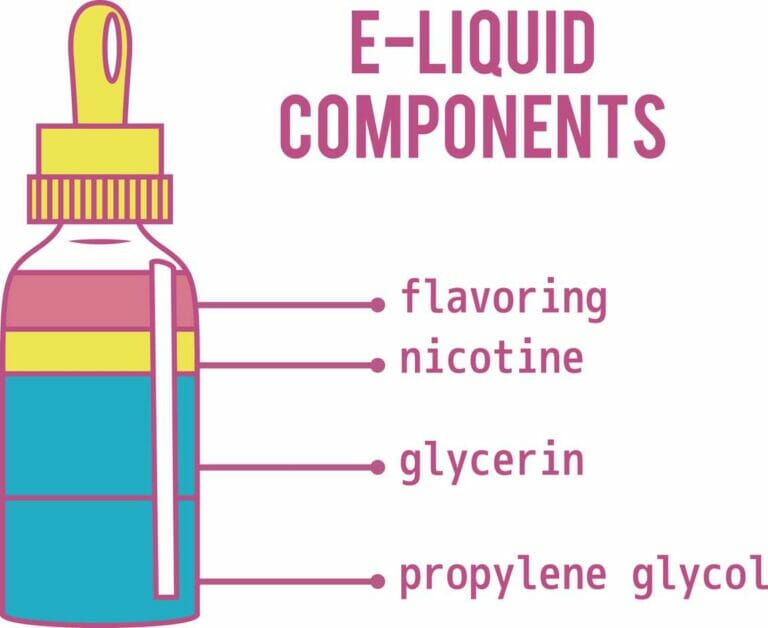
This product consists of a PG/VG base which differs according to the tastes and needs of users. This is made up of vegetable glycerin and propylene glycol. Then, food flavorings (natural or not) can be added as well as nicotine depending on the product.

How to choose your e-liquid?

For products containing nicotine, it is essential to choose your e-liquid depending on its usual amount of consumption (in addition to the type of material you hold). People who smoke between 5 and 10 cigarettes a day can choose an e-liquid of 3 to 6 mg/ml. Those smoking between 10 and 20 cigarettes will have to choose an e-liquid of 11 to 12 mg/ml and those smoking more than 20 cigarettes per day will prefer a higher content, i.e. 16 mg/ml.

What about the PG/VG ratio?

This ratio is mediated by the type of device you have. The more powerful your e-cigarette, the higher the VG dosage should be. For a more fluid liquid, the rate of PG must be higher. It is also an element that will determine the Hit (the famous tingling sensation in the throat).

How to store your e-liquid?

An e-liquid can be kept for 2 years if it has never been opened. Indeed, the lifespan of PG and VG is 2 years, as for that of nicotine, it is 5 years. Nevertheless, the aromas keep for 18 months at most. This is why beyond 2 years, an e-liquid will inevitably lose its flavor. For opened e-liquids, you have a maximum of 6 months to use it.

Comment About What is an e-liquid? Below ..

Washington D.C. residents will no longer need a doctor to obtain medical cannabis

On Tuesday, the Washington DC Council unanimously passed an emergency bill that removes the requirement to obtain a doctor’s recommendation in order to purchase medical cannabis.

Residents over the age of 21 will now be able to “self-certify” that they need cannabis for medical purposes when registering for a patient card. This card will allow them to access one of the seven medical cannabis dispensaries in the city.

Earlier this year, the District Council passed a similar bill allowing residents over the age of 65 to self-certify that they need cannabis for medical purposes.

Facilitating access to medical cannabis

The bill aims to make medical cannabis easier to access for potential patients, some of whom may face difficulty finding a doctor who will provide a cannabis referral – 620 are registered with the city to do so, on thousands in DC — or may not have the time, insurance coverage, or money for a visit to a doctor.

The measure is also intended to support the city’s medical cannabis dispensaries which are facing increasing competition from shops and “donation” services. Since recreational cannabis is not yet legal in DC, some businesses are taking advantage of the legality of “cannabis donation” to sell t-shirts or juice, along with a certain amount of “free” weed, often cheaper than in the dispensary.

“Due to the low barriers to accessing the gray market, a significant number of patients who use cannabis for medical purposes have switched from purchasing this substance from legal medical dispensaries to the illicit gray market, which creates a risk important to the long-term viability of the legal medical cannabis industry in the district,” reads a statement from Kenyan McDuffie and Mary Cheh, the two councilors spearheading the project.

“If this trend continues, it is possible that gray market sales could wipe out legal cannabis dispensaries in the district. Given the…benefits that legal, regulated and safe dispensaries provide medical cannabis users in the District, it is vital that the industry survive until the District can establish a regulated recreational market and transition to comprehensive regulation of adult cannabis products. »

The bill will be submitted for the signature of Mayor Muriel Bowser who has already declared support for the text.