Home Blog Page 59

Cannabis legalization in Canada has improved access to medical cannabis

A recent report prepared for Health Canada shows that the legalization of cannabis in Canada in 2018 has improved access, information sharing and reduced stigma associated with cannabis for medical purposes.

The report is based on two surveys, one of 1,205 Canadians aged 16 and older who have used cannabis for medical purposes since its legalization on October 17, 2018. The second survey was conducted among a sample of 823 physicians and nurse practitioners who have had experiences with or inquired about people accessing cannabis for medical purposes.

Recreational legalization has facilitated access to medical use

Among respondents who have used cannabis for medical purposes (“patients”), just over half (53%) said they had done so before legalization. Almost half (46%) only started using cannabis for medical purposes after the full legalization of cannabis.

Of those who only started using cannabis for medical purposes after legalization in 2018, more than half (58%) said they were more comfortable doing so because legalization has made cannabis more readily available. Half (49%) also said they made the decision to use cannabis for medical purposes because they felt more information about medical cannabis was available after legalization and there was less stigma. a postman.

Most (71%) of those who said they had used cannabis for medical purposes said they had also used cannabis for non-medical purposes in the past three years since legalization.

Most of these patients (66%) also reported having discussed their medical cannabis use with a physician and/or nurse practitioner. Among those who did not discuss these issues with a healthcare professional (HCP), fear of stigma was the most common reason.

The most common reasons for refusing to prescribe medical cannabis are the healthcare professional’s refusal to authorize the use of cannabis for patients (38%), lack of evidence to support cannabis as a treatment option (31%) or the fact that the healthcare professional is not familiar enough with the use of cannabis for medical purposes (29%).

Types of Cannabis Products Recommended

Cannabis oils, extracts and capsules are the products most often recommended by a medical professional (68%), followed by edibles (26%) and dried flower (23%).

Almost a third of respondents said they had been recommended products with high CBD and low THC content, while 24% said they had been recommended equal amounts of THC and CBD. Finally, 19% said they were recommended only CBD and 17% both high-THC and low-CBD products.

Despite this, 44% of patients reported smoking their cannabis, while 34% said they preferred edibles, and almost a third (31%) preferred to ingest cannabis extracts or oils. Most patients said they preferred cannabis products that contain both THC and CBD, but responses were varied.

27% said they preferred higher levels of THC with lower levels of CBD, while 30% said they preferred higher levels of CBD with lower levels of THC. 28% said they preferred equal levels of THC and CBD. Only 13% said they would prefer a product containing only THC.

Frequency of consumption

More than a third (39%) of people who use cannabis for medical purposes said they do so almost every day, while 21% said they do so several times a week. Only 14% said they used cannabis for medical purposes once a week, and only 10% said they did so several times a month.

60% of patients said they thought legalization had a positive impact on access to cannabis for medical purposes. Among them, about half said they thought full legalization had increased the quality and quantity of products, and nearly half said they felt less stigma for their cannabis use.

Health Professional Survey

A second survey focused on the opinion of health professionals. 49% of them said that the use of cannabis had therapeutic value. 45% said there was therapeutic value at least once in a while.

Of the healthcare professionals who said cannabis use had therapeutic value at least occasionally, three-quarters cited clinical examples that suggested cannabis may have therapeutic value. More than half (59%) said cannabis was a valuable tool in cases where other treatment options were not tolerable or effective.

Most (89%) of healthcare professionals who believe cannabis has therapeutic value at least occasionally think CBD is the most therapeutic part of the plant, while 44% say THC, 13 % than other cannabinoids and 9% than terpenes have therapeutic value.

Most healthcare professionals (90%) said CBD had therapeutic value, while 85% said THC posed risks.

Of those who recommend a maximum daily dose of THC, the majority recommend no more than 10 mg. The maximum amounts of CBD recommended were more varied. About a third (29%) of healthcare professionals said they usually recommend up to 2.5 mg per day.

The largest proportion (29%) said they generally recommend up to 2.5 mg of THC per day. Another 22% recommended between 2.6 and 5 mg of THC, while 15% usually recommend between 10.1 and 15 mg. Only 1% of healthcare professionals usually recommend more than 25 mg.

Among healthcare professionals who do not recommend cannabis for medical purposes, most (58%) cited a perceived lack of evidence on the effectiveness of cannabis or a lack of information on the appropriate dosage (55 %) to explain why.

Almost half (48%) said they felt they didn’t know enough about using medical cannabis or were concerned about negative side effects (47%). 64% of healthcare professionals said they had received more inquiries about the use of cannabis for medical purposes since legalization.
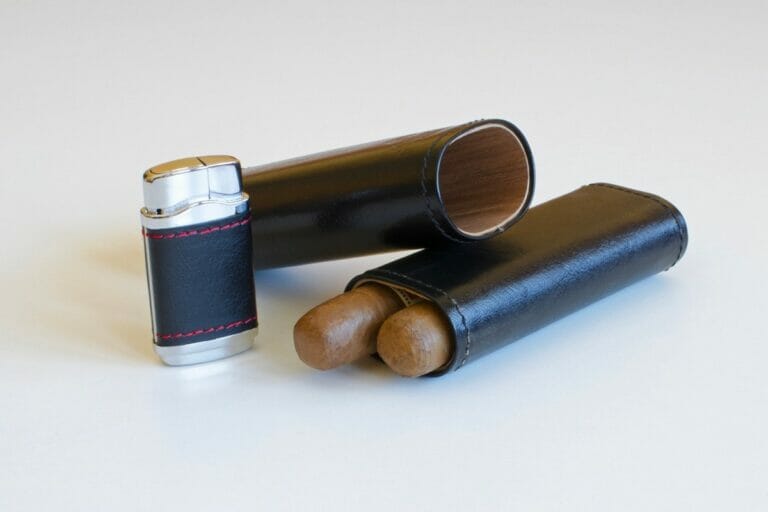
Cigar cases for everyone?

0

As practical as they are aesthetic, cigar cases are essential for all smokers of volutes. We explain what a cigar case is for and how to find yours. Decryption.

The cigar case: transporting the swirls safely

His name speaks for itself. L’cigar case is a rigid accessory allowing cigars to be transported over a fairly short period of time, without damaging them. For example, if you know you have to go away for a day or two and enjoy a good cigar, you can carry it with confidence in a cigar case. Small and light, they slip into the pocket of a coat, a jacket or even a bag.

Cigar cases can be single, double or even larger. However, the most widespread are the doubles, since they make it possible to double the pleasure! Similarly, they can be made of leather, metal or plastic depending on the model. Be careful, they do not replace humidors! They are mainly used to protect your cigars during a short trip.

How to choose the right cigar case?

The first criterion to take into account is none other than the number of compartments required. If most of the time a case with 2 cigars is enough, maybe you will only need a simple case or a larger one (3 or 4 cigars)?

The second criterion will be more of the order of aesthetics. Indeed, cigar cases come in several colors, patterns and textures. Depending on your tastes, you might be attracted to one model over another. While some smokers like simplicity, others will be more inclined to choose a flashy cigar case. Let your personality do the talking to make your choice!

The third and final selection criterion will be the price. Again, there is a wide and very disparate price range. Depending on the brand, design material or sometimes the chosen model, the amount can be multiplied by 10!

Comment About Cigar cases for everyone? Below ..

Illinois sold more than 1.5 billion cannabis in 2022

Adult cannabis sales in the small state of Illinois, population 12.7 million, exceeded $1.55 billion in 2022, a new record and a 12% increase from 2021 and 131% from 2020. Illinois has 113 licensed dispensaries in the state.

In a press release announcing the figure, Democratic Gov. JB Pritzker said that when he signed the state legalization law into law in 2019, the administration “set an ambitious goal: to create the industry of most equitable and economically prosperous cannabis in the nation. »

Last year, the governor said, the first adult cannabis dispensaries run by people with cannabis-related legal issues opened, which Pritzker says paves the way ” to an even stronger 2023. »

In all, 3 adult-use cannabis dispensaries opened in the past year, while another 189 conditional licensees are in the process of obtaining their full dispensary license from state regulators.

Mario Treto, Jr, secretary of the Illinois Department of Financial and Professional Regulation (IDFPR), noted that 2022 marked the second consecutive year that the state’s cannabis industry experienced “record growth.” »

“We are excited for what the future holds for the fairest cannabis industry in the country. We are optimistic that the industry will only continue to thrive in 2023 as we welcome more dispensaries to Illinois,” said Mario Treto, Jr.

Statistics compiled by the IDFPR show that 2021 sales totals were all surpassed in November 2022. A total of 36,435,129 items were sold at Illinois adult-use cannabis dispensaries last year, an increase of 20% compared to 2021.

Additionally, sales to Illinois residents totaled $1,073,132,436, an increase of nearly 14% over 2021, while sales to out-of-state residents totaled $479,192,383. an increase of almost 10% compared to 2021.

The 2023 Cannabis Cups

Canna French Cup

The 2nd edition of the Canna French Cup will be held from November 17 to 19, 2023. A CBD format is scheduled for March 24 to 26, 2023.

Emerald Cup

The Emerald Cup brings together in mid-May the fine flower of native Californian industry to award prizes to future dispensary hits.

Homegrown Cup

Since 2015, the Homegrown Cup has rewarded the best varieties grown by individuals indoors or outdoors. The 2022 edition was split into 2 events: a first in mid-July, to decide between weeds and extracts from indoor cultivation, a second in mid-December for the outdoors.

The 2023 edition should take place around the same dates.

Masters of Rosin

This competition, reserved for members of HQ, a renowned cannabis club in Barcelona, ​​will take place from March 6 to 12, 2023. As its name suggests, the Masters of Rosin is a rosin competition.

Your event is not listed? Send us an email via our contact form.

Hawaii wants to legalize cannabis in 2023

Jeanné Kapela, representative of the State of Hawaii, announced during a press conference a plan to legalize cannabis which will include a social justice system.

“We all know, and Hawaiians know, that it is high time to legalize the recreational use of cannabis for adults in Hawaii. This year, we are on the precipice of history,” she explained.

“Following the recommendations of a cannabis policy task force, we now have a roadmap to legalize recreational cannabis on our islands,” Ms Kapela said, referring to a report released by the task force. on cannabis from the Hawaii Department of Health in December 2022.

Kapela did not detail a timeline for introducing the bill, but explained a few key points, including the ambition of the criminal records erasure program.

“Social equity is what forms the core of our proposal,” she explained.

In March 2021, the Hawaii Senate had approved two cannabis reform bills that ultimately did not advance.

Former Hawaii Governor David Ige was not a staunch supporter of cannabis legalization, and often voiced his hesitation due to its federal illegality. He did, however, allow a law to pass without his signature in January 2020, which decriminalized cannabis in the state.

Newly elected Governor Josh Green said in November 2022 that he would sign a legalization bill.

“I think people have already moved past this cultural concern,” Green said during an October 2022 debate.

“But here’s what I would do. First of all, if cannabis is legalized, it should be very carefully monitored, in the same way as cigarettes. We should take the $30-40 million in taxes we would get from this and invest in developing our mental health system for the good of all. »

What does ChatGPT think of France’s cannabis policy?

ChatGPT, the chatbot created by OpenAI, has been generating a lot of interest since its debut less than two months ago.

Notable for its ability to answer complex questions, ChatGPT can also write long essays, legal briefs, computer code, poetry… or evaluate public policy.

Out of pure curiosity, I asked him about France’s position on cannabis.

Discussion with ChatGPT

If we ask ChatGPT what it “thinks” of the prohibition of cannabis in France, ChatGPT sets its limits:

ChatGPT “As a language model, I don’t have personal opinions. However, the prohibition of cannabis in France is a subject of debate and there are arguments for and against its use. Some claim that this prohibition has a negative impact on society by creating an illegal market and leading to an increase in crime, while others argue that it helps to protect the health of citizens and prevent the risks associated with drug use. Drug policies vary from country to country and are often influenced by socio-economic and cultural considerations. »

ChatGPT obviously can’t say what it “thinks” since it doesn’t think. But perhaps he will be able to determine whether cannabis prohibition is a successful policy?

ChatGPT “There is no consensus on the effectiveness of cannabis prohibition as a policy. Some claim that it reduced drug use and associated negative consequences, such as road accidents and hospitalizations related to drug abuse. Others argue that prohibition has failed to reduce cannabis use and has instead led to negative consequences, such as increased drug-related crime and stigmatization of people who use it.

There are many models around the world where alternative policies have been implemented and they have different results. Some have chosen to decriminalize or legalize cannabis for some therapeutic, recreational, or medical purpose. These policies tend to reduce the negative consequences of prohibition while providing some degree of control and regulation over the production and sale of the drug.

It is important to note that research on alternative policies is still limited and it is difficult to determine with certainty whether a given policy is more effective than another. It is important that policy makers continue to monitor and evaluate drug policies to maximize benefits and minimize risks to society. »

Ha. Does ChatGPT have any ideas for improving public policy around cannabis in France?

ChatGPT : “There are several ways in which public policy around cannabis could be improved in France:

  1. Decriminalization: By decriminalizing the possession of small amounts of cannabis for personal use, law enforcement could focus on more serious offenses and governments could recoup funds spent on cracking down on cannabis possession.
  2. Regulatory framework: By regulating the production, sale and consumption of cannabis, governments could ensure that cannabis is produced and sold in a safe and controlled manner, while reducing risks to public health.
  3. Education: By increasing education campaigns about the risks of cannabis use, governments could help individuals make informed decisions about using the substance.
  4. Funding for research: Finally, by increasing funding for research into the medical effects and risks of cannabis, governments could better understand the implications of this substance and help develop more effective policies. »

If ChatGPT says so…

Google opens (a little) to advertising for CBD in the United States

Google will allow advertising for hemp products and CBD cosmetics in California, Colorado and Puerto Rico, as part of an update to its rules on “dangerous products and services and health care and drugs”.

Advertising of CBD for internal human consumption still remains prohibited, the company said, including those for “supplements, food additives and vape products.” »

Google also indicated that pharmaceutical products approved by the Food and Drug Administration (FDA) may now be advertised in these states. Only Epidiolex, a pharmaceutical CBD oil with a high cannabidiol content, is so far approved by the FDA.

The changes, announced at the end of 2022, will come into effect on January 20. Advertisers will be able to apply for certification with Google from this date, when an application form is released.

Samples and certificates of authenticity required

Google said it has contracted with LegitScript, a Portland, Oregon-based payments compliance firm that provides certifications in high-risk industries. Only products certified by LegitScript will be eligible for promotion on Google platforms.

Those wishing to be certified to advertise on Google will need to provide LegistScript with samples of their products and certificates of analysis.

LegitScript has already published its certification standards for cannabidiol advertising. Advertisers will, among many other things:

  • Demonstrate product compliance with all legal and regulatory standards
  • If a license is required for the manufacture of the product, provide it
  • The applicant must provide a certificate of analysis demonstrating that the CBD used in the final product complies with federal laws regarding the cultivation and processing of hemp
  • Provide unexpired random samples of products submitted for certification for testing. These products must contain the advertised amount of hemp-derived compounds and must comply with legal requirements related to cannabinoid substances and ingredient levels.
  • Demonstrate that the products subject to certification have been produced in compliance with all USDA and state requirements for growing hemp, or are otherwise exempt from such requirements
  • Demonstrate that the applicant or product manufacturer, including associated personnel, businesses, or websites, must not have been subject to recent and/or repeated significant instances of poor legal compliance, disciplinary action, or other regulatory measures
  • Subject the applicant’s company officers, directors, or those with control over significant business decisions to criminal background checks conducted at the request of LegitScript, and those same individuals must disclose any criminal, regulatory, or civil violations anterior. Applicant must also disclose any litigation commenced, resolved, or otherwise resolved that involves Applicant at any time during the past 10 years. Prior violations or other misdeeds, including any prior regulatory discipline may be grounds for disqualification, at LegitScript’s sole discretion.
  • Adhere to Google’s Advertising Terms of Service

Luxembourg is not certain to “legalize” cannabis before the end of 2023

Intention but a lack of pragmatism before the finish line. This is how the legalization of cannabis in Luxembourg could be summarized.

Although the legalization project was indeed adopted last June by the government, the Luxembourg Minister of Health recently declared that she was not sure of being able to “finalize it during this legislature”, while the Luxembourg Council of State must give their opinion before the legalization takes effect.

“We must evolve in a framework where the objective is to show that this project can have an impact on public health in a positive way”, confided Paulette Lenert, adding to the microphone of radio 100.7 that the file is followed by near.

Luxembourg legalized medical cannabis in 2018. The same year, the Grand Duchy showed its desire to legalize cannabis for adult use. The first details of the legalization project emerged in early 2020, initially with a ban on self-cultivation and national cannabis production.

Finally, it will be the opposite that will be proposed: an authorization to cultivate 4 plants per household with a national production of seeds (and the authorized importation of seeds), but no legal sales of cannabis. Either a system halfway between decriminalization and complete legalization, which for the moment has not been able to motivate the government to act.

At the end of 2021, Luxembourg’s neighboring countries – France and Germany – were worried that cannabis would be added to the list of products imported by cross-border workers after alcohol, tobacco or fuel. With Germany having since announced its intention to legalize cannabis, with a system of legal sales, only one grumpy neighbor remains.

High and Fine Herbs season 4: the best of seasons

The show had started as a copycat Tipsy recipes in the Califlower way from Brussels. The fourth season is now worthy of high-quality reality TV, with a frenetic pace and an atmosphere of its own.

From Brussels to Barcelona

Jean-Jass and Caballero, always with comments slumped on their sofa, have managed the feat of bringing together a number of guests – Gazo, Da Uzi, Rim-K, Luv Resval, Mehdi Maïzi, Alkapote, Paul Mirabel, Roméo Elvis or Jok’Air for the best known – around more trying events than the other.

The Barcelona villa from season 3 still serves as the setting for the show with production on amphetamines and kilos of burnt weed. If you imagined a sluggish season 4, you failed.

As for the Golden Lung contenders, new faces with Limsa D’Aulnay, Le Juiice, Rowjay, Savage Toddy, Jimmy La Loutre and Arthur Qwest, “the civilian” sponsored by Kilograms.

Faultless for us, both in the (non-) treatment of the canna and in the tests (not to be repeated at home!) which are used to elect the Golden Lung and the good atmosphere which reigns and which we feels between all the participants. In short, you will have understood it, we like it a lot!

If you didn’t know what to do tonight, there’s still time to catch up on the first 2 episodes and continue with episodes 3 and 4 coming out tonight at 6 and 7 p.m.

The 4th season will lead at least on a mixtape that is due out on January 20 and for which pre-orders are open.

Morocco: ANRAC issues 50 additional licenses for cannabis companies

The Moroccan Agency for the Regulation of Cannabis Activities (ANRAC) has granted new licenses to companies wishing to carry out legal activities related to cannabis according to the Moroccan online news site Hespress.

50 new licenses have been granted to more than 20 players in the sector, a source wishing to remain anonymous told the Moroccan site, stressing that a recent meeting of the advisory committee responsible for studying license applications has made it possible to give the permission.

Among these twenty actors who received the license, there are two cooperatives responsible for processing the product, marketing and exporting.

The source also said that in total more than a hundred licenses have been given by the same organization and that for around 35 operators who will be responsible for the marketing in Morocco and abroad of cannabis derivatives. As of October 2022, only 10 licenses have been issued.

As a reminder, the National Agency for the Regulation of Cannabis-Related Activities is the governance and control body that ensures the proper application of Law No. 13.21 relating to the legal uses of cannabis in Morocco.

The law stipulates the granting of licenses for nine activities, that of production and agriculture exercised by the farmer originating from the region and in contact with the land, from one of the three codified regions namely Chefchaouen, Taounate and Al Hoceima.

The second activity concerns the production and exploitation of seedlings, the import of seeds and seedlings, or the export of the latter, activities carried out by people and not by companies. The rest of the activities are carried out by businesses, namely those related to the processing, transport, marketing and export of cannabis and the import of cannabis-based products.

ANRAC should launch its website this week, which will make it possible to submit license applications without having to travel to the site.