Home Blog Page 56

In Brazil, a first subscription service for medical cannabis

Innovation as a driving force for access to medical cannabis? In Brazil, a first subscription service focused on cannabis-based therapies has just been launched.

Managed by Gravital, a clinic specializing in medical cannabis treatments, the Gravital Club aims to facilitate access to this type of care, while offering a wider range of care. The principle of Gravital Club is to promote well-being and to encourage preventive and integrative medicine.

Brazil authorized medical cannabis in 2019, the products of which must for now be imported.

According to Joaquim Castro, founder of Clinica Gravitalthe subscription is an alternative for people looking to improve their quality of life and well-being.

“Our team of doctors has stressed the importance of monitoring patients’ progress more closely. The intention of Gravital Club is to provide its members with increasingly consistent results through cannabis therapy,” he says.

Subscription plans

THE Club GravitaIt offers two subscription options: Órbita III and Órbita IV. With these plans, patients can benefit, respectively, from three or four medical consultations per year at the Gravital clinic, carried out in person or by teleconsultation. Both modalities can be scheduled with any doctor in the network and with different professionals, of any specialty available at the clinic.

For face-to-face consultations, Gravital has units in several cities in Brazil: Rio de Janeiro, São Paulo, Sorocaba, Curitiba, Itajaí, Porto Alegre and Natal.

In both plans, the subscriber receives a 20% discount on additional consultations to those already included, a 15% discount in the Gravital bookstore and also exclusive discounts on the purchase of prescription drugs. Also included is a subscription to Alternnativa magazine, a quarterly publication containing the latest information on advances in medical cannabis.

About Gravital

Founded in Rio de Janeiro in 2019, the Clinica Gravital is the first clinic in Brazil focused on medical cannabis treatments. It currently has seven units in the country. Thanks to a multidisciplinary team, she treats patients suffering from clinical conditions such as insomnia, autoimmune diseases, chronic pain, fibromyalgia, migraine, autism, neurodegenerative diseases such as Parkinson’s and Alzheimer’s, among others.

Australian government report reveals its options for legalizing cannabis

THE Parliamentary Budget Office Australia’s PBO, which advises parliament on the budget, recently released a report exploring two options on how to approach cannabis legalization. He was tasked with exploring what legalization might look like at the request of Senator David Shoebridge and the Australian Greens party.

According to the PBO report, the first option foresees the creation of the Cannabis National Agency (CANA), which would act as the sole wholesaler between producers and retailers, set wholesale cannabis prices and issue licenses to potential cannabis business owners. Ideally, the agency would be funded entirely by production and retail licensing.

This option would legalize cannabis for anyone aged 18 and over, with no restrictions on how much a person can buy. This approach would also create penalties for selling to underage people, as with alcohol. Cannabis would be available to “overseas visitors”, and residents would be allowed to grow up to six plants. Finally, recreational sales would be “subject to the Goods and Services Tax (GST) as well as a 25% excise duty on sales including the GST”.

The second option contains all the provisions of the first option, except for the final recommendation, which would increase the excise tax to 15% instead of 25%.

The report explains that this approach would be similar to Canada’s cannabis law. In Canada, residents can grow up to four plants at home (except in Quebec and Manitoba), cannot smoke in public, and are limited to possession of 30 grams.

The PBO predicts the country could collect up to A$28 billion in tax revenue from cannabis in the first decade of legalization.

According to New Zealand HeraldSenator Shoebridge suggested that tax revenues be used to fund Job Seekerthe local Pôle Emploi, and to increase the financial assistance provided by the employment service Youth Allowance. He also suggested that tax revenue from cannabis could help build more than 88,000 social housing units over the next decade, providing more than 250,000 people with shelter.

“This PBO figure shows the incredible opportunity that legal cannabis creates not only to reduce harm but also to generate revenue that could be invested in health, education and public housing,” Shoebridge said.

“The Greens model creates a right for adults to grow up to six plants at home without being taxed and without having to pay. This figure takes this into account. It also secures business opportunities for local cooperatives and entrepreneurs to grow and sell cannabis, including through regulated cannabis cafes. »

He also explained that legalization just makes sense.

“Legal cannabis makes enormous social and economic sense. When we legalize cannabis, we take billions away from organized crime, the police and the criminal justice system and we can then spend it on schools, housing, hospitals and welfare,” Mr Shoebridge said. .

Moreover, he added that legalization would reduce the damage caused by criminal injustice, and that overall, polls have found that most Australians are supportive of cannabis and use it regularly.

“It is a fact that almost half of adult Australians have used cannabis at some time. The laws that make nearly half the country criminals don’t pass the pub test,” Shoebridge said.

“When you legalize cannabis, you can properly regulate the market, provide consistent health and safety guidance, and make the product safer. Right now, the only ‘safety regulators’ for the cannabis market are motorcycle gangs and organized crime, and that doesn’t make much sense. »

Commercial cultivation could begin in Australia as early as July 2023 if the PBO plans are passed, which would ensure cannabis supply is well ahead of demand. Applications for production and retail licenses could begin as early as 2023 or 2024, with hopes of launching sales in 2024 or 2025.

A few Australian provinces have already taken the step of decriminalizing cannabis and other drugs.

How do Europeans consume their CBD? 7 key trends in Europe

A new report offers an encouraging picture of the current and future CBD landscape in Europe. Let’s explore how, when, and why (or why not) people consume CBD products.

CBD-infused products are popping up everywhere, from the corner grocery store to the high street pharmacy. The potential benefits of CBD are well known, but how many people actually incorporate it into their daily lives? Is there a growing appetite for CBD as cannabis (and the attitudes around it) become more unleashed?

A recent report on the CBD market in Europe and the UK reveals that CBD is now one of the most popular wellness products in Europe.

the European CBD reportreleased by industry analysts Prohibition Partners, estimates that in 2022, just under €1.7 billion worth of CBD products were sold in Europe. This figure is expected to rise to just under €2.6 billion by 2026.

What explains the success of CBD?

The authors of the report attribute the success of CBD to:

  • The growing proportion of people who say they use CBD products
  • The resurgence of CBD products on European shelves following the judgment of the Court of Justice of the European Union (CJEU)
  • Continued sales of food and beverage products under legally “grey” conditions, as well as the expected increase towards the end of 2023, when new fully approved CBD products will be marketable
  • When it comes to CBD consumption in Europe, 11% of the 5,234 respondents have used a CBD product in the last 12 months and 4% claim to have used CBD at some point in their life (but not in the last 12 months for various reasons which are discussed in more detail in the report)

Awareness of CBD in Europe is high, with just over half of respondents having at least heard of CBD products. This is likely due to increased awareness of CBD’s safety and efficacy, its inclusion in FMCG portfolios, and the growing prevalence of CBD products among mainstream retailers.

Dive into the data below and explore seven key CBD consumption trends from the report.

Which country in Europe is the first to consume CBD?

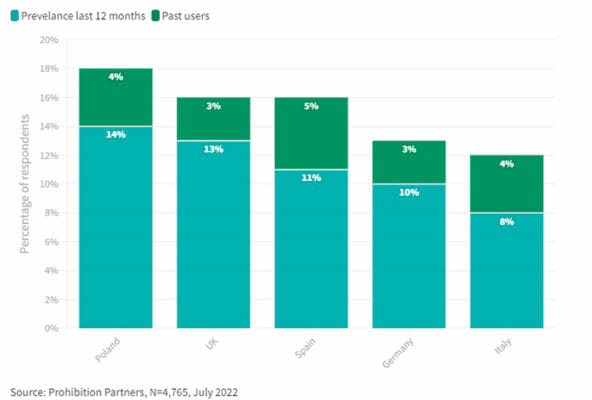
The highest prevalence of CBD use in the past year was found in Poland, where almost 15% of respondents indicated that they had used a CBD product in the past year. This fits with Poland’s evolution as a center for the production and distribution of CBD products.
CBD consumption in Europe

CBD consumption in Europe

Italy recorded the lowest percentage of CBD consumption over the past year at 8%, but this could be explained by the fact that CBD is commonly known in Italy as “cannabis light”. and that some consumers might not recognize it as a CBD product. These results confirm that CBD is now a commonly purchased consumer product in most European countries, despite the lack of regulation and enforcement.

How many times a week do people consume CBD?

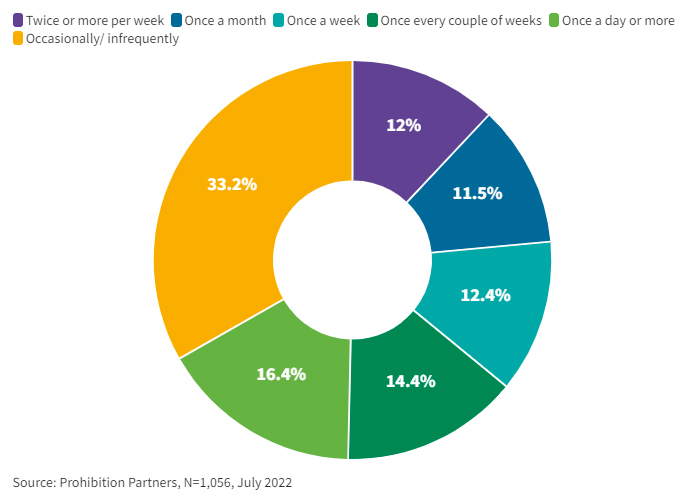
While 11% of respondents indicated that they had used a CBD product in the past year, approximately 35% of CBD consumers classified their use in the past 12 months as infrequent or occasional, that is ie less than once a month.

CBD consumption in EuropeCBD consumption in Europe

Frequency of CBD consumption in Europe

This figure speaks to the number of people on the continent who are, at least, curious about CBD products and willing to try them or use them for short periods throughout the year.

About 39% of consumers indicated that they used CBD once or more per week. This represents a portion of the population that has incorporated CBD products into their daily lives, often as part of their wellness routine.

How old are CBD consumers in Europe?

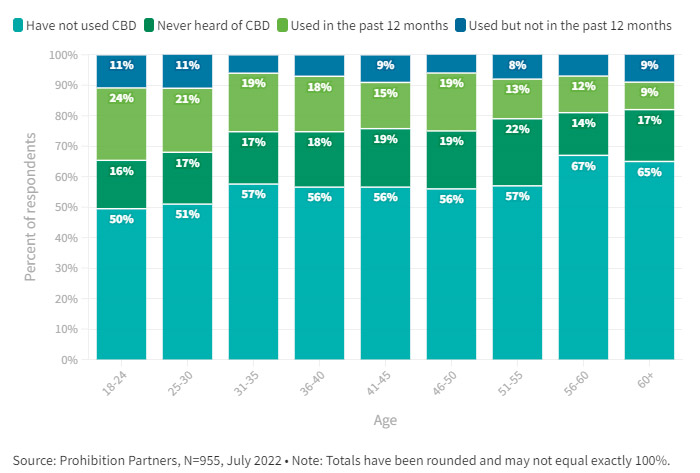
In general, CBD is more commonly consumed by the younger generation rather than those aged 50 and over. This is normal for new industries, where younger consumers are more open to trying new products, while older generations may take longer to adopt them.
Age of CBD consumers in EuropeAge of CBD consumers in Europe

Age of CBD consumers in Europe

In Europe, a respondent aged 18-24 is approximately twice as likely to report having consumed CBD in the past year as a respondent in the 50-60 age category. Also, the percentage of people who have heard of CBD is much higher for younger generations, where new trends spread faster, especially those related to wellness.

The prevalence of people who have never heard of CBD peaked in the 51-55 age category, while 18-24 year olds were the most “aware” of these products.

How do people consume CBD?

Prohibition Partners surveyed 955 CBD consumers about their buying habits to understand the current state of the market.

Overall, it’s clear that CBD oils and tinctures remain the most popular product format, with over 56% of CBD consumers last year reporting consuming both. This makes sense because oils are a familiar product format in the wellness category. The oils are also easy to dose and are commonly available throughout Europe, partly as legal ‘grey’ dietary supplements, but also as cosmetics, which can be consumed topically and in some cases ingested. like regular CBD oil.

Hemp flowers are currently the second most common method of consuming CBD products on the continent, surpassing food and beverage formats respectively. As we have seen above, CBD flowers are regulated very differently in different countries. In some, such as the UK, CBD flowers are, in theory, not marketable and especially not as a tobacco substitute, while in Italy and Spain more liberal regulations have allowed the market to “ cannabis light” to thrive.

The consumption of different CBD products varies greatly across age groups. The division can generally be traced along the lines of familiar product formats such as oils, capsules and pills more often consumed by older age groups and newer product formats on European shelves such as herbal products. plants, flowers, e-cigarettes and vapes used by younger groups.

We can expect this situation to stabilize in the coming years. As CBD flowers become a more accepted product format for consumers, and regulators are better able to distinguish between legal and illicit products, more stores will begin to carry them. New inhalant product formats such as flowers and vapes should also be appropriately regulated in future updates to tobacco regulations in Europe.

Why don’t Europeans consume CBD?

Respondents who indicated that they had heard of CBD, but had not used it in the past 12 months, were asked about the reasons for their non-use. According to the report, the main reason why people do not consume CBD products is a lack of confidence that the wellness effects, which are much talked about in the media and in the marketing of CBD, will not work for them. This may be true in many cases.

However, some factors can misinform consumers, such as lack of dosage awareness, such as when consumers try very small amounts or try for an insufficient amount of time before giving up due to lack of beneficial effects.

Price is the second most common reason why consumers do not consume CBD products. As new products hit the shelves, especially after the advent of new legal foods, the price squeeze is likely to drive down the cost of CBD products in Europe, which could encourage consumers to buy them. to try.

The following three most common reasons can all be addressed directly by the CBD industry: increased marketing of where to source CBD products, better education on the legality of CBD, and finally, better education on the latest studies on the safety and effectiveness of CBD. These initiatives would go a long way towards removing barriers to consumer entry into the market.

Are non-CBD users likely to try CBD in the next year?

All the measures that Prohibition Partners studies, after interviewing people across Europe, indicate that the number of consumers and the amount of consumption in Europe continues to increase gradually.
CBD non-consumersCBD non-consumers

CBD non-consumers

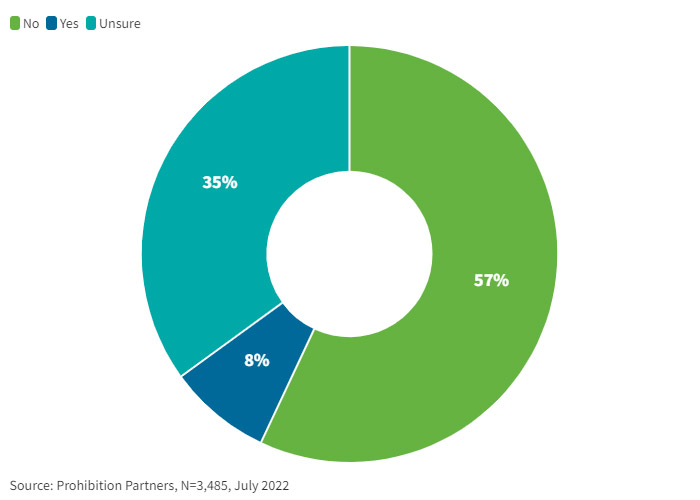
About 8% of people who have not used CBD products in the past 12 months indicated that they intend to use them in the next 12 months. This represents a massive influx of old and new consumers into the market. This figure does not take into account the 35% of non-consumers who are hesitant to consume CBD products in the next 12 months.

Will CBD consumers continue to use it for the next 12 months?

Prohibition Partners also asked current consumers how they think their consumption will change over the next 12 months. A large number (36%) of consumers indicated that they would reduce or stop using CBD products in the next 12 months.
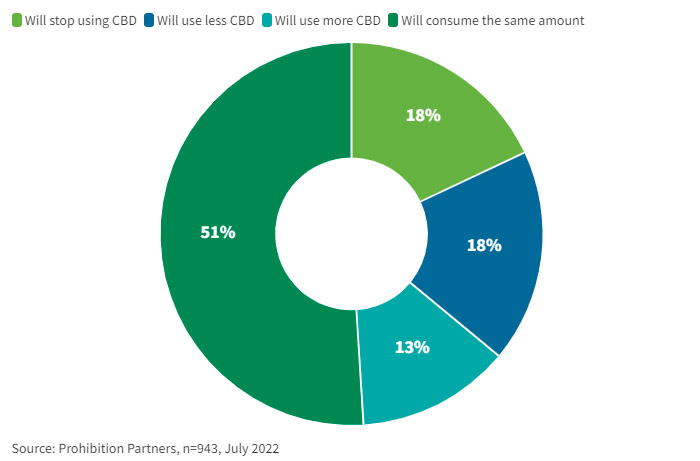
Use of CBD in EuropeUse of CBD in Europe

Use of CBD in Europe

This high turnover rate is manageable for now for the young industry, but deserves special attention from operators, as in the long run, reliable revenue generation and a stable consumer base will be needed to sustain the industry.

Bonus insight: CBD search trends on Google

The results show a general trend of increasing interest in CBD purchases on Google Shopping in most European countries. Some countries have peaked in recent years, such as Italy and Germany which saw their respective peaks in 2018 and 2020 although interest remains strong.

Germany is the country with the largest drop in average interest over the past three years. This data compares favorably to the same trends observed in the United States, where a sharp decline in interest in CBD has been recorded since 2019.

Costa Rica amends its plan to legalize cannabis

The Costa Rican government is preparing to present an alternative text for its plan to legalize cannabis for adults, after obtaining feedback from different institutions, including the Ministry of Health, the Ministry of Agriculture and the Costa Rican Institute of Drugs (ICD).

Natalia Díaz, Minister of the Presidency, said the legislation will be developed in coordination between these entities and will include the general observations made by various institutions.

“We will include the general comments that several institutions have made. The idea is to present a new project to solve the problems,” she commented.

If the legalization project goes through, “companies that cultivate or industrialize cannabis for recreational purposes will be able to operate under the free zone regime. Consumers will be able to go to nightclubs, cafes and other businesses to buy these products,” according to local media.

Roy Thompson, president of the Costa Rican Hemp and Cannabis Council, indicated that the recreational cannabis market could generate between 15 and 20 billion dollars in sales per year.

The main opposition to the project comes from medical or judicial associations – the Organization for Legal Investigation (OIJ), the Medical Association, the College of Psychiatrists, the Institute of Alcoholism and Drug Addiction (IAFA) – and from the church

The Episcopal Association has thus firmly opposed the legalization of cannabis.

“The benefits that this project could bring are hypothetical and not based on solid foundations. In contrast, science has consistently demonstrated the widespread harms of cannabis use,” she pointed out.

In Hong Kong, CBD is now a “dangerous drug”

Breaking with the global approach, Hong Kong decided to ban CBD and classify it as a dangerous drug. The ban on its consumption and marketing has now been enacted.

From now on, stiff penalties and huge fines – usually associated with narcotics like heroin – will be applied to those caught in the act of possessing, producing or smuggling CBD into Hong Kong.

In the wake of measures put in place in mainland China, the ban on CBD in Hong Kong was announced last year, when government officials cited the difficulty of distinguishing pure CBD from THC and the possibility of contamination. during the production process. They also cited how CBD can be converted into THC – for example for the production of delta-8 THC or other minor cannabinoids.

According to Hong Kong Free Press, the Hong Kong authorities began to crack down on CBD businesses in August. Residents had three months from October 27 to dispose of their CBD products in special boxes set up in the city.

Public bins for CBD in Hong Kong

Public bins for CBD in Hong Kong

“From February 1, cannabidiol, aka CBD, will be considered a dangerous drug and will be supervised and managed by the Dangerous Drugs Ordinance,” Customs Intelligence Officer Au-Yeung Ka-lun said during of a press briefing.

“From then on, the transportation of CBD for sale, including import and export, as well as the production, possession and consumption of CBD, will be illegal,” Au-Yeung said.

Anyone caught importing, exporting or producing CBD could face life imprisonment and a fine of 5 million Hong Kong dollars (€650,000). Those caught in possession of CBD face up to seven years in prison and a fine of one million Hong Kong dollars (€130,000).

“We will attack all types of dangerous drugs from all angles and from all sides, and intelligence-based law enforcement is our primary focus,” Chan Kai-ho, division commander, told reporters on Friday. within the Department’s Airport Command.

Chan said authorities will apply the law on a case-by-case basis and “seek legal advice from our Department of Justice to determine what further actions will be.” »

the South China Morning Post reports that since 2019, the department said it had seized more than 4,100 CBD products containing traces of THC. Between January 2018 and December 2022, authorities arrested 38 people for their alleged links to 68 cases where CBD products were believed to contain THC.

In January 2022, Hong Kong customs officers arrested nine people and seized 25,000 items of CBD worth HK$14.6 million for the same reasons.

Yet in 2020, Hong Kong’s first CBD cafe opened, selling a full range of CBD products, including bottles of CBD oil for personal use, powders to add to food such as oil and butters, and other products, including pet pain relief products.

Luxury accessories for smokers: which are the most popular?

0

In the smoking universe, there are many useful accessories both for those who smoke the pipe and for the fans of cigars or cigarettes. But did you know that it was also possible to find luxury smoking accessories? Let’s take a quick look at these high-end products.

Luxury accessories for cigarette smokers

Some smokers like to roll their own cigarettes and therefore need special equipment to do so. Similarly, to light their cigarettes, they also need a lighter, but sometimes having a premium product also helps them stand out.

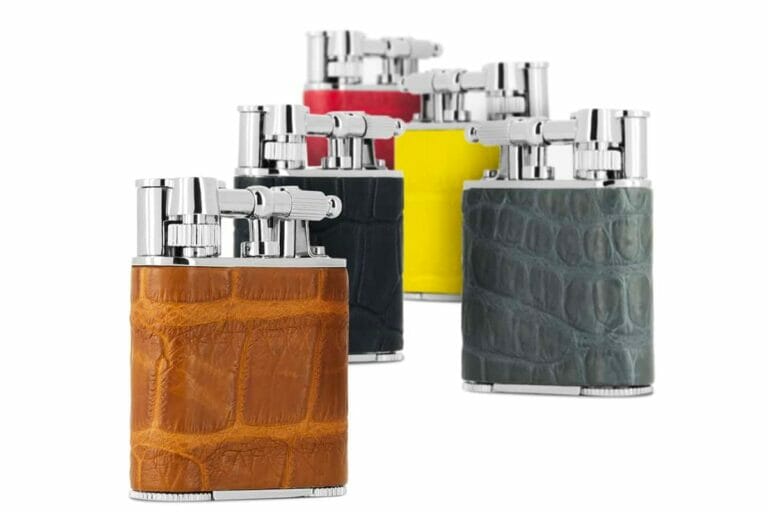
Did you know that there are luxury tubing machines, like the Art and Volutes model? For cheap and perfect cigarettes, this is an essential model! To carry your rolling tobacco everywhere, opt for a leather tobacco pouch. Some major brands offer beautiful high-end pieces, such as ST Dupont.

Luxury accessories for pipe smokers

Pipe smokers are generally seen as philosophers or intellectual people. This is why the accessories of the world of the pipe are in the image of the regulars. For example, what could be more majestic than a pipe-holder ashtray to rest the bouffarde between two palavers?! Of course, there are some at all prices and designed in many noble materials, such as wood.

Although the pipe itself is a luxury accessory depending on the manufacturer, you may also need a good lighter to light your mouthpiece. The Chacom, Corona and Savinelli brands are among the best known in the world for their beauty.

Luxury accessories for cigar smokers

It is in this universe that rare and posh objects are the most common. Indeed, the world of cigars is populated by beauties of all kinds, such as the accessories of the Peter Charles Paris brand and its high-end lighters.

Also find all the magnificence of the work of enthusiasts through cellars or cigar cabinets. The Adorini, Elie Bleu and ST Dupont brands are among the most popular.

Comment About Luxury smoking accessories: which are the most popular? Below ..

The United Nations recognizes the multiple qualities of hemp, a “momentous occasion” for the EIHA

The tide is turning in favor of hemp at the highest levels of global governance, explain Lorenza Romanese, Managing Director, and Francesco Mirizzi, Senior Policy Advisor, of the European Industrial Hemp Association (EIHA).

Most of the legal problems with hemp started at the United Nations with the Single Convention on Narcotic Drugs of 1961. This punitive drug convention followed the example of the United States which had undermined the hemp industry in the years 1930 by prohibition and the increase in taxes via the Marihuana Tax Act of 1937.

Other countries were forced to follow suit, and hemp cultivation on the planet dropped dramatically, from over 300,000 tons in 1961 to around 75,000 tons in the early 1990s.

The light at the end of the tunnel

In recent years, many hemp activists and organizations around the world, including the EIHA, have lobbied for the rehabilitation of the plant.

These efforts achieved public recognition with the publication last November of the United Nations Conference on Trade and Development (UNCTAD) document titled “ Commodities at a glance: Special issue on industrial hemp (in English here).

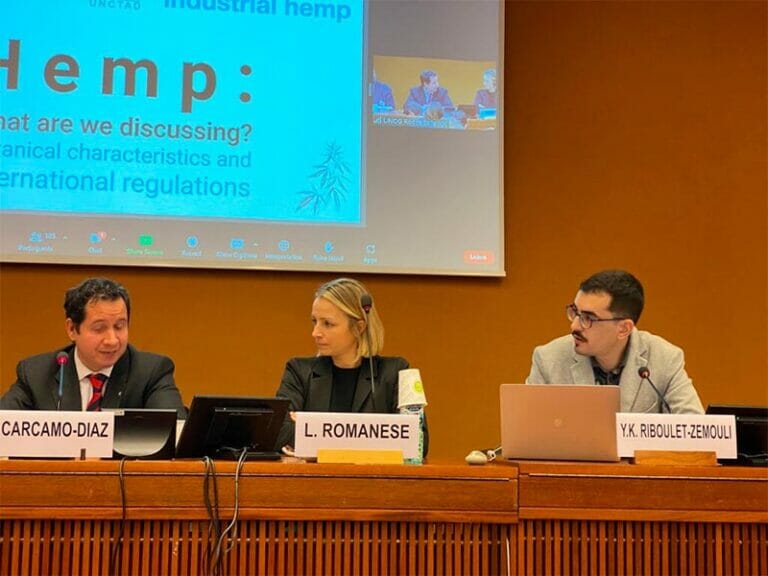
This post was followed by last week’s event at the Palais des Nations, Geneva, Switzerland. This is probably the first time the cannabis plant has been discussed in a positive light in a UN building – and with the support of a UN body itself!

EIHA at the UN

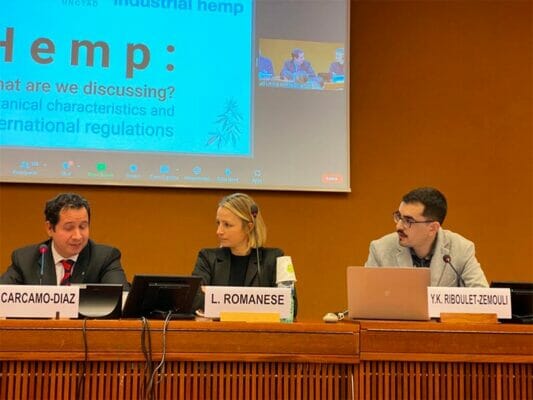
EIHA’s Lorenza Romanese and Kenzi Riboulet-Zemouli

The highest levels

The EIHA now believes that hemp is finally recognized at the highest levels of global governance as a key crop in the transition to a new and greener economy, fit for people and planet.

The fact that these UN initiatives were launched by UNCTAD is in itself an acknowledgment of the potential of hemp as a catalyst for economic growth and development. The hallowed halls of the UN have previously only discussed hemp in relation to narcotics and prohibition.

EIHA also infuses its “whole plant” approach, as described in their Hemp Manifesto. This holistic vision has been adopted and used as a source of information by UNCTAD, contrary to certain visions which divide hemp molecule by molecule.

This comprehensive publication presents many arguments for hemp to play a crucial role in a new, greener and more sustainable society. It also demonstrates the potential of hemp to empower rural communities around the world, and particularly in developing countries, which can jump-start local economies and serve a wide range of consumer markets.

Hemp: resilient plant

For the EIHA, hemp is the perfect complementary crop to legumes and cereals. Communities can rely on it to produce safe and nutritious food, clothing, housing and a wide range of other products. Synergies with other sectors are essential and easily deployable.

Hemp is also a viable solution for raw material diversification and greening for major international players.

The EIHA Hemp Manifesto offers a global path for hemp to reach its full potential and deliver multiple economic, social and environmental benefits. UNCTAD estimates that the global market could reach $18.6 billion by 2027, nearly four times the amount in 2020.

EIHA, which contributed to the publication of the UNCTAD document on hemp and its presentation at last week’s event in Geneva, now hopes to achieve a transparent discussion within the framework of the UN and set the record straight to correct mistakes made in a past where international hemp regulations were driven by vested interests rather than science and facts.

Main image: The EIHA UN team: From left to right: Monica Solano, Lorenza Romanese, Francesco Mirizzi and Mark Reinders.

Switzerland sells its first grams of legal cannabis for adult use

Recreational cannabis is now legally on sale in one of Switzerland’s largest cities.

The country officially launched its cannabis pilot project on Monday, allowing a few hundred selected participants to purchase cannabis for adult use from several pharmacies in the Swiss city of Basel.

The Swiss authorities gave the green light to the pilot project last year. In particular, the project aims to improve understanding of “alternative regulatory forms”, such as regulated sales in pharmacies, which could serve as a basis for future legislation and study its impact on consumers and the black market.

A sale of cannabis in Switzerland

A sale of cannabis in pharmacies in Switzerland

In the Basel project, 374 adult participants and already consumers will be able to buy cannabis flower and hashish, all grown and processed in Switzerland in selected pharmacies in Basel. During the two and a half years that the study will last, they will be regularly questioned about their consumption and their physical and mental health.

The youngest participant is 18 years old, the oldest 76. The average age is 36 years old. As of Monday, a first group of around 180 people was able to buy cannabis products. The second group will start in six months.

Program participants will be strictly monitored by government regulators, and they are prohibited from sharing cannabis with anyone outside of the program.

Other Swiss cities should quickly join Basel, in particular Lausanne or Geneva.

An experiment under high control

Vigia AG, a Swiss company that provides tracking and tracing software, has “developed the cannabis dispensary system in partnership with the Federal Office of Public Health (OFSP) in order to reliably document the distribution of products”, which in turn “allows cannabis products to be tracked transparently and provides the basis for scientific research. »

“We are in an emerging industry where various paths to legalization are currently being discussed. With a structured legalization process, maximum compliance and transparency, Switzerland is leading by example. With our Cannavigia software and the Cannabis Dispensary System, we provide the various stakeholders with the necessary tools to track and document each step of the supply chain. We are proud to be part of the Swiss pilot projects and this historic milestone,” Philipp Hagenbach, COO of Vigia AG, said in a press release.

Christophe Bex, LFI deputy: “The legalization of cannabis is going to be a long battle”

The deputy La France Insoumise (LFI) for Haute-Garonne made an appointment with Newsweed in his office at the National Assembly. Between a book by Jean Jaurès and a work on nuclear power, the president of the cannabis study group says to himself ” happy “ of his new role, even if he still has a lot to learn about cannabis. Like his predecessor, he is in favor of a “framed legalization of cannabis” in France.

Newsweed: Before becoming an MP, you worked for 15 years at La Poste, then in the administration of the University of Toulouse. In the Assembly, you sit on the National Defense Committee. How did you end up in this cannabis group?

Christophe Bex: When the president of the LFI group, Mathilde Panot, asked the deputies in which study group each wanted to sit, I applied for the group on rurality, because I grew up in the Meuse, and on the cannabis. I have always found the French model absurd. And then cannabis is a cross-cutting subject, where we talk about justice, security, public health… That’s how I found myself president of the study group on cannabis! But for now, I’m all alone in this group (he smiles).

What will be its composition? And his role?

The secretariat of the National Assembly will send a message to all deputies, then I will welcome the new members. It would be good if there were fifteen of us, from all political stripes. On the role, I have no ambition to reinvent hot water, but we will conduct auditions. Moreover, I have already been contacted by the collective “Police against prohibition“. And then, why not write a bill.

“I am in favor of supervised legalization”

Will you contact Robin Reda (ex-LR, now Renaissance), president of the cannabis information mission during the previous mandate?

(He notes his name in a notebook, then checks on his computer if Mr. Reda is still a deputy) Yes, as well as all the deputies who have worked on cannabis. I will also speak with my colleagues from LFI, Eric Coquerel and Ugo Bernalicis, who have tabled several bills to legalize cannabis.

During the hearings, will you hear representatives of cannabis consumers, who are often overlooked?

You are right. In our society, during debates on television, we invite many “knowledgeable” people but we do not leave room for people, the first concerned. This is particularly the case at the moment, with the pension reform. If you ask the question to a driver, you will quickly understand that he cannot work two more years.

On cannabis, I say “yes” to question representatives of consumers or former consumers. I would like to know their age, their background, their relationship with cannabis, whether they are addicted or not. You can’t work on a subject if you don’t talk to the first people concerned.

Robin Reda said he was in favor of a “security legalization” cannabis. L’former rapporteur Caroline Janvier (Renaissance) told Newsweed his fondness for a “State-framed legalization”. And you?

I am also for legalization supervised by the State, with a ban on sales to minors, and consumption authorized only in identified places. Cannabis cultivation should be local and non-capital intensive, organic if possible, with a capped THC level. I am also for the right to cultivate cannabis at home, in order to prevent large groups from dominating the market. My goal is to protect young people and reduce consumption.

During the last term, several bills to legalize cannabis were passed. They all failed. Will you keep trying your luck?

Yes. We need to find a majority, but I think it’s not impossible. In the Assembly today there are many deputies in their forties who are not shocked by the fact that one may have smoked a joint in one’s youth. This was not the case a few years ago. So we can bring together elected officials from all sides if we explain that we want to fight against trafficking, reduce consumption, and free up time for the police.

The cannabis fine does not work. Two out of three fines are not paid, some poor departments (Bouches-du-Rhône, Seine-Saint-Denis) are more targeted than others. What should be done ?

What is certain is that it is not the fault of the consumers. It’s the fault of the system. Penalizing consumption won’t solve anything, as long as there’s always a box of candy in the middle of the table. Rather, it is necessary to bring an activity to these young people. When they smoke, they think of nothing else.

In March 2024, experimentation around therapeutic cannabis will end, three years after it began. Is it time to legalize the medical use of cannabis?

(He notes a few words in his notebook). I will follow this closely. If there is a vote, LFI will vote for it. It would be an excellent signal, one more step towards potential generalized legalization. On therapeutic cannabis, we are behind in France. When we see patients with multiple sclerosis, it is better that they have access to cannabis rather than filling themselves with drugs.

Regarding CBD, how did you view the long legal battle?

I had followed from afar and discussed with shop owners. But that says a lot about the day we will decriminalize or legalize cannabis in France. It’s going to be a long battle, there will always be this resistance.

Do you think that the democratization of CBD can help the French to better understand – and accept – cannabis?

Yes. With the CBD, shops are visible in the landscape. Some will be curious, push the door, see cannabis flowers, take some information. They may tell themselves that it doesn’t take much for a CBD shop to turn into a “cannabistro” (he smiles).

US FDA Won’t Issue CBD Regulations

After 4 years of work, the Food and Drug Administrationthe US Food and Drug Regulatory Authority, has concluded that it will not regulate CBD foods or dietary supplements.

She also dismissed three petitions seeking to allow CBD products to be marketed as dietary supplements and said the agency would “work with Congress” on a regulatory pathway for the cannabinoid.

The statement was released by the Principal Assistant Commissioner, Dr Janet Woodcock.

“The consumption of CBD raises various safety concerns, especially during long-term use. Studies have shown that it can harm the liver, interact with certain medications, and harm the male reproductive system. CBD exposure is also of concern when it comes to certain vulnerable populations like children and pregnant women,” Woodcock wrote in his statement.

Woodcock said the decision would allow policymakers to develop “a new regulatory pathway for CBD […] that balances individuals’ desire for access to CBD products with the regulatory oversight needed to manage risk. »

Woodcock also said that there are concerns about the potential risk of CBD to animals and that “people could be unknowingly exposed to CBD through the meat, milk and eggs of animals fed with CBD. »

“Because it is not clear how CBD products could meet the safety standard for substances in animal feed,” she writes, “nor do we have the intention to pursue the development of rules allowing the use of CBD in animal feed. »

She adds that the agency “did not find sufficient evidence to determine how much CBD can be consumed, and for how long, before causing harm” and, therefore, “did not have the intention to pursue the development of rules allowing the use of CBD in dietary supplements or conventional foods. »

Shelled hemp seeds, hemp oil, and protein powder made from the seeds, on the other hand, are approved by the FDA as ingredients in human food.

The U.S. Congress has already addressed CBD, drafting a bill in 2021 that would have ensured that hemp-derived CBD and other non-intoxicating hemp ingredients could be marketed as dietary supplements.

“The Hemp and Hemp-Derived CBD Consumer Protection and Market Stabilization Act 2021” would also have required manufacturers of CBD and hemp extract products to comply with existing safety rules for food supplements. The project stalled in a House of Representatives committee earlier this month.

CBD could be treated in the Farm Bill 2023 which will be negotiated this year. Stakeholders urged legislators to incorporate into the Farm Bill a text that would designate CBD and other non-intoxicating cannabinoids as dietary supplements.