Home Blog Page 48

The PSAC asks to raise the THC level in hemp to 1% in France

In a press release published online, the French Association of Cannabinoid Producers (AFPC) announces that it has called on the government to “improve the limit rate of THC for the cultivation of active hemp”.

The PSAC has thus transmitted an official request to the Ministers of Agriculture, Health and Public Accounts, requesting that the Government revise upwards the current limit of 0.3% of THC which applies to the cultivation of hemp.

This request is motivated, in the words of the PSAC, by the agronomic, technical and economic inconsistency that the current limit of 0.3% THC imposes on professionals in the sector.

This rate, imposed by European regulations, would thus not take into account the agronomic reality of hemp and the climatic particularities of the various European States. As the increase in cannabinoid levels in the plant is strongly correlated with climatic variations and environmental stresses, staying below the current limit is becoming more and more difficult for farmers faced with increasingly hot summers, which can naturally increase , the THC level in the plant. Such a rate also deprives farmers of access to seed varieties dedicated to the cultivation of active hemp, but exceeding 0.3% THC.

Similarly, from an economic point of view, the current limit imposes on French producers to be in a situation of unequal competition, faced with products from other European States which have already opted for a limit of 1% THC (Switzerland , Czech Republic, Bulgaria) or 0.6% (Italy).

As a result, the PSAC has officially asked the Government, for agronomic and economic reasons, to raise the THC level for active hemp to 1%.

This measure would allow the hemp sector with French active ingredients to compete on a level playing field with foreign competition and to develop to its full potential, according to the PSAC press release.

The Spanish Ministry of Health lacks information on medical cannabis

The lack of information on medical cannabis is not the prerogative of France. As reported by Cannareporter, the Spanish Minister of Health, José María Miñones, recently declared before the Chamber of Deputies that, apart from spasticity derived from multiple sclerosis and the different types of epilepsy – pathologies treated by products from GW Pharmaceuticals – “unfortunately”, for other diseases, the information available on medical cannabis “is insufficient and we cannot recommend its use”.

The reactions of those invested in wider access to medical cannabis are one-sided. Deputy Josune Gorospe, from the Basque parliamentary group (PNV), said he considered the minister’s response a “regression”, while Carola Perez, president of the Spanish Observatory of Medical Cannabis, has already condemned these statements.

Mr. Miñones, who was appointed health minister on Monday to replace Carolina Darias, made his government debut during a plenary session. The first question he received concerned the regulation of medical cannabis in Spain, posed by PNV MP Josune Gorospe.

The latter began by warning Miñones that he was already “the third minister whom we are questioning in this legislature on the regulation of the medical-therapeutic use of cannabinoids”, and that the regulation of medical cannabis which would make it possible to know “which patients could have access to this type of product is already three months late”.

Questioning him directly, she asked, “When does the government intend to fulfill the mandate of this chamber on regulating the medical and therapeutic use of cannabinoids?” »

In response, the newly minted minister contented himself with reading his files.

Ms Gorospe was outraged and said the response left her ‘cold’, saying a government commission had spent six months working with entities, experts and representatives from other governments to gather evidence .

“How can you tell me there is no evidence?” Listen, read and pay attention to what we have here. Don’t make a fool of yourself by putting us in the position of other European countries and giving patients in the state the same opportunities as other patients elsewhere,” she said.

Once again, the Minister of Health indicated that the Medicines Agency was working on a report “which allows us to establish the most appropriate regulations to pursue two objectives: safety and effectiveness”, adding that the The agency would continue to work and analyze the scientific literature in order to establish the modality that best meets the needs of patients and the Spanish regulatory system.

Oregon issues its first psilocybin production license

Authorities in Oregon last week issued the first business license under the state’s psilocybin therapy program.

Licensee, Satori Farms PDX LLC, has been granted permission to manufacture psilocybin products from theOregon Psilocybin Services – a branch of theOregon Health Authority – last Wednesday.

Oregon’s medical psilocybin program was officially launched last January, after voters approved the system in the 2020 election.

Psilocybin, a psychedelic substance present in certain mushrooms, called “magic mushrooms”, has shown promise in the treatment of severe depression, post-traumatic stress disorder, anxiety at the end of life in patients in phase terminal and certain mental disorders. Although the substance remains banned at the federal level, the Food and Drug Administration (FDA) granted psilocybin mushrooms “breakthrough therapy” status for major depressive disorder in 2018, which has resulted in clinical trials.

I’Oregon Psilocybin Services warned that the program could be slow to roll out because regulators must first review applications for four different types of licenses: production, analytics, service centers and enablers.

The start of the month also marked the culmination of Portland-based InnerTrek’s first-ever psilocybin training program, which teaches students how to accompany patients on psilocybin during their psychedelic experiences.

Earlier this month, Oregon psychedelic medicine advocates launched the Psychedelic Medicine PACa new political action committee intended to support electoral candidates in favor of the use of psychedelics for therapeutic purposes.

Ben & Jerry’s co-founder launches non-profit cannabis brand

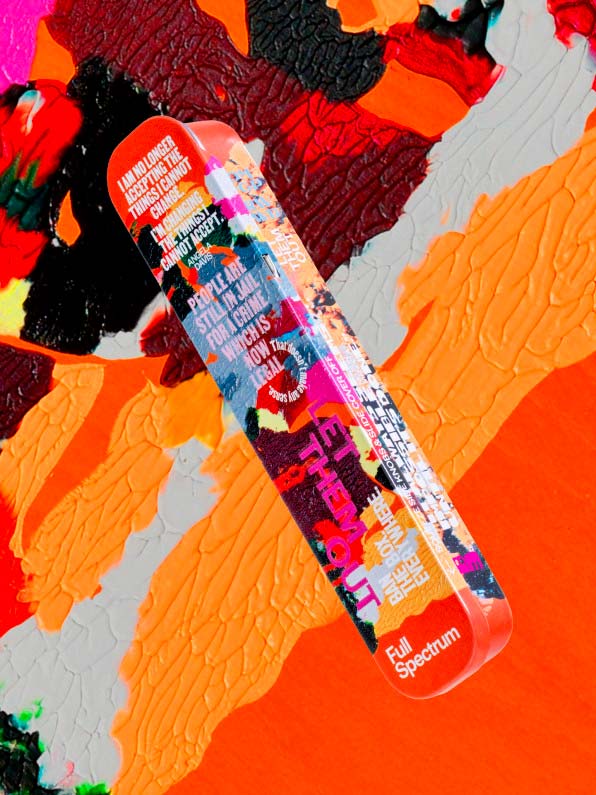
Ben & Jerry’s co-founder Ben Cohen has launched a cannabis brand called Ben’s Best Blnz, or B3, and profits from the company will be used for social purposes. The company’s official mission is to “sell good weed and use the power of business to right the wrongs of the war on drugs.”

“The idea [de la marque] came to me on a camping trip with a friend, sitting around a fire and smoking a joint. And we thought, “It would be nice to have weed like the good old days,” Ben Cohen told reporter Abigail Glasgow.

Ben's Best Pre-Rolls

Ben’s Best Pre-Rolls

And behind the desire to find the effects of yesteryear, Ben Cohen obviously opted for a very social approach for his brand. B3 has thus been registered as a non-profit organization and 80% of the company’s profits will be entrusted to the NuProject association and donated in the form of grants to black entrepreneurs in the cannabis sector. An additional 10% will go to the Last Prisoner Project and 10% will be paid to the Vermont Racial Justice Alliance.

For Ben Cohen, this latest initiative aims to address the huge gap in wealth between generations, caused by the systemic oppression of black people in the United States. “The average black family owns 1/10th the wealth of a white family,” he explains. “I feel that owning a business is one of the best ways to access generational wealth. »

The brand will offer low-THC products, including pre-rolls and vape pens.

The Ben's Best vape penThe Ben's Best vape pen

The Ben’s Best vape pen

The packaging of the various products features quotes from abolitionist Angela Davis and former South African President Nelson Mandela. The branded packaging was designed by Dana Robinson, whose series Ebony Reprinted recontextualizes advertisements from the 1950s and 1960s. Robinson has created a new piece for the brand, recontextualizing an old magazine ad that serves as a motif for packaging and communication visuals.

The work of Dana RobinsonThe work of Dana Robinson

The work of Dana Robinson

“Schedule 1 started the war on drugs,” Cohen says of Nixon’s racist campaign that disproportionately targeted black people and is at the root of today’s problem with the incarceration of mass. Historically, black people have been arrested four times more often than white people for using cannabis.

“Schedule 1 is supposed to be reserved for drugs that have no medical value and pose a high risk of addiction,” adds Cohen, “which doesn’t apply to weed, but beer. “.

With a mission to “sell good weed and use the power of business to right the wrongs of the war on drugs”, B3’s products are sure to become one of the tools for decarceration, the erasure of criminal records and the rehabilitation of convicted persons.

Discover the brand of cigar accessories Credo

If you are a cigar smoker, you cannot miss the Credo brand. Specializing in smoking accessories, the quality is omnipresent, yet the prices remain within reach of all budgets. Focus on the Credo brand and its cigar accessories.

Credo: the satisfaction of the cigar smoker above all

The Credo brand has built its empire on customer satisfaction. This is why it is constantly renewing its product ranges and innovating in order to satisfy all generations of aficionados.

For centuries, Crédo has been enriched with new techniques, materials and prowess to create smoking accessories that are always of high quality. This is why, in the 21st century, the brand is still number 1 in the world after having flooded and satisfied the planet with its self-regulating humidification system. This small revolution has made Credo an essential leader.

More than 180,000 humidifiers are manufactured annually. It must be said that the technology used is extremely precise and reliable in guaranteeing a humidity level of 70% in cigar cabinets.

Credo smoking accessories

Building on its success with its humidifiers, Credo has launched a very complete range of accessories. Accessible to all budgets, they are essential to be able to smoke your curls in the best conditions. Starting with the cigar cutter, without which it would be impossible to observe a good tasting. Practical and available in several colors and sizes, they will be able to cut the top of your stems cleanly for perfect combustion.

For smokers on the move, Credo cigar cases are ideal. One, two or three cigars, you choose according to your needs and your habits. To control the humidity level of your cigars in the cellar, you can also rely on Credo analog or electronic hygrometers.

To go further, know that the brand also offers cigar repair kits if some are dried up and unstuck. One thing is certain, with Credo, cigar smokers are thrilled!

Delaware is just waiting for its governor to legalize cannabis

The Senate of the US state of Delaware on Tuesday approved two bills aimed at legalizing the possession of cannabis and regulating its sale for adults, and sent them to the governor.

The legalization proposal was approved by 16 votes to 4, while the regulation measure was adopted by 15 votes to 5. The two texts, which passed through the Senate committees before being put to the vote, are sponsored by Democratic Congressman Ed Osienski.

“The legalization of recreational cannabis for adult use is inevitable because it is the will of the people,” said Democratic Sen. Trey Paradee, who is taking the bill through the Senate, ahead of the vote.

“60% of Delawarens think recreational cannabis use should be legalized. This percentage will certainly increase rapidly in the years to come,” he said. “The older generation that was fed the lies and propaganda of Reefer Madness are beginning to understand what the younger generation already knows: Marijuana, by any measure, is far less harmful than alcohol, does not create addictive substances like caffeine and nicotine and does not have the harmful side effects and astronomical health costs and consequences of tobacco and nicotine products.

Congressman Ed Osienski recently said that while the governor is looking to veto the legislation again, as he did in 2022, this time around he’s “optimistic” and thinks “he has the votes.” necessary to overcome”.

The outline of legalization in Delaware

Here is what the 2 cannabis legalization bills in Delaware would accomplish:

  • possession, consumption, sharing and purchase of one ounce of cannabis (28 grams) for adults 21 years and older would be permitted
  • Public consumption and cultivation of cannabis would remain prohibited
  • There Division of Alcohol and Tobacco Enforcement (DATE) State would be tasked with regulating the market through a new Office of the Marijuana Control Commissioner
  • In the first 16 months of implementation, regulators could approve up to 30 cannabis retail licenses
  • 7% of cannabis revenue would go to a “Justice Reinvestment Fund” that would support restorative justice, workforce development, technical assistance for the economically disadvantaged…
  • Legislation does not provide for automatic erasure of criminal records for old cannabis-related offenses
  • In addition to traditional retail, cultivation, manufacturing and laboratory licenses, the bill also provides for social equity and micro-enterprise licenses (restricted to applicants whose majority shares are held by residents of the Delaware)
  • Localities will be able to ban cannabis companies from operating in their territory
  • Cannabis sales for adult use would be subject to a 15% sales tax. Medical cannabis products would not be taxed.

Geneva overtakes Amsterdam on the cannabis consumption podium

According to the latest findings from the European Monitoring Center for Drugs and Drug Addiction, Geneva has dethroned Amsterdam in average cannabis consumption.

To reach this conclusion, the Observatory analyzed the wastewater of 104 European cities as part of the study ” Wastewater analysis and drugs – a European multi-city study“, published by the European group SCORE, in association with the EU anti-drugs agency (EMCDDA).

In 2022, nearly 181 mg of cannabis residues were found, every day and per thousand inhabitants, in the wastewater of Geneva.

3 other Swiss cities were tested: Zurich and Basel come in 5th and 6th position while Bern is far behind by Swiss standards with 11th place. This makes Switzerland, within this ranking, the first consumer of cannabis in Europe.

Ranking of cannabis use in Europe

Ranking of cannabis use in Europe

As a study by the University of Geneva has shown, approximately 750,000 joints are smoked every day by our Swiss neighbors for an estimated total annual turnover of one billion Swiss francs.

Amsterdam comes in 2nd position and Barcelona in 3rd position.

It should be noted, however, that neither France nor the United Kingdom (apart from Bristol) were part of the study in 2022. Using the results of 2021, Paris would arrive 9th in the ranking, ahead of Prague.

The analysis also reveals an increase in detections of cocaine and methamphetamine.

Taliban tighten cannabis prohibition in Afghanistan

According to a decree from the Taliban leader issued this month, the cultivation of cannabis is prohibited throughout the country, which was already the case. But above all, in case of violation, the plantation will be destroyed and the offenders will be punished according to the rules of Sharia.

“The cultivation of cannabis is completely prohibited throughout the country and if someone cultivates it, the plantation will be destroyed. Courts have also been ordered to punish offenders in accordance with Sharia laws,” a statement from Taliban leader Hibatullah Akhundzada said.

What exactly are the penalties provided by Sharia? The “crimes” of apostasy, revolt, adultery, slander and alcohol are punishable by amputation of hands and feet, flogging and/or death. These penalties also apply to women whose bodies and hair are uncovered.

Afghan, world producer of cannabis and opium

Cannabis is one of the crops most produced by farmers in the country and Afghanistan became the top supplier in 2010, according to the United Nations. The country has also long been one of the world’s largest producers of opium, the basic ingredient of heroin, and cannabis, which is grown on a large scale in half of its provinces.

According to a 2010 report by the United Nations Office on Drugs and Crime (UNODC), between 10,000 and 24,000 hectares of cannabis are cultivated each year in Afghanistan, with significant cultivation in 17 of the country’s 34 provinces.

The illegal opium and cannabis trade is believed to have fueled the Taliban before they came to power in 2021, following a 20-year insurgency against US-led forces that invaded the country following of the September 11, 2001 attacks on the United States.

The Taliban claimed to have entered into a partnership with a medical cannabis company in 2021.

Taliban press director Qari Saeed Khosty claimed then that a contract had been signed between the Afghan government and a cannabis company called Cpharm to set up a cannabis production center worth $450 million. dollars in Afghanistan, and that the facility would be “operational within days.

Shortage of pharmaceutical CBD oil for medical cannabis experimentation

The fears of the patients turned out to be real. While we noted last week the possible shortage of cannabis-based medical products in France, a communication to the stakeholders of the experiment confirmed the situation.

The experiment will thus lose its supply of pharmaceutical CBD oil without THC – CBD 50 oil from Little Green Pharma – which represented around 60% of the products prescribed, and without existing stock.

According to our information, the laboratory in charge does not wish to continue to offer its product either for free or at €14 per bottle, a price well below its manufacturing, transport and customs costs, as proposed in the call for offers from the Ministry of Health for the extension of the experiment.

The proposals made for patients who are treated with this product are to replace it:

  • for epileptic children stabilized with Epidyolex
  • for stabilized adults suffering from spasticity and/or multiple sclerosis with a CBD:THC 20:1 oil

Adult patients who have found satisfaction in a pure CBD oil (without THC) should therefore change treatment and experiment with a new CBD oil with THC, which some know not to tolerate.

Once again, the role of the Directorate General for Health (DGS) is widely singled out, by many sources we have contacted, for its lack of anticipation and its lack of interest around this experiment to the detriment of sick people.

Some, like Yann Bisiou, a specialist in drug law, express it head-on:

“There are CBD shops on every street corner and the DGS is not able to find pharmaceutical CBD. The legal fragility of the system chosen by the DGS was clearly established and a source of litigation. Either they are incompetent, or they want to ruin the experiment,” he confides to us.

By searching the call for tenders, which was available online, we also realize that the funding for the extension of the experiment was taken from the budget of the associations of patients victims of therapeutic accidents. Sign, if necessary, that the DGS takes very lightly the experimentation of therapeutic cannabis in France. A “scandalous and shameful” situation for Yann Bisiou.

From our understanding, the DGS also belatedly noticed that a product had not found a buyer in the context of the call for tenders which concerned the extension of the experiment, despite numerous warnings from manufacturers. She has since been trying to find solutions to avoid a shortage of products.

It would also be in this context that it hastily released and by bypassing the ANSM, normally competent on the subject, CBD-based drugs from the list of narcotics to place them on the list of poisonous substances, as advertised Nicolas Authier last week. This change in classification would be intended in particular to reduce import costs, the legal trade in “narcotics” being extremely controlled and expensive, and thus to facilitate the supply of experiments.

A change that could have been made before the shortage? And which could lead to a return of the missing oil to the patients? Within what time frame?

We are awaiting responses from the DGS and will complete this article as needed.

Would Texas open up to medical cannabis?

Texas, one of the most conservative American states when it comes to medical cannabis, will it finally open up its access to cannabis-based medicines a little more?

So far, only cannabis products with no more than 1% THC are allowed. They should also only be recommended for a list of 9 pathologies: epilepsy, seizure disorder, multiple sclerosis, spasticity, amyotrophic lateral sclerosis, autism, cancer, post-traumatic stress disorder or an incurable neurodegenerative disease.

But a recent bill could facilitate patient access to cannabis.

Texas lawmakers last week approved a bill that would allow all physicians to recommend the use of cannabis to patients with chronic pain who would otherwise be treated with prescription opioids.

Republican Congresswoman Stephanie Klick’s bill was approved by the House Public Health Committee about a week after members gathered testimony on the proposal at an initial hearing.

The medical cannabis program expansion bill would replace the 1% THC limit for cannabis oil with a volumetric dose of 10 milligrams. As presented, the bill would have raised the limit to 5% THC, but the committee passed a substitute amendment that calls for a switch to the volumetric dose method.

It would also add a tenth condition allowing patients to benefit from low-THC cannabis products: “A condition that causes chronic pain, for which a physician would otherwise prescribe an opioid. »

The bill also intends to make it easier to add other medical conditions to qualify patients for the cannabis program through regulations rather than laws. If passed, the bill will come into force on September 1, 2023.

The development comes weeks after another House of Representatives committee unanimously approved a bill to decriminalize cannabis possession in the state while providing a pathway for expungement of records.