Home Blog Page 104

Israel to decriminalize cannabis

Israel is moving ahead with its legalization of cannabis, with the government considering fully decriminalizing cannabis use by adults.

President Isaac Herzog and Justice Minister Gideon Sa’ar announced last Sunday that the government was also considering expunging the criminal records of those convicted of possession or personal use of cannabis, according to the Jerusalem Post.

Once the new regulations are approved, Israelis convicted of possession or personal use of cannabis will be able to have their records expunged by submitting a request to the Justice Department, which the president can rule on.

Those who are the subject of ongoing criminal proceedings will be able to contact the police and request that the charges be dropped, but only for people who have no other criminal records.

Last February, Gideon Sa’ar submitted his Cannabis Decriminalization Plan, which aims to elevate cannabis-related offenses from criminal offenses to civil offences, for public comment. The measure will “lift the criminal label and the stain that comes with it” and builds on a proposal that has been tabled to amend the Administrative Rules and Order Act.

Currently, cannabis use is partially decriminalized in the Middle Eastern country, with the first two incidents resulting in fines and indictment occurring only with the fourth offence.

Once Gideon Sa’ar signs the settlement – ​​which is expected to happen in the coming days – approval followed by immediate implementation is expected in the Knesset, Israel’s parliament, shortly thereafter. The country has already been seeking since at least 2020 to legalize cannabis, while developing its national industry around therapeutic cannabis and extensive research on the plant.

3 Moroccan provinces authorized to cultivate cannabis

The Moroccan Government Council, meeting last Thursday, clarified by decree certain provisions of Law No. 13.21 relating to the legal use of cannabis in Morocco. The new text, which still authorizes the legalization of cannabis for medical and industrial purposes, gives an idea of ​​the contours of this future legal market.

The most notable point is the delimitation of the areas that will be able to accommodate the cultivation of cannabis. The decree now sets the regions in which it will be permitted to authorize activities related to the cultivation, production, establishment and exploitation of cannabis. The provinces of Al Hoceima, Chefchaouen and Taounate, which already grow cannabis, were initially selected, with the possibility of adding other provinces following the interest shown by national and international investors.

In addition to an economic vocation, the Moroccan legalization project has above all a social vocation, in particular to take out the historical growers who have an environment and a climate conducive to the cultivation of cannabis, ancestral knowledge, but work for the black market.

The text also emphasizes that the National Regulatory Agency will be the body in charge of issuing licenses. To prevent the exploitation of legal cannabis for illegal purposes, it will need to receive detailed monthly reports from licensees on the status of seeds, plants and finished cannabis products.

The project also provides for the setting up of an Advisory Commission which will be in charge of examining applications for authorizations and giving its opinion on them. Chaired by the Director General of the Agency or his representative, this commission will bring together the representatives of the departments concerned.

This regulatory provision also authorizes the Ministries of the Interior, Agriculture, Health, Commerce and Industry to rule on the cultivation, production, processing, manufacture, transport and export. cannabis. These authorities will also be able to decide on the tetrahydrocannabinol content of the varieties that will be imported and cultivated.

When cigars save a blockade in Brest

In August 1800 there was a blockade in the city of Brest. The conference given by Jean-Yves Besselièvre at the Musée de la Marine on February 1st was precisely the opportunity to return to the link between this event and cigars. Explanations.

Back to a little-known historical fact

Shortly after the French Revolution, Napoleon Bonaparte took power. At that time, relations between France and England were quite tense. It must be said that the new French Republic gave ideas of rebellion to many neighboring countries. Ireland was no exception. In order to contain the French momentum, the English fleet has therefore developed a highly advanced maritime strategy.

Indeed, if it could not really approach the coasts of France, the English army positioned its ships strategically so that no French ship could leave its maritime space. It was therefore the famous blockade of the English army. This situation hurt the French who could no longer supply their armies, especially on the military level where the arsenal was lacking.

The truce and the famous box of cigars

On August 12, 1800, the truce was announced. For the occasion, the English captain William Cathcart, captain of the Triton went aboard the Frégate Furieuse, a French vessel commanded by Jean-Nicolas Topsent.

After some formalities, the commanders of the two armies exchanged a few words over a snack. The French remained very discreet about the positions of the boats, however, he did not hesitate to ask for some information on the English artillery force.

When the evening was well advanced, Topsent received a message from another French commander: La Touche. The latter mentioned that he had indeed received the box of cigars sent, but that he would not tolerate a flag of truce being sent to an officer of his command, otherwise he would seize the boat.

Having been able to attend the delivery of the ticket, Captain Cathcart mentioned this detail in his report. That’s how a simple box of cigars and all thecigar world which gave an important strategic shift during the blockade of Brest.

Comment About When cigars save a blockade in Brest Below ..

Ontario making cannabis home delivery permanent

The Alcohol and Gaming Commission of Ontario (AGCO) announced that the provincial government has given the green light for cannabis retailers to offer cannabis home delivery services and pickup at the store.

In a bulletin released this week, the AGCO says the province has established rules to make this expected change permanent and put in place temporarily during the Covid pandemic. These new rules will come into effect on March 15.

Strict rules

Although Ontario is one of the Canadian provinces that most facilitates the development of the cannabis sector, not all companies will be able to deliver cannabis. Only the retail store authorization holder or its employees may make deliveries, which must be made to a residence or private place, including places such as hotel rooms. Delivery by third parties is not permitted.

“Please note that the new delivery rules will still not allow cannabis retail stores to operate wholly or primarily as delivery businesses,” the AGCO said. “The new rules will allow cannabis retailers to continue to safely provide consumers with greater choice, convenience and access to legal recreational cannabis,” the announcement reads.

For delivery, orders must be placed with a specific store, orders must come from that same store and be fulfilled with products stocked on site, and cannabis can only be delivered during the hours the store is open at public.

When operating websites, applications or other similar online platforms, Licensees must take reasonable steps to ensure that customers accessing them are at least 19 years of age and must display the official cannabis retail seal of Ontario.

In accordance with the current rules governing the transactions of click-and-collectthese must be “carried out in an area adjacent to the store that is picked up by the store’s monitoring system”.

For First Nations communities, delivery “will be permitted, unless the community has requested that delivery be restricted,” adds the AGCO.

Tilray to buy rival HEXO’s debt for up to $211 million

HEXO, a Quebec cannabis producer, has announced that it has finalized a strategic partnership with Tilray, a Canadian producer, which includes the purchase of its debt up to $211 million, in exchange for Tilray of a significant share of the capital of its struggling rival. .

Under HEXO’s terms, the terms of the deal are favorable to it and will allow the company to strengthen its balance sheet and accelerate its transformation into a profitable business over the next year.

The new partnership also brings together the two major cannabis market leaders in Canada and is expected to create economies of scale of up to C$50 million within two years, which will be shared equally between HEXO and Tilray.

“My main priority since joining in November has been to repair a very difficult balance sheet due to the convertible notes that were put in place previously, and today, after an exhaustive search for alternatives, we are announcing the most optimal to strengthen our balance sheet, preserve shareholder value and provide HEXO with the capital needed to execute our plan The Path Forward“said Scott Cooper, President and CEO of HEXO.

“This strategic alliance will help reduce our costs, preserve our independence and we look forward to concluding a definitive agreement shortly. »

“We believe this transaction would be a win-win for Tilray and HEXO, as it would launch a strategic partnership between two leading Canadian cannabis producers with complementary brand portfolios. For us, it paves the way for meaningful future ownership in HEXO and allows us to participate in HEXO’s share price appreciation as it continues to implement its growth initiatives.” said Irwin D. Simon, president and CEO of Tilray.

Last year, HEXO raised concerns about its convertible note issuance and said it might not have enough cash to service its debt.

Portugal does not want CBD in cosmetics

Infarmed, the Portuguese ANSM, has published a circular recalling that the use of CBD extracted from “cannabis for industrial purposes” is prohibited in Portugal.

Citing the Single Convention on Narcotic Drugs of 1961, Infarmed Chairman Rui Santos Ivo clarifies that “cosmetic products may therefore not contain the following substances/preparations related to the cannabis plant, regardless of their tetrahydrocannabinol content (THC)”.

According to the Portuguese Medicines Authority, “the inclusion of CBD or other cannabinoids, which naturally exist in the cannabis plant, is not allowed, since they are obtained through the preparation of extracts or tinctures of cannabis or its resin.

For Infarmed, CBD is a controlled substance

Infarmed’s circular also states that “with regard to the various cannabinoids that are part of cannabis resin, and in particular the substance cannabidiol (CBD), it is the opinion of the International narcotics (INCB – International Narcotic Control Board), that it is covered by the Single Convention on Narcotic Drugs of 1961, as an extract/preparation of the cannabis plant, and is listed in Schedule I annexed to that convention. Thus, the aforementioned substances, namely the substance cannabidiol (CBD), as a cannabis resin or preparation, are included in Table IC, annexed to Legislative Decree No. subject to the control measures applicable to the substances listed therein. planned”.

A point of view that the main world hemp associations do not share. For them, the conventions do not regulate hemp and its derivative products, but only the medical markets for the substances. The 1971 Convention clearly underlines this principle by indicating that governments “may authorize […] the use of these substances in industry for the manufacture of non-psychotropic substances or products”.

CBD banned in cosmetics

Infarmed therefore points out that the marketing of cosmetic products containing CBD is prohibited in Portugal.

This regulation “prohibits the inclusion in cosmetic products of all the substances listed in Tables I and II of the Single Convention on Narcotic Drugs of 1961, by heading 306 of Annex II. In addition, at the national level, these substances are considered to be controlled, in accordance with the provisions of Decree-Law No. 15/93 of January 22, in its current version”.

In this sense, specifies Infarmed, “cosmetic products cannot contain the following substances/preparations related to the cannabis plant, regardless of their tetrahydrocannabinol (THC) content”:

  • Cannabis and cannabis resin;
  • cannabis extracts and tinctures;
  • Leaves and flowering/flowering or fruiting tops of the cannabis plant.

Even with regard to the substances listed on the CosIng, the European regulation of authorized ingredients in cosmetics, which specifically includes “Cannabidiol – derivative of cannabis extract or tincture or resin” or “extract of cannabis leaves Cannabis Sativa”, their inclusion in cosmetic products is nevertheless prohibited.

But for Infarmed, an ingredient listed on CosIng does not mean that its use in cosmetic products is authorized: “its inclusion in cosmetic products is not authorized”.

The circular notes that only hemp seed oil is accepted, pending probable legal action regarding the European authorization of CBD and CBG in cosmetics.

Costa Rica legalizes medical cannabis and hemp

The President of the Republic of Costa Rica, Carlos Alvarado, signed the Law on Medical Cannabis and Industrial Hemp on Wednesday morning, a day after the deputies approved it definitively, and after a first veto from the President who did not want self-cultivation of cannabis by patients.

Carlos Alvarado, however, was in favor of the principle of the bill, stating: “I want to say categorically that I support medical cannabis. I want to be able to sign this law. We resorted to a partial veto and recommended three changes to the text” which were enough to finally pass a restricted version of the first proposal.

The President pointed out that this bill represents very positive points for the country: “On the one hand, to relieve pain or provide treatment to people who need it, and to expand health options for people. That’s just one big goal, and this law fulfills it. »

“The other great achievement of this law is that hemp can be industrialized, an activity that could reinvigorate our agriculture, especially our rural areas, with a culture and a new industry that could be developed from it,” said he added.

The text must now be published in the Official Journal to come into force, nearly three years after the start of the process of the file in the Legislative Assembly and a first passage before Congress last October.

The law will allow Costa Rican authorities to grant licenses for the production of cannabis for medical purposes and hemp for industrial use.

After 4 years of legalization, Alberta is finally making a profit on cannabis

Four years after the legalization of cannabis, theAlberta Gaming Liquor and Cannabis (AGLC), which supplies the province with cannabis, is expected to make a profit of $7 million on cannabis, according to the 2022-23 provincial budget.

This could represent a change of C$18 million in revenue compared to a loss of C$11 million forecast for the fiscal year ending March 31, according to the Canadian provincial government.

The announcement comes as the AGLC prepares to shut down its retail cannabis website on March 8, giving up its monopoly on legal online cannabis sales, which accounted for approximately 1.5% of the legal Alberta market. .

At the same time, Alberta government tax revenue from private cannabis sales is projected to increase from a forecast of $145 million in the current fiscal year to $157 million in 2022-23, a 8% increase.

By comparison, that $157 million is well over double the $73 million expected from the province’s tourism tax, but is well below the $644 million in tobacco and smoking tobacco taxes projected for the province. coming year.

The AGLC and at least one cannabis retailer said part of the expected increase in revenue can be explained by a further 6% increase in the wholesale price of products, which took effect on Friday and will be passed on to consumers, who have so far benefited from a very low price for their cannabis.

“Arguably Alberta has the cheapest cannabis in the country and it will always be cheaper than BC, Manitoba and certainly Quebec,” said Ryan Roch, owner of Lake City Cannabis. , to the Calgary Herald. According to him, the tax will add about $1 to a package of pre-rolls.

A growing industry since legalization.

“Cannabis net income is expected to remain strong in 2022-23 and includes the implementation of the wholesale mark-up,” the AGLC said. “The cannabis industry has continued to grow in revenue since legalization, with product lines expanding and retailers expanding. »

The growing number of cannabis stores in the province – which has now licensed 752 outlets, half the number of liquor stores in Alberta – plays a big role in access to cannabis. At the same time, the number of cannabis users has not increased significantly over the past four years.

Federal regulations that limit the THC content of edibles and concentrates also favors illicit sellers.

According to Statistics Canada, cannabis sales in Alberta last December were up 3% from a year earlier.

While some businesses have been closed or placed under heavy restrictions during the waves of the COVID-19 pandemic, cannabis and liquor stores have been deemed essential services and allowed to operate almost normally.

Missouri presents its proposal to legalize cannabis

A Missouri lawmaker last week introduced a comprehensive bill to legalize cannabis in the state. The measure, titled Cannabis Freedom Act (HB 2704), was introduced in the Missouri House of Representatives by Rep. Ron Hicks, a Republican from St. Charles.

If passed, the bill will legalize cannabis for adult use, regulate the recreational cannabis trade and erase convictions for previous cannabis-related offences.

“The Cannabis Freedom Act is the product of input from many different stakeholders, including members of law enforcement and those who have endured incarceration for conduct that society now deems acceptable,” said Hicks. “I am especially grateful to Oklahoma State Representative Scott Fetgatter for his assistance in creating a free and strictly regulated market program. »

The details of the bill

Under the bill, adults 21 and older would be allowed to buy and use cannabis. Adults would also be allowed to grow up to 12 cannabis plants at home for personal use.

The bill directs the Missouri Department of Agriculture to regulate the recreational cannabis program. The department would write program rules and issue licenses to cannabis producers, manufacturers, distributors and retailers, without capping the number of licenses that can be issued to qualified cannabis businesses.

The Cannabis Freedom Act directs the state Department of Finance to set a tax of up to 12% on recreational cannabis products. Purchases of medical cannabis by registered patients would not be subject to the retail tax. Revenues generated from cannabis taxes would be used to administer the program, with the remainder split equally between the Missouri Veterans Commission and financing teachers’ salaries.

The legislation prohibits state financial regulators from denying or hindering legal cannabis businesses from accessing banking services.

Cancellation of old cannabis-related convictions

The legislation also includes provisions for expunging convictions for non-violent cannabis-related activities legalized by the bill. Those currently incarcerated would be eligible for re-sentencing, and those who have already been convicted could ask the court to have their case quashed.

The bill also allows people on probation or parole to use cannabis. In addition, the smell of cannabis would no longer be considered probable cause for a law enforcement officer to conduct a warrantless search.

Citizens’ initiatives are also underway

the Cannabis Freedom Act provides Missouri with another opportunity for cannabis law reform. Last year, the group Fair Access Missouri launched an initiative campaign to amend the state constitution to legalize the possession, production and sale of cannabis for recreational purposes.

In addition, a separate initiative from the group Legal Missouri 2022supported by the Missouri Association of Criminal Defense Lawyers (MACDL), would also legalize recreational cannabis in the state.

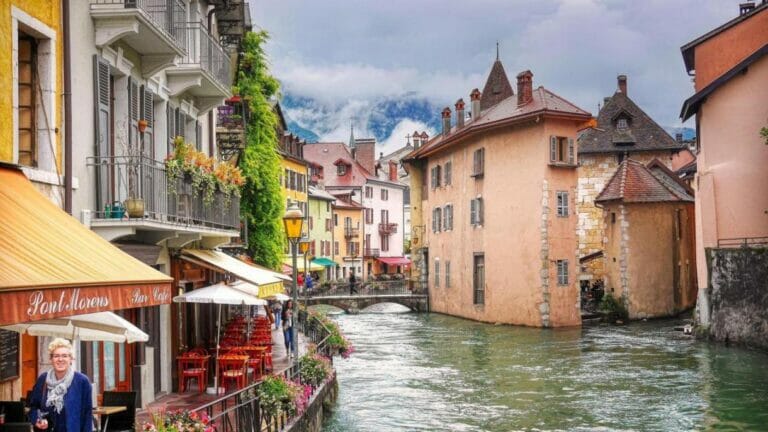
CBD in Annecy

  PURCHASE CBD ANNECY

To buy CBD in Annecy, it is quite possible to go to a physical store or for more discretion, you can also order its products online.

CBD delivery in Annecy.

You can get CBD from an online CBD shop. This is also the most common way to buy CBD today. This allows you to have time to leaf through the site, quietly from home. On the other hand, as it is not possible to see the products directly, you have to trust the photos displayed on the site. If you live far from Annecy (or even in Chamonix, La Clusaz, or Thônes), you can have your order placed on the online store delivered to you. You should know that the European Union authorizes the consumption of CBD, and therefore also its transport. It is therefore completely legal to have products delivered to Annecy from abroad. It can come from other continents, like America, but you can find products much closer to France, with a good quality/price ratio, like in Switzerland for example. Indeed, the latter has the same regulations as France in terms of CBD, on the other hand their authorized THC level is 1%, unlike in France where it is 0.3%. Our CannabisNic team can also deliver CBD to you in Annecy, and even all over Europe. Since the beginning of 2018, the development of physical and online stores have seen their sales of CBD increase sharply. These shops have a duty to sell CBD products that comply with European legislation, and therefore guarantee you controlled CBD items, for safe consumption. Do not hesitate to contact a seller or write an email to the store of your choice if you have any questions. On CannabisNic, you can find our CBD Guide, which will help you understand this molecule a little better, but you can also contact us via the contact form for any additional information.

What is CBD?

CBD is a lipophilic product, this means that it has a chemical affinity with fats, and by coupling to it, it can be assimilated by our organism. Unlike its counterpart THC, cannabidiol does not cause a psychotropic effect, and could even reduce the effects of THC, thanks to the entourage effect. CBD or cannabidiol is one of the main cannabinoids present in the hemp plant. A cannabinoid is a group of chemicals that stimulate cannabinoid receptors in the human body as well as in all mammals. It is the second cannabinoid to be discovered after tetrahydrocannabinol, generally called THC. There are three kinds of cannabinoids: Synthetics only developed in the laboratory Endogenous from certain animal organisms Plants present in cannabis plants. CBD is a product that is increasingly cultivated in Europe, but in France it is not subject to any legislation. CBD products that are marketed must not exceed 0.3% in THC content to be considered legal. The benefits of CBD CBD first has relaxing and soothing effects that could help fight convulsions, nausea or even epileptic seizures. It would also have virtues close to anxiolytics, and it could thus help to soothe stress but also help during smoking or drug withdrawal. It would also have the effect of reducing the side effects of THC such as fatigue or stomach aches. Some studies show that it can also play a role in relieving the symptoms of people with schizophrenia, social phobia or even autism.

Why buy CBD?

First of all, CBD is the least dangerous cannabinoid for the body and health. This substance, which would have relaxing and restful properties, could also help relieve certain ailments. In addition, the cannabinoid concentrations of the products that are sold by CBD shops are regulated by law, which makes it possible to take no risks when buying their products. Today CBD can be consumed in many different ways in oil, cream, infusions, food supplements… Our opinion on CBD, CBD is a very good way to try to relieve joint pain, muscle pain or nausea and it can also help alleviate other symptoms such as anxiety, schizophrenia or addiction. Although the consumption of CBD is not dangerous for human health, it is recommended to consume it in small quantities. CBD is a legal product in France but if you travel with it, be sure to find out about the laws of the country to prevent it from harming you.

Order your CBD on CannabisNic

CannabisNic is a shop that sells CBD products only online. It is possible to find all kinds of products such as oils, creams and even herbal teas. Today it is known that hemp is a plant that has therapeutic properties. Many people suffering from insomnia or pain use it throughout France and around the world. The consumption of cannabis containing a high level of THC is illegal in many countries, the products offered by CannabisNic comply with the various legislations in place: CBD sold at a THC level limited to 0.3%. The French capital is full of shops selling CBD, but it is also possible to buy it online. Here is everything you need to know about CBD in Paris. Buying CBD in Paris It is possible to obtain cannabis for medical use in three different ways in Paris. They are all considered legal, but only if they meet certain conditions: The variety of hemp from which the CBD comes must be registered and listed on the official Legifrance website, The THC concentration rate must be less than 0.3% in the hemp plant. The products must have been checked by certified laboratories before being put on the market. To buy CBD in Paris, it is quite possible to go to a physical store or for more discretion, you can also order its products online. line.