Home Blog Page 9

Permanent Marker: the variety of the year 2023 according to Leafly

Every year, Leafly selects the best cannabis strains of the year based on its user data. If Jealousy had been elected in 2022, the year 2023 would have had the Permanent Marker, a variety that has spread like wildfire on the menus of American dispensaries.

Crowned Leafly's Strain of the Year, Permanent Marker's meteoric rise can be attributed to the combination of exceptional genetics, strategic marketing, and a dedicated community of growers and consumers.

From Jealousy to Permanent Marker

The Permanent Marker is not a simple flash in the pan: it actually draws its characteristics from Jealousy, Leafly's 2022 variety of the year.

Seed Junky Genetics, an important breeder of Los Angeles, refined Jealousy by incorporating varieties like Biscotti and Sherbert, aiming for larger, darker, more resinous buds with a distinct grape candy and gas aroma. The variety caught the attention of Doja Pak, who coined the name and launched a global marketing campaign in 2022, with cuttings retailing for $1,000 each.

As of 2023, the strain has proliferated across the country, with renowned cultivators such as LA Family Farms, CAM, Doja Pak, Torus, Skord, Freddy's Fuego, and Preferred Gardens, among others, contributing to its wide availability. The popularity of Permanent Marker has been enhanced by its ease of cultivation.

Unprecedented growth and popularity

Permanent Marker's surge in popularity is reflected in its explosive growth on dispensary menus. Starting with just 10 stores in August 2022, it quickly expanded to 587 stores by November 2023 out of Leafly's 8,000+ stores.

This growth has not been limited to dispensaries alone; Permanent Marker has climbed the web traffic ranks on Leafly, becoming one of the top 200 varieties nationally. The buzz around this strain has resulted in an increase in demand, with consumers actively seeking it out and dispensaries fighting to keep it in stock.

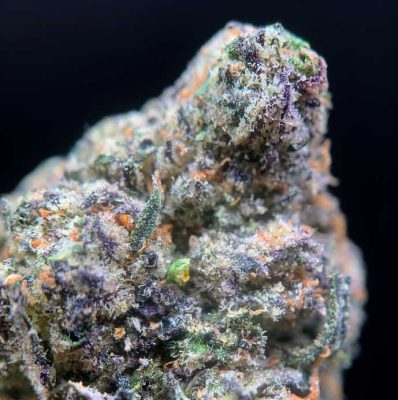
A bud of Permanent Marker

The Permanent Marker experience

The Permanent Marker consumption experience would be truly unique. As soon as the sachet is opened, its distinctive aroma, reminiscent of the scent of markers, permeates the environment. Described as a refined blend of grape candy, creamy berries and solvents, the strain captivates consumers with its complex flavor profile.

When it comes to its visual appeal, Permanent Marker boasts large, dark purple buds with orange pistils and a generous coating of white resin.

Power and effects

Permanent Marker lives up to its reputation as a potent strain, with a THC level of 25-30% and sometimes more according to American analysis criteria. The effects are very indica, providing a heavy and powerful high. Leafly reviews, which give it 4.8 out of 5 stars, highlight its superiority over other popular varieties like Lemon Cherry Gelato and Runtz.

While recognizing its potency, users are cautioned about potential side effects such as anxiety, dizziness, or pasty mouth. This strain is recommended for experienced users who can appreciate its intensity.

The History of the Permanent Marker

Seed Junky Genetics, the creator of Permanent Marker, has been pushing the boundaries of cannabis breeding since its inception in 2007. Co-founder JBeezy and his team embarked on a meticulous breeding process from 2019 to 2021 to create Permanent Marker. The selection process involved complex crossbreeding, with the goal of achieving the perfect balance between candy-like sweetness and carbonated undertones.

Doja Pak's role in marketing Permanent Marker was instrumental in its worldwide recognition. The release of $1,000 clones, a massive marketing wave in 2022, and the strategic selection of the strain name have contributed to its wide success.

What future for the Permanent Marker?

Permanent Marker's impact goes beyond its recognition as Strain of the Year. It disrupted the traditional model of sole ownership, with Seed Junky choosing to distribute $1,000 clones around the world, creating a network of growers rather than a single owner. The strain's success is evident, as evidenced by its multiple appearances on High Times review lists and its presence in both legal and illegal markets.

The future looks bright for Permanent Marker, with Seed Junky introducing feminized seeds in May 2023, sparking a new wave of growth and innovation. The strain has already inspired crosses like Permanent Marker x Push Pop, indicating its influence on future genetic exploration.

The next wave: Gello Shotz, Pineapple, Mango, Bubblegum

While Permanent Marker continues to dominate, Seed Junky Genetics is not resting on its laurels. Marker's next batch promises some exciting variations, including crosses of Gello Shotz, Pineapple, Mango and Bubble Gum. These crosses are expected to bring new flavors, increased yield and equally high THC content, which will keep Permanent Marker's momentum alive.


In Canada, 73% of cannabis now comes from legal sources

Last week, Health Canada released the results of the 2023 Canadian Cannabis Survey, providing valuable insight into the evolving landscape of cannabis use in the country. Conducted annually since 2017, the survey aims to shed light on how Canadians view and engage with cannabis, providing crucial data to monitor and shape national regulation under the Cannabis Act.

Cannabis use among young people

The survey revealed a stable picture of cannabis use among young Canadians aged 16 to 19. In 2023, 43% of them reported having used cannabis in the last 12 months, which represents an increase compared to 2022 and 2018. This rate, however, remained comparable to that of 2019 and 2020.

The stability of overall cannabis use across all age groups, particularly daily or near-daily use, has persisted since 2018 and remains around 25%. The percentage of young Canadians regularly using cannabis has remained stable at around 20%.

The percentage of Canadians deemed “high risk” due to their cannabis use is also stable, around 3% since 2018.

The decline in cannabis consumption through combustion is notable. In 2023, smoking remains predominant (63%), but alternative methods are gaining popularity, notably edibles (52%) and vaping (33%). This change highlights a diversification of consumption habits, perhaps influenced by changes in product availability and consumer preferences.

Impacts of legalization

The number of Canadians accessing cannabis from legal sources increased from 37% in 2019 to 73% in 2023, still increasing compared to 2021. Legal stores have emerged as the main source of supply since 2019. The study believes that the increasing accessibility of legal options and the standardization of regulated cannabis outlets are the main factors.

The percentage of Canadians driving after recent cannabis use fell from 27% in 2018 to 16% in 2021 and has not changed since, suggesting increased awareness of the potential risks associated with driving under the influence. influence of cannabis and adherence to responsible consumption practices.

Approximately 11,690 respondents aged 16 and over participated in the survey across all provinces and territories. Data collection covered various themes, including knowledge, attitudes and opinions; cannabis use and products; sources and purchase; assessment of high-risk cannabis use; accidental consumption and adverse effects; driving and cannabis; and cannabis for medical purposes.

In 2023, the survey expanded its scope to include new topics, such as reporting and occurrence of adverse reactions, identifying legal sources, knowing cannabis packaging requirements and an alternative assessment tool to measure harmful cannabis use.

ShoptaCBD opens to THCpo and HHCpo

In the ever-changing landscape of legal cannabinoids, two cutting-edge compounds have emerged at ShoptaCBD, pushing the boundaries of relaxation. THCpo and HHCpo, derived from CBD, are pioneers in the field of synthetic cannabinoids, mimicking the effects of THC and HHC, respectively. As THC and HHC are banned in France, these new compounds offer an alternative to experienced users looking for powerful effects.

Derived from CBD, the non-psychotropic cousin of THC, THCpo and HHCpo represent a breakthrough in cannabinoid synthesis. These compounds have been meticulously crafted to replicate the psychoactive effects of THC and HHC while circumventing the legal restrictions imposed on their natural counterparts in France.

The foundation of THCpo and HHCpo is based on growing premium CBD flowers indoors, which ensures optimal conditions for their growth. This controlled environment sets the stage for the infusion of a precise blend of cannabinoids, transforming these flowers into powerful sources of mind-altering experiences. The result is a synthesis of nature and science, offering users a unique and controlled journey into the realms of euphoria and relaxation.

For experienced users looking for a powerful yet legal alternative, THCpo and HHCpo offer an unparalleled experience. These compounds offer a sophisticated interaction of cannabinoids, producing effects similar to their banned counterparts, while remaining within legal limits.

The synthesis of THCpo and HHCpo marks the start of a new era in cannabinoid exploration and highlights the potential for innovation in this area. As the quest for new relaxation experiences and methods persists, these synthetic cannabinoids provide a glimpse into the future of psychoactive compounds, where legality and potency combine to redefine the boundaries of relaxation and euphoria.

It is essential to approach THCpo and HHCpo with caution, recognizing the potency of these compounds and understanding the chemical and legal landscape surrounding their use. As with any new substance, responsible and informed consumption remains essential to unlock the full potential of these revolutionary synthetic cannabinoids.

4.5 kg of cannabis sold legally in one month in Lausanne

For its first month of activity, the legal cannabis sales point in the city of Lausanne sold 4.5 kilos, or 5% of the quantity estimated to come from the black market.

Frank Zobel, deputy director of Addiction Suisse, clarified some of the demographics of buyers in an interview with 24 Hours: “They are on average between 35 and 40 years old and generally do not participate in drug support programs. »

For him, this challenges stereotypes and suggests that a diverse group is interested in regulated cannabis. More than 600 Lausanne adults have expressed their intention to participate in the Cann-L project in the coming months, indicating a potential attraction of consumers towards legal and regulated channels.

The potency of the cannabis being sold also provides valuable information. Zobel notes that “the most in-demand cannabis is the most potent, with a THC content of around 15%, which accounts for 40% of sales.”

Zobel addresses the issue of the presence of drug traffickers in the neighborhood, emphasizing that the first participants in the Cann-L project obtained their supplies through short circuits, such as acquaintances or growers. Zobel maintains that street vendors can still meet spontaneous needs that legal outlets cannot satisfy.

The Cann-L project is inspired by Quebec and aims not only to monitor the black market, but also to assess the impact of non-profit sales on consumer behavior. Participants must complete a questionnaire every six months, the data from which will be used to assess the long-term effects of the project.

The financial commitment to the Cann-L project is significant, with a cost of 1.7 million Swiss francs and an expected duration of four and a half years. It will be used, among other things, to understand in depth the dynamics of regulated cannabis sales and their potential effects on society.

The cities of Basel and Zurich have already launched controlled sales of cannabis in pharmacies in 2023.

These initiatives in different Swiss cities are not only experimental, but also aim to contribute to the ongoing debate on the development of federal cannabis legislation. In Switzerland, 4% of adults currently consume cannabis, and the data collected as part of these pilot projects will play a crucial role in the development of the future regulatory framework.

Danish Medicines Agency publishes study on side effects and use patterns of medical cannabis

The Danish Medicines Agency has published a comprehensive report on the results of its medical cannabis pilot program, covering the period 2021 to 2022. The report discloses key information regarding suspected adverse reactions, consumption trends and profile overall safety of finished cannabis products.

Overview of side effects

During the specified period, the agency received 19 reports of suspected adverse reactions related to finished cannabis products covered by the pilot program. This is notably a significant reduction from the 20 reports received in 2020. The reports were split into 9 cases in 2021 and 10 in 2022, only one of which was classified as a suspected serious adverse reaction.

Despite an increase in the number of prescriptions for finished cannabis products in 2021 and 2022, annual reports of adverse reactions have decreased by half. The Danish Medicines Agency confirms that these reports did not reveal any safety concerns and that no batch-related side effects were identified during the period.

The document provides a detailed analysis of reported side effects, classifying them into two categories: serious and non-serious. The majority of reports (18 of 19) were for suspected non-serious side effects, such as dizziness, stomach pain, anxiety and diarrhea. One report noted a suspected serious side effect, namely substance-induced psychotic disorder attributed to an overdose.

The agency carefully analyzed each report to assess the potential cause-and-effect relationship between the final cannabis product and the reported side effect. It should be noted that all reported side effects were already known for authorized medicines containing medicinal cannabis and no new or changed risks were identified.

Trends in medical cannabis use

Despite the decrease in the number of reports of adverse effects, the report highlights an increase in the consumption of finished cannabis products. In 2021 and 2022, eight finished cannabis products were made available to consumers, leading to an increase in prescriptions. However, these prescriptions were distributed to fewer Danish patients than in 2020.

Consumption data, detailed below, describes the types and concentrations of finished cannabis products, as well as the corresponding number of citizens and prescriptions reimbursed. Indications for prescribing cannabis included neurogenic pain, neuropathic pain, chronic pain, and pain, with patients aged 26 to 79 years.

Prescribed product Content Consumption in 2021 Consumption in 2022
Bedrocan “Cangros” 220 mg/g THC + <10 mg/g CBD 296 patients, 2684 prescriptions 367 patients, 3090 prescriptions
Billinol “LGP” 160 mg/g THC + <2 mg/g CBD 177 patients, 1060 prescriptions
Bedica “Cangros” 140 mg/g THC + <10 mg/g CBD 157 patients, 771 prescriptions 165 patients, 863 prescriptions
THC oil “Stenocare” 30 mg/ml THC + <0.1 mg/ml CBD 119 patients, 207 prescriptions
Seedmen “Aurora Nordic Cannabis” 5 mg THC + 0.2 mg CBD 264 patients, 1065 prescriptions – (Discontinued from Nov 15, 2021)
Bediol “Cangros” 63 mg/g THC + 80 mg/g CBD 227 patients, 1058 prescriptions 286 patients, 1063 prescriptions
Bediol “Scanleaf” 63 mg/g THC + 80 mg/g CBD 85 patients, 186 prescriptions
“Stenocare” CBD oil <2 mg/ml THC + 20 mg/ml CBD Month of 5 patients, less than 5 prescriptions

Barcelona City Council attacks Cannabis Clubs

The Barcelona City Council, led by Jaume Collboni, is seriously considering the closure of all Cannabis Clubs. These establishments, which have flourished over the past decade, have become the main avenue of access to cannabis in the city.

The recent change in position of the Council, which has been quite protective until now, has triggered a series of inspections and raised the concern of Club administrators and activists who have long defended the unique model of Barcelona's Cannabis Clubs.

Legal uncertainty and political change

City Council's new determination to close cannabis social clubs marks a significant shift from its previous stance of tolerance and defense of regulation. Albert Batlle, third deputy mayor and security advisor, recently declared the Council's intention to “put an end” to these clubs, emphasizing the need for a meticulous approach “with legal certainty, with rigor and without friction caused by haste.”

In 2021, the High Court of Justice of Catalonia annulled the 2016 City Council regulation, leaving these establishments without legal basis.

The recent inspection campaigns, separate from previous ones, aim to verify whether the consumption of cannabis is actively encouraged within these clubs. Club administrators reveal increased intensity during these inspections, suggesting a potential crackdown on cannabis activities. The Council, while remaining discreet on the issue, affirms that it strives to “guarantee the legality of these establishments”.

Conflicting perspectives

The controversy surrounding Barcelona's cannabis social clubs has generated confusion and frustration among activists who have long defended the model as a way to divert cannabis use from the streets, thereby reducing the risks associated with it.

However, the lack of clear regulations has allowed a subset of unscrupulous establishments to operate, blurring the lines between legitimate clubs and those that facilitate illicit activities. Activists deplore being unfairly grouped with traffickers by the City Council, and insist on the need for nuanced regulations that distinguish between responsible cannabis consumption and illicit trade.

International recognition

As Barcelona considers closing Cannabis Social Clubs, other countries are adopting similar models. Germany is set to open such venues in April 2024, while the Czech Republic recently curbed its ambitions for full legalization to move towards the establishment of Cannabis Social Clubs. Malta has also opted for Clubs, while different models of associations also exist in South America.

In December, experts from Barcelona met with the President of Malta to provide feedback on the functioning of these spaces, highlighting the international interest and recognition of this model.

Despite the regulatory challenges faced in Barcelona, ​​the city's cannabis social clubs continue to be a source of inspiration for countries navigating the complex terrain of cannabis legalization and regulation. An international delegation visited the Barcelona clubs last March with parliamentarians from various European countries, officials from the United States and representatives from South American countries.

Czech Republic scales back cannabis legalization ambitions

The legalization of cannabis in the Czech Republic takes a nuanced turn with the presentation of a bill by the coalition government. The proposed legislation, presented by the Pirate Party, walks a fine line between the initial idea of ​​a fully regulated legal cannabis market and the decriminalization measures currently in place.

The Pirate Party, a long-time advocate of cannabis legalization in the Czech Republic, itself acknowledges that the bill is a compromise, with provisions to decriminalize personal cultivation, allow Cannabis Clubs and introduce taxation .

Jindřich Vobořil, national drug policy coordinator, explained: “We agreed on the self-cultivation of a limited number of plants. This will mean decriminalization for adults who grow a small amount of cannabis for their own use. »

Abandoning full legalization

The bill falls short of ambitious plans proposed in 2023, which aimed for a fully regulated commercial market. The Pirate Party considers this a strategic decision, which positions the bill as a stepping stone towards broader legalization. Pirate Party MP Klára Kocmanová drew parallels with historical prohibition, highlighting the ineffectiveness of the current approach to criminalization.

The bill includes rules for legal cultivation, operation of cannabis clubs, licensed sales, exports and taxation. It also suggests restrictions on production and sale, as well as registration of consumers, small growers and Cannabis Clubs. This approach is reminiscent of that of Germany or Malta, which bet everything in the establishment of Cannabis Clubs as a first step to end prohibition.

The Pirate Party, however, is not abandoning its vision of a regulated market. He already intends to negotiate additions to the bill, including a pilot test of a fully regulated market, similar to his initial plans presented in 2023.

“It has become clear that, just like the prohibition of alcohol in the United States in the last century, the current approach of criminalizing cannabis does not work,” said Pirate Party MP Klára Kocmanová.

The Czech government's approach to drugs

The bill is part of the Czech government's broader plan to combat drug addiction until the end of 2025. It emphasizes the correlation between the regulation of addictive substances and their level of harm. Jindřich Vobořil, the anti-drugs coordinator, advocates for a scientifically proven and balanced approach to risk prevention and harm reduction. He believes that a regulated cannabis market could allow for better control and prevention while generating significant tax revenue.

Despite a consensus on certain points, the political debate around Cannabis Clubs is still ongoing. Agriculture Minister Marek Výborný expressed concerns about the potential increase in the number of consumers and spending on addiction treatment and prevention programs.

Pro-legalization groups, including the Safe Cannabis Association, CzecHemp and Legalizace.cz, welcomed the bill. According to them, the essential aspect is the end of sanctions for personal consumption of cannabis. However, they highlight a “fundamental gap” in the provision for a strictly regulated market, emphasizing the need for a more comprehensive framework.

From Mexico to Chile to Argentina, Latin cannabis brands are gaining ground

Cannabis in Latin America is changing, with emerging brands such as In Volá in Chile and WePlant in Argentina adopting traditional marketing and branding techniques. These strategies, which include market segmentation, brand experiences and collaboration with influencers, reflect a renewed interest in massification, large-scale production and more professional communication in the region.

However, the road to Latin brands is not free of cultural and legal pitfalls. “A brand is an identity and it is essential to define its name, logo or isotype. And his activity. Certain names cannot be registered without authorization,” explains Ivana Vigilante, lawyer in the sector.

How can Latino cannabis brands reach more consumers? What is the potential of these strategies for civil user associations? And what are the challenges to overcome?

Retail cannabis sales

Here's a spicy fact: more than 80% of the global cannabis market is a retail market. Thousands of businesses of all types and sizes grow, process and retail cannabis in all its forms. Design, packaging, labeling, quality labels, customer service, traceability and monitoring: cannabis brands are trying to be omnipresent.

While some brands choose to position themselves as leaders in an age segment, others focus on the lowest price or on raising awareness of environmental issues.

Chilean cannabis

Simon d'In Volá, a media and brand production company in Chile, explained how cannabis clubs and associations, although legally limited, have fostered a thriving medicinal market in the country. The self-management of these associations has allowed them to focus on providing detailed and reliable information to consumers, who are also affected by the importance of marketing and branding.

In addition, he noted a growing interest in information on product composition, product safety and transparency, particularly through labeling. To learn more about the average user, In Volá used key demographic information to design an average consumer. A theoretical model known in marketing as the “buyer persona”.

Meeting with Jorge

“This cross-checking of information with key parameters of marketing campaigns allowed us to create the profile of a cannabis consumer in Chile. His name is Jorge, he is 27 years old, has an average salary and spends about the same amount on cannabis,” explains Mr. Simón.

Mr. Simón also notes the importance of different segments of medical consumers and the construction of a narrative that gives meaning to the brand's design.

“There are those who look for the specific effects of certain cannabinoids and those who are interested in more general experiences,” explained Mr. Simón.

Looking for an immersive experience, In Volá has developped Beat Seedsa brand of cannabis genetics that combines their cannabinoid profile with music playlists on Spotify, designed to understand the graphical curves of different cannabinoids.

BeatSeeds seeds

We Plant: community, education and minimalist marketing

Founded with the aim of benefiting the community and fostering the advancement of medical cannabis, WePlant, a non-profit organization in Argentina, stands out for its emphasis on legal and safe access for consumers .

Marlexis Romero, social communications graduate and marketing specialist, believes that as a brand, WePlant is inspired by minimalist marketing strategies, seeking to create an impactful and recognizable image.

Ezequiel, co-founder of the NGO, and Marlexis both understand that brands are important because they tell a story, can justify the role of those who care for others and add value to their work.

Ezequiel also believes that creating educational content strategies helps bring quality information to a larger and more diverse audience, and he is already considering the possibility of synergies between cannabis and other industries, such as tourism.

The Weplant plantation

The Weplant plantation

Segmentation: Fancy, Zaza and others

When Mau Lamonica teamed up with urban music artists to promote his first brand, Fancy, he didn't expect his genetics to make a splash.

In a short time, “the genetics that Duki smokes” became the most sought-after gem, just like Zaza, a resinous genetic with the presence of terpenes, which targets a segment aware of the therapeutic benefits of extractions.

“In pre-sale, a thousand packages were sold in a few days. Our goal is to make this product accessible to all growers,” said Mr. Lamonica. I tried to give the product a “jewel” aura, where the grower is the artist,” added the breeder.

“We must adapt products to the needs of local consumers for effective and organic marketing. Market research is essential to continually improve our products,” adds Mau Lamonica.

As for the potential of the brands, he emphasizes: “Barcelona overcame an economic crisis thanks to cannabis, that is why I want to support the national industry.”

Zaza x Fancy

Zaza x Fancy

Jelly Genetics

In Mexico, where the U.S. market is more popular, brands are following the retail trend. José Luis, co-creator of the Jelly Genetics seed bank, explains that his brand tries to exist as an exceptional product.

It specializes in the production of feminized seeds, the first in Mexico, and stands out by offering local varieties that emphasize flavor, quality and storytelling.

“Between selection and design, a brand takes years. Our genetic products are intended to be enjoyed at certain times. They reflect the time of year in the life of the grower. We try to convey this work, in the visual line and in the merchandising,” explains José Luis.

“We look for quality to build loyalty. We don't give away our work. Brand is about price, and what's better than world-class quality, by Mexicans for Mexicans? »

Jelly GeneticsAll branding is political

Sofía Morello is a graduate in social communications and marketing director of the Argentine seed bank Red Ojitos (editor’s note: the little red eyes), with which she mainly focused on user trust and experience.

Sofía Morello knows the importance of making technical information accessible to her new clients, through personalized advice and digital applications. Its packaging is thus designed taking into account functionality and reuse, in order to increase the visibility of the brand.

Beyond traditional marketing, Ms. Morello stressed the urgency of recognizing the work of caregivers in clubs and civil user associations on the market.

“When designing a brand, it is essential to understand and respect the diversity of cannabis players, including women and diversities, who have gained ground in an initially male-dominated space, using stories and testimonials to break down prejudices and connect with new consumers,” said Ms. Morello.

In this regard, Vigilante noted that “NGOs have the legal capacity to register a trademark and, in some cases, they can make a profit through the trademark to cover their operational costs. The advantage of a brand is that it can be adapted to the reality of the project it represents. »

Legislative changes for vaping in the United Kingdom

0

With young people becoming more and more interested in vaping, certain countries such as the United Kingdom have decided to put in place strict measures in order to limit its appeal to adolescents. Adult vapers should not be concerned. Decryption.

Worrying figures on young British people and vaping

Vaping is estimated to help between 50,000 and 70,000 British smokers quit their tobacco addiction each year. However, according to a recent survey, in 2023, 20.5% of young people between 11 and 17 years old will have already used an e-cigarette. This is three times more than the last 3 years. Even if vaping helps adults wean themselves from tobacco, it is not intended for a minor audience.

This data simply flies in the face of Prime Minister Rishi Sunak's agenda as he wants to create the country's first-ever smoke-free generation. Faced with this alarming figure, the British government reacted.

A public consultation is launched to limit vaping among minors

The United Kingdom has always been very supportive of vaping. However, if cigarettes cannot be sold to minors, vaping remains accessible to them. Faced with this growing enthusiasm among young people for e-cigarettes, the United Kingdom government launched a public consultation on October 12, 2023. Open for 8 weeks, the idea is to collect the opinions of various stakeholders and the general British public, in order to find ways to divert young people from vaping.

Received favorably by all stakeholders, this public consultation has already brought together several proposals. However, the Prime Minister is reassuring and insists that the proposed future measures would only concern minors.

The various proposals to fight against minors’ vaping

Firstly, there is a question of prohibiting the sale of tobacco products to minors. But the proposals do not stop there, since it is also a question of limiting the flavors so as to no longer attract children, while not disgusting adults. It is also a question of applying strict rules on point-of-sale displays and in particular of putting vaping products out of the sight of minors.

On the products themselves, proposals have been made to ensure that neither e-cigarettes nor vape products are intended for minors. The price of e-cigarettes is also being questioned to discourage young people. Finally, local authorities could have the right to impose fines to enforce legislation on the sale of vaping products.

What is Gabriel Attal's position on cannabis?

The youngest prime minister France has ever known, openly gay and who admits to having used cannabis, that obviously doesn't happen every four mornings. But do we really know Gabriel Attal's position on cannabis?

His personal experience with cannabis

Gabriel Attal's first foray, to our knowledge, on the subject of cannabis was marked by a progressive position. In an interview given to BFMTV on January 15, 2020, Mr Attal insisted on the need for a global debate, encompassing questions of prevention, sanction and control.

Mr. Attal drew on his experience during a trip to Quebec, as part of his former functions related to youth, where cannabis had been legalized a few “months” earlier. [ndlr: années en fait].

He declared on Jean-Jacques Bourdin's microphone: “My conviction, the conviction that this gave me, is that the main issue is that of prevention. We cannot simply say: yes, we must legalize, without asking ourselves the question of how we support it.”

He thus said he was open to the debate on the legalization of cannabis, without personally declaring himself in favor of legalization despite the heavy reminders from Jean-Jacques Bourdin.

“What I don't want is to take a position on legalization, without considering what the prevention issues are,” he justified.

Attal's knowledge in this area also comes from his personal experience. When asked about his own relationship with cannabis, he candidly admitted to smoking in the past. However, he clarified that he was not a regular user and highlighted the negative impact he observed among his peers.

“I saw what it also produced for young people who were completely addicted, […] and I have seen young people who have been completely out of school and who have left all circuits, and that is not acceptable,” he noted.

In February 2023, while he was Minister for Public Accounts, he welcomed the record seizures of cannabis, demonstrating a move towards a more conservative point of view.

Now head of government, will he follow the same evolution as Emmanuel Macron, namely adopting a pro-prohibition position? Or will he remain faithful to his convictions which, on other subjects, have already evolved significantly since his beginnings in politics?