Home Blog Page 66

From Labello to Cannabis?

A good lip balm helps moisturize your lips, but beyond that, the smell, application, and texture are all a matter of personal preference. And if you’re into the benefits of hemp, you might be pleasantly surprised to find out that there is a hemp Labello.

From Labello to Cannabis?

The Labello is probably the most famous lip balm of our generation. The iconic blue version, however, has swapped its classic dressing for a green adornment with leafy prints and integrated hemp seed oil in this version. Naturally Vegan (naturally vegan).

The Labello with hemp seed oil

The Labello with hemp seed oil

The press service of Beiersdorf, the producer of Labello, did not answer our questions sent by email, we unfortunately have little information on this cannabis turning point of the brand. We have just been able to find on the Internet that the traditional mineral oils making up the Blue Labello have been replaced by vegetable oils, including hemp seed oil.

If you have already tried seen this product on a French shelf or tried these new lip balms Naturally Vegan Labello, don’t hesitate to tell us in the comments.

The cosmetic virtues of hemp seed oil

Anyway, it is not strange to see hemp seed oil in a product that is supposed to moisturize the skin. Hemp seed oil is indeed the savior of dry skin!

It rejuvenates and nourishes tense or dry skin and prevents flaking and itching. Used on the face, it controls sebum production to hydrate without clogging pores. Hemp seed oil restores the skin’s barrier and helps it retain moisture, making skin look healthy, hydrated and supple.

Hemp seed oil also protects against environmental aggressors that damage skin and cause premature aging, such as sun, radiation, pollution, cigarette smoke, and exposure to extreme hot and cold temperatures.

Hemp seed oil is also rich in antioxidants – such as vitamins A, C, E and F and fatty acids – which strengthen the outer layer of the skin so it can retain water. The skin thus remains firmer and more pleasant to the touch, and the appearance of wrinkles and fine lines is reduced.

Amsterdam Cannabis Expo 2022 or the latest scam

The Amsterdam Cannabis Expo, which was to be held from November 24 to 26, 2022, was ultimately just an old scam. A number of exhibitors, who had paid to exhibit, saw their money simply disappear.

The conference

L’Amsterdam Cannabis Expo 2022 began to gain prominence as early as 2020, launching a website and social media profiles, and offering sponsorship deals to a number of organizations.

Its website, which was only taken down last week, presented the event as an annual conference welcoming “thousands of industry professionals” from “more than 100 countries”.

Soon after, a myriad of third-party websites, many of which continue to advertise the event, added the event to their listings as well.

The three-day event was advertised as featuring a ‘prestigious awards show’ and a full program of speakers discussing ‘the latest trends’, and as offering exhibitors ‘the perfect opportunity to showcase your brand to the industry’.

At first glance, its website seemed completely legit, encouraging brands such as Orange County CBD to come forward.

Melanie Hatjigiannakis of Orange County CBD told BusinessCann that she found out about the event in May this year when she was compiling a list of industry events she wanted to attend in 2022.

” There was no red flag immediate at this point, because the website was very well filled with information that you expected to see,” she said.

On closer inspection, however, the main sponsors of the event did not even exist.

Other companies have been contacted directly by the event to offer sponsorship offers, but no information has been given on the content of these packages. One company reported that as soon as their conversations with the event began, one-day tickets were already sold out and only three-day tickets were available via bank transfer.

Red flags

As the event drew closer, more glaring warning signs began to appear. Not only did the company not release any information about its program until its website was taken down, just two weeks before the event kicked off, but its anonymous organizers were unable to answer questions posed by exhibitors. .

Ms. Hatjigiannakis explained, “We always ask for a plan of the available exhibition space before making any commitments. It was when this plan arrived that we sounded the alarm. »

“Indeed, all the blocks of the same size (exhibition spaces) were drawn on the plan, which is not possible. You would know this if you had exhibited at previous events. We also noticed that no other company names were listed on the floor plan. »

All of the companies BusinessCann spoke to about the scam said their only contact with the organization was via a generic email address (contact@amsterdamcannabisexpo.nl) and no names were ever given. been given.

While it’s not unusual for a generic email address to be used initially, Ms Hatjigiannakis said her “second alarm” was that these emails were never signed by a member of the team. sale.

“Usually the person you’re dealing with wants the commission for selling the space, so they make sure you know their name and direct contact information after the initial communication,” she said. added.

“Communication broke down when they kept asking us to pay the bill and we kept asking questions about the event that they clearly couldn’t answer. »

While Orange Country CBD ceased all contact before sending money, other exhibitors weren’t so lucky.

A cannabis tech company, which wished to remain anonymous, said it was in touch with event organizers as recently as October, but communication stopped entirely as soon as they sent their invoice.

They have since worked with their bank to get their money back; however, they were told last week that the bank account the money had been sent to was now empty, leaving them little recourse.

An “announced non-existent event”

Many of the companies involved would likely have continued their association with the non-existent event for much longer had it not been for the intervention of RAI Amsterdam, the exhibition center where the event was to take place.

Almost every company we spoke to said their suspicions about the fraudulent event were confirmed when they contacted RAI Amsterdam.

Each of them said they contacted the venue, which is still listed on many websites and Google as the host of the event, in an attempt to obtain information that was not provided by its organizers, to finally be informed that no event existed.

Following an increasing number of calls, the site was forced to issue a statement on October 7 warning the public that this event did not exist.

The RAI told BusinessCann: “We have received a few calls from exhibitors wishing to participate in this event. – Most with a request for additional information, and some after receiving zero reaction from the ‘organizer’ after prepayment.

“This is how we learned about this so-called event and issued a warning statement. »

“The RAI is not the only place mentioned as a location. The “organizer” of this event seems to have sent several articles (or published articles) to attract attention.

“We regret that someone is able to fabricate and advertise a fake event in the media. This is especially painful for businesses that have made a payment, expecting to attend and/or exhibit at an event. The exhibitors we spoke to found their way to the authorities. From what I understand, they are taking legal steps to get their money back. »

BusinessCann has contacted the organizers for comment, but has received no response at the time of writing.

In Israel, more than 120,000 patients now consume 4.5 tons of cannabis per month

Israel, a pioneer in medical cannabis, publishes a monthly status report of its medical cannabis program. According to data as of the end of October, the number of Israeli patients treated with medical cannabis reached 120,944, about 1,500 more than in September. After 10 years of therapeutic cannabis, the increase in the number of patients is now less sustained month after month, and down 50% from the rate of increase in 2021.

The amount of medical cannabis to which Israeli patients are entitled also increased in October, from around 4,575 kg in September to around 4,600 kg in October. Among these 4.6 tonnes, 4,174 kg (approximately 91%) in inflorescence and 423 kg (approximately 9%) in oils and extractions, this being the eligibility figure and not the amount actually issued, which generally reaches 80% of what is allowed.

In terms of the indications for which patients are entitled to a licence: 65,336 patients hold a license for the “chronic pain” component, ie approximately 55% of patients and a slight decrease compared to the previous month. Second on the list, as usual, is the “other” section, which continues to climb, this time from around 18,479 in September to 19,138 in October.

In third position: 17,485 of the patients are licensed for post-traumatic stress disorder (PTSD) – a figure which signifies a relatively high increase in the last month in this section compared to the previous months as well as compared to in the chronic pain section.

In fourth place are 12,682 oncology patients (cancer – past or present) – a figure that signifies the continuation of a downward trend that has been going on for around 4 months in the number of people eligible for cannabis for cancer-related indications .

Also in the data, approximately 56,000 patients (approximately 46%) are between 21 and 45 years old, approximately 41,000 patients (approximately 34%) are between 46 and 65 years old, approximately 21,500 patients (approximately 18%) are between 66 and 66 and over, plus fractions of a few additional percent are children and boys up to age 20 – mostly autistic and epileptic.

The French Ministry of Health, which lamented a lack of knowledge about medical cannabis and data from French experimentation with therapeutic cannabis, could probably look for some data there!

Malta will start the procedure for opening Cannabis Social Clubs in February 2023

From delay to ignition for the establishment of Cannabis Clubs in Malta. The country which intended to open its first social clubs in 2022 postpones the opening of license applications to 2023.

The Responsible Cannabis Use Authority (CURA) will be able to begin accepting applications for cannabis club licenses by next February, according to Parliamentary Secretary Rebecca Buttigieg.

Speaking in Parliament, Ms Buttigieg said prospective cannabis associations will be able to apply for a license next year, remarks reported by MaltaToday.

Malta legalized cannabis last year, allowing people to grow up to four cannabis plants in their private residence. Apart from self-cultivation, cannabis associations are the only legal way for people to obtain cannabis products. However, no Cannabis Club currently has the right to form.

Cannabis Clubs are associations of growers who pool their resources and share the harvest among their members.

A regulatory authority, ARUC, was set up as part of the reform to regulate these associations. The Authority for the Responsible Use of Cannabis was to regulate the sector while carrying out actions to educate, raise awareness and mobilize players in the sector.

Mariella Dimech, a former coordinator of drug addiction programs at Caritas, was the authority’s first executive chairwoman. She was appointed in 2021 for a three-year term, but was sacked from her post earlier this month.

In a statement announcing her dismissal, Ms Dimech said she had spent her term working with “no staff, no budget and a political and decision-making strategy that I disagreed with”.

Leonid McKay, a former director of Caritas who was rather cautious about the legalization of cannabis, has since been appointed executive chairman of the authority, to the chagrin of local pro-legalization associations.

“Releaf Malta does not endorse newly appointed President Leonid Mckay because of his previous prohibitionist stances against people who use cannabis and years spent at Caritas dehumanizing the voices of people who use cannabis and labeling us as sick patients in need of rehabilitation,” Releaf Malta said.

The CJEU considers that a Russian treated with cannabis must be able to stay in the Netherlands

The Court of Justice of the European Union this week advocated that a Russian national asking to stay in the Netherlands should be granted the right to do so. The man developed a rare blood cancer when he was 16 and is currently receiving treatment, including cannabis, which is helping him live without significant pain.

The Court of Justice said the man should not be sent home, even though the Netherlands rejected his asylum claims. She said failure to receive proper treatment would expose her to such pain “that it would be contrary to human dignity”, among other things.

Russia bans the use of cannabis and the issue has become a major international issue since WNBA star Brittney Griner was convicted on August 4. Customs officers said they found vape cartridges containing cannabis in his luggage. The two-time US Olympic gold medalist said she had a prescription for medical cannabis for the pain.

The Court of Justice of the EU was reacting to a question from a local Dutch court asking for advice on how to deal with the problem.

Although the case concerns access to medical cannabis, the judgment applies to any medical treatment not available in the host country.

“A third-country national suffering from a serious illness cannot be deported if, in the absence of appropriate medical treatment in the host country, this national risks being exposed to a real risk of a rapid increase , significant and permanent pain associated with this disease,” the court said in a statement.

This requires establishing that the absence of treatment would cause pain “of such intensity that it would be contrary to human dignity in that it could cause serious and irreversible psychological consequences, or even lead to suicide”. , can we read in the press release.

The Spanish Ministry of Health will present its law on medical cannabis next month

In Spain, the Ministry of Health is currently drafting the law that will regulate medical cannabis in the country.

The Spanish government has announced that the Spanish Medicines and Health Products Agency (AEMPS) is working on the issue, after a deputy from the Ciudadanos political party asked a parliamentary question.

“AEMPS is preparing a roadmap for the appropriate regulatory framework and the viability of these recommendations, guaranteeing the quality of these products (extracts or standardized cannabis preparations), so that their use contributes to the health of patients who may have them. need and the protection of public health”, replied the government, after being questioned on the regulatory advances and the roadmap for the medical use of the plant.

The AEMPS thus seeks to meet the deadline set by the subcommittee on medical cannabis of the Congress of Deputies, which recommended last June that medical cannabis should be available in pharmacies in Spain before the end of 2022.

The regulation of medical cannabis in Spain is approaching

What other suggestions did the congressional subcommittee make regarding medical cannabis? The text specifies that “the dispensing of magistral formulas with extracts or standardized preparations of cannabis must be carried out by the network of pharmacies of the health system, by favoring hospital pharmacies and by exploring the alternative of community pharmacies which can respond to the requirements”.

In addition, patients who will be able to access cannabis will be those suffering from multiple sclerosis, certain forms of epilepsy, nausea and vomiting derived from chemotherapy, endometriosis, cancer pain and chronic non-oncological pain ( including neuropathic pain), with the possibility of extending it to other therapeutic indications when studies provide consistent evidence.

In particular, it remains to be defined whether cannabis flowers intended for vaporization will be dispensed or not.

Oregon pardons 45,000 people for cannabis possession

Less than two months after US President Joe Biden announced a federal amnesty for cannabis offenses – and urged state governors to do the same – Oregon is responding.

This week, Governor Kate Brown announced sentence reductions for past simple possession offenses that affect an estimated 45,000 people in the legal state of Oregon and save $14 million (18 .8 million euros) in fines and related costs.

“No one deserves to forever suffer the consequences of a conviction for simple possession of cannabis, a crime that is no longer prohibited in Oregon,” Kate Brown said in a statement.

“This amnesty will clear 47,144 convictions for possession of a small amount of cannabis, removing barriers for thousands of people seeking employment, housing or educational opportunities that would otherwise , would not have been eligible,” a statement from the governor’s office noted.

The amnesty will apply to convictions for possession of one ounce of cannabis (approximately 28 grams) or less handed down before 2016 and for which the person was 21 years of age or older. It must also be the person’s only charge and “there must be no victims”.

“No one is currently incarcerated in the State of Oregon solely for possession of one ounce or less of cannabis,” the fact sheet further notes.

“We are a state, and a nation, of second chances. Today, I am taking action to right the wrongs of a flawed, unfair, and outdated criminal justice system in Oregon when it comes to personal possession of cannabis,” Ms. Brown reports.

The American Civil Liberties Union (ACLU) and the American Civil Liberties Union of Oregon applauded Ms Brown’s decision. “The failed policies of the War on Drugs – including harsh sentencing, overcriminalization and surveillance of Black communities – have perpetuated racial disparities in the criminal justice system and contributed to mass incarceration,” notes a joint statement. .

Several US states have already taken clemency measures

The governors of Colorado, Nevada, Illinois, Pennsylvania and Washington state have already taken steps in recent months to pardon those convicted of minor drug offenses.

It depends on the state, but some records are automatically reviewed and erased, while others require eligible individuals to apply.

The most expensive Zippo in the world

0

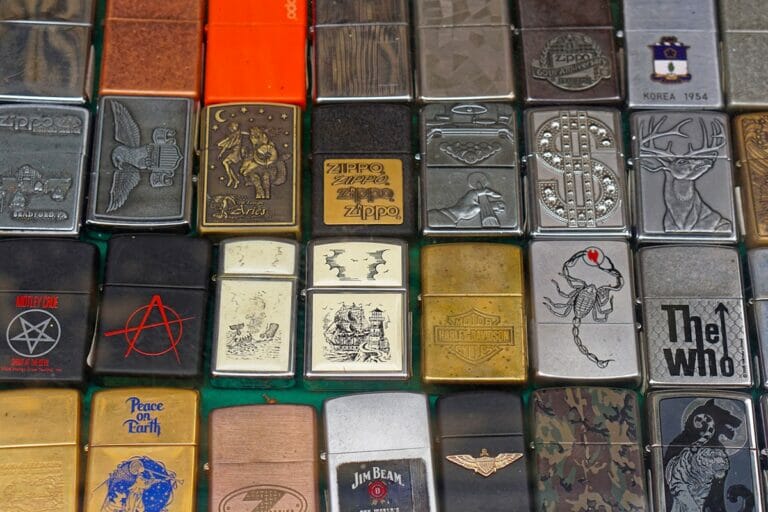
As with almost all objects or accessories, some models stand out. Without really knowing why, they sometimes become symbols of an era or of the reputation of a brand and are snapped up at exorbitant prices. Zippo lighters are no exception to the rule. Here are the most expensive Zippo in the world.

The most expensive lighter in the world is not a Zippo

A few years ago, the most expensive lighter in the world was none other than the Dunhill Golden Apogee, the first butane gas lighter created in only 50 copies. Each sold for $13,000. However, it was dethroned by ST Dupont’s Louis XIII Fleur de Parme, which was sold to Steven Hung, a history-loving Hong Kong billionaire, for the modest sum of 500,000 euros.

The second lighter was designed in jadeite and silver stones. It is also a lighter and ashtray duo with rather extravagant dimensions. This set sold for $254,000! To close the top 3 of the most expensive lighters in the world, let’s find the famous Fabergé Imperial lighter. Note that it can also be used as a pocket lighter, it costs no less than 136,000 dollars.

The most expensive Zippo in the world

What are the most expensive Zippo lighters?

In the Zippo family, the most expensive model is none other than the exceptional Windbreaker celebrating the 75th anniversary of the brand. Indeed, designed in 2007, it displays rather sober lines, but features the number 75 inlaid with a yellow flame on its main face. This lighter has the particularity of lighting up in all weathers, by protecting the flame from air and wind, hence its name. It sold for 37,000 euros.

In second place comes the famous Zippo 1933. Without frills, or even precious metal, it owes its notoriety and its ranking as the 10th most expensive lighter in the world to its sentimental value. Indeed, fans of the brand know that this is the very first Zippo lighter to have been made. It sold for $18,000 to an unnamed collector. Zippo Windbreaker.

The decriminalization of cannabis in the hot seat in Thailand?

The future of Thailand’s cannabis industry is up in the air after a lawsuit was launched challenging the decriminalization of cannabis in the country.

On June 9, the Thai Ministry of Public Health issued a decree removing cannabis from the list of narcotics. Under this regulation, the cultivation and trade of cannabis and hemp were more or less permitted. Restaurants and cafes are allowed to sell cannabis-infused foods and drinks, but only if they contain no more than 0.2% THC. Products with a higher concentration of THC are allowed, but only for medical purposes.

The opposition has not been very enthusiastic, and the Thai cannabis industry has been criticized for its lack of basic controls. The opposition claims that Health Minister Anutin Charnvirakul caused social problems in the country and violated local and international laws by issuing the decriminalization decree. In response to growing criticism, the Ministry of Public Health announced a new rule aimed at better controlling the promotion and sale of cannabis flower, but the law has yet to come into effect.

On Monday, Thailand’s Central Administrative Court accepted a lawsuit led by Smith Srisont of the Medical Council of Thailand and lawmakers from opposition political parties seeking to revoke the decriminalization order.

The government should present its Cannabis Actthe text of the law that would definitively regulate cannabis, on November 23 before Parliament.

Proponents of legalization defend themselves

One of Thailand’s leading cannabis advocates, Chokwan “Kitty” Chopaka, announced on Facebook that she and other dispensary owners would gather at noon on Nov. 22 at government headquarters in Bangkok to protest the lawsuit. could stop everything.

“I went to different dispensaries around Sukhumvit to invite them to participate in the protest tomorrow, which went better than I thought, I guess seeing your business under threat can make people quite active “, posted Chopaka on Facebook, translated from Thai.

“I apologize if I could not personally invite each dispensary, and I would like to take advantage of this moment to invite all the dispensaries to come and demonstrate against the Narcotics Control Board who wants to penalize cannabis again. Which means that all dispensaries could be closed. »

“Those who don’t want their businesses closed. Those who don’t want their investment to disappear. Those who don’t want to hide their culture again. Those who want to sell cannabis legally. Those who do not want to start having urine tests again. Those who want cannabis to stay legal, come join us.”

ABC News reports that around 200 people showed up for the rally at government headquarters in Bangkok. “We want to make sure these politicians don’t try to put cannabis back on the list of narcotics. If that happens, our fight for years will mean nothing,” Akradej Chakjinda, a coordinator for Cannakin, a network of cannabis decriminalization supporters, told The Associated Press.

Another advocate, Soranut “Beer” Masayavanich, owner of the Sukhumweed dispensary, announced that another group will meet at the Ministry of Public Health to discuss with Charnvirakul the upcoming cannabis law.

“Our goal is to create mutual understanding about the benefits that cannabis will bring,” Beer said. “We emphasize that the decriminalization of cannabis brings benefits to several sectors, from tourism to the economy to agriculture. »

Paraguay: Presentation of the draft law on cannabis for medical use and for adults

At the end of last week, a bill aimed at decriminalizing the use and cultivation of cannabis was presented to the National Congress.

The bill is the result of the first International Conference on Cannabis held on July 26 in Asuncion within the National Congress. The conference was convened by the Presidency of Parliament and brought together parliamentarians and experts on industrial hemp and cannabis.

The bill, introduced by the frente Guasú, the left front, and representatives of civil society involved in the issue of cannabis, is entitled “Through which the self-cultivation, production, industrialization, marketing, use and research of the plant of Cannabis and its derivatives are comprehensively regulated and declared to be of national interest”.

A leader of Granja Madre, Juan Cabezudo, explained that “Senator Óscar Salomón, President of Congress, has called an international conference to discuss the medical and commercial opportunities generated by the use of cannabis in all its forms. »

He added that “there was the participation of relevant national institutions as well as civil society organizations such as Mamá Cultiva, the Paraguayan Cannabis Cooperative, the Paraguayan Chamber of Industrial Cannabis and Granja Madre”.

Paraguay has already legalized the production of medical cannabis and supplies several countries. However, access to medical cannabis remains complicated for patients and self-cultivation is still prohibited.

Cannabis decriminalization

The central point of the bill presented to Congress, reported by ABCis to decriminalize the use and cultivation of cannabis.

Among the key points of the bill are the following:

1. decriminalize the Cannabis plant, its derivatives, uses and users, within the framework of an approach based on human rights guaranteed by the national Constitution, by setting administrative sanctions except in the case of related offences.

2. Declare the area of ​​national interest, emphasizing the health of the sick and the economic rights of family farming, as well as the industrial and fiscal potential that it can represent for the country.

3. It establishes the National Institute of Cannabis (Incanna) as a state public body with the participation of civil society, endowed with broad powers to achieve the objectives of the law.

4. It authorizes self-cultivation by individuals and the creation of cultivation associations for adult and medical use of the plant and its derivatives, as well as their limited possession.

5. The bill under consideration establishes guidelines for the prevention of cannabis use by minors, as well as express restrictions on production and consumption in public spaces.

The Uruguayan model served as the basis for the project, “but with the social and economic reality of the country”, explained Juan Cabezudo, leader of the Ganja Madre association.