Home Blog Page 107

Israeli cannabis producer InterCure buys Better for $35 million

Intercure, the largest cannabis producer in Israel, has announced plans to acquire medical cannabis operator Better for $35 million.

The deal, which is expected to be finalized in early Q3 2022 subject to Israel Medical Cannabis Agency (IMCA) approval, will see Intercure obtain Better’s business operations in Israel and abroad , as well as its intellectual property, cultivation site and unique varieties.

Better’s $35 million purchase price will be paid for with Intercure shares at a valuation of $10 per share, subject to a three-year lock-up plan.

Buoyed by last week’s announcement of greater decriminalization of cannabis, Intercure’s stock has soared more than 22% in the past month.

International Opportunities

According to Intercure, the transaction will allow it to extend its “global reach and accelerate its international expansion strategy in key global markets”.

Better has two cultivation facilities capable of producing 3 tonnes of medical cannabis per year, which it says it distributes to “tens of thousands” of patients in its two key markets, Israel and Australia.

This will allow Intercure to gain a foothold in another international market, after having announced its intention to expand its activities internationally for the first time in December 2021.

“The combined business operations of InterCure and Better are expected to create a new force in the international cannabis industry that will further accelerate our global expansion plans and opportunities and the consolidation process,” said Alex Rabinovitch, CEO of Intercure. .

“We believe our combined business strengths and capabilities will help us connect more effectively with new and existing patients in Israel and internationally. Once completed, InterCure’s portfolio will include new leading brands, a unique distribution network and partnerships, enabling us to deliver lasting value to all stakeholders. »

Amos Cohen, Chief Financial Officer of Intercure, added, “InterCure continues its growth momentum while leading the consolidation of the medical cannabis market. This acquisition, the first of its kind, is a new step in the implementation of our strategy and strengthens the position of InterCure. »

InterCure has several partnerships with American brands, including Cookies.

The cultivation and production of medical cannabis authorized in France

The cultivation of cannabis for medical use is now authorized in France. The decree published in the Official Journal today February 18 will enter into force on March 1, 2022.

Pharmaceutical state monopoly

The decree concerns above all the addition of the terms “culture” in article R. 5132-74 of the public health code which governs the use of narcotic plants in medicine.

If in substance the decree thus treats cannabis for medical use like any medicine, in form, Yann Bisiou, lecturer in private law and criminal sciences and specialist in drug law, points out some inconsistencies.

“It’s the gasworks we could expect. For example, the decree deprives the CBD decree of legal basis, without referring to the new article 5132-86-1 which will henceforth govern the uses of industrial hemp” laughs Yann.

Nothing serious for the CBD decree, which retains all its value, but an indication of the lack of discussion between the various authorities which govern industrial and medical Cannabis. Also, the Minister of Industry is absent from the organization of medical cannabis, while he is present on industrial hemp, but not the Ministry of the Interior, while he is absent on industrial hemp.

Legal comical incident: delta-9-THC becomes illegal again! Article 5132-86, rewritten by the decree, removes the passage which made delta 9-tetrahydrocannabinol an exception to the prohibition of cannabis molecules. Synthetic cannabinoids are now at the same level as natural cannabinoids.

The choice is made by a state monopoly, which will appoint its operators, who themselves will choose the producers concerned, with stricter regulatory conditions than those already known for the production of poppy, for example.

For Yann Bisiou, the main risk associated with the decree lies in the future organization of the medical cannabis sector. “The ANSM can refuse to develop a competitive system, like what is done on opium in France”.

In this hypothesis, the agency can entirely choose a single industrial operator who would delegate production to a limited number of producers, a scheme which strongly limits real access to medical cannabis in foreign examples.

The decree will be supplemented later by decrees to further define the regulation of the medical cannabis industry in France.

A CST for form

In parallel, the Temporary Scientific Committee (CST) “Culture in France of cannabis for medical use – technical specifications of the production chain from plant to drug” of the National Agency for the Safety of Medicines and Health Products (ANSM ) will hold its first meeting today.

The CST, whose value will be purely informative, will meet to discuss the following points:

  • The delta-9-tetrahydrocannabinol (THC) and cannabidiol (CBD) levels of plants
  • Cannabis strains used
  • The methods of traceability of the plants until the harvest of the flowers
  • The expected pharmaceutical forms of cannabis-based medicines
  • The pharmaceutical quality criteria as well as the necessary controls

New Bleuh cannabis products marketed as hashish and dried flowers

The Quebec company Bleuh, which markets recreational cannabis products with a high concentration of THC under its eponymous brand, is marketing four new products, two of which are in the form of Hashish. The trading company would like to be able to export its “Quebec Gold” to France over the next decade!

These new products marketed under the Bleuh brand will be available from February 2022 at Canadian recreational cannabis retailers.

Old school H29 hashish

Old School H29

Made in Quebec in an artisanal way, this hashish with unique aromas will contain nearly 29% THC. This product is the result of a blend made from top quality ingredients from Sativa-type cannabis flowers. The slightly aged product will be sold in a 3.5g format in an amber glass container. Each unit contains almost 1000 mg of THC.

Old school H19 hashish

Old School H19

Old School H19

Lighter than the H29 Old School, this hashish is composed of equal parts THC and CBD, the two most well-known molecules in cannabis. This balanced hash contains around 19% THC and 19% CBD. H19 also contains 3% cannabigerol (CBG), a lesser-known molecule that contributes to H19’s unique aroma. Once inhaled, this product could create a feeling of well-being.

The H26 Sativa

H26 Sativa

H26 Sativa

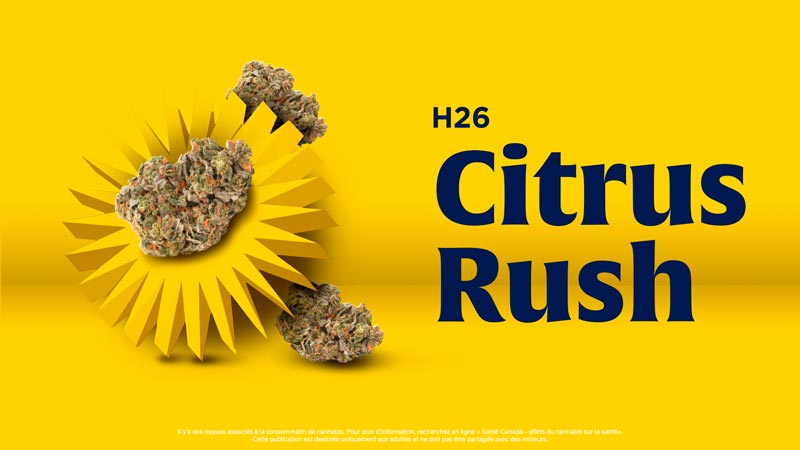
Marketed in the form of dried flowers, in a 3.5g pocket format, Citrus Rush, the first of its line, is a phenotype resulting from the crossing of two well-known products in the industry: Skunk Tangerine and Do- If-Dos. The H26 brings a pinch of sweet citrus, a spritz of hazelnut cookies and a slightly earthy floral note. Sativa-dominant Citrus Rush pouches will be marketed with THC concentrations ranging between 23% to 29%. This inhaled product may stimulate the appetite and cause a feeling of euphoria.

The H26 Indica

H26 Indica

H26 Indica

This dried flower product containing between 23% to 29% THC will be distributed in a 3.5g format. The Indica-dominant K-Smorz variety will be the first to be released. It is a sweet tasting strain with warm flavors of cookie dough and graham crackers. This phenotype comes from a cross between Zookies and PCS1 strains. Once consumed, this product could induce a feeling of relaxation.

The final word belongs to the vice-president of operations at Bleuh. “Last fall, when we visited France, we saw the popularity of cannabis among French consumers. There is a lot of curiosity and certainly interest,” says Dany Lefebvre.

“When French laws allow it, Bleuh will be in the running to export the famous “Quebec Gold” to France”, confided the vice-president of operations. In addition to the four new products that are about to be marketed, the product collection at Bleuh includes around fifteen new products. It already markets light cannabis products under the De La Ferme brand.

About Blueh

Bleuh is a Quebec company with its head office in Centre-du-Québec. Bleuh is committed to providing quality recreational cannabis products at competitive prices and contributes to the mission of integrating consumers into the legal cannabis market and keeping them there, without promoting the consumption of cannabis.

Italian Constitutional Court rejects cannabis legalization referendum

Italy’s citizens’ initiative to legalize the personal use of cannabis has been blocked by Italy’s constitutional court, although a petition on the subject attracted 630,000 signatures, enough to be put to a vote.

The result of the online referendum, held in 2021, meant that Italian citizens were ready to vote to legalize the personal cultivation and possession of cannabis. In a judgment on Wednesday, however, the judges said the proposed law would have forced Italy to violate its international obligations to prevent drug trafficking.

The referendum proposal sought to legalize the cultivation of cannabis for personal use and ease penalties for other cannabis-related crimes, with violators no longer risking jail time for selling small amounts of the drug.

Constitutional Court President Giuliano Amato said the referendum could be interpreted as including other narcotics considered hard drugs, such as opium, which could not be liberalized. “It amounts to making us violate multiple international obligations,” Mr. Amato said.

Responding to the decision, members of the Referendum Cannabis association said: “This is not a defeat for us and the hundreds of thousands of citizens who are committed to legal cannabis. Today is a defeat for the institutions that are no longer able to understand an important part of this country. »

“It is the failure of a court that fails to guarantee Italians a constitutional right, of a parliament that for thirty years has failed to crush the mafia…”

“The only winner today is the mafia…. “.

“Now we are going to take a few days to figure out how to re-ignite the battle for legal cannabis and we make you a promise: we won’t stop this time either! “.

Since 2019, growing cannabis at home for personal use is no longer a crime in Italy. Since 2016, possession of small amounts of cannabis is also no longer a criminal offence.

Campaigners hoped Italy could follow in the footsteps of countries such as Malta, the first European country to legalize cannabis for adult use, and countries such as Germany, Luxembourg and Switzerland, all of which are in the process of to create some form of legal cannabis market.

Snoop Dogg bets $15 million on cannabis legalization in Germany

The rap legend’s venture capital firm Casa Verde led a $15 million Series B funding round for Cansativa, a Frankfurt-based cannabis distribution platform that currently supplies German pharmacies. Argonautic Ventures and the family office Alluti, based in Munich, also participated in this funding round.

Cansativa will use the funding “to expand its medical cannabis product portfolio and develop its recreational platform ahead of legalization in Germany,” the company said in a statement Wednesday.

The investment “will allow us to achieve our ambitious vision of becoming the operational backbone of cannabis retail in Germany,” added Benedikt Sons, CEO of Cansativa.

If Casa Verde has already invested in Europe, for example in the Portuguese startup AceCann, the arrival of funding in Germany comes in a context of announcing legalization. The country’s new coalition government has pledged to legalize cannabis within four years.

Legalization is coming

This measure would give a boost to the legal cannabis sector in Germany, which is already by far the largest in Europe for its medical use. As one of the only countries where patients can obtain medical cannabis for free, Germany is expected to account for more than half of the continent’s medical cannabis consumption until 2024.

Founded in 2017, Cansativa is already well established in the market. The startup – which calls itself the “Amazon of Cannabis” – makes it easy for German pharmacies to buy medical-grade cannabis, taking care of the supply chain and logistics.

If and when recreational cannabis is legalized in the country, Cansativa believes it is well positioned to transfer its technology platform to this new market, as dispensaries would have much the same requirements as current pharmacies. According to Jakob Sons, co-founder and managing director of Cansativa, this new fundraising will be used to strengthen the company’s product and software engineering teams in anticipation of this new market.

“The most important thing is to improve and transform our existing B2B platform into a scalable technology product that will meet all the requirements of the future growth of the medical and, above all, recreational ecosystem,” he explains to Sifted.

Market opportunity

15 tonnes of medical cannabis are consumed each year in Germany. Legal consumption for adults could reach 200 tonnes within two years of legalization.

Last year, Cansativa secured a four-year exclusivity deal with the German regulator, making it the only company allowed to distribute locally produced cannabis, and Sons says Cansativa is also the market leader in terms of the volume of imported cannabis it distributes.

Speaking ahead of the funding announcement, Yoni Meyer, partner at Casa Verde, said this positions the startup to become a dominant player in the market: “Cansativa is strategically positioned to become the leading medical cannabis platform in the most major economy in Europe… We strongly believe that this team will play a central role in the expected legalization in Germany and will have a decisive impact on the European market, which is expected to reach 3.6 billion dollars by 2025.”

ICBC Barcelona: How is cannabis regulated in Spain?

For a cannabis lover, Spain is a veritable playground. The European nation has long been home to an incredible cannabis community.

Barcelona is particularly fantastic for cannabis enthusiasts, with around 70% of the world-class cannabis clubs located in the region. Food, culture, beauty and cannabis combine to make Barcelona one of the best cannabis tourist destinations in the world.

Spain has a very unique public policy and regulatory approach to cannabis, with some elements of this policy being better than others, especially from the perspective of cannabis patients and entrepreneurs.

Current legal status

Currently, cannabis is decriminalized in Spain for personal use. A person caught in possession of a personal quantity of cannabis is liable to a fine of up to 200 euros. However, in many parts of the country, the application of the law is flexible and the definition of a “personal” amount of cannabis is unclear.

Cannabis for commercial purposes is completely illegal, with the exception of a handful of licenses for the medical cannabis industry. All medical cannabis produced under the limited number of licenses is for export. The only other nationally recognized cannabis business models are those involving cannabis research.

That being said, hundreds of cannabis clubs operate in Spain, and at one time cannabis clubs operating in Barcelona were considered legal by local authorities. A court ruling overturned Barcelona’s policy of allowing cannabis clubs, leaving the entire industry in limbo. Spain’s unregulated market is thriving, but its regulated industry is significantly hampered by current politics.

Future reforms?

Europe recently saw its first nation legalize cannabis for adult use after lawmakers in Malta passed a reform measure late last year. Several other countries, including Germany, Luxembourg and Italy, are expected to legalize cannabis sooner than expected.

All of this puts pressure on Spain to take its rightful place as an international leader in the cannabis industry and policy. The best way to find out more about what’s on the horizon in Spain is to attend the International Cannabis Business Conference B2B event taking place in Barcelona on March 10, co-sponsored by Bhang Inc. and Grow Glide, with an after-party sponsored by Juicy Fields. The B2B event is part of the world’s largest cannabis industry superconference, alongside Spannabis.

The B2B event includes a panel dedicated to analyzing current laws and regulations and possible reforms that are looming in Spain. The panel moderator will be Bernardo Soriano Guzmán, CO-CEO, S&F Abogados. Panelists will be Sergio González aka Weedzard (President, 420 Movement), Iker Val (CPO, Sovereign Fields), and Ruben Valenzuela Moreno (CTO, Valenveras). Each member of the panel has extensive experience in the field of cannabis and is perfectly suited to provide valuable information on Spanish cannabis policies and regulations.

Who else will speak at ICBC Barcelona?

The funniest man in cannabis, Ngaio Bealum, will be the master of ceremonies at the International Cannabis Business Conference in Barcelona. Other speakers include:

  • Jamie Pearson – President and CEO, Bhang Inc.
  • Guillermo J Fernandez Navarro, co-founder of S&F Abogados.
  • Nic Easley – CEO of 3C Consulting and Managing Director of Multiverse Capital
  • Luna Stower – VP Business Development, Ispire
  • Òscar Parés – Deputy Director, ICEERS Foundation
  • Chloe Grossman – Executive Director of Business Growth, Trulieve Cannabis Corp.
  • Roberto Algar – Managing Director, Curaleaf Switzerland
  • Santiago Ongay – CEO, Sabia
  • Kai-Friedrich Niermann – Founder, KFN+ Law Office
  • Dr. Juana Vasella – Lawyer, MME Legal Zurich
  • Joan Simó Cruanyes – Coordinator of Cananbis Hub UPC
  • Albert Tio – Founder of Airam and President of Fedcac
  • Aaron Smith – Co-Founder and Executive Director, National Cannabis Industry Association
  • Lisa Haag – Founder, MJ_Universe
  • Juanma Fernández – CEO, Easy CSC Group
  • Patricia Amiguet – Founder of the Pachamama Cannabis Association and President of CatFAC
  • Zeta Ceti – Founder and CEO, Green Rush Consulting

Over 80 countries will be represented at the superconference to be held in March in Barcelona and will include representatives from all sectors of the industry as well as leading international cannabis policymakers and industry service providers. Attend the Barcelona Superconference to connect with international investors, entrepreneurs, industry regulators and policy makers, and scale up your industry.

The International Cannabis Business Conference is also organizing other events in Berlin in July 2022 and Zurich in September 2022. You can book your tickets now and take advantage of the early bird discount.

A psychedelic beer would have helped this ancient South American empire to reign

Leaders of an ancient South American empire used psychedelic beer to maintain political control over their society and surrounding communities, according to research published in January.

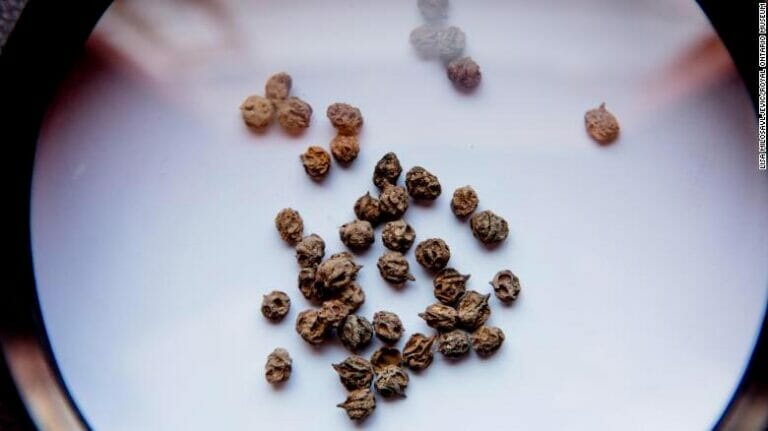
In a study published by the journal Antiquityarchaeologists have revealed that the leaders of the Wari people served a beer-like drink made from the fruits of the false pepper plant, a small tree, combined with the seeds of the vilca tree and served the mixture to guests during communal feasts.

The fruits of the pepper plant used to make a beer-like alcoholic beverage called chicha.

“The resulting psychotropic experience reinforced the power of the Wari state, and represents an intermediate step between exclusionary and corporate political strategies,” the researchers write in a summary of the study published online by Cambridge University Press. “This Andean example adds to the global catalog documenting the close relationship between hallucinogens and social power.”

Power and psychotropics

The Wari built their empire on the high plateaus of the Andes Cordillera, in present-day Peru. They ruled the region from 600 to 1000 AD and predated the Inca Empire by four centuries. Archaeologists who carried out excavations in Quilcapampa, southern Peru, from 2013 to 2017, discovered the first traces of psychedelic vilca seeds at a Wari site.

Matthew Biwer, visiting assistant professor of archeology at Dickinson College in Pennsylvania and lead author of the study, said the discovery sheds light on how indigenous civilizations in South America used psychoactive substances.

“It was a turning point in the Andes in terms of politics and the use of hallucinogens,” Biwer said.

The Wari Empire Excavation Site

The Wari Empire Excavation Site

“We consider this type of hallucinogen use to be a different context of use than earlier civilizations, which seem to have closely guarded the use of hallucinogens for a privileged few, or the later Inca Empire which emphasized on the mass consumption of beer but did not use mind-altering substances like vilca at parties. »

Pre-Columbian civilizations used vilca, often inhaled in the form of snuff, as early as 4,000 years ago. The seeds contain the psychedelic dimethyltryptamine, as well as bufotenin, a substance similar to serotonin.

“What I’ve read from ethnographic sources is that you have a very strong feeling of flying,” Biwer told Inverse.

Party people rule the empire

Previous research has found that the Wari used partying and beer as a means of exerting political control over guests from surrounding communities. Researchers at the Quilcapampa site have found evidence that the Wari made “soft beer”, called chicha, in large quantities. Botanical remains of molle and vilca were found and ceramics were discovered in the center of the site, an indication of where feasts were held, according to the study authors.

“The Wari would add vilca to shisha beer in order to impress guests at their feasts who couldn’t return the experience,” Biwer said. “This created a debt relationship between the Wari hosts and the guests, probably from the surrounding area.”

“We believe that the feasts, beer and vilca served to create and cement the social bonds between the peoples affiliated with the Wari and the local populations as the Empire expanded,” continues Biwer. “It was also a way for Wari leaders to demonstrate and maintain their social, economic and political power. »

Biwer explains that guests were under social pressure to recognize the power of their Wari hosts and felt compelled to reciprocate in the future.

“There is political power in being able to acquire and use these hallucinogenic substances and to provide these experiences,” Biwer said. “I think this provides a very good example of the connection between politics, drug use, intoxication and social connections. »

Researchers have yet to discover why the Wari civilization eventually died out. But by continuing to study the sites inhabited by the pre-Columbian civilization, they learn more about how the first inhabitants of Peru lived.

“The Wari empire stretched from northern Peru to the far south, near the Chilean border, and from the coast to the mountainous areas of the Andes,” explains Biwer. “It is the first example of an empire in South America, which collapsed about 400 years before the rise of the Inca Empire”.

Florida: the 3 popular initiatives to legalize cannabis rejected

Ballot initiatives to legalize cannabis in Florida have failed to gather the necessary signatures to be submitted to voters. The deadline was February 1.

To appear in the referendum next November, each proposed initiative had to cross two thresholds. First, each had to gather 222,898 signatures to be examined in committee. Then the measures must garner a total of 891,589 signatures to be put to the vote in November, if deemed constitutional by the state Supreme Court.

Of the three proposed initiatives, only one gained enough signatures to be reviewed, but state courts rejected the proposed amendment on legal grounds.

The other two attempts fell short of the number of signatures needed for voters to decide whether or not to legalize cannabis in Florida. In addition, several ballot proposals seeking to reform the state’s medical cannabis provisions have also failed to clear the hurdles required to be put to a vote.

Still a (thin) hope

Having failed to reach the required number of signatures, only the State of Florida can now bring a legalization project.

Currently, four legalization proposals are in the Florida Senate and House of Representatives. These four bills are divided between the two houses of the Florida legislature and, if passed, will not become law unless approved by the governor and the bills accompany are adopted.

But the proposals, which depend on each other, lack bipartisan support. Besides, due to the extremely polarized political climate in Florida’s legislature, it’s unclear if any of the bills can actually land on the governor’s desk. In addition, any measure adopted will still have to be signed by Republican Governor Ron DeSantis who has so far refused to move towards legalization.

The candidates for his replacement are more interested in the subject.

South Park’s Latest Episode Shines a Light on Inequalities in the Cannabis Industry

South Park creators Trey Parker and Matt Stone never shy away from laughing at cannabis. They did, however, get a little more serious in last week’s episode by addressing the issue of inequality in the US legal industry.

In the February 9 episode, Randy Marsh, white owner of Tegridy Farms, a fictional cannabis farm that has appeared in previous episodes, realizes that there are strong inequalities in the cannabis industry. Marsh discovers this while attending a conference and sees that some people are boycotting cannabis companies that don’t employ people of color.

So Marsh invites the only black couple in town, called the Blacks, to enjoy “farm-fresh hemp salad from here in Tegridy.” He even takes an interested photo of the dinner party and his guests to post, saying, “Look at our friends,” as seen in a clip from the episode titled “The Big Fix.”

The Blacks bluntly ask Marsh if they were invited just because they are Black, pointing out that they have received numerous dinner invitations over the past year, with the hosts invariably taking photos which are then posted on Instagram.

During the evening, Randy Marsh manages to convince Steve Black, financial consultant, to come and inspect his farm. But when Black sees himself on a billboard, with Tegridy boasting that “sales are going crazy right now,” Black gets upset at being used for the money and with no real intention of advancing. fairness.

Marsh then tries to buy Black’s stake (and silence) with a wad of cash allegedly from the profits of the new ad. Black agrees to stay, knowing he’s been turned into a commodity.

As Black tries to come up with ideas to improve the business, which are quickly rejected, he realizes the money just isn’t worth it. Tired of this charade, Black reacted by opening his own 100% black-owned cannabis business, Credigree Weed, directly across from Tegridy Farms, much to Marsh’s dismay and anger.

South Park fiction is based in Colorado, which legalized recreational cannabis a decade ago and medical cannabis in 2000.

South Africa to speed up regulation of its cannabis industry

South African President Cyril Ramaphosa wants to speed up regulation of the cannabis industry in South Africa.

The president said in his State of the Nation address last Thursday that hemp and cannabis production could create 130,000 new jobs. Creating a regulatory and policy framework for the industry is now a priority.

“We want to exploit that,” he said. “We will accelerate policy and regulations relating to the use of cannabis for medical purposes, particularly in the Eastern Cape Province and KwaZulu-Natal” so that cannabis realizes its “enormous” potential for investment and job creation.

Finally implementing the legalization of cannabis

The cannabis legalization project must also make its way, while it has been blocked in Parliament since the end of 2020.

In 2017, South Africa’s Constitutional Court ruled that the government could not prevent citizens from growing and consuming cannabis in their homes. The decision gave lawmakers two years to propose legislation. The bill that passed in 2020 has nevertheless been widely criticized for its harsh penalties and confusing rules.

According to the bill, people who use cannabis in public can be imprisoned for up to two years, and if they do so in front of children, they risk four years behind bars.

The bill removed minor infractions, but did not specify enforcement measures. It also did not provide rules for commercialization, which largely prevented the development of an industry.

The bill also benefits more people who have space to grow and consume cannabis in peace, while the harsh penalties would put increased pressure on poor and vulnerable communities.

In response to this unpopular bill, South Africa’s Department of Agriculture, Land Reform and Rural Development (DALRRD) presented a cannabis master plan last summer aimed at finally getting the industry off the ground. .

The plan creates a seed registration and certification system, while leveraging traditional knowledge to support research and development. It wants to provide technical and financial support to farmers and develop the local market while facilitating the export of South African products. It also implements education and training programs.

The bill is currently being considered by the South African parliament.