

After a lively first day of talks focused on the future of the cannabis industry, day two of Cannabis Europa London 2023 opened with a look back at the very beginnings of the industry.
Esther Farkash, a regulatory consultant, opened the first session in the Barbican theater by paying tribute to Raphael Mechoulam, the “father of cannabis research”, who died last March at the age of 92.
Industry Pioneers
She recalled that Professor Mechoulam, who studied cannabis and the endocannabinoid system for 60 years, began his prolific cannabis career by befriending officers from his local police station, who gave him 5 kg of cannabis from the exhibit room to begin his work.
“That’s why we now understand THC and CBD,” Ms. Farkash explained.
After determining that there must be a “built-in system in our body that reacts so strongly to these compounds”, he worked for 30 years researching the endocannabinoid system, publishing over 700 scientific papers in the leading scientific journals. most prestigious institutions in the world and writing the guidelines on how patients are treated with medical cannabis.
“I’d like to end with a sentence that he kept mentioning: ‘Modulation of the endocannabinoid system may have therapeutic potential to treat all forms of disease.’ Thank you all for continuing his work and his vision.”
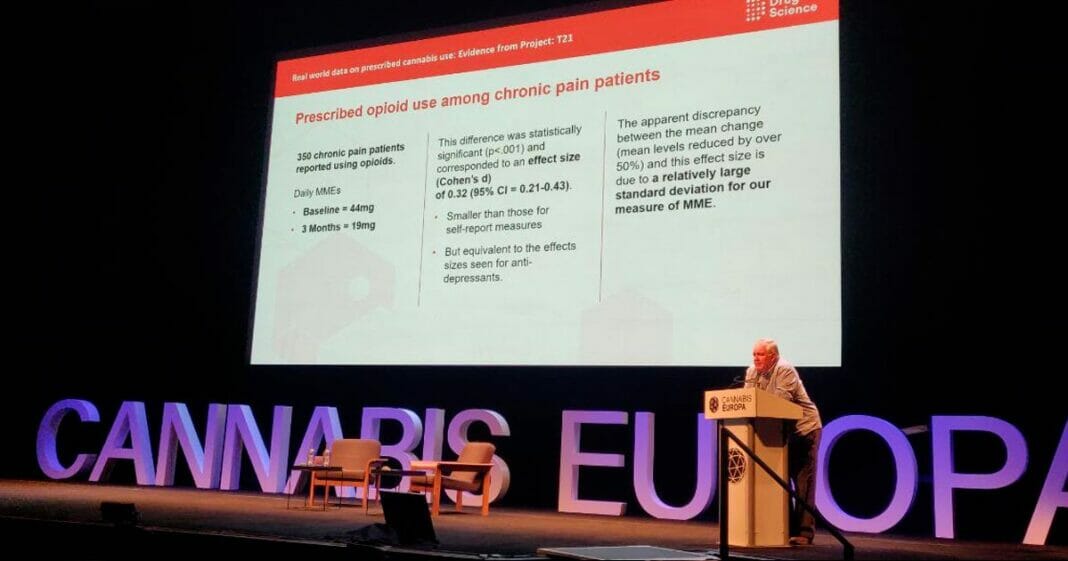
The day ended with a keynote from fellow cannabis industry pioneer, Professor David Nutt, who gave the audience an exclusive insight into the groundbreaking Project Twenty21 initiative spearheaded by drug science.
Professor Nutt presented the “truly remarkable” results of the three-year study involving around 3,000 patients looking at the effects of regular cannabis use on a range of specific conditions and on well-being general patient.
After three months of regular use, patients, approximately 50% of whom suffered from chronic pain and 41% from psychiatric disorders such as anxiety, saw a marked improvement in their overall health.
The improvement in sleep quality was also “very significant” and patient-reported measures of anxiety were reduced by nearly half.
” It is enormous. I doubt an anxiety trial would have had such a large effect.”
Patients with chronic pain and PTSD have also seen marked improvement, news that will be “very, very satisfying for patients”.
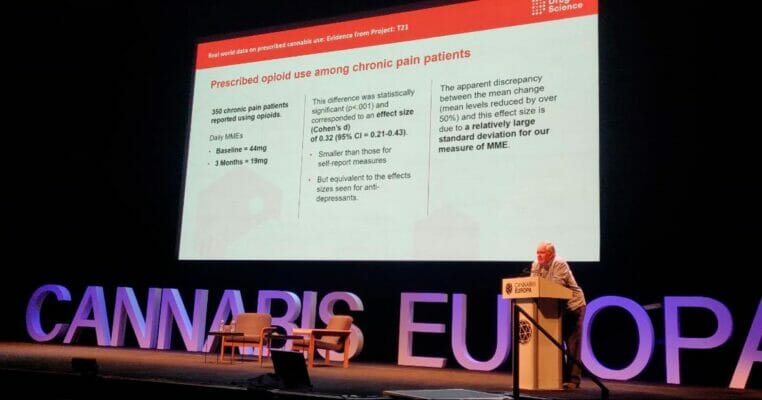
In addition, patients who were also using opioids to treat their disorders saw a significant reduction in their use, with the baseline milligram equivalent morphine (MEM) dose reduced from 44 mg to 19 mg.
“We have not changed the medication. I want to emphasize that these are patients who choose not to use opiates. And it’s not targeted. It is almost certain that we could do better if we bothered. »
“I believe this is now sufficient evidence to warrant proper systematic review, as the evidence we have provided regarding tolerability and efficacy is unquestionably outstanding. »
Broadening of the search
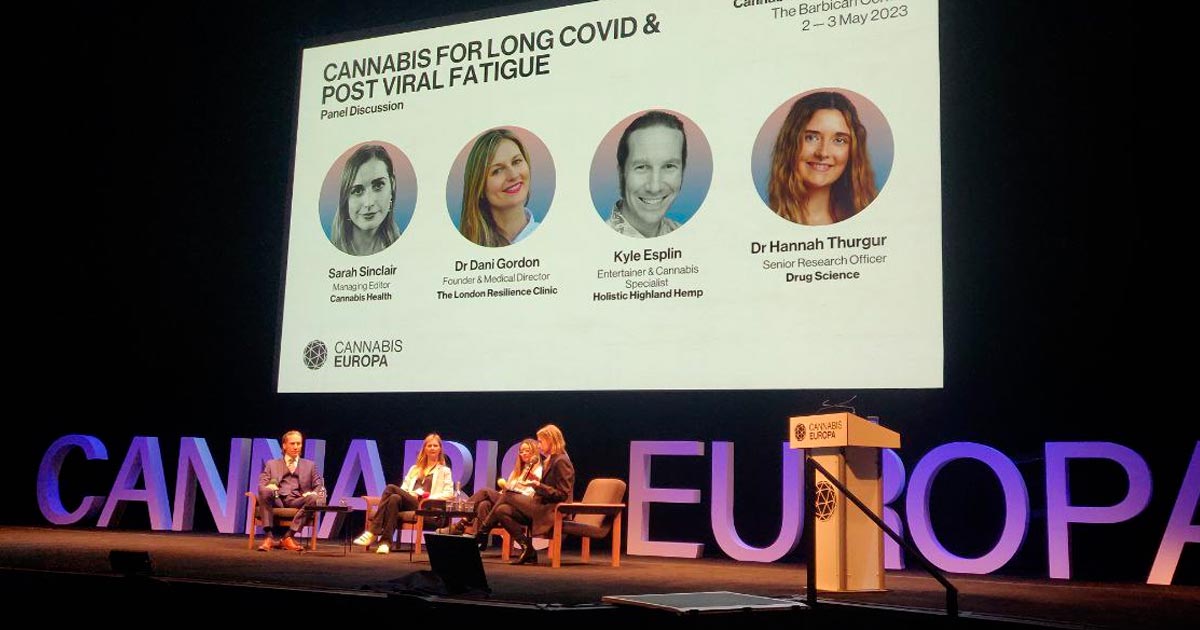
This isn’t the only groundbreaking cannabis research conducted by drug science which was on the agenda for day two, as a panel of experts looked at the potential of cannabis to treat long-term COVID, which is estimated to affect around 2 million people in the UK United from January 2023.
Hannah Thurgur, Head of Research at drug sciencebegan by explaining that the six-month, phase two feasibility study was primarily aimed at establishing the safety of treating these patients with a CBD-dominant compound, but also sought to explore the effects of cannabis on their quality of life, fatigue, depression and anxiety.
She explained that although the sample size was “smaller than we would have liked” (12 participants), the study showed promise in terms of worsening symptoms, even after stopping. of the treatment.
Dr. Dani Gordon, founder and medical director of the London Resilience Clinic, said: “At least you have prepared the ground for someone else to come and do the next phase of this study. These things are so bureaucratic, so it’s a very important job.”
Dr. Gordon went on to explain that she has found treating chronic fatigue with cannabis as part of an integrative medicine approach to be effective in helping patients engage with their treatment programs.
“If we manage to give them a bit more energy, then they can commit to the rest of the program. Cannabis is a catalyst that allows them to engage in the next steps of their program. Cannabis is the only thing I’ve found that can do that.”
This conference also opened a debate, which continued throughout the day, on the type of research carried out on medical cannabis, its cost and its value for patients and the medical industry.
Ms Thurgur suggested that despite some speakers dismissing real-world evidence in favor of randomized controlled trials, there was “real value in trying to see how more thoughtful representative populations of patients respond to different types of cannabis-based products, as well as being able to have a more personalized approach to this diversity”.
A trio of one-on-one interviews on the changing role of the pharmaceutical industry in the European cannabis industry delved into this topic.
Robin Emerson, Managing Director of Jorja Emerson Centersaid the industry needs to “work a lot harder” to provide the clinical evidence we need to move the industry forward in the UK.
Terry O’Regan, of Brains Bioceuticalslargely agrees with this view, stating that the industry is “limited because nobody is doing these clinical studies,” which means starting from scratch.
“It breaks my heart to see these failed cannabis studies, and I wonder if it didn’t really work or if they just didn’t do the due diligence when it came to the dosage. These studies give a negative impression of this industry, and the last thing we want is for it to be relegated to some kind of homeopathic medicine.”
He suggested that involving the pharmaceutical industry was essential to obtain funding for this “expensive clinical research”, but that to do so the industry had to “hold itself to the highest standards”.
Finally, Dr. Mikael Sodergren, Curaleaf’s chief medical officer, spoke out against this idea, pointing out that the real data is now more widely accepted by the medical community.
“The MHRA, EMA and FDA have all issued press releases indicating that they are very happy to use real data to accelerate drug development. This data will never replace clinical trials – it won’t happen – but it certainly has a role to play in making the process faster and cheaper. »
“We have a feedback loop that is not available to the pharmaceutical industry in traditional drug development, which is real-world data. This type of registration program can be uniquely applied to medical cannabis. »
Lessons to be learned
Despite the growing momentum of cannabis research across the continent, the parallel momentum of adult-use markets threatens to undermine the former’s progress.
Aras Azadian, CEO of Avicanna, told a panel discussion about the growing “identity crisis” surrounding the adult and medical use markets that there was “much to learn from Canadian mistakes.”
“We have always insisted that medical use should come first, but we have seen the opposite. The industry has been so focused on enriching recreational use, which has never happened, that the medical market has been neglected. »
“Because we knew recreational cannabis was coming, we had medical companies that were actually just recreational companies. The medical community was deceived into believing that there would be investment in trials and no one realized…The medical community was completely shocked by what happened”.
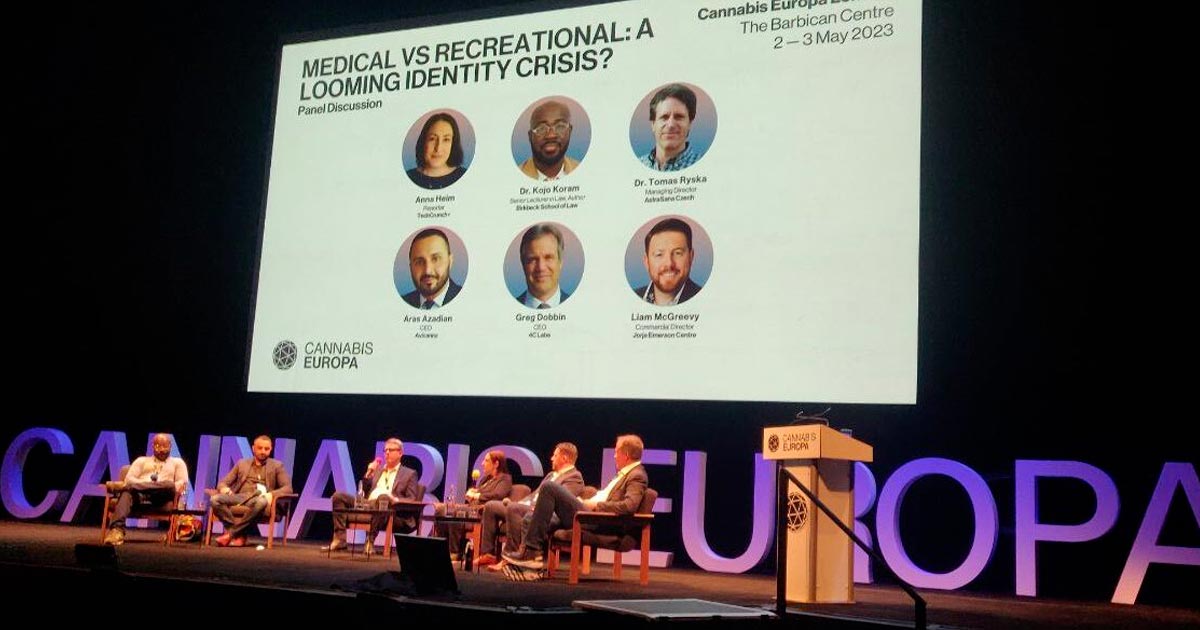
According to him, after the arrival of the recreational market, physicians no longer engaged in the industry or wanted to be trained, many of them assuming that potential patients would simply turn to the recreational market.
Regarding Germany’s decision to “step back from recreational use”, he said he thought the news was “fantastic for patients”.
Dr Kojo Koram, from the University of London, insisted on this point: “I think that some policymakers feel that the problems with medical cannabis could be solved by a recreational market, allowing patients to access this drug through these routes. This risks undermining the legitimacy of both markets.”
In a later session on reasons to be optimistic about recent developments in Germany, Boris Moschowitz of Alephsana explained that he believed Germany could still be a leading example of regulation of the cannabis.
Unlike countries like Luxembourg, Spain and Portugal, where the legislation is “not well enforced”, he suggested that in Germany there was at least a “genuine will to enforce what they put down on paper”.
“If we manage to infuse this energy into all the other European countries, in one and the same direction, I am sure that we will succeed. »
To learn more about the first day, click here.