

In the world of cannabis, we often ignore the complex and exciting world of male plants. Generally overlooked for their low THC content, male plants are nevertheless essential for pollen production. This little guide aims to explore this so often neglected nugget: cannabis pollen.
What is cannabis pollen?
The term “pollen” comes from the Greek ‘pollos’, meaning flour or fine dust. In the context of cannabis, it refers to a powdery substance produced by the male plant during flowering. This tiny powder contains the male gametes. These will then allow the female plant to germinate and produce seeds. Thus allowing the survival and propagation of the species.
What role does pollen play in the cannabis plant?
Pollen has an essential role in the natural cycle of a plant. To put it simply, without pollen, no new seeds! A grain of pollen from a male plant lands on a stigma. You can see these kinds of white-orange antennae on a female flower. It is then that a fascinating process begins: that of fertilization.
In fact, each grain contains a reproductive cell responsible for the transfer of hereditary characteristics. In other words: a genealogical district concentrated in such a small space, it’s quite astonishing, isn’t it?
How and when is pollen released?
Nature has done things well. To maximize its chances of success, a male plant generally releases its pollen when female plants are at the peak of their receptivity.
This typically happens around midsummer, when the days start to get shorter.
Mother Nature sends a signal that tells the boys it’s time to send off their precious golden shipments in hopes of sparking the next generation of cannabis. All it takes is a little wind to disperse these tiny grains over several kilometers. They potentially affect a multitude of female plants ready to be pollinated.
When talking about pollen extraction, it is important to understand that it is a relatively simple process. Indeed, although it may seem complicated at first glance, with a little effort and the right techniques you can harvest your own cannabis pollen. Here’s how to do it.
Collect pollen from a male plant
To recover the precious “green gold” or cannabis pollen, it is crucial to know when and where to look.
- Identifying a male plant: A female plant produces flowers that can be eaten. The male plant produces pollen to fertilize these flowers.
- Wait for the right period: A mature male plant generally begins to produce and release its pollen when it enters a specific growth phase. (usually 3-4 weeks after the first signs of a male plant appear).
- Collection: Once this stage is reached, you can simply collect the pollen by gently shaking the flower clusters. You can do this on top of a piece of aluminum foil or a clean plastic bag.
It is essential during this operation to avoid any contact with your female plants in order to avoid any untimely pollination which would compromise the production of the buds.
What does a male cannabis plant look like?
Identifying exactly what kind of cannabis plant can be difficult. Especially if you are unfamiliar with the plant.
- A male cannabis plant, unlike females, produces pollen sacs instead of flowers.
- These bags usually come together in clusters and often look like small hanging green balls.
- Female plants produce white pistils emerging from the floral calyxes to capture pollen. The male plant, for its part, shows no such signs.
It is essential to learn to identify your plant so that you can adapt your care. And collect this precious weed pollen correctly.

Collect cannabis pollen in your grinder
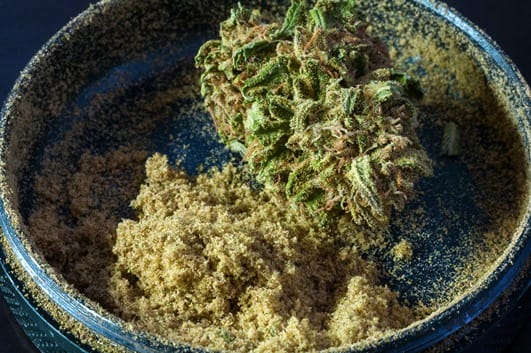
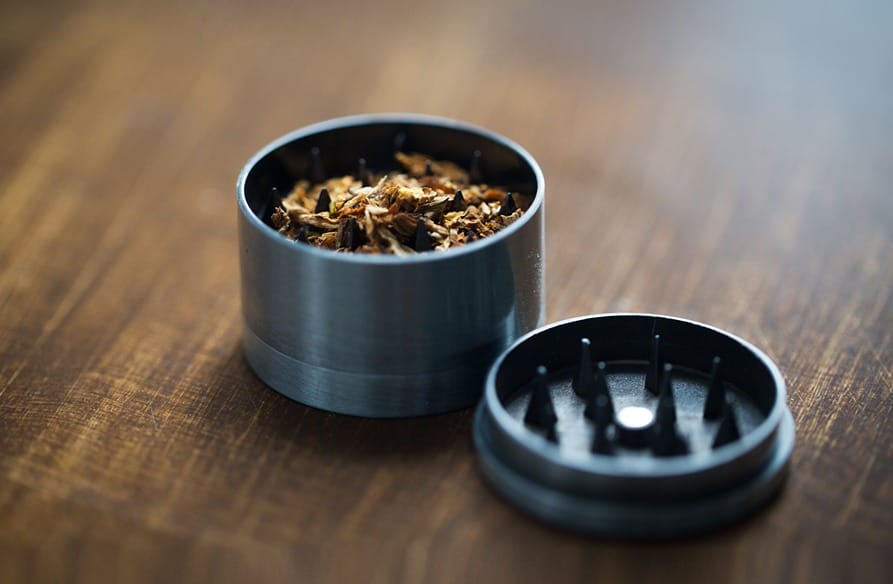
Collecting cannabis pollen in your grinder is a clever practice to get the most out of your CBD flowers. Over time, the fine trichomes, often called “kief,” break off from the cannabis buds and accumulate in the lower chamber of the grinder. You can also find it under the name “skuff” in the jargon of cannabis enthusiasts. This precious deposit is known for its high concentration of cannabinoids and terpenes. It offers a more intense experience and smell. To recover it, start by placing your grinder in the freezer for around thirty minutes. This will help the trichomes to shed.
Removing pollen using the sieve
Dropping CBD pollen through a sieve into your grinder is a fairly simple process. It is very effective in separating your precious trichomes or kief. Here’s how to do it:
Grinder Preparation: Make sure your grinder is clean and the sieve is not clogged. A multi-chamber grinder with a fine sieve is ideal for this task.
Grinding: Place the CBD buds into the grinding chamber. Turn the grinder several times to grind the entire bud and loosen the trichomes (resin glands containing cannabinoids and terpenes).
Tapping: Once the bud is completely ground, lightly tap the side of the grinder on a flat surface. This helps dislodge the trichomes and pass them through the sieve into the collection chamber below.
Collection: Open the bottom chamber of your grinder. You should see accumulated CBD pollen. Use a small spatula or brush to collect the pollen.
Storage: Store pollen in an airtight container, preferably in a cool, dark place to preserve its potency.
What are the different types of cannabis pollen?
If you think all cannabis pollen is the same, think again. There are several varieties, differentiated mainly by the genetic strain of the plant: Sativa, Indica or Rudéralis.
Each type has its own characteristics and is used in different ways.
- Cannabis Sativa Pollen: Cannabis plants of this species are generally taller, with thinner leaves. Their pollen has a reputation for its energizing and stimulating effect on the mind.
- Cannabis Indica Pollen: Indica cannabis plants tend to be smaller and denser compared to Sativas. The derived pollen can often cause a more intense feeling of relaxation.
- Cannabis Ruderalis Pollen: Less known than the previous two, this subspecies produces pollens that are less powerful in terms of psychoactive effects.
Moreover, it is important to mention the ‘Gold pollen‘. Nicknamed for its distinct golden color, this form is highly valued for its peculiarities and high concentration of cannabinoids.
There is also the mention of ‘CBD Pollen‘, from plants rich in CBD (Cannabidiol), a non-psychoactive component of cannabis that has attracted a lot of interest in the medical field in recent years.
We would like to point out that depending on the extraction techniques used (manual or automatic), different qualities of CBD pollen are obtained, therefore varying in strength and purity.
In short, the diverse and fascinating world of CBD cannabis pollen offers consumers a range of products for a wide selection. And while the effects may vary depending on the extraction types and techniques used, the final decision often comes down to personal preference.
Use of cannabis pollen
The use of CBD cannabis pollen is not new! Indeed, cannabis growers know it well: this precious powder can be used in several ways depending on your specific choices and needs.

Can you smoke CBD pollen?
Yes, you can definitely smoke CBD pollen even if the smell and taste are different from classic flowers. Indeed, most enthusiasts turn to this type of use because of its soothing and relaxing effects attributed to cannabidiol (CBD). However, it is important to emphasize that each consumer reacts differently to cannabis products.
Technically, there are two options for smoking CBD pollen:
- You can mix it with your favorite herb in a dedicated pipe or joint, with or without a filter.
- Or use it pure in a pipe or a vaporizer specially designed for this (vaporization).
In all cases, temperature plays a key role in determining the aromas secreted by combustion. However, always keep in mind that the fewer accessories you use to consume your product, the better its final quality will be.
Transform pollen into hashish
The process of turning pollen into hashish is called “pressing”. This ancestral technique consists of subjecting the pollen to high pressure and high temperature in order to accelerate the release of the resins contained within.
Here’s how to do it step by step:
- Collect the pollen and place it on a clean, flat surface.
- Wrap the pollen with baking paper.
- Use an iron, set the temperature to the lowest setting.
- Apply pressure for a few seconds to the enveloped pollen.
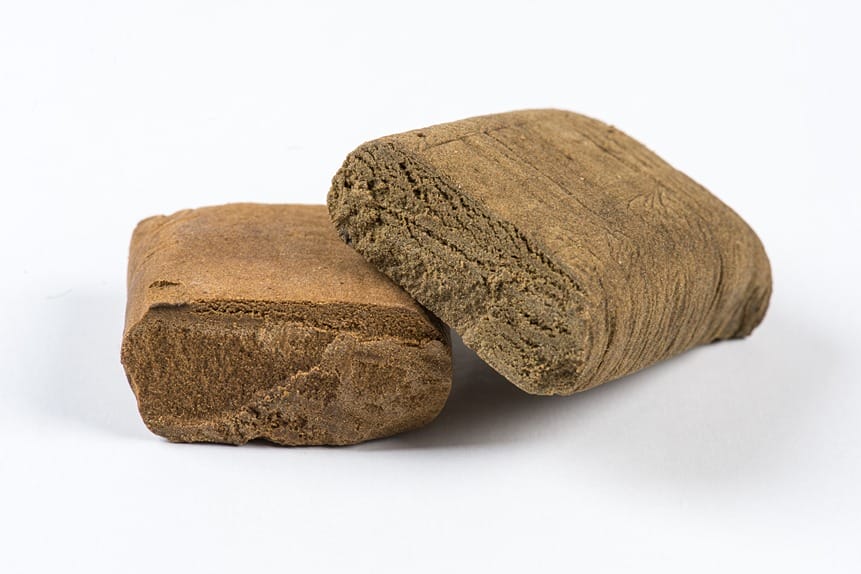
Then watch as the crystals begin to melt and bond together to create a uniform mass called a “hash.” You can find many categories of Hash CBD with different textures and notes on our online CBD store uWeed.
Finally, it is important to note that although you can enjoy the potentially relaxing benefits of pollen made into hashish, this does not cause any intoxication from the THC found in other forms of cannabis.
Hash or resin, what are the differences?
You have surely heard of resin when we talk about weed pollen and CBD hash. Hash CBD and CBD resin, although coming from the same plant, are created and used differently. The hash results from the compression of cannabis trichomes, resulting in a solid texture and varying CBD potency.
Cannabis resin undergoes solvent extraction at low temperatures, making it sticky, with a high percentage of CBD and a rich terpene profile. These differences lie in their production methods, textures, and terpene profiles.
The resin may also include other important cannabinoids like CBG and CBN, each offering unique composition and therapeutic properties, expanding the spectrum of potential benefits beyond CBD alone. You can find high quality CBG resin and CBN resin on the uWeed website.
Is cannabis pollen a drug?
The question may be asked: “Is cannabis pollen considered a drug?” The answer to this complex question depends largely on context. Technically speaking, the term “drug” generally refers to any substance that has a biochemical impact on the human body. That said, the term also has a strong cultural connotation, referring in particular to illegal or potentially addictive substances.
It is important to note that cannabis pollen contains very little THC extract – the psychoactive compound associated with the mind-altering effects of conventional cannabis. In fact, male plants that produce this pollen are often eliminated by those seeking to maximize THC production in their female plants. This coming from the head producers notes that they will appear as a disruptor of a good harvest of resinous buds.
CBD pollen: a legal alternative
In contrast, certain specific types of cannabis – such as certain strains of Cannabis Sativa L., more commonly known as hemp – are known to have significantly higher levels of another cannabinoid: CBD (cannabidiol). These strains produce “CBD pollen,” and are currently receiving increased attention due to their apparent therapeutic potential without the psychoactive effects associated with THC. These therapeutic effects would reduce stress and anxiety, reduce chronic pain and improve sleep.
Pollen from hemp, rich in CBD, therefore presents an interesting legal and non-psychotropic alternative to other forms of cannabis. Furthermore, it can be used by everyone, including those who seek to exploit its therapeutic properties without feeling a “high” psychoactive effect, often inseparable from “traditional” cannabis. And that completely legally on our Weed Shop.
The use is therefore clearly different and moves away from the usual conception of recreational drugs and is closer to a well-being supplement, focused on improving quality of life rather than seeking psychotropic effects. .
However, it is essential to consult a doctor before use to ensure that this substance meets your needs and does not interfere with other medical treatments. CBD pollen thus represents an interesting legal alternative which should continue to arouse a lot of interest in the years to come.