Home Blog Page 90

Canada decriminalizes small amounts of drugs in British Columbia

The Canadian federal government on Tuesday approved a vast experiment in the decriminalization of drugs in one of the country’s largest provinces, British Columbia. so that police will no longer be able to make arrests, issue citations or even seize four currently illegal substances in low-level possession cases.

This harm reduction policy will take effect on January 31, 2023 and will last until at least January 31, 2026 in British Columbia (BC), Canada’s fourth largest province by population.

The federal Minister of Mental Health and Addiction and the Associate Minister of Health have given the green light to this three-year exception to the country’s drug code, with the aim of destigmatizing substance abuse and encouraging the treatment as an alternative to criminal penalties for possession of small amounts of drugs, in a concept of massive opioid overdoses in the province.

The Provincial Association of Police Commissioners and the Canadian Association of Commissioners support this policy, although the former only proposed to decriminalize one gram.

From 2023, people caught in possession of up to 2.5 grams of certain illicit drugs – including opiates, cocaine, methamphetamine and MDMA – will not be criminalized. British Columbia officials had proposed setting the possession threshold at 4.5 grams, but the governments reached a compromise.

“Substance use is a public health issue, not a criminal issue,” said Sheila Malcolmson, BC Minister of Mental Health and Addictions. “By decriminalizing people who use drugs, we will break down the stigma that keeps people from accessing lifesaving support and services. »

The overdose epidemic in British Columbia has forced the conversation about what kind of strategies could prevent more deaths. Canadian health officials and lawmakers are increasingly willing to support policies such as improving access to needle-exchange programs and anti-overdose medication like naloxone.

“The decriminalization of drug possession is a historic, courageous and revolutionary step in the fight to save lives from the toxic drug crisis,” said Kennedy Stewart, Mayor of Vancouver. “Today marks a fundamental overhaul of drug policy that prioritizes care over handcuffs and I could not be more proud of the leadership shown here by the governments of Canada and British Columbia. »

The City of Vancouver, in particular, has been at the forefront of promoting harm reduction policies, for example opening its first supervised consumption site in 2003 where people can use currently illegal drugs in a medically supervised environment.

Officials from other jurisdictions in Canada have also expressed interest in receiving a decriminalization exception from the federal government, but British Columbia is the first to be approved.
The Ministry of the Interior takes stock of its cannabis fine

The Ministerial Statistical Service for Internal Security (SSMSI) published last March on its Interstats portal an assessment of the criminal fixed fine (AFD) mechanism relating to narcotics, which since 2020 has made it possible to immediately sanction simple use – possession or consumption on public roads – of cannabis (97% of AFD), cocaine or ecstasy a fine and a criminal record.

The report, which had so far escaped us, first recalls the eligibility conditions for an AFD narcotics:

  • to be of age
  • not be in possession of more than 50 grams of cannabis, 5 grams of cocaine, 5 tablets of MDMA or 5 grams of ecstasy, weighing not being compulsory and left to the discretion of the security forces
  • not to be sick
  • have no difficulty understanding
  • not be a repeat offender
  • not having caused several simultaneous offenses
  • not be in possession of several types of narcotics
  • do not contest the offense

In all the above cases, offenders would have the right to a classic procedure (and no automatic criminal record).

Report findings

Thanks to the report, we know a little more than the previous figures communicated on the conditions for issuing the fine.

The majority (56%) of people caught in violation of the simple use of narcotics were the subject of an AFD, the rest having been the subject of a traditional procedure. Recipients of the ADF are almost exclusively men (94%) of French nationality (9 out of 10) aged between 18 and 30 (80%).

The departments that practice AFD the most are Bouches-du-Rhône where the maximum departmental rate is reached, Seine-Saint-Denis and Rhône. In addition, between the offenses recorded before (reference period: 2016 – 2019) and those after AFD (reference period: since 2021), two departments have increased by more than 100%: Oise (+135% ) and Bouches-du-Rhône (+232%).

The most delicate point of the report is however the following: “the rate of evolution of the number of persons questioned for use alone is negatively correlated to the rate of evolution on the part of minors”. As the AFD is reserved for adults, minors are forgotten by the system even though “the public health issues for this population are unanimously recognised” specifies the report.

This is also the conclusion of the document: minors who should be “the priority subject in the current fight against narcotics” are forgotten from the system in favor of “a sharp increase in the repression of drug use alone”.

Yann Bisiou, lecturer in private law and criminal sciences and specialist in drug law, severely judges the report and the device.

“AFD has eliminated the problem of minors. We have no more prevention and no more apprehension of the subject. Of course, nobody wants to put PV to minors, it’s not the idea, but there, there is no more answer. »

He continues on the very content of the report.

“There are also strong methodological biases, which have no impact on the findings of minors. These pseudo-scientific works serve to legitimize public policy. They are however very fragile documents from a scientific and methodological point of view and they become gospel words”.

For example, the 2016-2019 reference period, which is used to compare AFD’s performance before and after its establishment, is known to be low in “stupid results”, after two years of strong repression, and thus makes it possible to highlight better results for 2021.

Last “oversight” of the report which could prejudge the effectiveness of the device: the figure for the recovery of cannabis fines, which is strangely lacking, when it was presented to the Council of Ministers: 34%.

A blow from the English?

Is Delta-8-THC legal in France?

Delta-8-tetrahydrocannabinol, often referred to as delta-8-THC or simply delta-8, is a psychoactive, mind-altering cannabinoid with effects similar to those of delta-9 THC, the full name of THC. Delta-8 products are well established in the United States, where only delta-9-THC is prohibited at the federal level.

What is delta-8?

The legalization of hemp in 2018 in the United States launched a certain mode of production of minor cannabinoids from hemp and intended for markets where THC is still illegal for adult use. However, delta-8 is present in minute quantities in hemp. It is therefore synthetically recreated and then imbibes hemp flowers or distillate destined for cartridges.

How is delta-8 made?

If it exists in natural form in Cannabis plants, its presence is however minimal. Behind the “extraction” of delta-8-THC therefore actually exists a chemical reaction to acid from CBD. As we documented earlier, CBD is dissolved in an apolar solvent, such as pentane, for example, and Lewis acid, then heated to 100°C and mixed for 1-18 hours. It is then necessary to dry the whole with sodium bicarbonate, then to extract it with ether.

Nothing natural then, but a long chemical process.

What are the effects of delta-8?

Like delta-9 THC, delta-8 produces feelings of euphoria, relaxation, and potential pain relief, but is much milder. For people who don’t want to experience a pronounced “high”, the weaker effect can be an advantage.

It can produce the same side effects as THC (red eyes, dry mouth, rapid heartbeat, coordination problems, slow reaction time, anxiety, memory loss, etc.) without any decline in its long-term use, however.

Is consuming delta-8-THC safe?

Like all new hemp-derived cannabinoids (HHC, delta-10…), there is no standard dose and little or no research on the immediate or long-term effects of consuming delta-8.

Since hemp-derived cannabinoids are completely unregulated, there is no traceability of their origin, composition, presence of heavy metals or residues of the chemicals needed to synthesize them.

Is delta-8-THC legal in France?

Unlike the United States, where delta-8 and delta-10 are currently legal under the hemp law, and only delta-9-THC is federally banned, France bans all tetrahydrocannabinols. , delta-8-THC, delta-9-THC, delta-10-THC and only leaves room for 0.3% THC for hemp varieties and derived products.

Delta-8-THC is therefore illegal in France, regardless of its origin (hemp or CBD).

The list of narcotic substances is quite clear on this and includes “Tetrahydrocannabinols [ndlr : au pluriel, important !]their esters, ethers, salts as well as the salts of the aforementioned derivatives” without the possibility of derogating therefrom for isomers of delta-9-THC.

Uruguay: After four years of legalization, nearly half of sales are on the legal market

After more than four and a half years of legalization, the legal cannabis market in Uruguay serves between 39% and 56% of cannabis consumers in the country.

These data, taken from a recent report by theInstitute of Regulation and Control of Cannabis (IRCC) and reported by Stratcann, are based on a consumer survey conducted in August and September 2021 and cover the market through December 2021.

The survey puts around 250,000 the number of cannabis users over 18, the legal age to consume cannabis, in the country which has around 3.5 million inhabitants, or around 7% of the population. total. This figure represents 10% of the approximately 2.6 million Uruguayans who are of legal age.

Uruguay legalized cannabis in 2013, but only opened retail in July 2017. Consumers can register at one of three entry points: buy cannabis within a few dozen licensed pharmacies, grow their own cannabis, or grow as part of a cooperative where members share cultivation duties.

While initially only a handful of pharmacies participated in the program, their number has increased in recent years, leading to a general increase in legal sales.

Cannabis sold in pharmacies comes in 5 gram packets, with a limit of 40 grams per month. As of February 1, the price of a 5-gram package of dried cannabis flowers in pharmacies was set at 390 Uruguayan pesos, or around €10. Consumers can choose from four different cannabis strains sold in five-gram sachets, called Alfa I, Alfa II, Beta I and Beta II, with around 2% CBD and 9% THC, depending on the strain.

The average monthly purchase in pharmacies in 2021 was around 15 grams.

Fairly wide range of legal sales

Although survey data shows that only 29% of respondents said they had access to cannabis through legal channels, 43% said they shared it with friends and family, which would represent around 39% of the total market.

As registration to grow your own cannabis only lasts three years, policymakers estimate that if these licenses were automatically renewed, it would bring the total number to around 56% of the total market.

As of December 31, 2021, 47,515 people were registered to buy cannabis from pharmacies, while 13,441 were registered to cultivate their own cannabis, and another 7,032 were registered to cultivate in one of the 220 registered cultivation collectives in the country. .

Only 53% of people registered to buy cannabis in pharmacies did so in 2021.

From January to December 2021, the number of people registered on the regulated market increased by 11% and the people registered in a culture club/cooperative increased by 31%. 58 new Cannabis Clubs were registered in 2021.

A recent study showed that the legalization of cannabis in Uruguay did not increase consumption among young people.

Japan plans to legalize medical cannabis

The Japanese Ministry of Health is considering legalizing medical cannabis, while proposing to strengthen the criminalization of its recreational use.

A group of ministry experts met on May 25 to begin discussions on revising the Cannabis Control Act, enacted in 1948.

The move comes as the ministry drafted a report in June 2021 recommending the government allow the use of cannabis-containing drugs to treat intractable epilepsy.

Japan’s health ministry plans to draft proposals to revise the cannabis control law as early as this summer.

A strict prohibition

Current Japanese law prohibits the cultivation and possession of cannabis as well as the manufacture of cannabis-based medicines. The ban applies to the flowers, leaves, roots and uncultivated stem of the cannabis plant.

All G7 countries except Japan have authorized the use of epilepsy drugs that contain cannabis, most often only CBD with Epidyolex.

However, the country does not want to end prohibition and is seeking to add a new provision to the Cannabis Control Act to criminalize the use of non-medical cannabis.

Some experts, however, are calling for more treatment for addicts to prevent recidivism, instead of imposing criminal penalties, citing data that shows many cannabis users in Japan are young people.

Rhode Island becomes the 19th US state to legalize cannabis

Rhode Island Democratic Gov. Dan McKee signed the bill to legalize cannabis for adults in the state last Wednesday, just a day after it was approved by the Legislative Assembly. Rhode Island is the 19th US state to legalize cannabis for adults.

“This bill successfully integrates our priorities of ensuring that the legalization of cannabis is fair, controlled and safe. said the governor during the signing ceremony.

Under this measure, adults 21 and older will be able to buy and possess up to one ounce of cannabis (28 grams) and keep 10 ounces at home for personal use. Adults can also grow up to six plants at home, with three flowering and three growing. The state will license 33 retailers in six areas and impose a 10% excise tax, as well as the state’s 7% sales tax and a 3% tax that will be returned to municipalities.

The legislation also includes provisions for automatic cancellation of criminal records, giving the courts until July 1, 2024 to grant respite to all who are eligible. Any prior civil violations, misdemeanors or convictions for possession of cannabis, which would now be legal, will automatically be erased from court records systems as part of this reform.

A preliminary tax memo on the bill estimated that first-year sales — from 2023 to 2024 — would reach $14 million in new revenue for Rhode Island, with cities and towns receiving about $2.5 million, indicates the report.

More than $5 million would be used to administer the program, according to the memo; however, the bill passed by the legislature did not include tax estimates and assumed that sales would begin on October 1 when they are scheduled for December 1.

General strike at the Quebec Cannabis Society

The union representing employees of the Société québécoise du cannabis (SQDC), represented by the Canadian Union of Public Employees (CUPE), called a general strike on Friday, May 20.

The union, which has 300 members, says the strike action follows the suspension of the union’s president and vice-president, as well as 75 employees.

According to a union press release, these people were suspended for wearing dresses and Bermuda shorts rather than the black pants and t-shirts required by the SQDC. The refusal to wear the SQDC uniform was a means of pressure to demand better wages and benefits, comparable to those of employees of the Société des alcools du Québec (SAQ), the Crown wine and spirits agency. .

Wage demands and better working conditions

SQDC members earn a starting wage of around $17 an hour, and the majority of employees don’t have full-time positions or job security.

Almost all (91%) of unionized employees voted in February 2022 to establish pressure tactics that could go as far as an indefinite general strike.

CUPE says it also wants to exercise its right to bargain for employees of new branches who have unionized.

“All we ask for are decent working conditions. Currently, we feel no respect from our employer and this is reflected in the mandates given to the management bargaining committee. In short, no, we will not be the ‘cheap labour’ of state corporations! said David Clément, president of Local 5454, last February.

A representative from the SQDC declined to comment on the negotiations, but pointed out that the strike actions are impacting 22 of the 89 SQDC sites in the province.

“The SQDC fully recognizes the right of employees to exercise pressure tactics in the context of current negotiations,” says Fabrice Giguère, communications advisor and spokesperson for the SQDC. “We cannot comment on ongoing negotiations as we want to discuss issues that need to be addressed at the bargaining table. Our goal is to reach a negotiated agreement to the satisfaction of all parties involved. »

“Furthermore, it should be mentioned that 22 stores are currently on strike out of the 89 stores we have across the network. We want these 22 stores to remain open in order to continue to serve our customers and fulfill our mandate of migrating consumers to the legal recreational cannabis market. »

The SQDC operates all retail cannabis stores in Quebec, with nearly 100 locations currently in operation. At the end of 2019, the workers had already reached a collective agreement with CUPE representatives around sick leave.

Delaware governor vetoes cannabis legalization

Delaware Democratic Governor John Carney on Tuesday vetoed plans to legalize cannabis in the state, drawing the ire of fellow Democrats who overwhelmingly support legalization.

In vetoing the measure, John Carney reiterated concerns he had previously expressed about the legalization of cannabis.

“I recognize the positive effect marijuana can have on people with certain health conditions, and for this reason I continue to support the medical cannabis industry in Delaware,” said John Carney.

“I supported the decriminalization of cannabis because I agree that individuals should not be imprisoned solely for the private possession and use of a small amount of cannabis – and today, thanks to decriminalization in Delaware, they are not. »

“That said, I do not believe that promoting or expanding cannabis use is in the best interests of the State of Delaware, especially our youth. Questions about the long-term health and economic impacts of recreational cannabis use, as well as serious law enforcement issues, remain unresolved. »

The governor’s veto comes days after the bill failed to pass the state House of Representatives for the second time. The House, controlled by Democrats, voted 23-15 on Thursday to approve the bill, two votes close to the required supermajority.

There remains a possibility for Democratic representatives to override the governor’s veto. The only limit: the last time they succeeded was in 1977.

Betsy Maron, chairwoman of the Delaware Democratic Party, however, says she is confident lawmakers will be able to make legalization a reality.

“Last year, we went so far as to include it in our party’s platform, which was passed unanimously at the 2021 state convention,” Maron said in a statement. “Delaware voters have further solidified their voice on the issue by electing Democratic candidates for the legislature who support legalization. We are confident that these lawmakers will override the veto knowing they have the support of Delaware Democrats. »

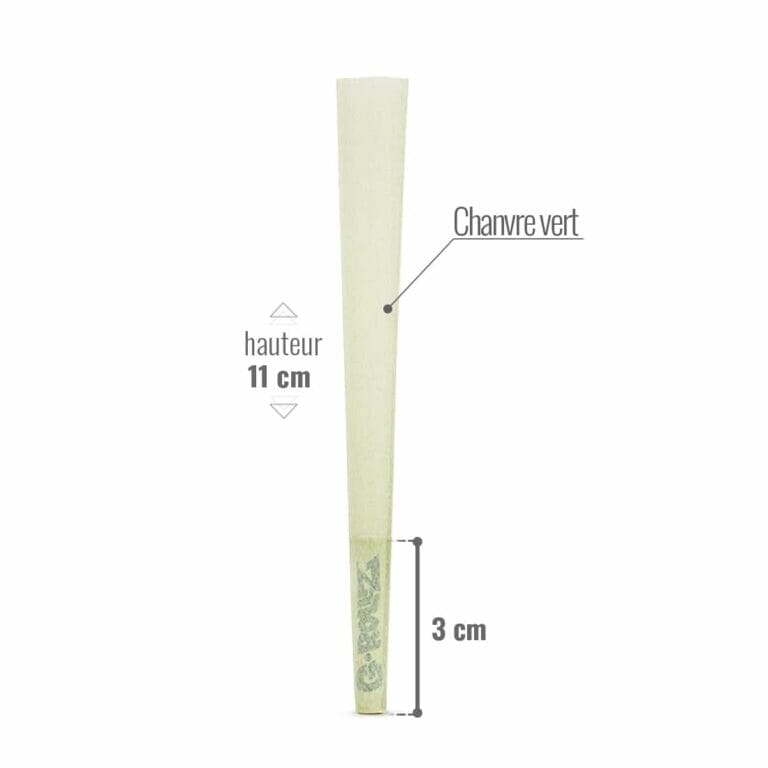
What are the advantages of pre-rolled cones?

Pre-rolled cones are attracting more and more consumers. And for good reason: they are very practical in addition to being easy to use. Are you still hesitating to take the plunge? Here are all the benefits of using pre-rolled cones.

A pre-rolled cone, what is it?

As the cost of cigarettes has increased, many are switching to roll-ups. But now, unskilled hands can waste a lot of time and money, because the rolling technique is quite complex.

With pre-rolled cones, you won’t have this problem. Indeed, the cone is already rolled and ready to accommodate your tobacco or aromatic herbs.

Why use pre-rolled cones?

Convenience is most likely the main reason smokers turn to pre-rolled cones. Indeed, the number of manipulations is considerably reduced since half the work is already done! But this is not the only advantage of pre-rolled cones.

The aesthetics of your cigarettes

Pre-rolled cones are calibrated so all your cigarettes will look the same. Your only concern will be gauging how much tobacco or herbs to put into your cones.

Regular burning

The fact of having a uniform cigarette also makes it possible to obtain a homogeneous combustion. Equipped with a good size filter, so you have no risk of a piece of tobacco entering your mouth at the time of inspiration.

The time saving

Obviously, since you don’t have to roll and stick your cigarette, you save time! Especially since there are specific devices to fill even more cones simultaneously. So you can leave in the morning with all your cigarettes ready for the day!

The choice of size

Another significant advantage: you have the choice between several sizes of pre-rolled cones. This therefore gives you the opportunity to prepare small cigarettes for your breaks, for example, so you will no longer crush half an unfinished cigarette with regret at the bottom of the ashtray.

Comment About What are the advantages of pre-rolled cones? Below ..

Is a surplus of cannabis hampering the growth of the German medical cannabis industry?

Germany continues to see cannabis companies from around the world crowding into its medical cannabis market in hopes of securing their slice of the pie.

With limited domestic production capacity and by far the largest medical cannabis patient demographics in Europe, imports into the country have nearly doubled every year since the market was established in 2017.

The promise of a potential adult-use market within a few years has exacerbated the scramble for companies to gain a foothold in the medical market, giving them a head start when it eventually arrives.

Despite this rapid influx of investment and product, German medical cannabis telemedicine operator Nowomed says supply has now exceeded demand and product saturation is deterring some doctors from prescribing.

The German market

The German medical cannabis market continues to grow steadily, with a 43% increase in cannabis sales to pharmacies last year. There are now around 138 varieties of medical cannabis available in the country, almost three times the amount available in 2019.

This dramatic influx of products was laid bare in September 2021, when Germany’s Ministry of Health released data on medical cannabis imports by country.

Data showed that in the first half of 2021, 18 countries were recorded as having exported medical cannabis to Germany.

Conor O’Brien, industry analyst at Prohibition Partners, told BusinessCann: “The demand for medical cannabis in Germany is now being met by an abundant supply from growers in at least 18 different countries, and this list keeps growing. Based on the names of the flower strains, there are more than 100 available in Germany today. »

Excess supply

Exports to the country exceeded 20,566 kg in total throughout 2021, including 5,678 kg in the fourth quarter, the highest quarter on record.

However, there is a growing gap between the amount of cannabis that is imported and that which arrives on pharmacy shelves.

Data released this year by the German Parliament shows that in 2021 only 9,001 kg arrived on pharmacy shelves, less than half the amount imported.

Cannabis sales in pharmacies in Germany

Cannabis sales in pharmacies in Germany

It is understood that a significant portion of imported flower stock reaches its shelf life before it can be sold to pharmacies and end up in the hands of patients, while other stock is re-exported.

Florian Wesemann, medical director of young German medical cannabis digital therapy platform Nonomed, says the level of supply has gone “crazy”.

“Currently, there are so many new flowers and extracts coming in every month, it’s crazy. I have way too many options, more options for prescriptions than I actually need. »

He explained that part of the problem was the lack of data accompanying many of these new products, due to both their short presence in the market and often poor labeling.

“The kind of information producers actually give out about their products is very, very different. They should list the amount of THC and CBD, but what about terpenes or secondary flower ingredients? Some of them have nice tables of information, some have very limited information. »

Although many producers would visit clinics in the region and “show how their products work”, German doctors “take a long time to prescribe them” due to this lack of data.

Impact on industry

Although this is by far the largest market for medical cannabis in Europe, Mr Wesemann suggested that it was still a “very, very small niche within the medical market”, relatively speaking.

He added that only “1% or 2% of German doctors” currently prescribe cannabis.

This situation would be largely due to under-education, cannabis still not being part of the classic medical curriculum, a problem that Nowomed is trying to combat.

“They don’t have the necessary information, especially for the extracts for which they need a titration plan for the patient. It is something that is not easy to combine in an ordinary clinic, because it takes a lot of time. »

Imports of medical cannabis into GermanyImports of medical cannabis into Germany

Imports of medical cannabis into Germany

“Even doctors who are positive on cannabis treatments say ‘I don’t know how to prescribe this’ and refer patients to Nonomed. »

Wesemann says the overabundance of products adds to this problem, “confusing doctors who don’t know where to start,” especially those who work for public practices and who have less time to learn.

Mr O’Brien added that alongside imports, there is now “domestic supply from two or three government contractors who currently supply pharmacies at a very competitive price of 4.30 euros per gram”, which which exerts strong downward pressure on prices, which are historically around 20 euros per gram.

“A direct benefit to patients is the increased number of flower strains and oils available, which means they can experiment with their doctors and find the optimal product for them. »

“For operators in the sector, the current competition will have a direct negative impact on margins due to lower prices. »

“Producers and suppliers will have to invest time and effort in convincing doctors, pharmacies and patients to choose their particular strains, a task made more difficult given the legal limits on the marketing of cannabis in Germany. »

“The data is clear: the overall demand for medical cannabis is growing and the market for adult use is not that far, which could justify the presence of a wide range of products on the market, even if they are not immediately profitable, if operators are sure that they can bide their time and capture part of the market as it grows. »