Home Blog Page 79

Panama regulates the medical use of cannabis

On Wednesday evening, the President of the Republic of Panama, Laurentino Cortizo, signed an executive decree approving Law 242, which regulates the medical use of cannabis, as well as its derivatives, in the Central American country.

“I signed the Executive Decree that governs Law 242 of 2021, which regulates the medicinal and therapeutic use of cannabis and its derivatives; one of the strongest regulations at the regional level, to allow the consumption of transformed cannabis and relieve thousands of patients, ”expressed the Panamanian president on his Twitter account.

The legalization of cannabis had been validated by President Cortizo in October 2021.

The presidential decree creates a regulatory framework that allows the creation of monitored and controlled access to medical cannabis and its derivatives for therapeutic, medical, veterinary, scientific and research purposes in Panama, as reported by local media. In addition, Mr. Cortizo signed a second decree that creates a national directorate for the monitoring of administrative and operational activities necessary for the implementation of Law 242.

This directorate will be attached to the Ministry of Security (Minseg) and will monitor industry-related activities through field visits. She will also ensure compliance with industry guidelines for those wishing to produce medical cannabis in Panama.

The decree authorizes the consumption of medical cannabis by people with a prescription, who will be controlled and supervised by a patient registration system.

“The goal of all of this is for Panama to have the best management model for the medical cannabis industry. Our intention is to promote in the medium and long term the establishment of local and foreign companies that will be able to supply the national market using raw materials produced in Panama,” said Mr. Cortizo.

Quebec to launch ‘small batch’ pilot project for cannabis micro-growers

The Société québécoise du cannabis (SQDC) is launching a “small batch” pilot project to facilitate the marketing of new products by microproducers.

The program will allow batches of cannabis under 40 kg, and provided the product or genetics are new to the Quebec market, to be sold in the province outside of current product calls and applications.

Products will be limited to 3.5 gram offerings starting at CA$25 (€5.42/g), and products will need to consider SQDC guidelines for eco-friendly packaging.

To determine the products that will be approved under the program, the SQDC will also take into account cultivation methods, as well as proximity to Quebec.

The program was announced this week, and the SQDC expects to be able to accept products for review by mid-September, with 10 small batches to be chosen by the end of September.

The products will be available to consumers during the first phase of testing from November 21 to January 15, 2023 at select SQDC branches. The SQDC will then follow up with the Association québécoise de l’industrie du cannabis (AQIC) and the industry in general in February 2023 to measure the success of the program.

If the pilot project is successful for producers and consumers, the SQDC anticipates full implementation of the program in April-May 2023.

Pierre Leclerc, CEO of the Association québécoise de l’industrie du cannabis (AQIC), who consulted with the SQDC on the development of this project, says he is excited about the opportunities the program will provide for micro and other small-batch producers who attempt to penetrate the Quebec market.

“We are very satisfied and happy that the SQDC is going in this direction and happy with this collaboration,” rejoiced Pierre Leclerc to StratCann.

“It’s a good way to introduce interesting new genetics to the Quebec market. I think this can be an important opportunity for producers in Quebec and across Canada. »

The program is a good example of Quebec listening to the needs of cannabis producers, he said. While it is micro-designed and the province may place more emphasis on local products, it is open to all Canadian growers who can meet the province’s requirements for small batches and new genetics. .

“The program was put in place after some micros requested such a program and informed the SQDC of their problems regarding their ability to do business with it. The whole program has therefore been built around the needs of microphones, but it is not limited exclusively to microphones. »

Louis Sirois, president of Laboratoire InoVert, a standards processor in Quebec, and president of Groupe Conseils Sirois, thinks the program will help the province identify new products that resonate with consumers.

“They want to offer something different, something of good value that can provide new and special products. It is a good way to introduce new and interesting genetic products to the Quebec market. I think this can be an important opportunity for producers in Quebec and across Canada. »

“Then, if it’s good, it can find a long-term place in the market.”

London University Launches Largest Independent Study Ever of Cannabis Use

King’s College London launches the largest independent study on the effects of cannabis on the brain. The study Cannabis & Me will focus on the environmental and biological factors responsible for the different effects experienced by cannabis users.

The university has released £2.5 million and wants 6,000 people to take part in the survey. The researchers said funding for the Medical Research Council contribute to a better understanding of the use of this substance, consumed by 200 million people in the world.

More research is needed on how cannabis interacts with the brain so doctors can be more confident when considering prescribing medical cannabis, said lead researcher Dr Di Forti.

“Cannabis is used daily by many people for recreational purposes but also for medical reasons,” she said. “But in the UK, the prescription of medical cannabis remains rare. »

“Our study aims to provide data and tools that can make doctors in the UK and around the world more confident, where appropriate, in prescribing cannabis safely. »

The overall goal of the study is to understand the link between a user’s biological makeup and the effect of cannabis on them. Researchers will use a combination of virtual reality, psychological and cognitive analysis, and DNA testing.

They will also study epigenetics in participants, that is, how behavior and environment can affect how genes work.

Dr. Di Forti said she was particularly interested in finding any markers linked to potential problems in consumers, such as mental health problems or social problems.

The team is currently looking for participants aged 18-45, living in the London area, who currently use cannabis or have used it less than three times or never before.

The first step for participants is to complete a 40-minute online survey.

Hemp used to improve water quality in Illinois

Hemp is set to play an important role in a major water quality improvement project in the US city of Decatur.

The City of Decatur received a federal grant of $9,883,117 from the US Department of Agriculture for its Lake Decatur Water Quality Initiative.

Decatur Lake is a 1200 hectare reservoir located in the town of Decatur, Illinois. Created in 1920, the lake was built as a water source for the city. Since then, the lake has experienced significant silt problems, requiring costly dredging. Much of this silt comes from agricultural lands within the watershed.

In 2018, the City of Decatur completed a four-year dredging project that increased the lake’s storage capacity by 30%. The cost of this dredging: 91 million dollars.

Hemp, which can be grown at high density, has a deep root system, which helps stabilize soils and reduce the amount of waste washed away by rain.

As part of a pilot project supported by the National Hemp Association (NHA) and the Hemp Innovations Foundation (HIF), hemp will be planted in targeted sub-watersheds and land plots.

“This effort will accelerate the hemp industry in Illinois and demonstrate the positive environmental and economic benefits,” the NHA states. “We strongly believe that hemp can become a viable crop in the Midwest and be effectively integrated into an agricultural system largely dominated by corn and soybeans. »

The overall project aims to reduce up to 50% of sediment and 20% of nitrate nitrogen flowing into Decatur Lake each year. Reducing nitrogen fluxes into the lake is also very important because high nitrate levels promote algal blooms, which can starve aquatic environments of oxygen as algae die and decompose. Some types of algal blooms are also toxic to humans and other animals.

The Illinois Hemp Growers Association welcomes the approval of the RCPP Lake Decatur Water Quality Initiative Plans.

“The grant for this project provides an opportunity to showcase hemp as a proven ally of farmers and the environment,” said Rachel Berry of the Association.

New York will issue up to 150 cannabis sales licenses

New York regulators are months away from launching the legal sale of cannabis. Over the past year, the responsible parties have prepared the laws and prepared the ground for this launch.

Last week theOffice of Cannabis Management (OCM) released a regional breakdown of possible dispensaries, showing the number of licenses that would be granted by area.

The OCM says it will award up to 150 licenses in 14 regions across New York State. Larger boroughs such as Manhattan and Brooklyn get more licenses and, therefore, are likely to have more outlets.

The region with the most room for licenses is Manhattan, with 22 licenses in total. Close behind are Long Island and Brooklyn, with 20 and 19 permits respectively. Other highly populated areas like Queens and the Bronx follow with 16 and 10 licenses each.

The OCM is currently preparing to issue CAURD licenses (Conditional Adult Use Retail Dispensary) to applicants, which are those granted to persons already convicted of possession or trafficking of cannabis.

CAURD licenses will be the first licenses to be provided to the public, with the aim of benefiting those who have been most harmed by the criminalization of cannabis.

“CAURD licensees are positioned to make the first legal cannabis sales in New York before the end of 2022, accelerating investment in New York State communities that have been impacted by the disproportionate application of the prohibition of cannabis”, can we read on the official website of the MCO.

The application process is meant to be simple and financially accessible, requiring no outside help from lawyers or other parties.

“The main purpose of the CAURD license is to create opportunities for New Yorkers most affected by cannabis prohibition,” said CMO spokesperson Aaron Ghitelman.

“Part of this is granting up to 150 CAURD licenses to individuals who themselves or close family members have had eligible cannabis-related offenses in the past and have interests in profitable businesses” , reportedly added Ghitelman.

New York was expected to begin accepting applications to open dispensaries by early September, with the goal of having affected businesses up and running by the end of 2022.

The first European cannabis distribution trial will “open the door to THC” in Switzerland

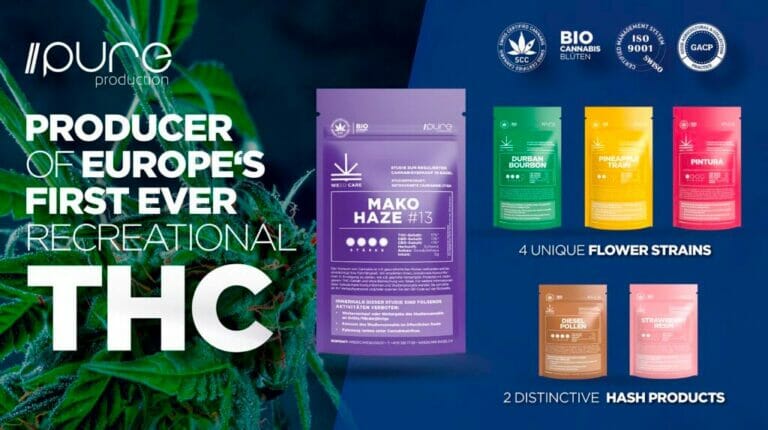
Switzerland is now just weeks away from launching Europe’s “first recreational THC cannabis pilot”, the first of a dozen that are expected to take place in the country over the next few months.

Called “Weed Care”, the pilot project is due to launch in Switzerland’s third most populous city, Basel, on September 15 and will run until March 2025.

This is the latest step in a long line of parliamentary decisions towards the liberalization of cannabis in the country, after the country made significant regulatory changes to ease its restrictive access to medical cannabis last month.

Lino Cereghetti, CCO of Pure Production AG, supplier of the cannabis for the pilot project, told BusinessCann: “If CBD opened the door to cannabis, these pilot projects will open the door to THC. »

Weed Care Pilot

The Health Department of the City of Basel, the University Psychiatric Clinics of Basel, the University of Basel and Pure Production will work together, alongside other stakeholders such as the Swiss compliance and management software platform the Cannavigia supply chain, to lead the pilot.

Approximately 370 participants, who must be over the age of 18, reside in Basel-City and use cannabis, will take part in this two-and-a-half-year study.

Throughout the duration of the study, these participants will be regularly interviewed to determine the level of their cannabis use and its effects on their physical and mental health, “among other things.”

According to Mr. Cereghetti: “One of the main objectives of this study is to determine whether, in a regulated market where they have a choice, people choose products that minimize risk. Because if they go to the black market, all they get is high THC, no CBD.”

They will have access to four different flower products and two different hashes, with varying degrees of THC content and below 20%.

All products will be supplied by Pure Production, and all will be available at ‘black market prices’ of between 8 and 12 Swiss francs per gram, almost the equivalent in euros.

Cannabis legal in Switzerland

Participants will be able to purchase these six products legally for the duration of the pilot – Credit Pure Holdings AG

Luc Richner, CEO of Cannavigia, added: “In the upcoming pilot project in Basel, the prices are based on the THC content of the cannabis and may vary during the trials.

“The studies underlying these trials are designed to better understand the effects of controlled access to cannabis on consumer health and behavior and may also examine the impact on the local black market. However, the specific research questions will be decided by the research projects concerned. »

Participants will be able to purchase their products at nine different pharmacies in 5-gram packets and can purchase up to two packets at a time.

Cannavigia will also provide the distribution system for the pilot, which will see producers “use its software to track their cultivation and distribution”, allowing the Federal Office of Public Health (OFSP) to “know the amount of cannabis produced”. , and dispensaries to “authenticate participants to ensure only those approved for the trial can purchase cannabis.”

“Due to the Narcotics Act and accountability to the UN, maximum compliance and transparency is required. In addition, the pilot projects provide a scientific basis for possible future legalization,” Richner explained.

“We have developed an extension of our Cannavigia software which provides the necessary information for these two aspects. Transparency throughout the supply chain builds confidence in future cannabis legalization and helps paint a realistic picture of what possible legalization might look like in the future. »

More studies to come

These pilot studies were made possible by key regulatory changes made to the Federal Narcotic Control Act on May 15, 2021.

While the FOPH approved the pilot on April 19 this year, requests for such studies were reportedly submitted by the universities of Bern and Basel as early as 2017, which would have “set the political process in motion”.

Although it would have been open to the idea, the government was forced to reject these proposals on the grounds that there was no legal framework allowing the establishment of such pilots.

Last May’s amendment established that legal framework, allowing controlled sale of cannabis for recreational and research purposes for 10 years, and providing a “broad framework of possibilities” designed to provide a solid factual basis for the best regulatory path. to be continued.

According to Cereghetti, Basel, Bern and Zurich all announced their intention to implement pilot projects when regulations changed last year, but Basel was the fastest.

Now that the Basel study has been given the green light, a number of study requests have been submitted by other cities.

“They are still being processed and will be granted in one, two or three months, depending on the date of submission and the degree of completeness of these requests. »

“Currently, there are about 10 projects in Switzerland that have openly communicated that they have started submitting or are still planning to submit, and we are involved in many of them. In addition, we plan to set up our own pilot project in 2023.”

Not only are many more studies expected to be launched over the next few months, but a new attempt at national recreational legalization is also reportedly underway.

After the failed referendum on the legalization of the cultivation, purchase and consumption of cannabis for personal use in 2008, which saw 63% of citizens vote against it, Pure and other parties worked on a second public vote.

However, in light of the rapid progress made on the Medical Cannabis Act and pilot projects, the group “no longer saw any reason for a public vote” and decided to go a parliamentary route.

In October 2021, the Council of States’ Social Security and Health Commission voted in favor of a motion allowing the full legalization and commercialization of cannabis for adult use.

Now a nine-person subcommittee of the commission has until October 2023 to draft legislation that would “regulate recreational cannabis nationally”, and a parliamentary caucus has been created to train over the next 18 months.

“It means that the people who will write the law will have a good understanding of cannabis and the mistakes, from places like Canada, that we can learn from.

“What has happened in public perception over the past five years in Switzerland has been incredible. We could have full regulation of the cannabis market in Switzerland by 2025. And yet these pilot projects will run in parallel. »

Malaysia to rule on medical use of cannabis before year’s end

Malaysian Minister of Health Khairy Jamaluddin participated in a bilateral meeting on medical cannabis with Thai Minister of Health Anutin Charnvirakul. Their objective ? Exploring the potential health benefits of cannabis and determining what Malaysia can learn from its neighboring country’s medical cannabis policies.

Thailand is the first country in Southeast Asia to legalize the use of cannabis for medical purposes.

Jamaluddin also met with the Thai Government Pharmaceutical Organization and key industry players. He later visited greenhouses growing cannabis.

In a press conference, Jamaluddin said: “Malaysia does not want to be left behind. Therefore, we want to see and study the effectiveness and safety of using cannabis for medical purposes.”

Meanwhile, the official assured that, for now, Malaysia is only considering the use of cannabis for medical purposes and not its cultivation, but it is not ruling it out in the future.

“If there is a strong demand to make it an industry, we will look at growing cannabis. We will take one step at a time,” he said.

The minister concluded that the government will make a decision on the use of medical cannabis before the end of the year.

“I want to act quickly… I am convinced that we will be able to take a stand this year. The main decision, yes or no, will be made this year and the policy will probably be implemented next year. That’s my goal,” he said.

Luís Figo launches his brand of CBD products

Luis Figo, a former professional football player, elected Ballon d’Or in 2000, is now also a CBD entrepreneur. He launched his brand, LF CBD, after experiencing the benefits of this cannabinoid.

“CBD natural products have helped me achieve great results during tough times of pain and long wounds. The positive effects of using these products were amazing. It improved my self-confidence and my level of anxiety! »

Luís Figo, former captain of the Portuguese national team, claimed to have used cannabis-derived products during his sports career, having obtained these positive results. and joins for example David Beckham who has also invested in a British CBD cosmetics company.

On Luis Figo’s page, the former player leaves a personal note to visitors, “after testing all the products, I would like to invite you to check the link in my bio and try them”, can we read on Instagram of Luis Figo!

“Made in Europe with 100% organic hemp grown in Switzerland. Compatible with veganism. Free of GMOs, gluten, harsh chemicals, pesticides, heavy metals and other harmful ingredients. »

In another post, Luís Figo states that “a common concern shared by many people who want to try CBD oil for the first time is whether the product could harm them or cause any unwanted addiction”. The former player then explains that his products, “because they contain less than 0.03% THC, do not have this type of effect”.

The only catch, according to Portuguese law, CBD is considered a medicine and can only be sold with authorization from Infarmed, a widely disputed Portuguese law. The products will however be sent from Poland, by the company Grupo A4, which Infarmed will find difficult to curb!

Tilray authorized to sell its medical cannabis in Poland

Tilray Medical strengthened its position in Europe with marketing authorization in Poland. The Canadian company has received approval to market its medical cannabis products in the country, expanding its product offering and distribution in pharmacies across Europe.

Denise Faltischek, Director of Strategy and Head of International Affairs at Tilray, said, “I am extremely proud of our team in Europe for once again extending our authorization for Tilray Medical products across Europe. Tilray will continue to advocate for reasonable patient access to reliable, high-quality medical cannabis in Europe and countries around the world. »

In Poland, the company has established multiple partnerships with pharmaceutical companies to distribute branded and unbranded medical cannabis products. Patients can obtain prescriptions for medical cannabis in Poland through their GP.

The company said its products have been “selected to ensure patients receive the highest product quality and consistency in the supply of their medical cannabis products.”

Earlier this year, Tilray announced that it was merging its medical division, which includes that of Aphria, under the common banner of Tilray Medical, uniting the company’s medical cannabis brands under a single strategy, mission and vision. .

The company also announced that its medicines are now available in Malta on prescription in pharmacies on the island and since 2021 in Luxembourg.

Last month, Tilray Medical’s parent company, Tilray Brands, announced record results for fiscal year 2022, with net income of $628 million, a 22% increase over the previous year.

Estonia will switch to 0.3% THC in hemp

The Estonian Ministry of Social Affairs is currently developing a change in regulations that will allow hemp varieties with a higher tetrahydrocannabinol (THC) content to be grown in Estonia.

Currently, Estonian farmers are only allowed to grow hemp varieties with a THC content below 0.2%. By early next year, that limit will rise to almost 0.3%.

Ago Siiner, CEO of Perfect Plant, a long-time importer of hemp seeds, pointed out that under local conditions, only two currently authorized hemp varieties are worth growing in Estonia.

“But this change would make three to five more varieties available that we could grow for seed,” Siiner said.

The regulations were changed at European level at the end of last year, when a regulation of the European Parliament and the Council of Europe was implemented, finally allowing the payment of aid for the cultivation of varieties Cannabis with a slightly higher THC content.

According to Reno Paju, an official from the Ministry of Rural Affairs, this could help European farmers compared to farmers in other countries.

“In many other countries around the world, the limit is 0.3-1 percent,” Paju explained. “The EU is catching up with the rest of the world on this requirement.”

Some 6,800 hectares of industrial hemp are currently cultivated in Estonia.

Reno Paju said he doesn’t think the change will have much effect on Estonian farmers, and he thinks Finola will remain the most popular variety grown here.

Several local growers are instead expecting the change to be impacted by Estica, a new Estonian hemp variety registered this spring, which also has a significantly lower THC content than its Finnish cousin (0.03%).

Reno Paju pointed out that the relaxation of the rules will also prevent hemp farmers whose crops have just exceeded the authorized THC content from being excluded from benefiting from agricultural subsidies. In Estonia, there have only been a few such cases, dating from 2017 and 2018, but it happens more frequently in southern Europe, where hemp cultivation is more popular and growing conditions favor the production of THC.