Home Blog Page 76

Legislative elections in Italy and prospects for the legalization of cannabis

In Italy, cannabis use is a well-established habit. Cannabis is the most widely used illegal substance in the country, with around 9.8% of Italians using it, or 6.1 million people.

If citizens’ initiatives to legalize exist, showing popular support very quickly stopped by the Constitutional Court, the substantive debate on the legalization of cannabis has never really started in Italy, despite the fact that the National Anti-Mafia Directorate has expressed in favor of legalization.

On the medical cannabis side, patients are facing shortages of medical cannabis, mostly imported. The Italian army is today the only domestic producer, and fails to meet demand, even though the licensing mechanism is in place to authorize other companies to produce.

The next legislative elections in Italy, caused by the fall of the Draghi government at the end of July, will determine the course of Italian politics in the coming years. Overview of the different Italian parties and their vision on cannabis.

On the right, maintaining the status quo

Some members of right-wing parties have timidly begun to reconsider their positions, particularly on medical cannabis. The party leaders, however, remain clearly opposed to any change.

For Silvio Berlusconi, “legalizing cannabis by transforming drug use into a socially accepted and acceptable behavior seems to me a serious error, cultural rather than legal. Drugs, even light drugs, are the opposite of freedom, and I add to this the dignity of the person”.

Matteo Salvini, of the Northern League, had declared war on light cannabis stores. declares for his part: “I am personally against! I would be for the legalization and regulation of prostitution, because until proven otherwise, sex does not hurt, cannabis does. And if doctors say it’s for healing… For God’s sake, but absolutely not for entertainment! “.

Giorgia Meloni, figurehead of the far-right Brothers of Italy party, is on the same line: “Fratelli d’Italia voted against the bill on the cultivation and administration of cannabis for therapeutic use because that the contours of the law are so unclear that there is a risk, in essence, of a disguised legalization of this substance for recreational purposes”.

More opening on the left

In the last 3 legislatures, the legalization argument has been embraced by several parties, including the Radicals, the 5 Star Movement, the Democratic Party (PD) and others mainly on the left.

Among the proponents of legalization in the forefront we find +Europa which, in its electoral program, writes: “We promote strategies for the legalization and regulation of the use of drugs with a view to reducing the harmful effects of personal consumption, name of individual freedom, the fight against crime and the fight against the profits of narco-mafias, the protection of public health, free access to treatment and freedom of research on the medical use and science of these substances.

Other parties, such as Possible and Potere al Popolo, but also Verdi and Sinistra Italiana, support the legalization of cannabis in their programs and the creation of real supply chains from the point of view of industrial hemp to revive the Italian economy. Enrico Letta, secretary of the PD, said: “As part of the policies against the mafia and organized crime, we believe that the time has come to legalize the self-production of cannabis for personal use and ensure that cannabis medical treatment is effectively guaranteed to patients who need it”.

And finally, the M5S , which presented its program entitled “On the bright side”, included cannabis by planning a reform that aims to regulate the cultivation of cannabis for personal use.

Could a future government formed by an anti-prohibitionist majority really lead to a change wanted by the majority of the people? Will Italy join the initiative taken by Germany, Luxembourg, the Netherlands and Malta which, last July, met to discuss the legalization of the recreational use of cannabis? What if, instead, a majority of prohibitionists were elected?

Questions that time will answer.

Costa Rica sets hemp limit at 1% THC

Costa Rica legalized hemp last March. Under the rules communicated last week, hemp cultivation and production licenses will be inexpensive and widely available.

Cultivation and trade licenses, renewable every six years, will be granted to farmers and other operators in the supply chain. And the limit of THC in hemp is set at 1.0%, and therefore an easier production of CBD in the country, the amount of cannabidiol in hemp goes hand in hand with that of THC.

Scope of rules

Natural and legal persons are authorized to cultivate and process hemp, in accordance with the framework, which sets and centralizes the specific rules applicable to post-harvest, storage, transport, product manufacturing, marketing, import and export of sanitary, food and industrial products.

The Ministry of Agriculture (MAG) will control the granting of licenses for the import and reproduction of crop seeds with the Costa Rican Social Security Fund (CRSS), which is responsible for most of the health sector country, or authorized laboratories or other entities. These licenses are only accessible to organizations such as cantonal agricultural centers, associations of small and medium producers, cooperatives and indigenous development associations, MAG said.

A very simple rule

“These are very simple regulations,” said Costa Rican President Rodrigo Chaves Robles. “The licenses won’t cost more than a token amount and anyone willing and able to comply with the law will be able to plant (hemp) and be able to process it. »

Hemp advocates in Costa Rica say creating a robust hemp sector can spur the development of agricultural value chains by bringing economic and social opportunities to rural areas of the country, and contribute to the growth of the pharmaceutical industry. .

The president said his office is preparing legislation to set out those rules, with the goal of presenting it to the Legislative Assembly no later than Nov. 1. The rules will then come into force after they are published in the official government gazette.

The Costa Rican government has also confirmed that it is preparing a bill to legalize cannabis.

New Zealand approves first locally made medical cannabis products

Last week, New Zealand health authorities began allowing the use of locally produced medical cannabis products, ending patients’ reliance on imported products. The Ministry of Health has authorized access to local medicines from September 9, opening up a new opportunity for New Zealand cannabis producers and manufacturers.

Under New Zealand’s medical cannabis legalization laws, any licensed GP can prescribe cannabis-based medicine to any patient to treat any medical condition. But since 2017, only imported cannabis medicines were approved for use by patients.

“Until now, New Zealand patients could only be prescribed medical cannabis grown overseas, with the vast majority imported from Australia and Canada,” says Tim Aldridge, managing director of cannabis producer Puro. New Zealand.

Puro New Zealand cultivates organic cannabis in its facilities in the South of the country. Earlier this year, the company signed a five-year, multimillion-dollar deal to supply cannabis to Helius Therapeutics, a company that manufactures cannabinoid medicines at its facility in East Auckland.

“In 2018, Parliament’s legislative intent around improving access was clear,” Doran said. ” [Nous nous sommes] also strived to obtain both locally grown and locally manufactured cannabis-based medicines. This national ambition to better serve long-suffering Kiwi patients is finally a reality and it’s exciting. »

“This is great news for many patients who have long sought legal access to medical cannabis products grown and manufactured in New Zealand,” Doran added.

Medicines approved for the New Zealand market

Helius Therapeutics has been notified by the Department of Health that two of its drugs have passed quality standards testing, a requirement before cannabis products can enter the market. New Zealand already has 35 cannabis companies across the country, with Helius Therapeutics being the nation’s largest.

Helius was the first medicinal cannabis company in New Zealand to obtain a GMP license for the manufacture of medicines in July 2021, bringing the first products to market three months later. The new products will first be launched in New Zealand before being rolled out internationally, with Europe and South America already identified as priority overseas markets for the company.

“Getting approval for medical cannabis products that are genuinely grown and manufactured in New Zealand is an important milestone for our industry,” Doran said. “Local patients and their advocates have fought long and hard for truly kiwifruit products that are both high quality and cost effective. »

Aldridge said his company spent four years bringing its operations up to government standards.

“It hasn’t always been easy,” Mr. Aldridge said. “Navigating this new industry, getting to grips with the regulatory regime, and cultivating at scale has been a massive undertaking. »

Although the work of developing local cannabis production infrastructure has not been easy, he says patients will soon reap the rewards. Locally produced cannabis medicines are expected to cost patients half the cost of imported medicines.

“We have seen significant delays and disruptions in the availability of imported products as COVID continues to impact supply chains,” Doran said. It’s confusing to patients and prescribers when products that make a difference in people’s lives are not available. Products grown and manufactured entirely in New Zealand will help alleviate these problems. »

Vermont issues its first three retail cannabis licenses

the Vermont Cannabis Control Board on Wednesday issued licenses to three businesses in Burlington, Rutland and Middlebury that will allow them to open their cannabis dispensaries in the coming weeks.

These three companies are the first in Vermont to get the green light for retail.

“The licenses approved today mark a historic moment for Vermont, spanning several decades,” Board Chairman James Pepper said in a statement.

The state of Vermont has authorized the Cannabis Control Board to begin issuing retail licenses “no later than” October 1, the date that will unofficially launch the adult cannabis market.

Existing medical dispensaries and candidates from backgrounds disadvantaged by the prohibition of cannabis were given priority by the council. The company Mountain Girl Cannabiswhich received one of the first three licenses, was one of two “social equity” nominees.

Retailers can start selling cannabis as soon as they receive their license, provided they have paid their fees and met certain conditions such as required employee training on the health effects of cannabis by the state, and have obtained local government approval, where applicable.

“This date will vary from company to company,” said the Cannabis Control Board in a press release.

In Burlington, the city council has banned retail until Oct. 1. Russ Todia, chief operating officer of Ceres Collaborative, one of the state’s largest clinics that also received an early license, said his business would open as close to that date as possible.

Colombia: a congressional committee approves the cannabis legalization project

The first committee of the Colombian House of Representatives approved in the first debate the project to legalize cannabis for adult use in Colombia.

Mr. Losada, author of the bill, asked President Gustavo Petro to support his initiative. “That they join this project and that we can have a broad debate that allows us to move forward with powerful legislation that regulates cannabis for adult consumption in Colombia, that creates a legal cannabis market and that guarantees the rights and freedoms citizens,” said the parliamentarian.

Being a legislative act, the bill will have to go through seven further debates in Congress. The House has until Dec. 16 to push through the three remaining first-round debates.

If it fails to reach this 50% approval rate before the end of the legislative period, the project will be put on hold.

However, Mr. Losada is optimistic: “We hope that the bill can be passed in plenary session of the House of Representatives. The support our bill has received is truly overwhelming, and we believe that under this new, much more open, liberal and progressive government, this initiative will come to fruition and finally regulate cannabis for adult use in the country,” a- he declared.

For its author, Representative Juan Carlos Losada, it is a strong message that Congress is sending today, because, according to him, it is insane that Colombians can cultivate and consume cannabis, these two uses being decriminalized, but n not have the right to buy it legally on a regulated market.

The bill aims, among other things, to amend Article 49 of the Political Constitution, which prohibits the possession and consumption of narcotic or psychotropic substances. More specifically, it would exempt adults who possess or consume cannabis and its derivatives from this prohibition.

Likewise, if the text is approved, it would entrust the State with the responsibility of paying particular attention to consumers who have a problematic relationship with narcotic or psychotropic substances. The State should therefore develop “permanent prevention campaigns against the consumption of drugs or narcotics and their harmful effects in favor of consumers”, indicates the proposal.

For Representative Losada: “Only through regulation can we deal with the criminal problem generated by illegality, only through regulation can we deal with the war machine of jibaros and drug dealers. This project is not a favor to drug traffickers, on the contrary, the favor is to maintain the prohibition of cannabis, the profit is in the illegality of the product that is sold. That’s where the drug business is.”

Since 1994, the Constitutional Court has established that the possession and consumption of drugs are actions that occur in the exercise of the right to the free development of the personality and the autonomy of the person and that they must not be penalized, also because, in themselves, possession and consumption do not affect the rights of other people (Award C-221 of 1994).

Cannabis should remain on the World Anti-Doping Agency’s prohibited list

According to a Wall Street Journal report, the World Anti-Doping Agency (WADA) is set to keep cannabis on its list of banned substances for 2023.

An advisory group has been considering its inclusion on the list over the past year, after the disqualification of US sprint champion Sha’Carri Richardson from the Tokyo Olympics sparked debate over whether the substance should be banned for sportsmen.

A draft list, which will be finalized with WADA’s Executive Committee at its Sept. 23 meeting, still includes cannabis, according to the WSJ. Cannabinoids are classified as substances of abuse, along with cocaine, heroin and ecstasy. A positive out-of-competition test is punishable by a three-month suspension, which can be reduced to one month if the athlete follows a treatment program. The previous sentence, which was reduced by WADA last year, came with a two- to four-year suspension from competition.

Richardson was the star of the US Olympic Trials last summer when she won the 100m final in 10.86, revealing after the race that she had recently lost her mother.

After the race, she tested positive for THC. She later said she used cannabis to cope with the news of her mother’s death. The month-long suspension meant that she could not compete in the Tokyo Olympics. His suspension caught the attention of many professional athletes, celebrities and politicians. U.S. Representatives Jamie Raskin and Alexandra Ocasio-Cortez have written a letter to WADA and USADA leaders asking them to reconsider penalties for recreational cannabis use.

Cannabis is also legal in Oregon, where the US Olympic trials were held.

The Dutch anti-doping committee has called for the removal of cannabis from the list of prohibited substances. The United States Anti-Doping Agency (USADA) has pushed for cannabis to undergo scientific scrutiny, but according to WADA, the agency has not called for its outright removal.

“For nearly a decade, USADA has advocated for the AMA to change its approach to cannabis so that a positive test would not constitute a violation unless it was used intentionally to enhance performance or endanger the health or safety of competitors,” Travis Tygart, director general of the United States Anti-Doping Agency (USADA), told the WSJ.

Quality issues delay start of controlled cannabis sales in Basel

The “Weed Care” pilot project in the city of Basel was to be launched today and intended to supply 370 people with cannabis for 2.5 years. It was put on hold because traces of pesticides were found in some of the supposedly organic plants.

Basel’s health department said the delay could last several weeks or even months, as the products now have to be retested by an independent body.

Six products – four types of cannabis flower and two types of hashish – were to go on sale in nine pharmacies starting this week.

Cannabis legal in Switzerland

Participants will be able to purchase these six products legally for the duration of the pilot – Credit Pure Holdings AG

The Federal Office of Public Health approved the pilot project last April as part of a project led by the University of Basel, its psychiatric clinics and the cantonal health department.

It should make it possible to assess the effects of the new regulations on the recreational use of cannabis and, ultimately, to combat distribution on the black market.

Several other local authorities, including Zurich, Biel, Geneva and Bern, have also applied to conduct similar trials. The Swiss Parliament laid the legal foundations for such small-scale initiatives in September 2020.

The Basel pilot, which will allow 370 people to participate in the sale of approved products, received 700 requests to participate.

Basel health officials will now consider options, including other products from the same or other vendors.

Thailand: a first legalization project fails to pass

A new bill, the Cannabis and Hemp Billwas proposed in the Thai House of Representatives on Monday to regulate the decriminalization of cannabis in Thailand.

Under the rules proposed by this new bill, hospitals will be allowed to cultivate cannabis for therapeutic use, as provided for in the Herbal Products Act. Family farms will be able to use a maximum of 2.5 hectares dedicated to the cultivation of industrial hemp to use the fiber, trunk and roots of the plant.

And for personal use, the new proposed law would allow households to grow up to 15 cannabis plants.

Thai lawmakers forced the withdrawal of a bill aimed at regulating the use of cannabis, saying the proposed legislation did not contain enough provisions to prevent its misuse for recreational purposes.

House lawmakers, however, voted 198 to 136 on Wednesday to withdraw the bill and send it back to the drafting committee for further review. The Cannabis and Hemp Bill, which passed first reading in June and aimed to give the government greater control over the industry, could now be reintroduced in November.

Unexpected resistance to the bill came from the main opposition Pheu Thai party and the Democratic Party, a member of the ruling coalition. They follow concern over a proliferation of outlets and cafes selling cannabis products in Bangkok and other cities, three months after the country became the first in Asia to decriminalize cannabis. .

“The bill does not control cannabis, but promotes it, leaving room for its use to be changed from medical to extremely recreational,” said Sutin Klangsang, a lawmaker from Pheu Thai, the House’s largest party. low. “We are afraid that children and people will smoke it and become addicted”.

Since Thailand’s historic decriminalization, the government has repeatedly said that this measure is aimed at medical and commercial use and that it frowns upon its recreational use. The bill does not directly prohibit smoking for recreational purposes but stipulates that it will be prohibited to consume in public.

Parties opposed to the Cannabis Bill in its current form have threatened to vote against the legislation unless the revised version bans recreational use. They are also against the proposal that would allow households to grow up to 15 cannabis plants.

Opposition to the bill is also seen as a political tussle ahead of general elections to be called by March 2023. Passing the bill would deliver another victory for the Minister of Health Anutin Charnvirakul, who led the drafting of the bill and spearheaded cannabis liberalization as part of his campaign promises in the 2019 general election.

Experimentation with medical cannabis may not lead to legalization

There was hope on the side of the sick. They will have to be patient. According to our information, the experimentation with medical cannabis, which will end in March 2023, may not lead to the legalization of medical cannabis in France.

Instead, a second experiment with an undetermined budget and duration. With a major difference compared to the first: medical cannabis products would this time be paid to suppliers, and no longer provided free of charge.

The National Health and Medicines Agency, which refers to the General Directorate of Health (DGS) for any request concerning the sequence of events, has already asked current suppliers for a price list to estimate the cost of the second experiment, confirms a source close to the file.

The sums calculated being particularly high, the Agency would also be forced to launch a call for tenders, which is mandatory as soon as the amount of a public contract exceeds €40,000 (or €100,000 for innovative products). The supply of medical cannabis could therefore open up to companies that are not currently part of the experiment. This obligation was avoided during the first experiment, medical cannabis being provided free of charge. The ANSM had thus taken advantage of more freedom to choose suppliers at its discretion.

On the side of the current experimentation, the inclusions have finally been extended until December 26th. At the beginning of July, 1,226 patients were included in the experiment, out of the 3,000 places open. 540 patients have left the experiment since its launch, including 186 for adverse effects and 200 for ineffective treatment.

A report, produced by an external entity, will be submitted to Parliament on September 26, ie 6 months before the end of the experiment, and will evaluate the system on the basis of the data collected.

Nicolas Authier, president of the temporary Scientific Committee for the follow-up of the experimentation of cannabis for medical use, does not comment on the possible continuation of the experiment. But confirms that “the arbitrations are now political and will take place in the coming weeks because the follow-up (from April 2023) will have to be integrated into the PLFSS2023”, the Social Security financing bill which sets the expenditure of the State throughout the year in terms of health.

From there to conclude that allocating a budget to treat the sick, moreover with cannabis, is the only reason that prevents generalization, there is only one step.

Nicolas Authier also explains to us that there are still two major points to be settled:

  • the status of these products (ad hocin this case to be integrated into the public health code, or magistral preparation)
  • reimbursement or not by health insurance

Questioned by us, the DGS has not yet granted our requests for clarification.

All about terpenes

0

Have you heard of them many times, but don’t really know what terpenes are? Thanks to this article, you will become unbeatable on the subject!

Terpenes: what are they?

Terpenes are a natural hydrocarbon produced by almost all plants. It is an oily aromatic component used, for example, to make resin and turpentine. We often talk about them in the world of cannabis, because they are very fragrant in this plant and come from the same glands that produce cannabinoids. These biomolecules have effects on the body when they are ingested by inhalation or burned (smoke), but also when they are ingested, because terpenes bring taste!

What are terpenes used for?

It is good to know that there are many kinds of terpenes (limonenes, mycenes, pinewoods, beta-caryphylls…), each with different properties and smells. But their goal is the same: to protect the plant from predators, pathogens and harmful micro-organisms. They mainly interact with insects, but can also act as pheromones! Indeed, terpenes are also reproductive messengers for plants of the same species, by attracting pollinating insects.

Extracted from plants, terpenes are particularly widely used for aromatherapy in the form of essential oils!

All about terpenes

What is the link between terpenes and the smoking universe?

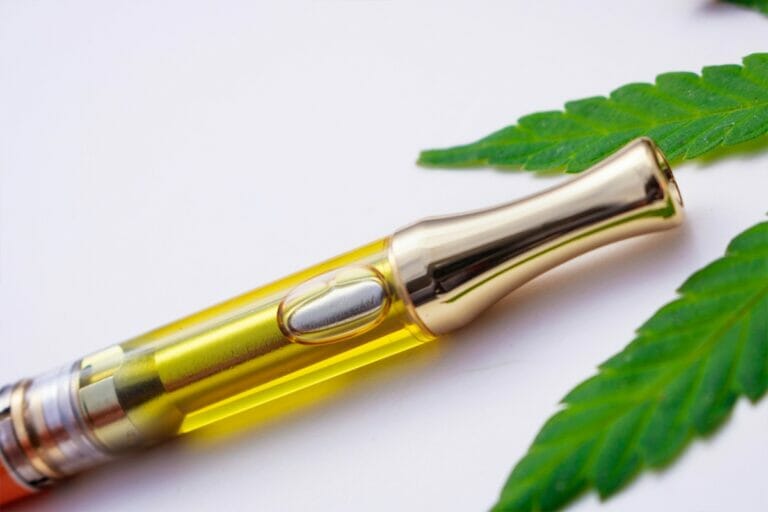
In the smoking universe, terpenes are omnipresent, especially for vapers. Indeed, natural molecules are used for the manufacture of e-liquid, in particular because they have interesting tastes and smells to exploit.

What are the effects of terpenes on the body?

In aromatherapy, terpenes are very beneficial to the body. Relaxing, stimulating or even aphrodisiac, their virtues differ according to the molecules used. Terpenes have multiple benefits. Myrcenes are relaxing, linalool is a natural sedative, pinewood improves concentration and memory, humelene brings a natural satiety effect, as for limonene, it reduces stress and stimulates good mood.