Home Blog Page 14

Amsterdam Cannabis College announces the closure of its premises after 25 years of existence

The Amsterdam Cannabis College has officially announced the closure of its premises located in the heart of Amsterdam’s Red Light District. After 25 years of dedicated service as a central institution in the cannabis community, the College regrets this decision.

Established a quarter of a century ago on Oudezijds Achterburgwal, the premises have served as an important meeting point for the international cannabis community, hosting many important events, educational programs and community initiatives.

Unfortunately, due to changing financial considerations, Cannabis College has opted to transition all of its operations to an online platform. Starting January 1, 2024, all events, classes and comprehensive educational programs will take place exclusively on the official website, www.cannabiscollege.com.

“While we are excited about the possibilities offered by our online platform, we understand the sentimental value associated with our physical location. The decision to close our doors was not taken lightly and we would like to express our deep gratitude to the community for their 25 years of unwavering support. As we begin a new chapter, we invite the community to join us in celebrating the memories and milestones our institution has experienced over the years. We remain committed to fostering a sense of community and connection, albeit in a different setting,” said foundation president Gio Dronkers in a press release relayed by CannabisIndustrie.nl.

About Amsterdam Cannabis College

Founded in 1997 by Dutch philanthropist Henk Poncin and his colleagues from the Green Prisoners Release action group, the Cannabis College Amsterdam was established as a public information center dedicated to promoting the beneficial aspects of the Cannabis sativa L plant. .

The new information center and organic cannabis garden opened in 1998 in a monumental 17th century house in Amsterdam. Throughout its existence, the College has played a crucial role in educating the public about the Cannabis plant, providing guidance on the safe use of recreational and medical cannabis through workshops, tutorials and B2B services.

Luxembourg’s new government will not completely legalize cannabis

Luxembourg’s new government coalition will not follow through on the initial plan to legalize cannabis. The alliance made up of the Popular Christian Social Party (CSV) and the Democratic Party decided to maintain the first “light” part of legalization, with the decriminalization of cannabis consumption and the regulation of self-cultivation for adults, but full legalization of the production and sale of cannabis will not move forward.

A two-part legalization

The first phase of legalization, focused on decriminalizing public possession and allowing home cultivation of cannabis, was successfully approved this year. Luxembourgers are now allowed to possess up to three grams of cannabis in public, and each household can grow up to four plants for personal use.

However, the second part of the plan, which aimed to legalize the purchase and sale of cannabis for recreational purposes, was abandoned by the new coalition government, thus aligning with the recently approved coalition agreement.

The first part of legalization was delayed by the Covid-19 pandemic and legal concerns within the European Union. The decision to split the project into two parts allowed the approval of the initial phase.

The coalition agreement now highlights the government’s commitment to maintaining the legalization of home cultivation while recognizing the importance of observing the positions of neighboring countries on the full legalization of cannabis. The agreement emphasizes that while personal cultivation remains legal, full legalization will not be pursued.

The decision not to move forward with the business aspects of cannabis legalization has led some to question the reasons for this choice. The new coalition would not see the need to take this step.

The progress of neighboring Germany, also with legalization in 2 phases, will perhaps later push Luxembourg towards complete legalization.

Ontario allows retailers to own up to 150 cannabis stores

Ontario plans to double the number of cannabis stores a retailer can operate from 75 to 150, and proposes banning cannabis cultivation in homes that offer child care.

Better fight the illicit market

Ontario’s plan to double the number of cannabis stores a retailer can operate, from 75 to 150, aims to better combat the illicit cannabis market. The current cap of 75 stores, implemented in 2021, is expected to be revised early next year to provide consumers with more options for purchasing cannabis from licensed and regulated sources.

Ontario Attorney General Doug Downey says increasing the number of stores is a crucial step in combating the influence of the illicit market. The province currently has around 1,800 cannabis retail stores with some major chains like Canna Cabana, True North, Sessions and Spiritleaf.

Raj Grover, president and CEO of High Tide Inc., owner of Canna Cabana, which has 63 stores in Ontario, said he was pleased with the proposed change. Mr. Grover considers that this is a positive measure which is part of the objective of promoting a competitive environment.

Childcare facilities and cannabis cultivation

Another aspect proposed by the Access to Justice Improvement Act of 2023: the cultivation of cannabis in homes that provide child care services. The province is working to ban the practice, citing concerns about the appropriateness and safety of growing cannabis in child-friendly environments.

Attorney General Doug Downey expressed his unease with the current situation: “Five years ago, the federal government decided that cannabis would be legal in this country, and part of the new legislation allowed the cultivation of up to of four cannabis plants at home. He added: “As things currently stand, cannabis can be grown in home childcare settings. We find this deeply troubling and inappropriate, and quite frankly, I never imagined we would need to legislate on this. »

The measure brings Ontario in line with British Columbia, which already has a similar restriction in place. The aim is to balance personal cultivation rights with the need for responsible regulation, particularly in spaces where childcare is provided.

The government of the State of Victoria (Australia) open to the decriminalization of cannabis

The government of the Australian state of Victoria has been open to discussions on the decriminalization of personal use of cannabis, raising the possibility of substantial reform of drug laws.

This announcement follows the rejection of a bill by MPs from the Legalize Cannabis party, which proposed the legalization of the personal use of cannabis by adults and the cultivation of up to six plants. Despite this rejection, the government has expressed its willingness to continue discussions, recognizing both the benefits and risks associated with such a proposal.

Ingrid Stitt, Minister of Mental Health, quoted by The Age, said: “Labor saw benefits in the proposal, but also risks.” A position that opens the way for a nuanced exploration of multiple perspectives on the decriminalization of cannabis in Victoria.

The proposal to legalize cannabis

The party’s proposal Legalize Cannabis sought to provide a health response to cannabis consumption, emphasizing a three-step approach towards comprehensive market regulation. The original bill allowed adults to possess small amounts for personal use and to grow up to six plants. Cannabis can be donated, but not sold, and a designated caregiver can cultivate on behalf of others. However, offenses such as drink-driving, supplying to children and smoking in public would remain.

David Ettershank, Legalize Cannabis, said: “We have this bizarre situation in the state of Victoria, where there is an illicit market worth at least $1.2 billion a year… Why? »

The party says state resources could be redirected from enforcing cannabis laws to health and education initiatives, in addition to the potential to generate revenue through taxation in a legal and regulated market.

Rejection but openness of the government

Although it rejected the bill in its current form, the government has been open to continuing discussions. Prime Minister Jacinta Allan clarified that discussions with Legalize Cannabis would continue, but that no policy changes were immediately planned. The statement marks a departure from the previous government’s staunch opposition to any changes to drug laws relating to cannabis.

Rachel Payne, Legalize Cannabissaid: “I want the Victorian Premier to be courageous in her response to this bill and end the injustices faced by the tens of thousands of adults who use cannabis in this State “.

The deputies of Crossbench, including the Libertarians’ David Limbrick, view the cannabis legalization plan as more moderate than desired. However, David Ettershank defends the proposal as “modest and common sense”, calling for the removal of an “antiquated 95-year-old prohibition”.

Sione Crawford, Managing Director of Harm Reduction Victoria, suggests that decriminalization could reduce stigma and improve the likelihood that individuals will seek help for their cannabis use. A report from thePennington Institute reveals that 37% of Australians over the age of 14 have used cannabis, and a 2019 survey by the Australian Institute of Health and Welfare indicates that the public is increasingly supportive of legalization.

Consumption at the top of the state

Victorian Treasurer Tim Pallas supports a health-based response to cannabis, expressing his personal belief that cannabis use should not be a crime. He actually admitted to using cannabis when asked for his personal opinion on legalization in the state.

“I don’t think a criminal approach is best. A health approach would be best. »

Prime Minister Jacinta Allan and Opposition Leader John Pesutto have also admitted to using cannabis in the past.

Minnesota to evaluate reliability of cannabis saliva screenings

In order to test the effectiveness of roadside cannabis screening tests, theOffice of Traffic Safety (OTS) of Minnesota has launched a pilot project to develop a saliva test to detect actual intoxication in drivers who have consumed cannabis.

Minnesota Saliva Testing Pilot Program

According to Mike Hanson, director of the OTS, the primary goal of the saliva test is to identify people who have used substances like cannabis and opioids in the last two hours, rather than detecting use dating back several days, reports Fox9. The test uses the SoToxa Mobile Test System and the Dräger DrugTest 5000both of which have been tested in other states.

The state has recruited 320 drug recognition evaluators (DREs) for the program, the majority of whom are local law enforcement officers. These evaluators, trained to recognize signs of impairment due to substances other than alcohol, will be equipped with saliva tests. The testing process includes field sobriety tests, followed by a voluntary saliva sample, which is then analyzed for the presence of six substances, including cannabis. Possibly positive drivers will not be arrested or have their license revoked while participating in the operation.

Individuals participating in the pilot program voluntarily provide saliva samples, which will allow the OTS to collect valuable data on the prevalence of driving under the influence of drugs. The goal is to submit this data to the Minnesota Legislature in fall 2024, advocating for legislative updates that would allow law enforcement to use these devices to arrest drunk drivers.

Minnesota saw an increase in drug-related driving incidents between 2013-2017 (8,069 incidents) and 2018-2022 (15,810 incidents).

Global roadside enforcement initiatives

Minnesota’s program aligns with similar initiatives globally. In Michigan, the Roadside Oral Fluid Testing Pilot Program, launched in 2017, used the Alere DDS2 device to test for a variety of substances. Phase II of the program, from 2019 to 2020, expanded its scope. Other US states, including Alabama and Kansas, have also implemented roadside saliva tests.

Canada, following the legalization of cannabis for adult use in 2018, adapted its laws to allow the use of saliva drug tests on the side of the road with the Dräger DrugTest 5000. The SoToxa mobile testing system received approval for use by law enforcement in 2019. Meanwhile, in Australia, the Victorian Parliament approved a bill for medical cannabis driving testing in October 2023, signaling a commitment to understanding how cannabis affects driving behavior.

While the continuation of roadside drug testing is laudable, concerns have been raised about the effectiveness of these tests. Vancouver-based lawyer Kyla Lee highlighted problems with Dräger’s DrugTest 5000, citing its unreliability in determining intoxication. False positives, particularly for people who have only consumed CBD, and difficulty performing in cold weather are among the reported problems.

An article published in September 2023 on the website of theAmerican Council on Science and Health echoes these concerns, citing a study by researchers at the University of California, San Diego. The study questions the accuracy of roadside saliva tests, highlighting the lack of scientific consensus on their reliability in indicating cannabis intoxication.

University of Minnesota launches cannabis research center

The University of Minnesota recently launched the Cannabis Research Center (CRC), in response to the legalization of cannabis for adults aged 21 and older in the state. Created under the auspices of the School of Public Health, the CRC aims to assess the impact of cannabis legalization in Minnesota and guide policymakers in developing regulations and best practices. With an annual budget of $2.5 million, the center will be funded by cannabis tax revenue once the state’s recreational market is operational.

Professor Traci Toomey, a public health policy expert focused on substance use control policies, will be the CRC’s first director.

The center will have different objectives including:

  • conduct in-depth research on the health effects of adult-use cannabis legalization, addressing issues related to equity, prevention and treatment of substance use disorders, education and decriminalization
  • prioritize anti-racist principles
  • maximize the health benefits of cannabis regulation
  • study the impact of cannabis on underage users, given concerns about its effects on brain development and the risk of cannabis use disorders later in life
  • study the influence of cannabis legalization on public safety, health equity, and potential disparities in the marketing and distribution of cannabis in different communities.

Minnesota’s adult-use cannabis law has been in effect since August. State-licensed cannabis dispensaries are scheduled to open in early 2025, pending regulations for commercial production and sales.

New Zealand grants first license to grow native magic mushrooms

New Zealand’s Ministry of Health has issued a cultivation authorization for research into a native magic mushroom, Psilocybe Weraroa, for the first time.

The strain, which contains the psychoactive compound psilocybin, will be studied for its potential to help people struggling with methamphetamine addiction, a significant problem in New Zealand. The license, granted last October, marks an important step in the integration of traditional knowledge, scientific research and medical innovation around psychedelics.

Mushroom therapy and clinical trials

The license has been granted to Rua Bioscience, a Tairāwhiti-based biopharmaceutical company, which will conduct the clinical research project around the addictions and potential of psilocybin from Rangiwaho Marae. The research is supported by various entities, including theEnvironmental Science and Research (ESR), the universities of Auckland and Waikato, and Manaaki Whenua Earth Care Research.

According to NZ HeraldJody Toroa, member of the board of directors of Rangiwaho Marae, welcomed this opportunity for his community: “These taonga [ndlr: trésor en maori] are provided by atua [ndlr : les dieux Polynésiens]and our people have used them for healing and well-being for centuries.”

The license currently allows cultivation research, with clinical trials subject to further approval. The first phase of trials aims to evaluate the safety profile of psilocybin by testing healthy adults. The scientific community generally considers psilocybin to be less harmful than many other illegal drugs, and its potential therapeutic benefits have been explored in various clinical trials around the world.

To ensure rigorous scientific standards, ESR’s analytical services will be used to determine psilocybin levels in Psilocybe Weraroa mushrooms. This test is crucial for maintaining dosing consistency and accuracy during clinical trials.

The NZ Herald article mentions that psychedelics like psilocybin and LSD are thought to increase neuronal plasticity, which could help break thought patterns associated with illnesses like depression. The University of Auckland is notably in the second phase of clinical trials relating to the microdosing of LSD in the treatment of depression.

The renewed interest in psychedelics for therapeutic purposes is not unique to New Zealand. Countries like Australia were the first to allow substances like MDMA and psilocybin to be prescribed for specific mental disorders. Although the New Zealand government has not yet expressed explicit support for such treatments, the Health Research Council has independently funded projects exploring the therapeutic potential of psychedelic substances.

Towards legalization of medical cannabis in Bosnia and Herzegovina

The issue of legalizing cannabis for medical purposes has become a central point of the Parliamentary Assembly of Bosnia and Herzegovina. A recently organized conference entitled “Legalization of cannabis for medical purposes – how to speed up the process?” ”, brought together representatives from various institutions across the country. The conference aimed to address the complexities surrounding the use of cannabis for medicinal purposes, exploring opportunities to streamline the legalization process.

The urgency of clarity around medical cannabis

Saša Magazinović, a member of the House of Representatives of the Parliamentary Assembly of Bosnia and Herzegovina, was one of the main advocates of the measure. Magazinović highlighted the importance of providing legal access to cannabis for people facing debilitating illnesses.

In his speech he explained that “we are talking about a large number of people who suffer from great pain, autoimmune diseases, malignant diseases, neurological disorders… we are talking about people whose quality of life is significantly impaired . »

Magazinović praised the diversity of conference participants, including representatives of the Council of Ministers, members of parliament, ministries of health, clinical centers, law enforcement agencies and various public institutions. Despite different political orientations, the common goal is to facilitate the legal use of cannabis for medical purposes.

Drawing attention to the various global developments surrounding cannabis, Magazinović recalled that three years ago the United Nations Commission on Drugs reclassified cannabis and recognized its medical properties.

Nataša Grubiša, director of the Agency for Medicines and Medical Devices of Bosnia and Herzegovina, highlighted the need for clear, high-quality and controlled medicines. Concerned about the lack of information on the quality of illegal cannabis products currently available, Ms. Grubiša said: “At the moment we do not know what type of resins our patients receive, we do not know how they are dosed, nor how they are administered to them. »

She emphasized that entering this field is not just a matter of international obligation, but a commitment to ensuring that citizens receive safe, effective and high-quality medicines.

Nediljko Rimac, Minister of Health of the Federation of Bosnia and Herzegovina, brought a unique perspective drawing on his experience as a former surgical oncologist. Mr. Rimac recognized the usefulness of cannabis in relieving severe pain and affirmed the support of the Federal Ministry of Health for this initiative. He said: “The aim of today’s event is to enable patients to obtain the necessary preparation in a legal manner,” reports AA.

St. Vincent and the Grenadines’ first Cannabis Cup will celebrate tradition and destigmatization

With the aim of celebrating traditional agricultural practices and destigmatizing cannabis, theAlternative Holistic & Organic Co-operative Society (AHOCS) and CannaSVG, a medical cannabis cultivation company, are set to host the first Cannabis Cup in Saint Vincent and the Grenadines (SVG). Scheduled for December 10 at Pier 1, this event is not just a competition, but a step toward recognizing the role of traditional farmers in the emerging cannabis industry.

The island legalized medical cannabis in 2018, in a joint movement by Caribbean countries to at least legalize medical cannabis.

On the local importance of destigmatization

AHOCS member Josiah Cuffy highlights the importance of destigmatizing cannabis in society. In an interview given to Search light, he says: “The idea of ​​the Cannabis Cup is to establish a day of freedom for cannabis, because we are really trying to destigmatize it. We now have medical cannabis here too, so it’s only right that destigmatization goes hand in hand with that.”

The SVG Cannabis Cup will not only be a competition for the best local cannabis products, it will also be a celebration of the diverse cultural facets of cannabis. AHOCS is keen to involve traditional farmers and local artists in the event.

Cuffy emphasizes the importance of this involvement: “We really want traditional growers to be involved in medical cannabis in the country, for the country itself, because that’s the only way to start destigmatizing.” This inclusive approach aims to bridge the gap between traditional practices and the evolving cannabis landscape.

The organization will also have a booth at the event, showcasing literature on the plant and various products derived from Cannabis and other plants that provide health benefits, as well as promoting informed and responsible cannabis consumption. .

The competition will include categories such as Indica, Sativa and hybrid flowers, as well as hash. Prizes will be awarded for the best flowers (visual appearance), the best aroma (smell), the best taste (softness of combustion) and the best high (intensity).

Conley Rose, president of AHOCS, highlights the organization’s broader goal of expanding the cannabis market. By advocating for the sale of medical cannabis in different locations, AHOCS envisions a future where medical cannabis products are accessible to a wider audience in Saint Vincent and the Grenadines.

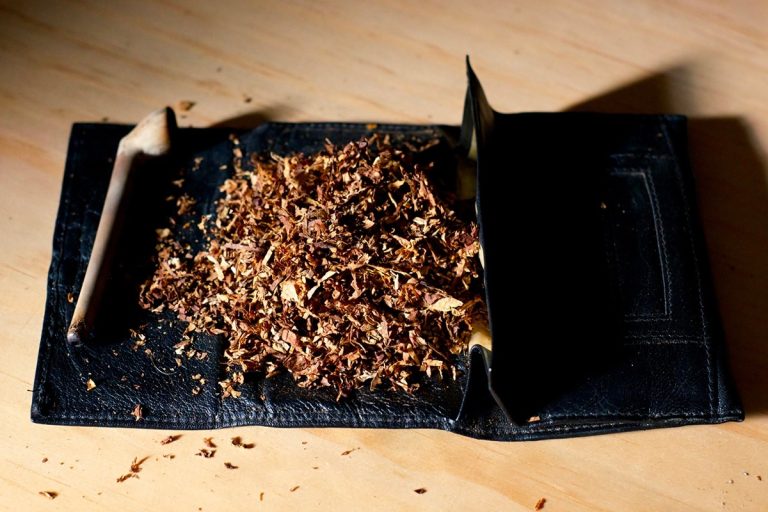
The advantages of buying a tobacco pouch for pipes

0

It is well known that pipe smokers like to have their tobacco with them so they can smoke their puff whenever they want. To transport tobacco safely and without inconvenience, the tobacco pouch is a suitable accessory. But that’s not the only advantage of this special smokers’ pouch. Here are its other strengths.

What is a tobacco pouch?

A pipe tobacco pouch is a small container that has existed for many years. Its role is to keep the tobacco in bulk for rolling cigarettes or stuffing the pipe. It comes in various shapes and sizes. Likewise, if it is commonly made of leather, other materials are also used for its design.

What is a tobacco pouch used for?

If it is available in several formats, it is certainly to allow the transport of a larger quantity of tobacco, but not only. In fact, some models are specifically designed to also carry the equipment necessary for rolling cigarettes. Finally, there are still some for pipe smokers, since this type of tobacco pouch allows the pipe to be stored and protected during transport.

As such, the pipe tobacco pouch is larger than the classic tobacco pouch. It has a dedicated pocket to protect puffers. The most advanced models also have several compartments to store all the necessary accessories. So you can smoke your pipe wherever you want, even if you are not at home. In other words, the tobacco pouch is much more than just a reserve of tobacco, it is also a means of transporting all your paraphernalia in a secure and compact manner.

The advantages of the special pipe tobacco pouch

In addition to the advantages mentioned above, certain models of tobacco pouches are very complete. You can slide your tobacco in there, but also your lighter in the dedicated slot. Then, transport your pipe safely, stored in its specific location and finally, a small pouch allows you to carry your pipe cleaner and pipe tamper. Of course, if you need to keep your tobacco for a long time, also consider adding a humidifier!

Delled – LaFleur produces the first French cannabis extracts for medical use

Delled – LaFleur was already one of the pioneers of the medical cannabis sector in France. The company has just announced that it has cultivated and released a batch of medical cannabis extract intended for manufacturing an oral form of cannabis treatment. This milestone marks a turning point in the history of the company and that of medical cannabis in France, which is inexorably approaching a reality.

Cultivation, extraction then destruction

The company has invested in state-of-the-art facilities to ensure a safe and controlled environment for growing cannabis and being able to work in the European market. With its background in horticultural LEDs, Delled – LaFleur therefore cultivates its Cannabis plants, with a proprietary system for controlling the growing environment and drying called Hortimind.

Extraction was also done in-house to obtain a pure, highly concentrated medical cannabis extract. This method not only preserves the therapeutic properties of the plant, but also eliminates unwanted impurities.

Delled – LaFleur has also implemented rigorous quality control measures throughout the production process. Each batch of medical cannabis extract undergoes extensive testing for cannabinoid content, terpene profiles, microbial contaminants, heavy metals and residual solvents. It thus controls these variables in its raw materials by high-performance liquid chromatography (HPLC) and by gas chromatography (GC-MS), a service that it already offers to companies that would like to have their flowers or their CBD extracts.

The batches were then “released,” jargon for meaning that the batches are certified by a qualified person and could be distributed to patients. As medical cannabis is not yet widespread in France, and the experimentation is supplied abroad, part of these technical batches will therefore be destroyed. The other part will be integrated into technical batches of an oral formulation to stabilize them and observe the behavior of the product over time, in particular the degradation of the active ingredients present. The data collected will then be sent to the National Agency for the Safety of Medicines and Health Products (ANSM) to validate the products for post-experimentation.

Delled – LaFleur thus successfully carried out a Proof of concept of its capabilities and shows that it is already able to supply its first batches of medical cannabis to French patients.