Home Blog Page 68

Carl Sagan: How Cannabis Deepened His Creativity, Empathy and Mindset

Carl Sagan is one of the most well-known and admired scientific celebrities of the 20th century. As a planetary scientist, he brought visionary insights into the atmospheres of Mars, Venus and Jupiter’s moon Europa. As the host of the documentary series Cosmos, he took millions of viewers on a guided tour of the universe. Sagan has written on a wide variety of topics, including the need for truth in public discourse, world peace, and climate change, topics that resonate today.

As a cannabis advocate, he was also decades ahead of his time.

However, he wisely kept his pro-cannabis positions to himself, the “war on drugs” reigning supreme. On the other hand, in a small group, he professed his love of the plant with passionate eloquence – even going so far as to write an anonymous essay (under the pseudonym “Mr. X”) for the book Marihuana Reconsidered by his friend Lester Grinspoon in 1971, which you can find translated into French here.

Much of Sagan’s correspondence on cannabis has only come to light in recent years, revealing a long-hidden facet of this man’s complex life – a facet in which cannabinoids have helped him reconnect with memories of his early childhood, to find new mathematical ideas, to broaden his appreciation of art and music, and to deepen his empathy and love for his wife Ann.

New levels of perception

Sagan’s first experience with cannabis turned out to be a little disappointing. Around 1959, his anonymous essay recounts, he had reached a “period of relaxation in life” after years of intensive scientific work. During this period, he befriended a group of people who smoked cannabis “irregularly, but with obvious pleasure”. For months, Sagan politely refused every joint that came his way, until one night he finally decided to experiment.

After about half an hour, Sagan felt “no effect”. However, the “euphoric” seshs from his friends convinced Sagan to keep trying – and on his sixth or seventh attempt, the chemistry was set:

“I was lying on my back in a friend’s living room, idly examining the pattern of shadows cast on the ceiling by a potted plant… I suddenly realized I was examining a miniature Volkswagen in detail complex, distinctly outlined by shadows… When I closed my eyes I was amazed to see a movie playing inside my eyelids… a simple countryside scene with a red farmhouse, blue sky , white clouds, a yellow path winding over green hills to the horizon… hues of exquisite depth, and surprisingly harmonious in their juxtaposition. »

Although he clearly understood that he was hallucinating, Sagan was still “convinced that there are genuine and valid levels of perception with cannabis. He quickly became a regular – albeit relatively light – smoker and would remain so until the end of his life.

As his public persona continued to write popular science books and host television specials, Sagan pursued his own line of research in complete secrecy, diligently documenting the extraordinary mental phenomena that he experimented under the influence of cannabis.

Flashes of introspection

Sagan’s travelogues sometimes feel more like software manuals than spiritual texts, but that’s a big part of their unique appeal. Above all else, Sagan was a clear and precise science communicator, and that’s the perspective he brought to his cannabis travels. What other human being, for example, would describe in these terms the visions he had with his eyes closed?

“Another interesting aspect of information theory is the prevalence… of cartoons: just the outlines of figures, caricatures, not photographs. I think it’s just a matter of information compression; it would be impossible to capture the full content of an image with the informational content of an ordinary photograph, say 108 bits, in the fraction of a second occupied by a flash. »

And then there was the time he took a shower while stoned, and ended up drawing statistical diagrams in soap on the wall tile – and then translating those ideas into college essays:

“I had an idea about the origins and invalidities of racism in terms of Gaussian distribution curves…I drew the curves in soap on the shower wall, and went to write the idea. One idea led to another, and at the end of about an hour of extremely hard work, I discovered that I had written eleven short essays on a wide range of social, political, philosophical, and human biological topics. »

Of course, cannabis was not solely responsible for these productions. According to Sagan, the plant helped streamline mental cross-pollination between the various scientific and mathematical disciplines he had studied at the university level.

Sagan was particularly keen to refute the “widespread myth about this type of high: the consumer has the illusion of great insight, but it doesn’t survive the morning exam.” He was “convinced that this is a mistake, and that the…hunches you get when you’re stoned are real”.

The main problem, he said, was “putting those ideas into a form that was acceptable to the quite different self that we are when we land the next day.” He solved this problem by logging his ” highdeas in great detail, then analyzing and refining the good ones in the days that followed.

Sagan’s prodigious memory, curiosity and rationality provided the raw materials, while cannabis tied them together and molded them into meaningful accomplishments.

Art, music, empathy and love

As thought-provoking as Sagan’s scientific heights can be, some of his most moving travel reports focus not on rational calculations, but on emotional and aesthetic experiences: discovering music, exploring art, reliving childhood memories and a deeper connection with his wife through the magic of cannabis.

For much of his life, Sagan was – by his own admission – quite ignorant when it came to music. But with the help of cannabis, he wrote: “For the first time I was able to hear the different parts of a three-part harmony and the richness of the counterpoint. »

Along the same lines, he writes, “The cannabis experience greatly enhanced my appreciation of art, a subject I had never enjoyed much before. He discovered a new ability to translate real-world scenes into colorful abstract paintings in his mind – an ability he had never imagined, let alone tried to develop, before cannabis awakened him.

His view on cannabis is similar to that of Aldous Huxley on psychedelics. Both men believed that mind-altering drugs could alter our perception and shift us from our usual, survival-oriented mode, to one that allows for unique sensory perception and thoughtful thought patterns that society and our psychology are structured for. keep away. Huxley wrote an entire book, The Doors of Perceptionon this phenomenon which he called “Mind at Large”.

Sagan also found that using cannabis he could “step into the past, recall childhood memories, friends, relatives, toys, streets, smells, sounds and tastes of a bygone era. “. He found he was able to “reconstruct real childhood events that were only half understood at the time. In other words, cannabis allowed him to relive his childhood memories in vivid detail, from the perspective of the adult he was, giving him new insight into half-baked episodes. forgotten in his life.

“Cannabis brings us a consciousness that we spend a lifetime being trained to neglect, forget and push out of our minds. –Carl Sagan.

Perhaps more profoundly still, Carl Sagan found that cannabis increased his empathy for the people around him, especially his wife Ann, a consumer and legalization advocate, with whom he spent many happy hours ” share discussions, perceptions and humour”. In the bedroom, they discovered that cannabis gave sex “an exquisite sensitivity” that also strengthened their physical bond. At times like these, Sagan writes, cannabis allows him to “give his full attention to every sensation” and stay focused in the present.

For all of these reasons, Sagan strongly believed that the “serenity and insight, sensitivity and camaraderie” fostered by cannabis were “desperately needed in this increasingly crazy and dangerous world.”

New decree strengthens control of non-medical cannabis use in Thailand

Thailand’s Ministry of Public Health has issued a new decree aimed at tightening controls on the use of cannabis for commercial, research, study and export purposes.

The text, which entered into force this weekend, replaces that published on June 16, widely criticized for being considered too lax and open to abuse.

Under the new decree, only the cannabis flower is classified as a controlled part of the plant – unlike the leaves which can be used more widely, for example in cooking – and anyone who wishes to carry out research, study, export, sell or processing this herb for commercial purposes must obtain an official permit and comply with the related conditions.

The sale of cannabis in any form to students, persons under the age of 20, pregnant women or nursing mothers is prohibited.

Any additives such as leaves must be clearly stipulated by restaurants. If dishes are cooked with cannabis, restaurants must clearly state this, whether from cannabis flowers or cannabis leaves. Otherwise, consumers can sue restaurant owners and business owners.

Selling through vending machines or via vans, like the one presented at the top of the article, is now prohibited. Consuming in commercial premises is also prohibited, unless the sale is made by doctors, traditional medicine practitioners or certified rural doctors and for medical use.

Any form of advertising for commercial purposes is prohibited.

Cannabis can no longer be sold in public parks, amusement parks, temples, places of worship or hostels.

About 5,000 sales licenses have already been distributed in the country.

The definitive regulation of cannabis, the Cannabis Act, is still expected by growers and cannabis retailers alike. It should arrive in early 2024.

Obligations, omissions and EU rules: Kenzi Riboulet-Zemouli talks about the legalization of cannabis in Germany

Kenzi Riboulet-Zemouli, one of Europe’s leading cannabis policy experts, spoke to BusinessCann about plans to legalize cannabis in Germany.

Despite serious flaws in its approach, the European Commission is unlikely to have the power to stop Germany’s ambition to establish an adult cannabis market, the leading international drug policy expert believes.

In announcing its plans for cannabis legislation, Germany is taking an “interpretative” approach to its obligations under the international drug conventions, which it will present to the European Commission after preliminary discussions.

However, Kenzi Riboulet-Zemouli expresses his deep concern with regard to the German proposals, which he considers “insufficiently worked out”, “full of errors” and “poorly conceived”.

The Mandate of Nation States

For Kenzi Riboulet-Zemouli, however, the most important thing is that a nation-state, even if it is linked to a larger regional economic body like the European Union, has the capacity – as is the case for the Uruguay and Canada – to establish its own national drug control program.

“Although Germany has not done its homework and its white paper is riddled with many fundamental errors, treaty interpretation is the mandate of nation states and not that of the European Commission or the INCB . They cannot challenge the interpretations that States make of their treaty commitments. And states have the right to move forward with legalization as long as they adopt one of the two paths of interpretation allowed by international law,” he said.

The two possible ways to proceed are an interpretative “lex lata” approach to legalizing the non-medical cannabis industry under Article 2(9) of the 1961 Single Convention on Narcotic Drugs (SCND), or legalization as a science experiment.

Surprising omissions

However, Germany’s interpretative statement does not mention any of these options and, curiously, does not even refer to the Single Convention of 1961, although it contains the main legal provisions on cannabis “and makes ipso facto part of the acquis communautaire”, according to Mr. Riboulet-Zemouli.

The document also mentions the 1988 Convention by stating that it was ratified by the European Union (EU), which is not entirely correct, since the EU has ratified only a small part of the 1988 Convention, which does not concern cannabis.

Mr. Riboulet-Zemouli adds: “Although the approach lex lata is the correct one, it is very surprising that Germany has made no reference to either of these two paths” and suggests that there is perhaps a lack of clarity in its approach.

“It would be more logical to refer to Article 2(9) of the 1961 convention, which is already used for the legal trade in hemp and CBD and which can be extended to a total exemption of cannabis, whatever or its THC content, for industrial purposes. »

“Then there is Article 28 which provides a total exemption from the cultivation of cannabis for industrial purposes. »

“Ignoring these provisions and legalizing without regard to these concrete legal provisions (or even others) would unfortunately represent a violation prima facie of international law. »

With its interpretative declaration, Germany affirms that the “implementation of the coalition agreement – ​​under certain narrow conditions of state regulation and improved standards in the fields of health and youth protection as well as of the fight against trafficking in illicit drugs – is compatible with the objective and the legal requirements of the conventions”.

But she remains silent on the nature of this compatibility.

Statement by the European Commission

In an email response to BusinessCann, Anitta Hipper, European Commission (EC) spokesperson for home affairs, said the Commission was still awaiting a formal request for consultation from Germany.

She then provided the following statement, which focuses only on illicit cannabis and decriminalization, without mentioning the progress made in medical and adult cannabis on the continent.

She said: “Existing European legislation provides for minimum criminal penalties for the trafficking of illicit drugs and prohibits the cultivation of cannabis. The acquis communautaire (Council Framework Decision 2004/757/JHA) obliges Member States to take the necessary measures to ensure that crimes related to drug trafficking, including cannabis, are punishable. »

“This means that, except in the case of the personal use of drugs, which is left to the discretion of each Member State, Union legislation requires that all activities related to cannabis trafficking (production, manufacture, extraction, preparation, offer, offering for sale, distribution, sale, delivery) are subject to sanctions by national laws. »

“The acquis communautaire does not cover the personal use of drugs. It is therefore up to the Member States to decide how to deal with the personal use of drugs, including cannabis. »

No reserve expected

Kai-Friedrich Niermann, a German cannabis lawyer, said preliminary talks Germany has had with the EU indicate a favorable response to his plans.

He said: “No fundamental reservations are to be expected in this regard, otherwise the government would not have chosen this path. Especially since a number of Member States are already preparing for a reform of their national cannabis policy. »

He goes on to say that he expects the EU to comment on Germany’s approach in the short term, “so that the draft legislation can be introduced in the Bundestag as planned from January”.

And, if there is a return from the EU, it will have a limited impact.

He added: “The German government leaves no doubt that the legalization of cannabis is politically desired by them and that they will push it through come hell or high water.

“If the European Commission does not agree with the German plans – if that is legally relevant – it could only do so insofar as it is a question of establishing a commercialized value chain, c ie from cultivation to commerce, personal possession and consumption being privileged by international law and European law. »

Violation of EU rules?

Kenzi Riboulet-Zemouli highlighted how the EU could open infringement proceedings against Germany for violating the acquis communautaire.

However, beyond Council Framework Decision 2004/757/JHA – highlighted in the EC’s statement to BusinessCann – he argued that EU law also includes elsewhere “clear and direct obligations regarding lawful trade drugs”.

He added: “If Germany has not done its homework, nation states can determine their own course based on their own interpretation of international commitments. »

It is debatable whether Germany, as a founding member and largest EU country, will be prepared to go it alone.

In a document published last week, The Canna Consultants puts this issue forward by saying: “If the Commission’s answer to Germany is ‘no’, it is almost inconceivable that Germany will confront the Commission head-on in a public battle over this issue”.

Mr Riboulet-Zemouli continues: “I see Germany going very slowly in designing the law, the leaked document (outlining its plans) came as a surprise to many in the German government and beyond. It may not have had consensus among all branches of government, or with EU countries that have worked closely with Germany on European reform. »

“His approach is scattered and this may well reflect some of the internal divisions in German politics, which is now slowing down German reform. »

An eleventh municipality will legally distribute cannabis in the Netherlands

At the end of last week, the Dutch Commission for Public Order and Security met during a debate entitled “Combating crime, personal injury and organized crime” in the presence of the Minister of Justice Dilan Yeşilgöz -Zegerius.

Various questions relating to the experimentation with the legal production of cannabis in the Netherlands, which is lagging behind, or the legalization of cannabis in Germany were asked of him.

The Minister thus specified that the 11th city to join the experiment had not yet been designated. However, two major cities have reportedly expressed interest. The balance would tip for one of the two cities whose mayor is currently discussing with local stakeholders. The decision will be announced this fall.

She also confirmed that she was studying the possibilities of launching the production experiment for coffeeshops as soon as possible in response to the recent call from the mayors of Breda and Tilburg.

“A number of mayors have indeed floated the idea of ​​an earlier start-up phase to gain experience on a small scale. And we, that is to say Minister Kuipers and myself, are in the process of exploring the possibilities available to us and the support of the stakeholders in this regard. Myself, from my role, I have always said: “I am pragmatic in relation to all this experience”. We have clear agreements in the coalition agreement. It seems wise to me to comply with it. […] But I don’t want to develop new problems. […] I know that this delay is causing great irritation among a number of members of the chamber, so it seems fair to me to add that this delay is not a postponement anyway. »

She also clarified that for now, each grower must wait until all growers are ready to go before delivering their products to coffeeshops. Producers who are ready earlier will not receive financial compensation for the delay.

For coffeeshop owners, a later start currently means that they will be dependent on back door supply for longer and cannot yet offer legal cannabis in their coffeeshop.

The addition of an eleventh city will in any case not delay the launch of the experiment.

Asked if she was following developments in Germany, Dilan Yesilgöz Zegerius confirmed that she was observing what was happening there. However, it is impossible to predict to what extent the Dutch cannabis market will be affected. It will also depend on how legalization takes shape in Germany, which is currently completely undetermined.

“However, it will be interesting to follow the impact of legalization in Germany on drug tourism in the Netherlands,” she added.

Cantourage goes public in Frankfurt

German cannabis company Cantourage went public last Friday. The share price jumped more than 130% on its first day of trading, making it one of the few most successful IPOs this year.

“We are Cantourage and we love cannabis,” co-founder Florian Holzapfel said as he rang the bell at the Frankfurt Stock Exchange on Friday morning, adding that the company is happy to say “HIGH,” its ticker symbol. The shares traded at 15 euros on Friday at 1 p.m. and today around 25 euros.

From medical to recreational

Cantourage distributes several cannabis-based medicines and pharmaceutical-grade CBD products in Europe and Great Britain. With to date 38 partnerships and collaborations with cannabis producers in 17 countries, Cantourage offers a very wide range, particularly in terms of cannabis flowers. In 2021, the company with more than 35 employees, which also operates a medical cannabis clinic in Great Britain, achieved a turnover of more than 5 million euros. She expects about three times as many this year.

While the company was only founded in 2019, the founders had previously built a well-known cannabis pioneer, Pedanios GmbH, which was later sold to Aurora. At the time, Pedanios handled Canada’s first imports of medical cannabis.

Former CEO of Aurora Europe, Philip Schetter is now CEO of Cantourage. He sees great potential for the future with current developments:

“Cantourage is one of Europe’s leading medical cannabis companies and operates in a fast-growing sector here. It is estimated that the medical cannabis market alone will reach 7.7 billion euros in Europe by 2028. All the markets in which cannabis could be sold for adults are several times larger. In Germany alone, this is estimated to be almost 20 times the current medical cannabis market. Given the rapid growth in demand, we have completed the private placement and will now invest in expanding our cannabis flower manufacturing capacity. The planned IPO will also allow investors to participate in Cantourage’s continued growth. »

Enter the Pinel & Pinel universe

0

A young Parisian leather goods maker whose talent has been rewarded many times through his house Pinel & Pinel, Fred Pinel invites himself into the world of cigars with brio. Focus on his passion for curls and his racy creations.

The cigar world of Maison Pinel & Pinel

Fred Pinel grew up in Paris, surrounded by his family. He loved to visit his grandparents to spend endless time in the attic, which he defined as a veritable gold mine. During the sale of their house, Fred recovered an old suitcase which he transformed to accommodate his collection of cigar cases. This is how this artist at heart decided to break the codes. After having distinguished himself in several universes, he finally chose to create his own trunks and luxury leather goods accessories. Thus Pinel & Pinel House see the day.

And when we suggest luxury, it’s hard not to think of cigars… If Fred Pinel is very sensitive to leather goods, he is no less seduced by scrolls. This is how Maison Pinel & Pinel decided to interfere in this very distinguished universe by offering an exclusive collection. From the XXL trunk acting as a smoker to the 2-cigar case to carry in your pocket, the preservation of cigars is now assured with style.

The Pinel & Pinel Smokehouse Collection

Baptized “Fumoir”, these are therefore 9 pieces that make up the collection around the cigar at Pinel & Pinel brand. Made entirely by hand by cabinetmakers and trunk makers from Maison Pinel & Pinel, these storage systems are real cigar boxes. Their conservation is optimized in order to reveal all the aromas of the most prestigious stems.

Zoom on the Mini Cigar Trunk from the new collection

The Mini Cigar Trunk is one of the last two models to be integrated into the Fumoir collection. Its name was not given at random, since unlike the Ultimate Cigar Trunk which measures 1.80 m, the mini Cigar Trunk is only about 50 cm by 35 cm. However, it can accommodate up to 120 cigars on 3 shelves. Suspended on a nickel palladium base, it is largely highlighted and will attract the curious eyes of your guests!

Enter the Pinel & Pinel universe

Enter the Pinel & Pinel universe

Indeed, in addition to being practical, the mini Cigar Trunk is also very aesthetic! It takes up the codes of the famous trunks dear to Fred Pinel, with an interior made of cedar wood veneer, while the exterior is designed in calfskin. The finish is impeccably done, especially with brass and nickel palladium jewelry. Finally, the humidification system is provided by the Boveda brand.

Enter the Pinel & Pinel universe

Enter the Pinel & Pinel universe

Comment About Enter the Pinel & Pinel universe Below ..

Colorado decriminalizes psychedelics and legalizes psilocybin therapy

On Tuesday, Colorado voters approved a move to legalize possession of certain psychedelics and create psilocybin “healing centers.”

More than four years after Denver became the first U.S. city to decriminalize hallucinogenic mushrooms, the state is legalizing small-scale possession of certain psychedelics, while following Oregon’s lead in allowing licensed establishments to administer supervised psilocybin services.

the Natural Medicine Health Act therefore legalizes the possession, consumption, cultivation, and sharing of psilocybin, ibogaine, mescaline (not peyote-derived), DMT, and psilocin for adults 21 and older, with no explicit possession limit. There will be no recreational sale.

A therapeutic program of psychedelics, reserved for adults aged 21 and over, must be put in place. Patients can then travel to an approved healing center to receive treatment under the guidance of a trained facilitator.

Only psilocybin and psilocin will be authorized for therapeutic use in approved healing centers until June 2026. After that date, regulatory authorities may decide to also authorize the regulated therapeutic use of DMT, ibogaine and mescaline.

A new 15-member Natural Medicine Advisory Board will be responsible for making recommendations on adding substances to the program. Members of the advisory board will include individuals with experience of psychedelic medicine in a scientific and religious context.

People who have served their sentence for a conviction related to an offense made legal by this new law will be able to ask the courts to erase their records. If the prosecutor does not object, the court will automatically have to erase this file.

10 years of legalization of cannabis in Colorado: for what results?

Colorado and Washington made history ten years ago, on November 6, 2012, by becoming the first jurisdictions in the world to legalize the possession and sale of cannabis for adults, Washington with a measure called Initiative 502, and Colorado with a measure called Amendment 64.

Since then, the legalization of legal cannabis has spread to US states from coast to coast, and from Canada to Uruguay. With this week’s vote and legalization in Maryland and Missouri, cannabis is now legal in nearly half of the country.

10 years of legalization

Ten years ago, voters in Colorado and Washington were offered to vote to legalize adult cannabis use, with a relatively simple message.

In Colorado, the Campaign to Regulate Marijuana Like Alcohol made the argument that cannabis is safer than alcohol. And in Washington State, the campaign New Approach explained that legalization was not a panacea, but that the advantages outweighed the disadvantages, and that the disadvantages of prohibition were far more harmful.

Both campaigns also promised to take money from illegal operators and put it back into state budgets, to take a product that people were already consuming and to regulate it while ending arrests of those consumers, and that consumption among young people and road accidents under the influence of cannabis would not increase.

The data suggests that, on the whole, this is what happened.

10 years of numbers

Legal sales began in both states in 2014. Washington State imposes a 37% excise tax, while Colorado imposes three taxes: the 2.9% state sales tax on retail sales, the 15% cannabis tax on retail sales and the 15% cannabis tax on wholesale sales, not including local taxes.

In 10 years, the State of Colorado has collected 2.27 billion dollars in taxes. The state now has around 670 stores and 1,200 producers and processors. The majority of taxes go into the “marijuana tax treasury fund,” with mandatory funding for schools. In 2020-2021, the Colorado Department of Education received $175 million in cannabis revenue and $619.9 million in 10 years.

The funds were allocated to various programs, including the prevention of bullying or dropping out of school or scholarships to promote school entry and reading.

By the end of 2021, Washington State had collected $2.37 billion in taxes, with more than half of that spent on health care. The state now has 484 cannabis stores and 1,300 growers and processors.

In both states, the taxes collected also fund the cannabis regulatory program.

Driving and teenagers

The final conclusion is yet to be determined. Current testing methods only identify that a person has consumed cannabis, but not when or how much.

Therefore, a person who has an accident and who has cannabis in his body may have consumed this cannabis several days before. Also, there is no national standard for driving under the influence of cannabis, as there is for alcohol. And there is no consensus, based on research, about exactly how cannabis affects drivers.

A study finds that road accidents have increased since legalization in Colorado but not in Washington State. Differences in how regulation was put in place, such as density of cannabis stores, out-of-state cannabis tourism, or local factors may explain the different results.

Regarding adolescent use, major youth surveys in each state show that past-month cannabis use among middle and high school students is trending down.

New political support

Washington State Governor Jay Inslee did not support the legalization campaign in 2012, when he was running for governor, but called for federal legalization when he ran for president. presidency in 2020.

And former Colorado Governor and current U.S. Senator John Hickenlooper, who opposed the legalization measure in 2012, said this at an anniversary event last month:

“There was concern that legalization would lead teenagers to think it wasn’t that bad, and that they would start consuming more and experimenting more. And one of the great things that Colorado has is a health survey, Healthy Kids Colorado – there are now more than 40,000 participants. But I regularly go to the United States Senate to say, “We can prove that since we legalized marijuana, there hasn’t been an increase in teenage experimentation. No increase in consumption. No increase in driving under the influence of drugs”.

Just this week, he announced that he would introduce the PREPARE Act (Preparing Regulators Effectively for a Post-Prohibition Adult Use Regulated Environment). The ad featured Colorado as a success story, and its headline read, “Ten years after legalization in Colorado, Hickenlooper bill paves way for federal legalization of cannabis.”

CBD and its benefits for animals

0

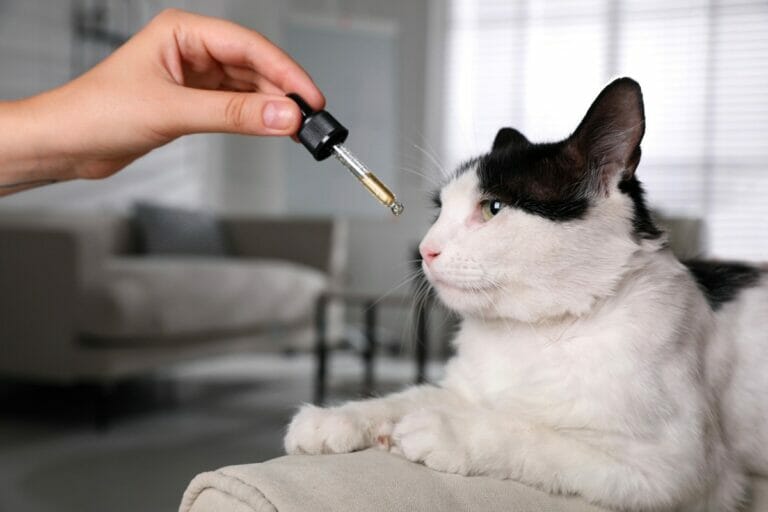
Did you know that CBD was also recommended for our 4-legged friends? The virtues of cannabinoids on the natural system of domestic animals are extraordinary, especially for stressed animals or animals suffering from osteoarthritis. Decryption.

CBD for your dog or cat

For those who don’t know, the CBD is a molecule derived from cannabis or hemp. This one is not at all psychoactive, which means that it has no habituation effect on the body. On the other hand, it soothes, opens the appetite, allows you to sleep better and reduces pain. Many diseases have proven the effectiveness of CBD on human health, but also on that of our furry companions. Now marketed legally and specifically for pets, CBD oil seems to work miracles.

Just like humans, dogs and cats have an endocannabinoid system, which makes them receptive to CBD. It is mainly the glands of the central nervous system, the brain, the peripheral organs and the immune cells that are concerned. However, the dosage as well as the modus operandi differ from humans. Animals should exclusively ingest it with their meal or take a mixture of CBD oil and salmon oil directly into the mouth.

CBD and its benefits for animals

When to administer CBD to pets?

If your dog or cat has a permanent ground of stress, or even anxiety, CBD can help him relax. If you find that your furry friend has a tendency to scratch regularly for no reason, to pull out their hair, or even to mutilate themselves, then CBD oil can be of great help.

Likewise, if your dog or cat suffers from osteoarthritis, CBD reduces pain at 2 mg/kg. Epileptic animals can also see their seizures reduced by up to 89% by taking CBD since it acts directly on the nervous system. Finally, for any infection, it would seem that CBD is more powerful than any antibiotic for common infections.

Maryland and Missouri legalize cannabis

Voters in Maryland and Missouri on Tuesday approved a referendum to legalize cannabis in the state. The 2 states become the 20 and 21 US states to legalize cannabis.

Now that the measures have been approved by voters, there remains the implementation of basic regulations for the adult cannabis program.

For Maryland, the purchase and possession of up to 1.5 ounces of cannabis (42 grams) will be legal for adults. The legislation will also remove criminal penalties for possession of up to 2.5 ounces. Adults 21 and older will be allowed to grow up to two plants for personal use and gift cannabis without compensation.

Previous convictions for behaviors made legal by the proposed law will automatically be expunged, and people currently in prison for such offenses will be eligible for a new conviction. The legislation provides that those convicted of possession with intent to distribute cannabis can apply to the courts for a redaction three years after serving their sentence.

In Missouri, adults 21 and older will be able to purchase and possess up to three ounces of cannabis.

They will also be able to cultivate up to six flowering cannabis plants, six immature plants and six clones if they obtain a registration card.

The initiative will impose a 6% tax on recreational cannabis sales and use the proceeds to facilitate the automatic expungement of individuals whose criminal records include certain non-violent cannabis-related offenses.

The rest of the proceeds will go towards veterans’ health care, addiction treatment and the state’s public defense system.

Regulators will be required to issue at least 144 micro-business licenses through a lottery system, with priority given to low-income applicants and people who have been disproportionately affected by drug criminalization.

Existing medical cannabis dispensaries will also be the first to be able to begin serving adult consumers with a dual license.

Arkansas and North and South Dakota have rejected legalization initiatives. 5 cities in Texas have approved proposals to decriminalize cannabis.